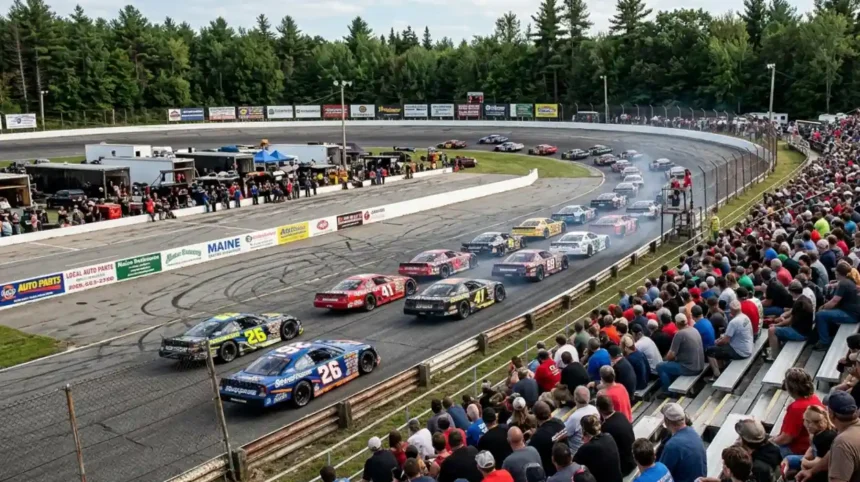
Oxford Plains Speedway stands as a cornerstone of short-track auto racing in New England and remains the largest spectator sporting facility in the State of Maine. Located along State Route 26 in the town of Oxford, this historic 3/8-mile asphalt oval has anchored regional motorsports since its establishment in 1950. Operating continuously for over seven decades, the facility serves as a vital economic engine for Oxford County and hosts the annual Oxford 250, widely recognized as one of the richest and most prestigious single-day short-track stock car races in North America. This comprehensive guide details the historical evolution, physical infrastructure, competitive divisions, and long-term regional impact of Oxford Plains Speedway, providing a definitive resource for media, researchers, and automotive enthusiasts.
- What is Oxford Plains Speedway?
- How did Oxford Plains Speedway evolve historically?
- The Formative Dirt Era (1950–1960)
- The Transition to Asphalt and the Bahre Era (1961–1986)
- Modern Reconfigurations and Sanctioning (1987–Present)
- What are the technical specifications and infrastructure of the track?
- What racing divisions compete at the facility?
- What is the historical and cultural significance of the Oxford 250?
- What role did the track play in national NASCAR history?
- What are the socio-economic and community impacts of the speedway?
- What does the future look like for Oxford Plains Speedway?
What is Oxford Plains Speedway?
Oxford Plains Speedway is a 3/8-mile (0.604-kilometer) semi-banked asphalt oval racetrack located in Oxford, Maine, designed primarily for short-track stock car racing. The multi-use facility encompasses a seating capacity exceeding 14,000 spectators and features an adjacent National Hot Rod Association (NHRA) sanctioned dragstrip.
The facility operates as a multi-tier sporting entertainment complex. Its primary asset is the flat, 3/8-mile oval track, which requires drivers to execute precise braking and throttle control due to its minimal banking. This unique layout fosters highly competitive, side-by-side stock car racing.
Beyond the oval, the complex incorporates the Oxford Plains Dragway, an NHRA-sanctioned acceleration strip that hosts weekly bracket racing. The entire property spans over 200 acres of flat terrain, accommodating large-scale parking, expansive competitor pit areas, corporate hospitality suites, and comprehensive media broadcast infrastructure.
The speedway operates primarily under the sanctioning of the Pro All Stars Series (PASS), a regional governing body for asphalt Super Late Model racing. It serves as a regulatory anchor for local short-track rules, stabilizing safety standards and technical specifications across diverse racing classes. As a cultural and athletic institution, it provides a structured platform for both amateur and professional drivers to compete, bridging the gap between local grassroots racing and national touring series.
How did Oxford Plains Speedway evolve historically?
The history of Oxford Plains Speedway began in April 1950 when local entrepreneur George Damon purchased 200 acres of flat woodland in Oxford, Maine, to construct a modern motorsports venue. The facility transformed from a raw dirt oval into a nationally recognized asphalt racetrack through successive eras of leadership and track reconfigurations.
The Formative Dirt Era (1950–1960)
George Damon hired civil engineer Harold Small to design and construct the original facility. The initial build took six weeks and cost approximately $35,000. When it opened on May 27, 1950, the track was a 1/2-mile dirt oval measuring 70 feet wide with a four-foot grade in the turns. The complex included a 600-foot-long wooden grandstand built to hold 5,000 spectators. The inaugural feature race on May 18, 1950, was won by a driver named “Hutch” Hutchins, who completed 15 laps at an average speed of 55.6 miles per hour. The venue quickly established attendance milestones, drawing a record-breaking crowd of 12,000 spectators for its Memorial Day race on May 27, 1950.
The Transition to Asphalt and the Bahre Era (1961–1986)
In 1961, Damon sold the facility to local businessmen Hayward Luck, Asa Packard, and Thomas Ryan. This ownership group executed the track’s first major reconfiguration, shortening the oval to a 1/3-mile asphalt surface characterized by short straightaways and sweeping turns.
In 1964, Maine businessman Bob Bahre purchased the facility, initiating an era of significant capital improvements and national prominence. Bahre demolished the aging wooden stands in 1965, replacing them with a modern steel structure designed for nearly 15,000 fans. He also constructed the adjacent NHRA dragstrip in 1969. Under Bahre’s management, the track hosted elite national divisions and launched its signature event, the Oxford 200 (later expanded to the Oxford 250), in 1974.
Modern Reconfigurations and Sanctioning (1987–Present)
The facility changed hands multiple times in the modern era, reflecting shifts in the regional motorsports landscape:
- Michael Liberty (1987–1999): Purchased the track in 1987, adding corporate skyboxes and an electronic scoreboard. Prior to opening day in 1992, Liberty authorized a complete repaving project that widened the backstretch, shifting the track to its current 3/8-mile configuration.
- Bill Ryan (1999–2012): Managed the speedway through the 2000s, stabilizing its weekly racing programs and hosting diverse regional touring series.
- Tom Mayberry (2012–Present): President of the Pro All Stars Series (PASS), Mayberry purchased the venue in 2012. Under his guidance, the track solidified its relationship with PASS, ensuring the long-term viability of Super Late Model racing in the northeast.
What are the technical specifications and infrastructure of the track?
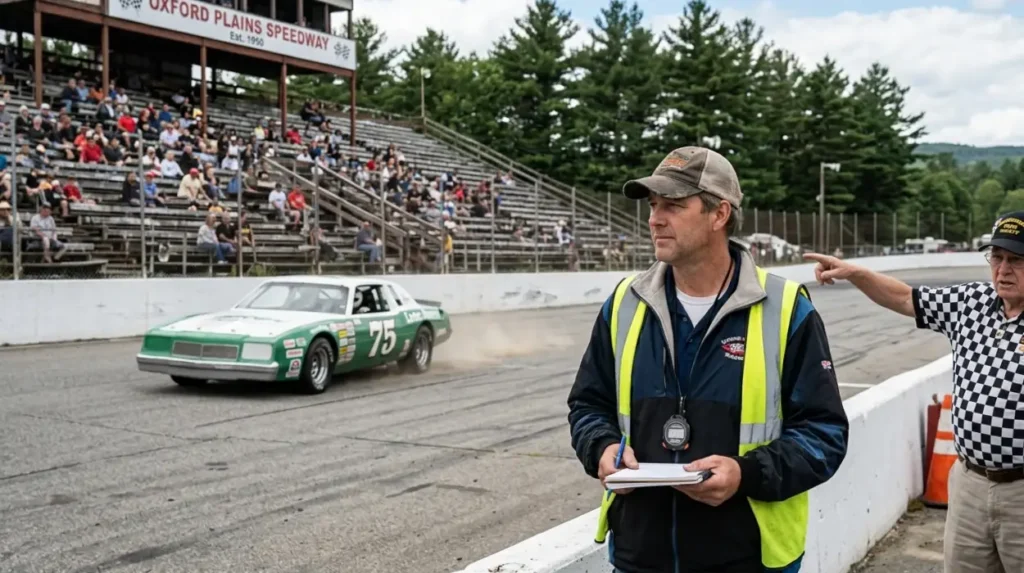
The physical layout of Oxford Plains Speedway consists of a 3/8-mile asphalt oval featuring minimal banking in the turns and wide straightaways. This specific architectural design places severe stress on a vehicle’s braking system and demands exceptional mechanical grip from the tire-and-suspension setup.
The track’s geometric layout dictates unique vehicle dynamics. Unlike highly banked tracks where centrifugal force holds cars in the turns, Oxford Plains requires drivers to brake deeply into the corners, rotate the vehicle at the apex, and carefully apply throttle to prevent rear-tire wheelspin on exit. The wide backstretch allows for multiple racing grooves, enabling competitors to race side-by-side through the turns.
The infrastructure includes heavy-duty safety systems designed to meet modern short-track standards. A continuous reinforced concrete retaining wall outlines the outer perimeter of the racing surface, complemented by catch-fencing designed to contain debris. The infield contains a dedicated safety care center, technical inspection bays, and staging lanes for competing vehicles.
Spectator infrastructure includes a sprawling main grandstand constructed of structural steel and aluminum bleachers. This grandstand structure is divided into numbered sections to accommodate large crowds during major events. The top tier features an enclosed press box and corporate hospitality suites equipped with timing monitors and scoring feeds. The facility utilizes a high-efficiency LED track lighting system to support night racing operations, ensuring uniform visibility across the entire surface.
What racing divisions compete at the facility?
Oxford Plains Speedway hosts a multi-tiered competitive ecosystem divided into premier weekly championship divisions, weekday acceleration programs, and regional touring series. These classifications allow drivers of varying budgets and experience levels to compete regularly.
The Oxford Championship Series
The primary competitive program takes place on Saturday nights throughout the spring and summer seasons. This series serves as the backbone of the track’s local driver ecosystem. Examples of weekly classes include:
- Super Late Models: The premier division at the track. These are purpose-built, lightweight racing machines featuring custom fabricated chassis, fiberglass bodies, and high-output V8 engines generating over 600 horsepower.
- Street Stocks: Highly competitive full-bodied stock cars based on production automobile frames. These vehicles utilize regulated crate engines and spec tires to control costs while emphasizing driver skill.
- Limiteds / Chargers: Intermediate divisions designed to transition drivers from entry-level classes to high-horsepower late models.
- Mad Bombers / Bandits: Budget-conscious, entry-level divisions utilizing modified four-cylinder and six-cylinder production vehicles with strict safety modifications.
The Acceleration Series
Operating primarily on Wednesday nights, this program focuses on low-cost, grassroots racing designed to lower the barrier of entry for amateur racers. Examples of these divisions include:
- Outlaws: Modified vintage or custom-bodied smaller cars.
- Rebels: Stock four-cylinder passenger vehicles with minimal performance enhancements.
- Cruisers: Strictly stock vehicles designed for endurance and entry-level competition.
- Sport Trucks: Modified pickup trucks tailored for short-track oval racing.
Regional Touring Series
The speedway serves as a primary venue for major northeastern touring organizations. The Pro All Stars Series (PASS) routinely brings elite drivers from across the United States and Canada to compete in high-stakes Super Late Model events. Additionally, the American-Canadian Tour (ACT) frequently schedules events at the track, featuring full fields of late-model stock cars utilizing specialized body styles and configurations.
Explore More Area Guide
Oxford Pillowcase vs Housewife Design: Luxury Bedding Guide | Oxford Daily
Oxford Instruments Share Price Performance and Financial Market News: Oxford Daily
What is the historical and cultural significance of the Oxford 250?
The Oxford 250 is an annual late-model stock car race held at Oxford Plains Speedway that stands as one of the most prestigious short-track racing events in North America. Inaugurated in 1974, the event draws top-tier short-track racers and national NASCAR stars due to its lucrative purse and intense competitive format.
Origins and Evolution
The event was established by promoter Bob Bahre on July 14, 1974, originally as a 200-lap race known as the Oxford 200. Joey Kourafas won the inaugural event, capturing a $4,500 share of the $25,000 total purse. In 1975, Bahre expanded the race duration to 250 green-flag laps. This change forced teams to implement pit strategies, including tire changes and refueling operations, which added an element of crew performance to the race. Over the decades, the event attracted major corporate backing, evolving into a high-stakes showcase with total purses regularly approaching $200,000 and offering a guaranteed winner’s payout exceeding $25,000.
The Qualifying Format
The unique qualifying structure of the Oxford 250 contributes significantly to its prestige and drama. Unlike standard time trials where drivers qualify individually against the clock, the Oxford 250 utilizes a random draw format to determine heat race lineups. Examples of the qualifying stages include:
- Heat Races: Drivers must race their way into the feature event through highly aggressive, short sprint rounds.
- Consolation Races (“Consis”): Competitors who fail to transfer from the heats enter secondary rounds to secure remaining starting spots.
- Last Chance Qualifier: A final sprint race that offers the absolute last opportunity to make the grid.
This format routinely forces championship-caliber drivers to start deep in the field, creating a dynamic race environment defined by heavy traffic and overtaking.
Cross-Disciplinary Competitors
The event possesses a rich history of drawing drivers from national stock car racing series. Throughout the late 20th and early 21st centuries, prominent NASCAR Cup Series champions and winners traveled to Maine to compete against local short-track specialists. Examples of notable national motorsports figures who have competed in the Oxford 250 include:
- Geoff Bodine: Secured consecutive victories in 1980 and 1981.
- Kevin Harvick: Competed in the event during the height of his NASCAR career.
- Kyle Busch: Captured a highly publicized victory in the 2008 edition of the race.
- Rusty Wallace, Jeff Gordon, and Dale Jarrett: Attended the event during various eras, solidifying its national reputation.
What role did the track play in national NASCAR history?
Oxford Plains Speedway established national prominence during the late 1960s by hosting three premier NASCAR Grand National Series (now Cup Series) events. These races brought legendary drivers to the state of Maine and produced historic milestones that remain embedded in national motorsports records.
The introduction of the NASCAR Grand National Series to Oxford Plains was orchestrated by track owner Bob Bahre, who sought to demonstrate that a short track in northern New England could support top-tier professional stock car racing. The track was configured as a 1/3-mile paved oval during this period, presenting a tight, grueling test of endurance for the heavy Grand National cars over a 300-lap distance.
The first event, the 1966 Maine 300, took place on July 12, 1966. It featured a total purse of $5,760. At 28 years old, Bobby Allison drove a 1965 Chevrolet to victory lane, marking his first career win in NASCAR’s premier division. Allison defeated short-track legend Tiny Lund, with future multi-time champion Richard Petty finishing third. Allison repeated his performance the following year on July 11, 1967, winning the second annual Maine 300 to claim his seventh career NASCAR victory.
The third and final Grand National race occurred on July 11, 1968. Richard Petty, driving his famous Petty Enterprises Plymouth, held off a sustained challenge from David Pearson to capture the checkered flag. This victory marked the 83rd win of Petty’s career, an essential milestone on his path to a historic, all-time record of 200 premier-series wins. While NASCAR’s top division eventually migrated toward larger superspeedways in the 1970s, these three events cemented Oxford Plains Speedway’s status within the national landscape of American motorsports history.
What are the socio-economic and community impacts of the speedway?
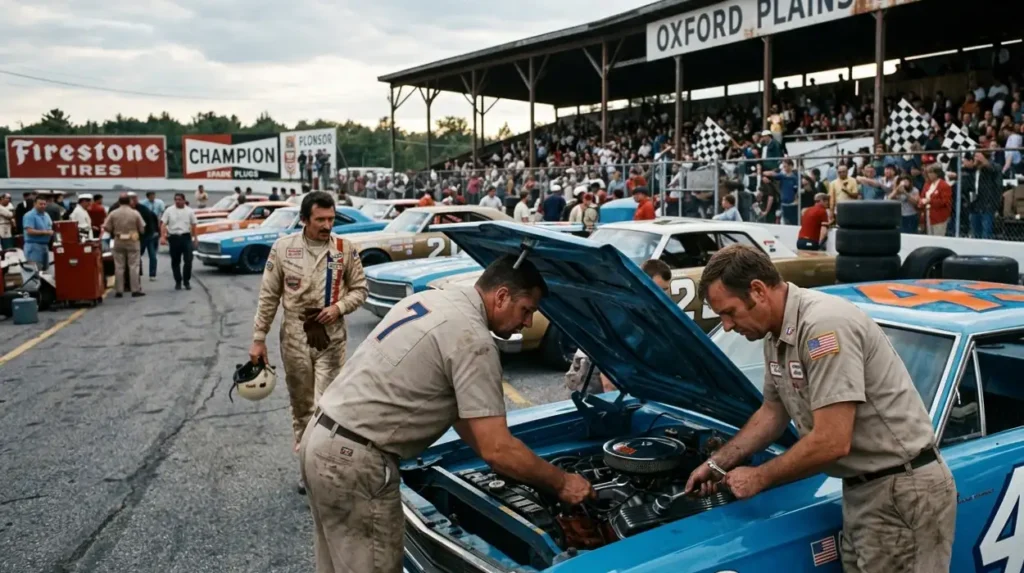
Oxford Plains Speedway exerts a profound economic impact on Oxford County and the surrounding Western Maine region while serving as a cultural hub for generations of families. The venue generates substantial seasonal revenue for local businesses and stabilizes employment across various service sectors.
Regional Economic Contributions
During its active operational window from April through September, the speedway drives tourism and commercial activity along the Route 26 corridor. This impact increases exponentially during the multi-day Oxford 250 weekend. Examples of businesses that experience direct economic benefits include:
- Hospitality and Lodging: Hotels, motels, and short-term rentals across Oxford, Norway, Paris, and Auburn regularly reach 100% occupancy rates during major race weekends.
- Campgrounds: The speedway opens expansive acreage for on-site camping, drawing thousands of fans who purchase supplies from local grocery stores and hardware vendors.
- Food and Beverage: Local restaurants and diners experience a measurable increase in foot traffic and revenue driven by traveling race teams and spectators.
- Automotive Supply Supply Chains: The track supports local specialty businesses, including racing fuel distributors, tire dealers, and specialized machine shops.
Cultural and Community Integration
The speedway functions as a multigenerational institution within the community. It is common for local racing teams to feature third-generation or fourth-generation drivers, with grandfathers, fathers, and children working on the same vehicle in the pit areas. This deep lineage has created a highly loyal fan base.
The cultural importance of the venue was highlighted in 2020 following the passing of longtime former owner Bob Bahre. His formal funeral service was conducted directly on the frontstretch of the racetrack. The service concluded with the hearse carrying Bahre’s casket completing one final honorary lap around the oval while hundreds of mourners stood in the grandstands waving small checkered flags, illustrating the tight bond between the venue’s management, competitors, and the local populace.
What does the future look like for Oxford Plains Speedway?
The future of Oxford Plains Speedway centers on integrating modern facility upgrades, maintaining regulatory stability through PASS sanctioning, and adapting to broader trends within environmental regulations and digital media. These initiatives ensure the facility remains viable in an evolving sports entertainment marketplace.
Infrastructure Modernization
To maintain its position as Maine’s premier racing facility, management continues to invest in physical plant upgrades. The ongoing conversion of track and safety lighting to high-efficiency LED systems reduces energy consumption while improving visibility for drivers and digital broadcast cameras. Continuous maintenance of the asphalt surface and concrete retaining walls is required annually to withstand the harsh freeze-thaw cycles of Maine winters.
Digital Media Expansion
The speedway has adapted to modern media consumption by partnering with regional and national motorsports streaming platforms, such as Racing America. These broadcasting agreements allow weekly events and the Oxford 250 to be streamed live to a global audience. This digital pivot provides local drivers with national exposure, helps secure corporate sponsorships, and generates a steady stream of pay-per-view revenue that supplements traditional gate receipts.
Regulatory and Environmental Adaptation
As environmental standards become more stringent across New England, the speedway faces the ongoing challenge of mitigating its environmental footprint. This includes monitoring noise levels relative to surrounding residential zones and preparing for a eventual shift toward low-emission racing fuels or hybrid short-track configurations. By balancing its rich historical legacy with forward-looking operational strategies, Oxford Plains Speedway is well-positioned to maintain its status as an essential fixture of American motorsports for decades to come.
What is Oxford Plains Speedway?
Oxford Plains Speedway is a historic 3/8-mile asphalt oval racetrack located in Oxford, Maine. Opened in 1950, it is the state’s largest spectator sporting venue and hosts weekly stock car racing alongside nationally recognized events.