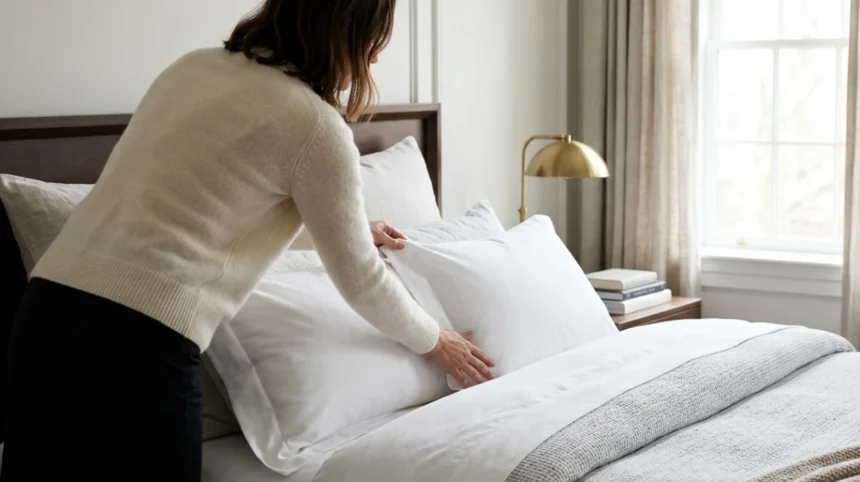
Bedding choices impact both sleep quality and bedroom aesthetics. Within premium interior design, the Oxford pillowcase serves as a fundamental element for creating a layered, hotel-quality aesthetic. While standard pillowcovers prioritize basic utility, the Oxford variation integrates specific structural details that elevate it to a decorative and functional asset. This comprehensive analysis by Oxford Daily examines the technical definitions, historical origins, material constructions, and precise styling methods of this essential bedding component.
- What is an Oxford pillowcase?
- Where did the name Oxford pillowcase originate?
- What is the difference between an Oxford pillowcase and a Housewife pillowcase?
- How is an Oxford pillowcase constructed?
- What materials are used to make Oxford pillowcases?
- How do you style an Oxford pillowcase on a bed?
- How should Oxford pillowcases be laundered and maintained?
- What are the commercial implications of Oxford pillowcase design in the hospitality sector?
- What is the future relevance of Oxford bedding designs?
What is an Oxford pillowcase?
An Oxford pillowcase is a standard-sized bedding enclosure characterized by a flat, fabric border or flange that extends beyond the secure internal chamber holding the pillow. This fabric border typically measures between 5 centimeters and 10 centimeters in width. It extends around all four sides of the pillowcase, creating a framed profile.
The primary differentiator of this design is that the structural seams are set inward rather than at the absolute edge of the fabric. The internal dimensions of a standard Oxford pillowcase match standard rectangular pillows exactly, which measure 50 centimeters by 75 centimeters in the United Kingdom and Europe, and 20 inches by 30 inches in the United States. Consequently, the external dimensions expand to approximately 60 centimeters by 85 centimeters, depending on the exact border width. This additional fabric serves a purely aesthetic purpose. It provides the visual illusion of a larger, more voluminous pillow, which prevents bed arrangements from appearing flat or sparse against expansive headboards.
Where did the name Oxford pillowcase originate?
The name of the Oxford pillowcase derives directly from Oxford cloth, which is a heavy, durable, basket-weave textile pioneered in Scottish fabric mills during the nineteenth century. The material was initially popularized by the manufacturing of the classic Oxford button-down shirt due to its structural thickness, breathability, and capacity to withstand rigorous laundering cycles.
Historical production records from the mid-twentieth century indicate that textile manufacturers adapted this specific warp-and-weft fabric pattern for bedding to create more resilient, structured pillow covers. The earliest written documentation of the term “Oxford pillowcase” appears in British archival publications from 1957, specifically within regional records like the Clitheroe Advertiser & Times.
Prior to the formal standardization of this border design, nineteenth-century pillow enclosures were rudimentary. They featured one simple open end that frequently allowed the pillow insert to slide out during sleep. The development of internal envelope flaps, combined with the structural perimeter derived from Oxford cloth construction, transitioned the product from a basic protective sack into a formal element of luxury domestic linens.

What is the difference between an Oxford pillowcase and a Housewife pillowcase?
The core structural difference between an Oxford pillowcase and a Housewife pillowcase rests entirely on the presence or absence of the outer fabric flange. A Housewife pillowcase features a minimalist, borderless design where the structural stitches sit at the absolute external perimeter of the fabric casing.
The Housewife design gained its title from the Bolton Housewives Co-operative in the 1880s. This collective modified standard open-ended cases by sewing an internal fabric flap inside the opening to trap the pillow insert. While both styles accommodate identical internal filling sizes, the Housewife case fits tightly and compactly around the filler. The Oxford case extends outward to create a grander, more formal presentation.
How is an Oxford pillowcase constructed?
The construction of an Oxford pillowcase requires advanced textile pattern cutting and specialized sewing methodologies to ensure the border remains flat and rigid.
1.Fabric Cutting and Alignment:Step 1.
Technicians cut the textile into two primary panels: a long top panel and a matching base panel that includes excess length for the internal envelope flap. Designers calculate the dimensions by adding the desired border width multiplied by two to both the length and width axes.
2.Hemming the Enclosure Flap:Step 2.
The open entry side of the internal envelope flap undergoes a double-turn machine hem. This reinforcement prevents fraying during repeated insertions of dense down or synthetic pillow fills.
3.Mitering the Outer Corners:Step 3.
Industrial machinists join the borders using a 45-degree mitered corner technique. The two intersecting edges of the flange meet precisely at a diagonal angle, creating a perfect 90-degree outer corner. This element distinguishes a traditional Oxford from lower-cost “mock” variations that use continuous unjoined strips.
4.Inward Inset Topstitching:Step 4.
The final perimeter line is stitched exactly 5 centimeters inward from the outer edge. This double-needle stitch simultaneously creates the internal chamber wall and forms the decorative outer flange.
What materials are used to make Oxford pillowcases?
The choice of fabric directly dictates the breathability, tactile sensation, and structural longevity of an Oxford pillowcase. Because the outer flange relies on the inherent weight of the textile to stand crisp and flat, material selection modifies the visual presentation of the bed.
Long-Staple Cotton Percale
Cotton percale utilizes a closely woven, plain-weave pattern that yields a matte finish and a crisp hand-feel. Oxford pillowcases constructed from high thread count cotton percale, such as 200 to 400 threads per square inch, offer maximum structural rigidity. The density of the percale weave ensures that the 5-centimeter border remains upright and straight when propped against a headboard. This fabric optimizes temperature regulation via high airflow capacity, making it suitable for warm climates.
Cotton Sateen
Cotton sateen features a satin weave structure where four warp yarns float over a single weft yarn. This manufacturing process produces a lustrous sheen, a smooth drape, and a warmer thermal profile. An Oxford pillowcase made from cotton sateen offers a silk-like texture against the skin but possesses less structural rigidity than percale. The fabric border drapes more fluidly, creating a softer appearance.
Pure Flax Linen
Pure linen consists of natural fibers derived from the stems of the flax plant (Linum usitatissimum). Linen Oxford pillowcases introduce distinctive slubs, which are natural irregularities in yarn thickness, along with a relaxed drape. The border of a linen Oxford pillowcase does not remain perfectly rigid. Instead, it forms a relaxed, textured border that aligns with contemporary interior design aesthetics. Linen absorbs moisture up to 20% of its dry weight before feeling damp, providing excellent moisture-wicking capabilities.
Mulberry Silk
Premium silk variations use long-fiber mulberry silk woven at a heavy momme weight, typically ranging from 19 to 25 momme. A silk Oxford pillowcase minimizes friction against the human hair cuticle and facial skin epidermis. This reduction in friction limits hair breakage, tangling, and mechanical skin creasing during sleep. The flange on a silk case lies flat and fluid, offering a highly luxurious gloss finish.
How do you style an Oxford pillowcase on a bed?
Strategic bed styling utilizes a combination of pillowcase architectures to construct depth, color contrast, and varying heights. Professional interior designers avoid using a singular pillow type across the entire bed setup.
The Layered Hotel Stack
This methodology positions different types of pillowcases sequentially from the headboard forward. The back layer rests against the headboard and utilizes large, square European Oxford pillowcases, which measure 65 centimeters by 65 centimeters. The middle layer consists of standard rectangular Oxford pillowcases. These extensions frame the bed width and mask the mattress seams. The front layer incorporates standard Housewife pillowcases. The borderless profile of the Housewife case creates a clean, compact foreground that anchors the layered configuration.
The Flat Double Stack
For a modern, minimalist aesthetic, pillows lay completely flat on the mattress surface, stacked vertically in pairs. The bottom pillow uses a durable Housewife pillowcase to establish a stable, geometric base. The top pillow utilizes an Oxford pillowcase. The flat fabric flange spreads outward across the lower pillow, concealing the openings and creating a polished, tailored finish.
How should Oxford pillowcases be laundered and maintained?
Maintaining the structural integrity of the mitered borders and preventing the flange from curling requires systematic textile care protocols. Improper drying and washing compromise the fabric body, causing the borders to sag or bunch.
- Washing Parameters: Wash premium cotton or linen Oxford cases in water temperatures locked to a maximum of 40 degrees Celsius. Utilize a gentle cycle with a mild, liquid detergent free from optical brighteners or chlorine bleaching agents. High heat and harsh chemical powders strip the natural protective waxes from cotton fibers, accelerating fabric thinning.
- Drying Protocols: Air drying on a flat rack or clothesline represents the optimal method for preserving the shape of the outer border. If utilizing a mechanical tumble dryer, select a low-heat, delicate setting. Remove the pillowcases while they retain approximately 5% residual moisture. This prevents the synthetic setting of deep wrinkles along the double-stitched border seams.
- Ironing Technique: Turn the pillowcase completely inside out to iron the internal envelope flap first. Flip the case right-side out, smooth the flange flat away from the center chamber, and press with a steam iron set to the specific textile designation (e.g., high heat for linen, medium heat for cotton). Iron directly along the mitered seams from the inner stitch line outward to the edge. This forces the border to lay completely flat.
What are the commercial implications of Oxford pillowcase design in the hospitality sector?
Within commercial hospitality operations, such as boutique hotels and luxury resorts, the deployment of Oxford bedding directly interfaces with guest satisfaction metrics and operational laundering efficiencies.
Hotels utilize Oxford borders to communicate premium brand positioning without executing costly structural structural changes to bedroom furniture. The border design adds instant scale to standard bedding inserts, making entry-level economy mattresses appear more luxurious.
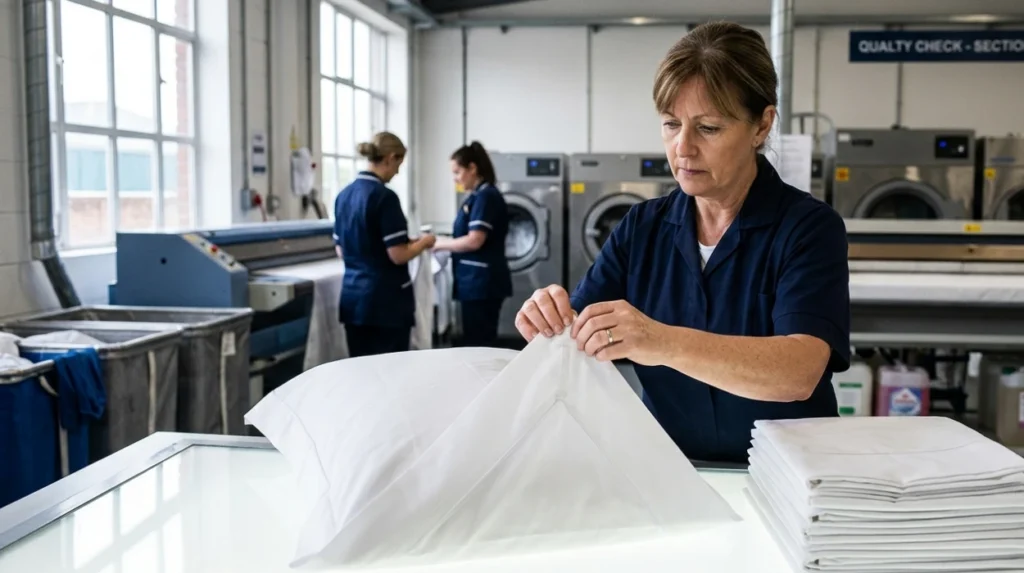
However, commercial laundries frequently utilize automated ironers and flatwork presses that operate at high velocities. Standard residential Oxford pillowcases featuring internal envelope flaps can twist or bunch inside high-speed rotary ironers. To solve this operational challenge, industrial manufacturers created a specialized “hotel-design” Oxford case. This variation replaces the inner envelope flap with an open rear canvas or overlapping split opening located directly in the center of the underside. This configuration allows the pillowcase to unfurl into a flat rectangle during automated processing. This change protects the mitered corners while maintaining high throughput speeds within commercial laundry facilities.
What is the future relevance of Oxford bedding designs?
The evolution of bedding design shows that consumer demand continues to focus on functional sustainability and textile longevity. As digital print technology and automated weaving systems advance, manufacturers are shifting away from traditional synthetic polyester blends. Instead, they are prioritizing verified organic cottons certified by international bodies like the Global Organic Textile Standard (GOTS).
Furthermore, smart bedroom microclimates are influencing textile engineering. Modern Oxford pillowcases are increasingly woven with phase-change materials (PCMs) or infused with cooling copper loops. These upgrades help regulate human skin temperature throughout the night while preserving the classic, elegant look of the traditional mitered frame. The design continues to serve as an industry standard because it successfully balances visual scale with protective utility.
What is an Oxford pillowcase?
An Oxford pillowcase is a pillow cover featuring a decorative fabric border, known as a flange, that extends around all four sides of the pillow. The border, typically 5–10 cm wide, creates a fuller, more elegant appearance while the internal pocket fits a standard-sized pillow.