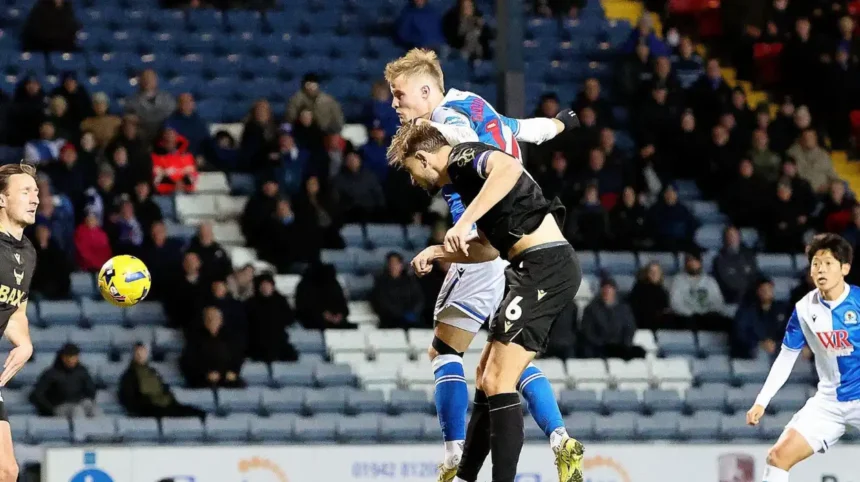
Blackburn Rovers Football Club, founded in 1875 and based at Ewood Park, represents a traditional pillar of Lancashire football. Oxford United Football Club, founded in 1893 as Headington and renaming themselves in 1960, represents Oxfordshire from their base at the Kassam Stadium. The clubs first met in official English Football League competition during the mid-twentieth century.
- How have recent match results shaped the Blackburn Rovers vs Oxford United record?
- What do the head-to-head statistics indicate about these two clubs?
- Which key players have dictated the outcomes of these matches?
- How do the tactical setups of Blackburn Rovers and Oxford United compare?
- What are the future implications of this fixture for Oxford Daily readers?
The competitive landscape changed significantly during the 1980s. Both clubs achieved top-tier status, competing simultaneously in the First Division. Oxford United secured their major domestic honour by winning the Football League Cup in 1986.
Blackburn Rovers achieved their modern pinnacle by winning the Premier League title in 1995. The subsequent decades saw both entities navigate distinct financial and sporting trajectories, leading to recurring encounters in the lower divisions before reconvening in the EFL Championship.
How have recent match results shaped the Blackburn Rovers vs Oxford United record?
Recent match results between Blackburn Rovers and Oxford United demonstrate a highly competitive dynamic in the EFL Championship, characterized by low-scoring tactical battles, crucial home victories, and thin performance margins that directly influence the league table standings.
During the 2024/2025 and 2025/2026 domestic campaigns, the head-to-head records shifted dynamically. In August 2024, Blackburn Rovers secured a 2-1 victory over Oxford United at Ewood Park. The return fixture in January 2025 at the Kassam Stadium resulted in a 1-0 victory for Oxford United. The sides played out a 1-1 draw at Ewood Park in December 2025.
The most recent encounter occurred on March 11, 2026, at the Kassam Stadium, where Oxford United defeated Blackburn Rovers 1-0. Forward Jamie Donley scored the decisive goal in the 34th minute of the match. Statistical data from this fixture shows Oxford United recorded an Expected Goals metric of 1.52 compared to 0.76 for Blackburn Rovers, despite Blackburn registering 69% of match ball possession.
What do the head-to-head statistics indicate about these two clubs?
Head-to-head statistics indicate that Blackburn Rovers hold the historical advantage in total victories, while Oxford United remain highly resilient at home, with matchups frequently decided by low goal margins and stark discrepancies in tactical possession metrics.
Analysis of historical and contemporary data shows that Blackburn Rovers have won four of the last seven meetings, while Oxford United have claimed two victories, alongside one draw. Goal distributions show an average of 2.14 goals per match across these encounters.
Recent Head-to-Head Encounters
- March 11, 2026: Oxford United 1-0 Blackburn Rovers (EFL Championship)
- December 9, 2025: Blackburn Rovers 1-1 Oxford United (EFL Championship)
- January 18, 2025: Oxford United 1-0 Blackburn Rovers (EFL Championship)
- August 24, 2024: Blackburn Rovers 2-1 Oxford United (EFL Championship)
- May 5, 2018: Blackburn Rovers 2-1 Oxford United (EFL League One)
Tactical metrics reveal distinct operational styles. In their latest match, Blackburn Rovers executed 424 accurate passes out of 520 total attempts, yielding an 82% passing accuracy rate. Oxford United completed 143 accurate passes out of 233 total attempts, resulting in a 61% passing accuracy rate.
However, Oxford United translated their lower possession into greater efficiency, producing 14 total shots and 7 shots on target, whereas Blackburn Rovers recorded 10 total shots and only 2 shots on target.
Which key players have dictated the outcomes of these matches?
Key players dictating the outcomes of these matches include creative midfielders who control transitional play, clinical young forwards converting low-volume chances, and central defenders tasked with maintaining defensive structural integrity under sustained possession pressure.
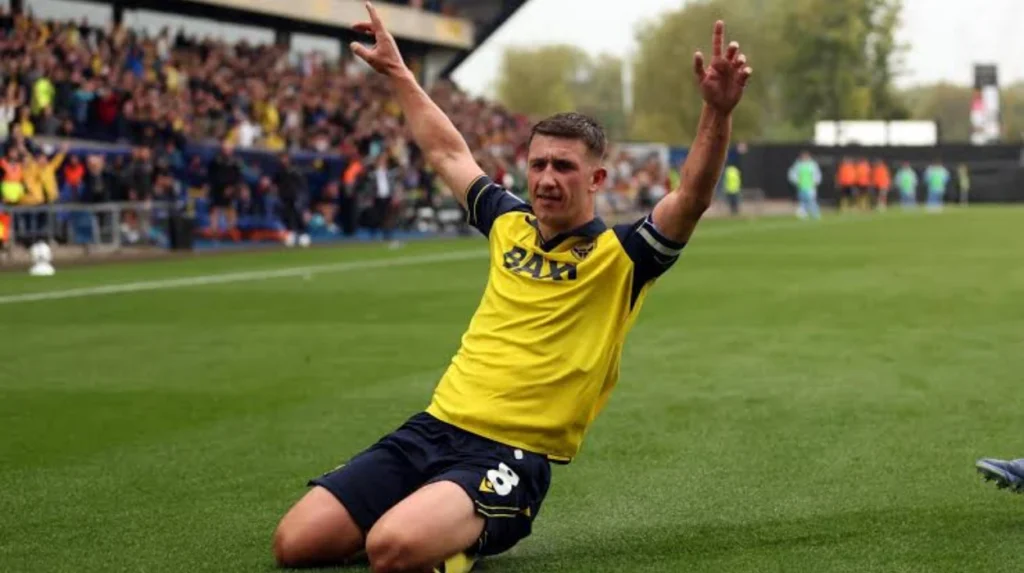
For Oxford United, midfielder Cameron Brannagan serves as the primary tactical anchor, achieving an 8.2 match rating in recent play by managing set-pieces and defensive distributions. Striker William Lankshear remains the primary offensive threat with 8 seasonal goals.
Forward Jamie Donley has proved vital, scoring the definitive match-winner in their 2026 encounter. Defensively, center-back Michal Helik and left-back Jack Currie provide the resistance needed to withstand high-possession opponents.
For Blackburn Rovers, Japanese forward Yuki Ohashi provides the main attacking spark, having registered 8 goals over the course of the league campaign. Midfielder Adam Forshaw helps anchor the center of the pitch alongside defensive core elements Eiran Cashin and Hayden Carter.
Goalkeeper Balázs Tóth has faced substantial pressure in these fixtures, recording 6 crucial saves during his last visit to the Kassam Stadium to prevent a wider deficit.
How do the tactical setups of Blackburn Rovers and Oxford United compare?
The tactical setups compare through Oxford United deploying a pragmatic 4-2-3-1 formation focusing on counter-attacks and wing progression, while Blackburn Rovers utilize a 3-4-2-1 structure built on possession retention and overloading final-third zones.
Oxford United head coach Aaron Ramsey structures the team to maximize defensive solidity before launching rapid transitions. The two defensive midfielders, typically Yunus Emre Konak and Cameron Brannagan, shield the back four, allowing full-backs to push wide.
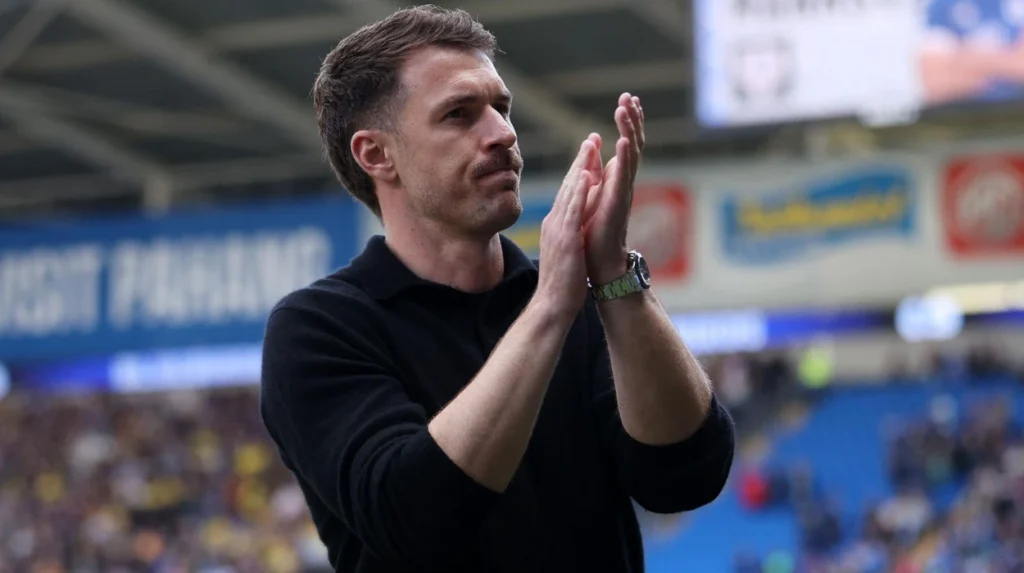
This shape generates offensive efficiency without requiring dominant possession, as demonstrated by their 31% possession win in March 2026. Oxford United focus on high-value shot creation, averaging 4 big chances per match against Blackburn’s backline.
Blackburn Rovers manager Michael O’Neill prefers a three-man defensive line that expands into a five-man block during defensive phases. The wing-backs provide the width, while the central midfielders dictate the tempo. This system allows Blackburn to control the territorial battle, frequently logging over 60% possession and out-passing opponents in the middle third.
The tactical vulnerability remains a low conversion rate of possession into big chances, alongside defensive susceptibility to rapid counter-attacks down the flanks.
What are the future implications of this fixture for Oxford Daily readers?
The future implications of this fixture for Oxford Daily readers center on permanent structural positioning within the English Football League tier system, seasonal recruitment capabilities, and the long-term economic stability of the participating clubs.
The EFL Championship represents one of the most financially consequential divisions in global sports. Relegation from this tier reduces club revenues significantly due to diminished broadcasting distributions and lower ticket sales. When Oxford United and Blackburn Rovers clash, the results carry direct consequences for survival in the division.
For Oxford United, maintaining structural competitiveness against historically larger clubs establishes the foundational stability needed to progress plans for new stadium infrastructure and academy development. For Blackburn Rovers, victories ensure the club retains its status as a viable contender for Premier League return strategies.
Future matches will continue to dictate managerial longevity, player retention parameters, and seasonal budgets, ensuring that this sub-regional narrative remains a critical focus for football analysts and supporters alike.
When did Blackburn Rovers first play Oxford United?
Blackburn Rovers and Oxford United have met in English professional football when both clubs competed in the same league division or domestic cup competitions. Their head-to-head history reflects the structure of the English football league system, where fixtures are determined by league placement and tournament draws.