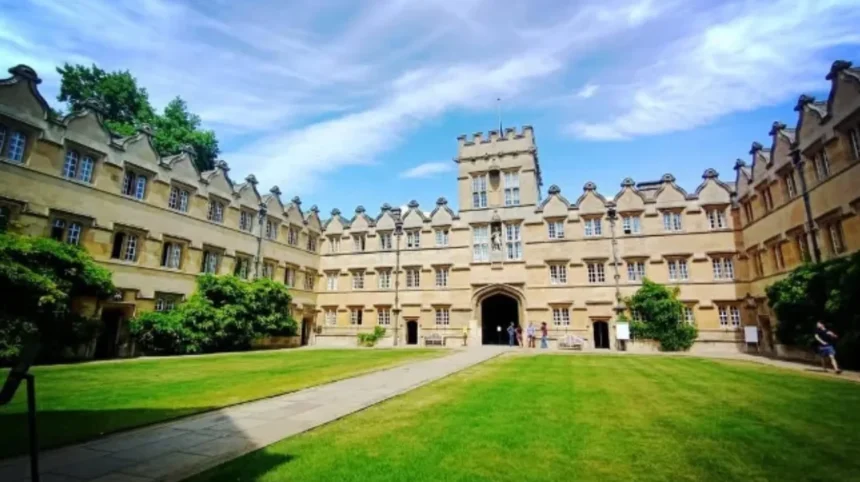
Oxford is a globally renowned city in Oxfordshire, England, celebrated for its prestigious university, medieval architecture, and rich cultural heritage. Visiting Oxford offers historic college quadrangles, world-class university museums, ancient libraries, and iconic architectural landmarks.
- What Are the Most Famous Colleges to Visit in Oxford?
- Christ Church College and Cathedral Highlights
- Magdalen College Quadrangle and Deer Park
- Merton College Medieval Architecture and Chapel
- Which Historical Libraries and Buildings Define the Oxford Skyline?
- The Bodleian Library and Divinity School
- The Radcliffe Camera Architectural Features
- The Sheldonian Theatre and University Ceremonies
- What World-Class Museums Should You Explore in Oxford?
- The Ashmolean Museum Collections and Exhibits
- Oxford University Museum of Natural History
- Pitt Rivers Museum Ethnographic Artifacts
- Where Can Visitors Experience Nature and Parks in Oxford?
- What Unique Local Experiences Define a Visit to Oxford?
The historic city center developed around Anglo-Saxon river crossings and evolved into an academic center during the twelfth century.
Visitors explore a compact urban layout where historic academic institutions, religious sites, and public spaces exist within short walking distances. Understanding the layout and significance of key sites enables efficient navigation across centuries of preserved British architecture.
What Are the Most Famous Colleges to Visit in Oxford?
Christ Church, Magdalen College, and Merton College represent the most famous academic sites in Oxford. These institutions showcase medieval quadrangle design, grand dining halls, historic chapels, and expansive botanical grounds that attract international travelers throughout every season.
The collegiate system of the University of Oxford comprises independent constituent colleges established between the thirteenth and twentieth centuries. Each college possesses distinct architectural features, gated entrances, and private quadrangle courtyards designed for academic residence.
Christ Church College and Cathedral Highlights
Christ Church was established in 1546 by King Henry VIII on the site of St Frideswide Priory. The college features Tom Quad, the largest quadrangle courtyard in Oxford, designed around a central water basin. The Great Hall served as the visual model for dining hall sets in modern film adaptations. Christ Church Cathedral functions simultaneously as a college chapel and the seat of the Anglican Diocese of Oxford. Architectural elements include twelfth-century Norman masonry and a late fifteenth-century stone vault ceiling over the choir.
Magdalen College Quadrangle and Deer Park
Magdalen College was founded in 1458 by William of Waynflete, Bishop of Winchester. The site spans 100 acres along the River Cherwell and includes a preserved deer park housing fallow deer. Magdalen Tower stands at 144 feet and marks the eastern entrance to the city center. Every year on May 1st, the college choir performs traditional hymns from the top of the tower at dawn. The Great Quadrangle retains fifteenth-century cloister arches featuring carved stone grotesques representing virtues and vices.
Merton College Medieval Architecture and Chapel
Merton College was established in 1264 by Walter de Merton and maintains some of the oldest surviving academic structures in Oxford. The Mob Quadrangle represents the earliest completed collegiate quadrangle layout, constructed between 1288 and 1378. Merton College Library, built in 1373, remains one of the oldest continuously operating academic libraries in Europe. The college chapel features original fourteenth-century stained glass windows and an elaborate Gothic choir designed before the Black Death outbreak.
Which Historical Libraries and Buildings Define the Oxford Skyline?
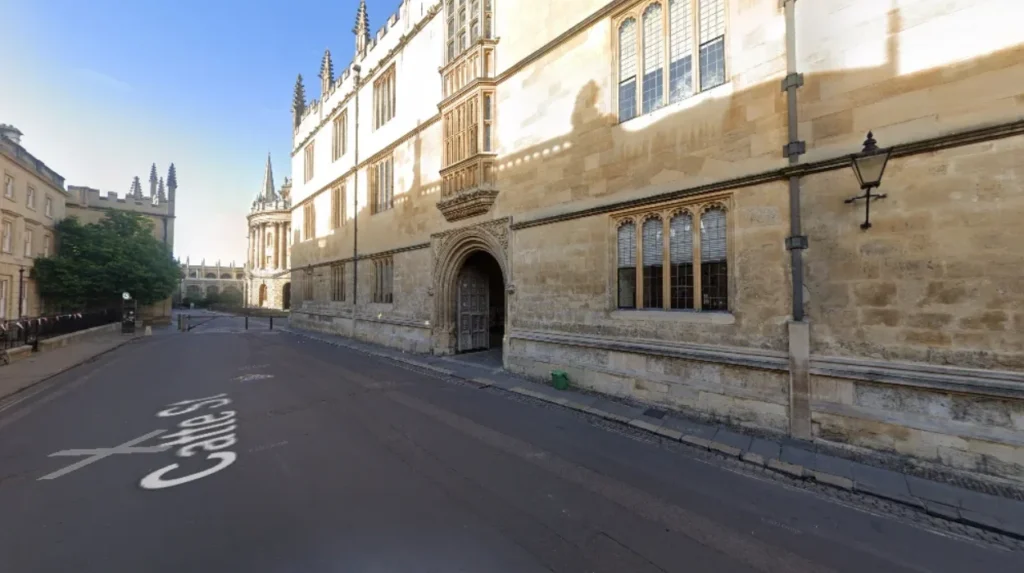
The Bodleian Library, Radcliffe Camera, and Sheldonian Theatre represent the architectural core of historic Oxford. These preserved structures form the central university precinct and showcase Gothic, Baroque, and Neoclassical design styles from the medieval era onward.
The city earned the designation as the City of Dreaming Spires due to its dense concentration of church towers, library domes, and college turrets. The central historic core spans Radcliffe Square and Broad Street, where major institutional ceremonies occur.
The Bodleian Library and Divinity School
The Bodleian Library opened in 1602 under the direction of Sir Thomas Bodley and functions as a major UK legal deposit library. The complex houses over 13 million printed items across multiple subterranean and aboveground holdings.
The Divinity School, constructed between 1427 and 1488, serves as the oldest purpose-built university room. The hall features a elaborate Perpendicular Gothic ceiling with 455 carved stone bosses representing aristocratic benefactor heraldry, academic symbols, and religious iconography.
The Radcliffe Camera Architectural Features
The Radcliffe Camera was designed by architect James Gibbs and constructed between 1737 and 1749 using funds bequeathed by Dr John Radcliffe. The landmark features a circular Neoclassical style built with local Heddington stone and rustic rustication around its lower tier.
The dome rises 140 feet above Radcliffe Square and houses reading rooms for the Bodleian Library system. Access to the interior working reading rooms remains restricted to university cardholders and authorized library tour participants.
The Sheldonian Theatre and University Ceremonies
The Sheldonian Theatre was designed by Sir Christopher Wren between 1664 and 1669 as his first major public architectural project. The building was funded by Gilbert Sheldon, Archbishop of Canterbury, to host university matriculation and graduation ceremonies. Wren modeled the structure after the ancient Roman Theatre of Marcellus, utilizing an innovative timber-trussed roof ceiling to avoid interior supporting pillars. The ceiling features a large allegorical painting by Robert Streater depicting the triumph of Religion and Learning over Envy.
What World-Class Museums Should You Explore in Oxford?
The Ashmolean Museum, Oxford University Museum of Natural History, and Pitt Rivers Museum offer world-class public collections. These institutions house millions of historical artifacts, natural history specimens, and ethnographic items accessible to researchers and tourists alike.
University collection management in Oxford began during the seventeenth century as academic donations expanded public knowledge. Museum admission across university-operated institutions remains free to the public throughout the calendar year.
The Ashmolean Museum Collections and Exhibits
The Ashmolean Museum opened in 1683 as the first public museum in Britain and the first university museum globally. The primary building on Beaumont Street was designed by Charles Cockerell in the Greek Revival style during the nineteenth century.
The collection includes ancient Egyptian mummies, Anglo-Saxon treasures such as the Alfred Jewel, and Renaissance artwork by Raphael and Michelangelo. Exhibition galleries span five floors organized by historical timelines and geographic trade routes.
Oxford University Museum of Natural History
The Oxford University Museum of Natural History opened in 1860 inside a Neo-Gothic building featuring iron roof pillars and glass skylights. The central court contains fossilized skeletal remains of dinosaurs, including the Oxfordshire-discovered Megalosaurus.
The museum preserves the only remaining soft tissue specimen of the extinct Dodo bird, recovered from a seventeenth-century collection. Educational displays showcase geological specimens, insect taxonomy collections, and evolutionary biology exhibits used for academic instruction.
Pitt Rivers Museum Ethnographic Artifacts
The Pitt Rivers Museum was founded in 1884 when General Augustus Pitt Rivers donated over 22,000 ethnographic objects to the university. The museum occupies a rear annex behind the Natural History Museum and maintains a dense Victorian exhibition style.
Displays feature over 500,000 artifacts categorized by functional type rather than geographic origin or age. Collections include musical instruments, defensive armor, ceremonial masks, and historical tools from indigenous cultures across six continents.
Where Can Visitors Experience Nature and Parks in Oxford?
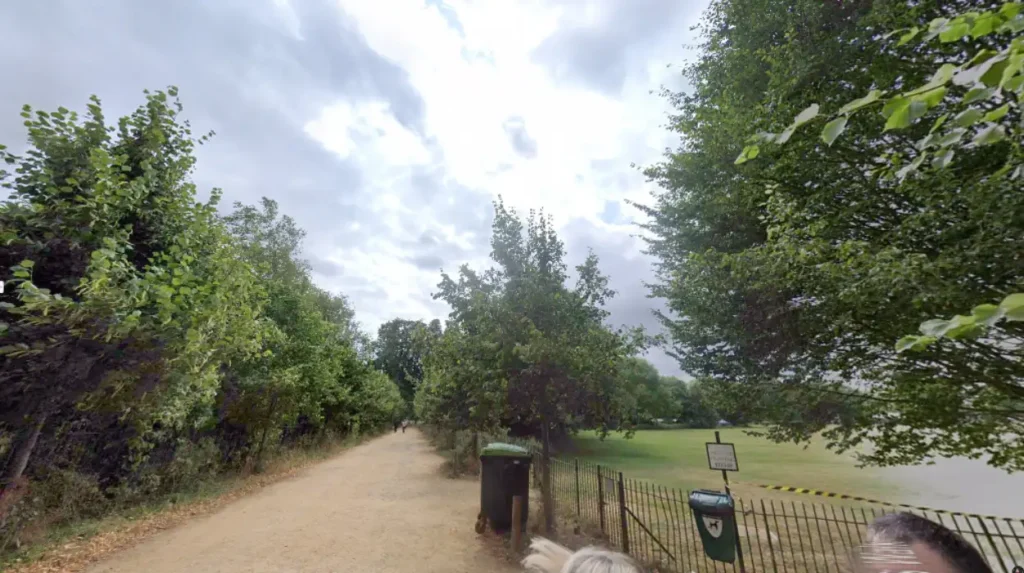
The University of Oxford Botanic Garden, Port Meadow, and Christ Church Meadow offer accessible public green spaces within city boundaries. These natural locations provide botanical conservation areas, wildlife habitats, and waterside walking paths along local river systems.
Oxford sits at the confluence of the River Thames and the River Cherwell, creating natural floodplain landscapes around the city center. These green spaces prevent urban expansion into historical waterways and maintain local biodiversity.
The University of Oxford Botanic Garden
The University of Oxford Botanic Garden was established in 1621 as a physic garden for growing medicinal plants. It stands as the oldest botanical garden in the United Kingdom, spanning nearly five acres along the River Cherwell.
The living collection includes over 5,000 distinct plant species cultivated across outdoor beds and glasshouses. The glasshouses house tropical collections, alpine flora, carnivorous plants, and arid desert succulents used for modern botanical research.
Port Meadow and Historic Commons
Port Meadow comprises 300 acres of ancient common land located northwest of the historic city center along the River Thames. The meadow has remained unplowed pasture land since the Anglo-Saxon period, verified by records in the Domesday Book of 1086.
Freemen of the city retain grazing rights for cattle and horses across the damp grassland year-round. The open landscape provides habitats for migratory wildfowl, wintering birds, and protected wetland vegetation species.
What Unique Local Experiences Define a Visit to Oxford?
Punting along the River Cherwell, exploring covered markets, and taking historical walking tours represent essential activities when visiting Oxford. These experiences allow visitors to participate in traditional university pastimes while exploring local commercial culture.
Cultural activities in Oxford integrate academic traditions with regional hospitality built over centuries of student residence. Outdoor activities operate seasonally, while historic markets and walking tours run continuously throughout the year.
Traditional River Punting on the Cherwell
Punting involves propelling a flat-bottomed wooden boat along shallow river waters using a long metal-tipped punt pole. Boats launch from the Magdalen Bridge Boat House or Cherwell Boathouse and navigate past college gardens. The River Cherwell offers calm water conditions suitable for self-navigated or chauffeured river excursions. Punting became a popular student pastime during the mid-nineteenth century and remains an iconic Oxford summer activity.
The Historic Covered Market and Local Shops
The Oxford Covered Market opened in 1774 to consolidate open-air market stalls into a single regulated indoor structure. Located between High Street and Market Street, the market features timber-framed avenues hosting independent local vendors.
Traders supply fresh local produce, artisanal cheeses, butchery products, flowers, and handmade baked goods. The facility preserves historic shopfront architecture while operating daily as a central commercial marketplace for residents and tourists.
What is the best time of year to visit Oxford?
Spring between April and May and early autumn during September offer pleasant weather and fewer tourist crowds. Summer brings peak visitor numbers, while winter allows for quiet exploration of interior library and museum exhibits.
How do visitors travel from London to Oxford efficiently?
Direct passenger trains run regularly from London Paddington and London Marylebone stations, taking approximately 60 minutes. Direct express bus services also operate 24 hours a day between central London and the Oxford Gloucester Green bus terminal.
Are University of Oxford colleges open to the general public?
Most historic colleges allow public entry during designated visiting hours for a small ticket fee. Operating times vary throughout the academic term based on student examinations, private university events, and seasonal schedules.
Can tourists visit the inside of the Radcliffe Camera?
General public entry into the working reading rooms of the Radcliffe Camera remains restricted to registered library cardholders. Tourists can view the exterior from Radcliffe Square or book specialized Bodleian Library guided tours that access select spaces.
How much time is needed to see the main sights in Oxford?
A single full day covers major central landmarks, including one college, the Bodleian Library exterior, Radcliffe Square, and a museum. Spending two full days allows for museum tours, river punting, and exploring secondary historic sites comfortably.