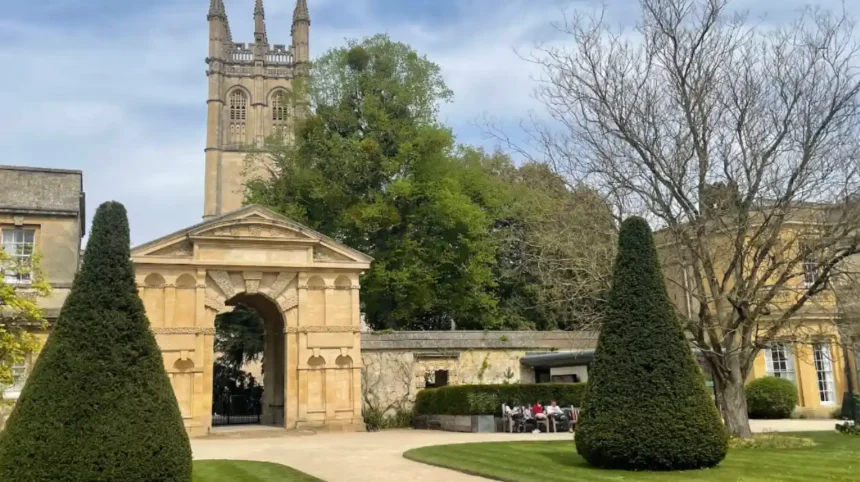
The city of Oxford represents a foundational municipal and academic hub established during the late Saxon period within the county of Oxfordshire. The physical settlement developed initially as a strategic river crossing where oxen crossed the shallow waters of the River Thames. The geographic location facilitated regional commercial trade networks across southern England. The foundational architecture dates to the ninth century when King Alfred the Great incorporated the town into a network of fortified defensive burhs to withstand regional military incursions.
- What are the premier academic institutions and library structures within the urban core?
- Which world-class museum facilities host significant historical collections?
- How do visitors navigate the unique municipal transport regulations and infrastructure?
- What modern cultural venues and retail zones define the contemporary city?
- What regional industrial hubs and economic developments support the local community?
- What are the current public interest and community safety developments in the area?
- Frequently Asked Questions
- What is the current official population statistic for the city of Oxford?
- How does the Oxford congestion charge system operate for visiting motorists?
- Why is Little Clarendon Street considered an important cultural destination?
- What does the historic term Oxford Blue signify within the university?
- What features are included in the recent Didcot Wave leisure centre transformation?
The academic narrative commenced during the twelfth century when academic lecture facilities consolidated into the formal entity known as the University of Oxford. The municipal footprint expanded systematically around medieval ecclesiastical properties and defensive perimeter walls. The contemporary urban layout retains this historic spatial core while integrating global research centers, heavy industrial sectors, and modern municipal transit infrastructure.
What are the premier academic institutions and library structures within the urban core?
The primary architectural and scholarly landmarks are concentrated within the central university infrastructure that dominates the local geography. The Bodleian Library remains one of the oldest public research libraries in Europe, housing more than thirteen million printed items under legal deposit privileges. The complex incorporates structural masterworks including the fifteenth century Divinity School and the distinct mid-eighteenth century neoclassical rotunda known as the Radcliffe Camera. The University of Oxford comprises forty-five independent historic colleges that feature distinct architectural styles from Romanesque to English Baroque.
Christ Church College stands as the largest collegiate entity, featuring the monumental Tom Quad designed by Christopher Wren and an expansive cathedral choir. Magdalen College displays late Gothic architecture alongside a designated deer park meadow. The Sheldonian Theatre serves as the official ceremonial graduation venue, designed by Christopher Wren using structural concepts derived from classical Roman theaters.
Which world-class museum facilities host significant historical collections?
The municipality features an extensive network of specialized institutional archives that display globally significant historical, artistic, and scientific artifacts. The Ashmolean Museum of Art and Archaeology stands as the oldest public museum in the United Kingdom, preserving over one million individual specimens. The repository contains specialized archaeological exhibits from ancient Egyptian, Greek, and Roman civilizations alongside Renaissance drawings by Michelangelo and Raphael. The Oxford University Museum of Natural History exhibits extensive zoological and geological specimens within a notable neo-Gothic skeletal iron framework.
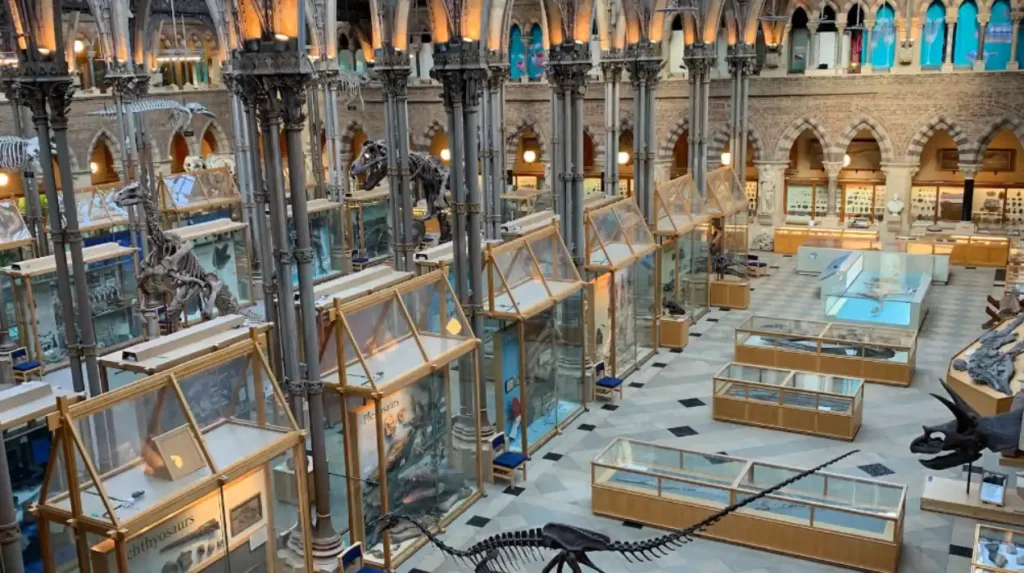
The structural interior houses complete dinosaur skeletons, mineralogical samples, and taxonomic remains of extinct species. The Pitt Rivers Museum attaches directly to the natural history complex, housing half a million anthropological artifacts arranged by typological function rather than geographic origin. The galleries showcase historical cultural technologies including regional ceremonial masks, maritime watercraft, and complex textiles.
How do visitors navigate the unique municipal transport regulations and infrastructure?
The local government utilizes strict spatial management policies to regulate automotive traffic and minimize environmental emissions across central roads. The Oxfordshire County Council enforces a targeted Zero Emission Zone across specific central corridors to penalize internal combustion machinery. The municipal system utilizes a network of five strategic Park and Ride facilities positioned along the perimeter ring road. The transit nodes allow commuters to park personal vehicles outside the center and complete travel via high-frequency electric bus shuttles. The regional rail network operates through the main Oxford Train Station, supplying direct linkages to London Paddington and Birmingham New Street. The regional transport architecture is expanding via the upcoming East West Rail project, which establishes direct track links between Oxford and Milton Keynes. The interior commercial zones remain highly pedestrianized, prompting the extensive use of bicycle infrastructure and traditional punting watercraft along the local River Cherwell.
What modern cultural venues and retail zones define the contemporary city?
The contemporary urban fabric balances traditional academic preservation with dynamic retail spaces, food enterprises, and distinct neighborhood subcultures. The historic Covered Market has operated continuously since 1774, hosting over fifty independent artisan food stalls, traditional butchers, and local craft boutiques. The Westgate Oxford development provides a contrasting modern commercial environment, housing multinational retail brands, rooftop dining spaces, and lifestyle leisure facilities. The northern district features Little Clarendon Street, which functions as a prominent cultural destination known for bohemian fashion boutiques, indie bookshops, and artisanal espresso cafes. The culinary ecosystem includes modern additions such as the Dishoom Permit Room on Queen Street, introducing specialized regional food styles. The broader county region connects visitors to specialized luxury retail properties at Bicester Village via direct highway links or dedicated regional rail connections.
What regional industrial hubs and economic developments support the local community?

The municipal economy extends far beyond tourism and educational services into advanced industrial engineering, digital technology, and scientific research. The Oxford Business Park serves as a major commercial hub housing global biotechnology corporations, research agencies, and corporate financial headquarters. The manufacturing legacy continues through automotive assembly plants alongside specialized instrumentation enterprises like Oxford Instruments, which develops high-technology equipment for global industries.
The local labor market is supported by progressive employment policies, as seen with companies like Morrisons setting competitive hourly pay rates for customer assistants. The regional development framework includes institutional updates like the comprehensive Oxford University biomedical sciences upgrade to enhance pharmaceutical research capabilities. The city council systematically approves major structural redevelopments, such as the approved Mansfield College master plan, to modernize residential and academic capacity.
What are the current public interest and community safety developments in the area?
The regional administrative structure regularly handles complex infrastructural choices, environmental planning debates, and public safety enforcement procedures. The local authority manages civic infrastructure changes, such as the contentious quiet lanes plan proposed by the Oxfordshire Council to reduce neighborhood traffic. The public protection framework involves active monitoring by the Thames Valley Police, who manage regular enforcement actions, including recent evictions of unauthorized travelers from Oatlands Road.
The criminal justice system processes cases through regional courts, including prosecution for localized speeding violations on the major A41 roadway corridor. The civic community celebrates notable milestones, including local chief Dr. Reeves winning an OBE in the official King’s Honours list for administrative excellence. The local cultural scene remains lively, with unexpected events such as musician Mick Jagger performing at an unannounced folk night inside a traditional regional pub.
Frequently Asked Questions
What is the current official population statistic for the city of Oxford?
The total population of the municipality stands at approximately 162,100 residents according to current UK official statistics. This demographic footprint includes a diverse international student population that fluctuates during active academic terms. The surrounding Oxfordshire county area supports a broader regional population exceeding 690,000 individuals.
How does the Oxford congestion charge system operate for visiting motorists?
The Oxfordshire County Council implements a temporary congestion charge and traffic filter system across key central corridors to mitigate gridlock. Motorists driving private vehicles through restricted points during peak operational hours face automated fines unless they hold an approved permit. Visitors are encouraged to utilize the designated Park and Ride bus network to avoid these vehicle fees entirely.
Why is Little Clarendon Street considered an important cultural destination?
Little Clarendon Street serves as a vital cultural corridor that connects the central university core with the residential neighborhood of Jericho. The street is historically recognized for its independent retail ecosystem, featuring artisan coffee shops, localized fashion houses, and alternative dining venues. The district provides a distinct contrast to the mainstream commercial spaces found in the modern Westgate shopping center.
What does the historic term Oxford Blue signify within the university?
The term Oxford Blue denotes the official dark navy color code traditionally utilized by the academic institution for branding, publications, and athletic uniforms. The hex code for this specific historical tone is precisely #002147. The color designation also signifies the highest athletic honor awarded to students who represent the university in varsity sports competitions.
What features are included in the recent Didcot Wave leisure centre transformation?
The regional leisure infrastructure received a significant upgrade through a 250,000 pound development project focused on the public facilities. The transformation completely modernized the changing village rooms, improved inclusive accessibility options, and updated the internal climate management machinery. The site serves as a vital community fitness and swimming hub within the wider Oxfordshire district.