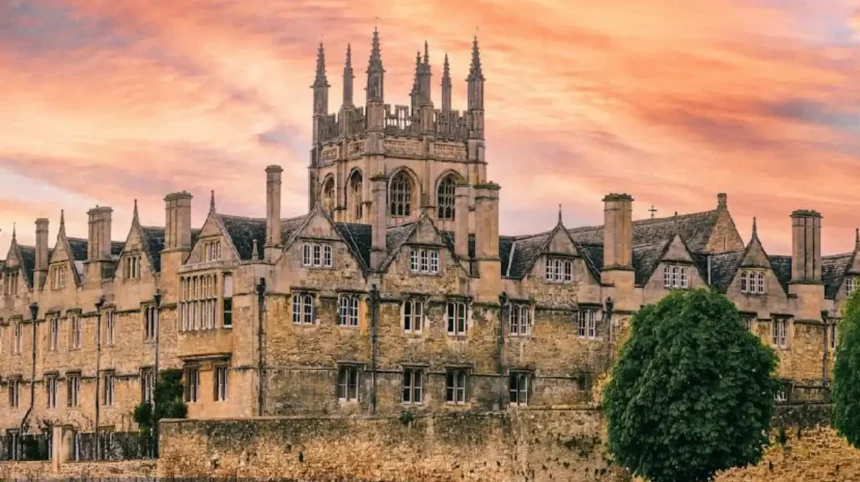
The total resident population of the city of Oxford stands at 167837 residents according to the latest demographic data updates compiled for the year 2026. This statistical figure represents a documented annual increase of 904 individuals which translates to a precise yearly growth rate of 0.54 percent over the previous calendar period. The Office for National Statistics records show that the broader county of Oxfordshire contains a total population of 763200 residents across its five primary administrative districts. Local governance structures divide these county figures among Cherwell district at 170400 residents, South Oxfordshire at 156500 residents, Vale of White Horse at 149300 residents, and West Oxfordshire at 120900 residents. This specific geographic distribution confirms that Oxford city functions as the second largest local authority district by overall volume within the immediate county boundaries.
- How Do Student Populations Distort the Permanent Resident Metrics?
- What Are the Historical Growth Trends of the Oxford District?
- How Is the Ethnic and Religious Composition Distributed across the City?
- What Spatial Patterns Characterize the Population Density of Oxford?
- How Do Economic Infrastructures and Business Hubs Influence Urban Migration?
- What Are the Future Population Projections and Infrastructure Plans for Oxford?
- FAQs About Oxford Population
- What is the current population of Oxford in 2026?
- Why does Oxford have such a low median age compared to the rest of the UK?
- How much does the student population change Oxford’s size out of term?
- What is the largest ethnic minority group within the Oxford population?
- Is the population of Oxford projected to grow or decrease in the future?
The Office for National Statistics mid year population estimates indicate a steady upward trajectory from the baseline established during the official Census 2021. The decennial census recorded the city population at 162000 usual residents which marked an absolute increase of approximately 10100 citizens from the 2011 baseline data. This historical change represents a 6.7 percent population expansion over the ten year timeframe which mirrors the broader national growth rate of England at 6.6 percent. The gender distribution metrics across the city maintain an equal balance with females comprising 50.2 percent of the total population and males accounting for the remaining 49.8 percent. Administrative registries verify that domestic migration and international arrivals constitute the twin primary drivers of this sustained growth within the municipal boundaries.
Age structure analysis reveals that Oxford possesses one of the youngest demographic profiles across the entire United Kingdom. The median age of the city population stands at 31 years which contrasts with the significantly higher national median age of 40 years. Demographic registers show that the population cohort aged between 18 and 24 years accounts for over 24 percent of the total urban residency. Conversely the population segment aged 4 years and under experienced a measurable decrease of 22.9 percent between the consecutive census periods. The local authority attributes this specific contraction to shifting family housing patterns and rising residential living costs within the urban core.
How Do Student Populations Distort the Permanent Resident Metrics?
The student population in the city of Oxford exerts a massive distortionary effect on standard municipal demographic calculations. The Census 2021 data confirms that 26.5 percent of the total adult population consists of full time students which represents 36217 individual learners. This concentration stands as the highest overall proportion of adult students recorded across any local authority district in England and Wales. The Higher Education Statistics Agency reports that 34945 students enroll annually for full time academic studies across the two primary local universities. These institutions comprise the University of Oxford which hosts undergraduate and postgraduate researchers and Oxford Brookes University which operates multiple regional campuses.
The massive influx of academic enrollees creates severe seasonal population fluctuations that directly impact local infrastructure management. Universal residency metrics drop by exactly 10 percent during the official out of term periods when students return to permanent domestic addresses. Demographic tracking logs show that the population reduction concentrates heavily within the young adult cohort aged between 18 and 22 years. The structural decline is most visible among female residents aged 19 years where the out of term volume drops by 67.7 percent. Male residency within the same age bracket experiences a corresponding decrease of 62.3 percent during the summer academic recess.
Housing allocations for this student demographic require specialized communal establishments to alleviate pressure on the private rental sector. Specialized registers show that 18702 full time adult students reside within university owned halls of residence and dedicated college buildings. An additional 10613 students occupy all student households which are classified as multi occupant rental properties across the urban wards. The University of Oxford accommodates 14873 full time students within its historical estate while Oxford Brookes University houses 7794 enrollees. The remaining student population utilizes external private accommodations which directly influences the broader residential property availability and rental pricing structures.
What Are the Historical Growth Trends of the Oxford District?

Barbara Bowen
The historical trajectory of the Oxford population reflects its transition from an early medieval trading post to a modern industrial and educational center. Founded originally in the eighth century the settlement received formal city status in the year 1542 under royal administrative decree. Early demographic records indicate that the urban population remained below 20000 residents until the arrival of nineteenth century rail infrastructure networks. The introduction of heavy manufacturing sectors during the early twentieth century transformed the economic baseline and triggered rapid population expansion. The establishment of the Morris Motors automotive plant in uk/local/cowley/">Cowley during the year 1913 served as the primary catalyst for industrial migration.
Mid twentieth century census records document a major population surge as industrial production and university expansion occurred simultaneously. The total population reached 145383 residents by the year 2005 through consistent urbanization and workplace diversification. This historical baseline expanded steadily through the implementation of regional economic initiatives and targeted employment creation strategies. The local planning frameworks facilitated the conversion of traditional agricultural zones into modern residential suburbs to house incoming industrial personnel. These suburban developments established the outer rings of the city including Headington, Marston, and the comprehensive Cowley development zones.
Modern growth patterns show a distinct shift away from manufacturing employment toward knowledge economy positions and global research sectors. The transformation of the urban economy stabilized the population growth rate at a sustainable long term average of 0.54 percent annually. This growth relies heavily on international migration patterns with over 35 percent of full time students originating from overseas nations. The integration of global researchers ensures that the historical city maintains a dynamic population turnaround that prevents demographic stagnation. The municipality continues to manage this expansion within a tightly restricted spatial footprint bounded by the regional green belt.
How Is the Ethnic and Religious Composition Distributed across the City?
The modern population of Oxford exhibits an exceptional level of ethnic and cultural diversity that exceeds regional averages. The official Census 2021 datasets state that 70.7 percent of the urban population identifies within the broad White ethnic category. The Asian or Asian British demographic group forms the second largest statistical cohort which comprises 15.4 percent of total residents. Residents identifying as Mixed or Multiple ethnic groups constitute 5.6 percent of the local population while Black tracking metrics reach 4.7 percent. The final 3.7 percent of the urban population falls into alternative ethnic classifications including Middle Eastern and North African categories.
International birth origins provide a clear explanation for the multi ethnic character defining the urban center. The Office for National Statistics notes that 62.3 percent of current city residents were born within the borders of England. This specific figure represents a clear decline from the year 2011 when English born residents comprised 68.1 percent of the populace. India represents the most significant non UK country of origin with 2.2 percent of the total population migrating from this nation. Non European Union countries account for 1.9 percent of the local population while arrivals from the United States match this exact 1.9 percent threshold.
Religious identity distribution across the municipal area has undergone major structural shifts over the past two decades. The proportion of citizens identifying as Christian dropped from 48.0 percent in 2011 to 38.1 percent during the latest census. Individuals claiming no religious affiliation now form the largest single group which accounts for 39.0 percent of the population. The Islamic faith represents the second largest active religious community with 8.7 percent of residents identifying as Muslim. Hinduism accounts for 1.6 percent of the local population while Buddhism and Judaism each record a steady 0.7 percent distribution.
What Spatial Patterns Characterize the Population Density of Oxford?
The physical geography of Oxford establishes rigid structural boundaries that concentrate the human population within a compact urban space. The total land area of the municipal district measures exactly 46 square kilometers which ranks as the 248th largest local authority territory. The current population density stands at 3641 residents per square kilometer which equates to 9430 people per square mile. This concentration places significant pressure on urban infrastructure systems and requires intensive vertical and infill land use policies. The high density metrics are driven by the confluence of the River Thames and River Cherwell which restricts peripheral development.
Internal population distribution varies widely across the distinct electoral wards and suburban neighborhoods that comprise the municipal zone. The central urban wards house dense student clusters while peripheral suburbs accommodate permanent family groups and working age professionals. The Office for National Statistics micro data shows that residential density increases sharply within eastern sectors such as Cowley and East Oxford. These districts feature high concentrations of terraced housing structures and multi occupant rental units that support local workers. Conversely the northern suburbs of Summertown and Wolvercote exhibit lower relative densities characterized by detached properties and larger domestic plots.
The presence of the surrounding statutory green belt creates a structural ceiling that prevents outward urban sprawl into Oxfordshire. This environmental protection zone encompasses the immediate periphery of the city boundaries to preserve the historical landscape profile. As a direct result the municipal authority must prioritize brownfield redevelopment sites inside the existing urban footprint to handle population growth. This spatial restriction intensifies local land values and drives up average housing costs across all residential sectors. The interaction between rigid environmental boundaries and population growth shapes the ongoing density profile of the urban environment.
How Do Economic Infrastructures and Business Hubs Influence Urban Migration?
The robust economic architecture of Oxford serves as the primary engine driving sustained demographic migration into the city region. The local labor market centers on higher education, professional scientific research, publishing houses, and advanced high technology sectors. These employment opportunities attract highly qualified specialists from international locations and domestic economic zones across the United Kingdom. The presence of multinational enterprise networks creates a continuous demand for technical personnel which stabilizes the working age population. This economic pull counteracts the natural out migration of older demographic cohorts who relocate away from the urban center.
Dedicated employment zones operate as primary focal points for professional daily commuting and residential sorting patterns within the city. The operational expansion of major commercial areas structures the local employment matrix and influences where arriving populations choose to live. These developments include the comprehensive research facilities situated at the eastern edge of the city boundary. The growth of these commercial hubs creates direct demands for nearby worker housing and expands public transport requirements. The proximity of employment centers to residential sectors dictates the localized population shifts observed between standard census monitoring periods.
The preservation of local commercial infrastructure requires constant investment to support the expanding consumer population base. Retail sectors and commercial spaces face shifting structural demands as the local population balance moves toward younger demographics. The management of these commercial zones involves balancing the requirements of international visitors, student shoppers, and permanent municipal residents. Local planning committees must align retail zoning approvals with broader population growth trends to maintain economic viability. This synchronization ensures that urban commercial centers retain sufficient capacity to handle daily footfall volumes safely and efficiently.
What Are the Future Population Projections and Infrastructure Plans for Oxford?
The local authority utilizes long term population projections to design future infrastructure networks capable of supporting urban expansion. Official subnational population models project that the city population will exceed 175000 residents over the next decade. This prospective growth necessitates systemic upgrades to regional transportation systems, water utility networks, and municipal waste management facilities. The local government prioritizes environmental sustainability goals alongside population growth management to mitigate urban carbon emissions. These initiatives aim to balance demographic demands with strict ecological protection frameworks across the built environment.
Transportation infrastructure represents a critical sector requiring comprehensive expansion to facilitate population movement across regional corridors. The development of new transport infrastructure aims to connect expanding population centers with external economic zones and employment hubs. These strategic initiatives include major rail line revamps designed to link the city directly with neighboring growth sectors. The introduction of these direct rail links will alter commuting patterns and distribute residential population pressures across a wider geography. This structural connectivity supports regional economic growth while reducing vehicular congestion on the existing municipal road network.
Housing delivery frameworks remain the most critical component of the future structural planning strategy for the city council. The acute shortage of available residential properties requires close cooperation between adjacent local authorities to accommodate overflowing housing demands. Planning agreements facilitate the construction of urban extensions outside the immediate city boundaries to support the growing population. These developments ensure that working families can access affordable housing options within reasonable commuting distance of the city center. The successful execution of these housing strategies will determine the long term demographic and economic stability of the region.
FAQs About Oxford Population
What is the current population of Oxford in 2026?
The estimated population of Oxford stands at 167837 residents for the year 2026. This figure reflects a steady annual growth rate of 0.54 percent driven by international migration and student enrollees. The official data shows an increase from the 162000 usual residents recorded during the previous Census 2021.
Why does Oxford have such a low median age compared to the rest of the UK?
The median age in Oxford is 31 years which is significantly lower than the national average of 40 years. This demographic profile is directly caused by the massive concentration of higher education students living in the city. Full time adult students make up over 26 percent of the total local population.
How much does the student population change Oxford’s size out of term?
The total resident population of Oxford decreases by approximately 10 percent during university vacation periods. This structural shift is concentrated among young adults aged between 18 and 22 years who return to home addresses. Some specific female age cohorts drop by up to 67.7 percent when academic terms conclude.
What is the largest ethnic minority group within the Oxford population?
The Asian or Asian British demographic group forms the largest ethnic minority cohort inside the city of Oxford. According to official census metrics this specific population group accounts for 15.4 percent of the total resident base. The broader demographic profile shows that 70.7 percent of the urban population identifies as White.
Is the population of Oxford projected to grow or decrease in the future?
Subnational population projections indicate that the population of Oxford will expand steadily to exceed 175000 residents over the next decade. This growth is supported by expanding knowledge economy sectors and regional transport infrastructure improvements. Local councils are actively building urban housing extensions to handle this projected demographic influx.