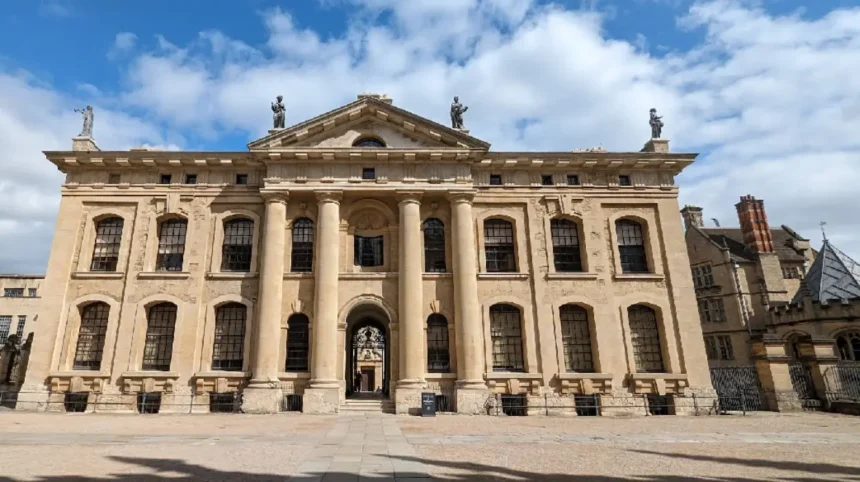
The Clarendon Building is a premier example of 18th-century neoclassical architecture in Oxford, England, designed by Nicholas Hawksmoor. Built between 1711 and 1715, it served as the original home for the Oxford University Press and remains a landmark university edifice.
- Why was the Clarendon Building constructed?
- Who was the architect of the Clarendon Building?
- What are the key architectural components of the structure?
- How has the use of the Clarendon Building evolved?
- What is the cultural impact of the Clarendon Building today?
- FAQs About Clarendon Building
- Can the public visit the interior of the Clarendon Building?
- Is the Clarendon Building still connected to the Oxford University Press?
- What is the significance of the “Learned Side” and “Bible Side”?
- Why is the building considered a Grade I listed site?
- How does the Clarendon Building relate to the Bodleian Library?
Why was the Clarendon Building constructed?
The Clarendon Building was commissioned to provide a dedicated, purpose-built facility for the Oxford University Press printing operations. Before its completion, the university printing presses were located in the basement of the Sheldonian Theatre, which disrupted university ceremonies.
This move allowed the university to separate its academic printing activities from the space used for public events. The decision to construct a new building reflected the growing professionalization of the university’s scholarly publishing efforts. Funding was secured through the commercial success of the literary work titled The History of the Great Rebellion and Civil Wars in England. This publication was written by Edward Hyde, 1st Earl of Clarendon, whose son donated the copyright proceeds to the institution. The building subsequently functioned as a hub for academic and theological printing until the press relocated in 1830.
Who was the architect of the Clarendon Building?
Nicholas Hawksmoor, a renowned architect and protégé of Sir Christopher Wren, designed the Clarendon Building in the neoclassical style. His vision was to create a formal, monumental gateway that signaled the entrance to the University of Oxford’s intellectual center.
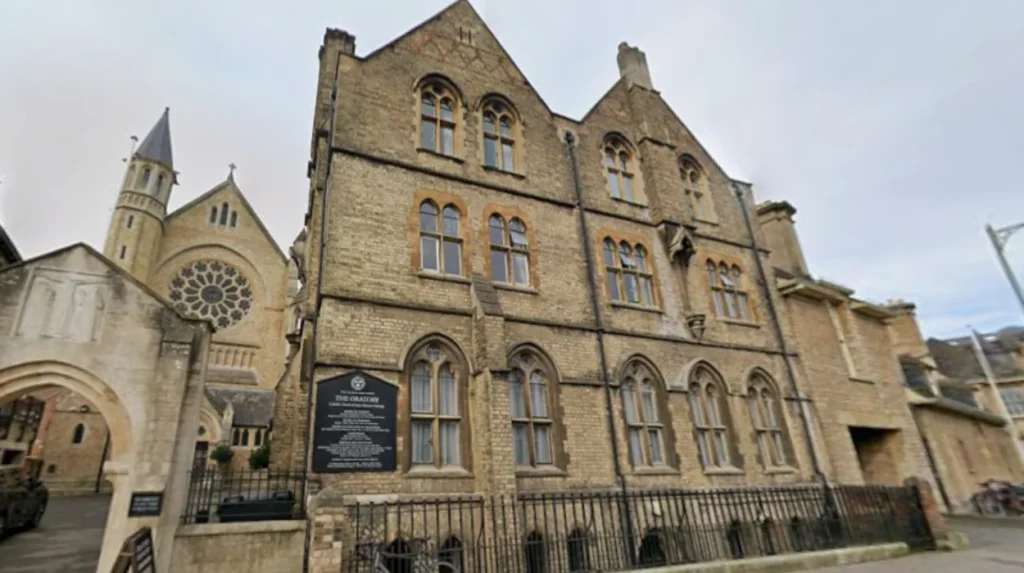
Hawksmoor utilized a rectangular design characterized by heavy masonry and a prominent portico. This structure is distinguished by its symmetrical layout, which divided the internal space into two distinct functional areas known as the Learned Side and the Bible Side. The Learned Side was designated for the production of academic texts, while the Bible Side was dedicated to religious printing. This organizational precision was integral to the building’s efficiency as a major 19th-century printing operation. The architect’s influence is further evident in the rigorous use of Tuscan columns and pediments.
What are the key architectural components of the structure?
The Clarendon Building features a neoclassical exterior with a notable Doric-order portico, attic-level windows integrated into the frieze, and a central arched passageway. These features combine to create a sense of neoclassical solidity typical of early 18th-century English architecture.
The facade presents a stately appearance, emphasizing the building’s status as a gateway to learning. The exterior includes statues of the Muses placed upon the roof, which align with the university’s emphasis on scholarly patronage and classicism. The structure is built primarily from limestone, consistent with the traditional building materials found throughout central Oxford. Internally, the building retains some of its original wood paneling in the historic Delegates’ Room, which was once used for printing press administration. The building’s design intentionally mirrors the monumental scale of the nearby Sheldonian Theatre and the Bodleian Library complex.
How has the use of the Clarendon Building evolved?
Following the relocation of the printing press to Walton Street in 1830, the Clarendon Building was repurposed for university administration and registry functions. Today, it serves as the admissions department and office space for the staff of the Bodleian Library.
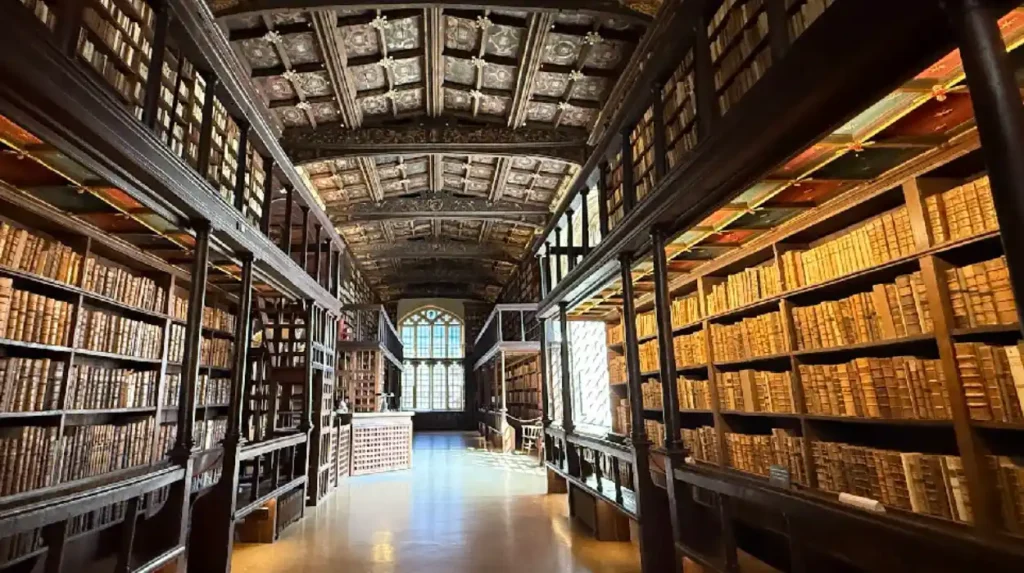
This transition from industrial printing space to academic administration reflects the shifting needs of the University of Oxford. In 1829, the building briefly accommodated police facilities, including cells within the basement level for temporary detention. Throughout the 20th century, the building underwent various interior modifications to support its new administrative role while maintaining its Grade I listed historical exterior. The current use ensures the preservation of the building as a functional part of the university’s day-to-day operations. It remains a key landmark for students navigating the admissions and registration processes at the university.
What is the cultural impact of the Clarendon Building today?
The Clarendon Building serves as a physical symbol of the University of Oxford’s historic commitment to scholarly publishing and academic tradition. It is a focal point for visitors on Broad Street and a vital component of the city’s architectural heritage.
The building is frequently referenced in architectural guides as a masterpiece of Hawksmoor’s work in the city. Beyond its physical form, the structure is linked to the Clarendon Fund, a prestigious graduate scholarship program at the university, which uses the building’s imagery in its branding. It has occasionally served as a site for student protests, notably in 2009, highlighting its role as a visible center for university governance. By housing the admissions office, the building acts as a literal and figurative gateway for new students entering the university community. Its presence continues to influence the aesthetic and historical narrative of central Oxford.
FAQs About Clarendon Building
Can the public visit the interior of the Clarendon Building?
The Clarendon Building is primarily used for university offices and administration rather than public exhibitions. While the exterior and the surrounding Broad Street area are accessible to the public, internal access is generally restricted to university staff and authorized visitors.
Is the Clarendon Building still connected to the Oxford University Press?
No, the building ceased all printing operations in 1830 when the press moved to new facilities on Walton Street. The Oxford University Press continues to operate globally, but it no longer maintains active offices or production equipment within the historic Clarendon site.
What is the significance of the “Learned Side” and “Bible Side”?
These terms refer to the original 18th-century internal division of the building to streamline printing. The “Learned Side” focused on academic and scholarly publications, while the “Bible Side” was dedicated exclusively to the production of religious texts and liturgical materials for the church.
Why is the building considered a Grade I listed site?
A Grade I listing indicates that a building is of exceptional historical and architectural interest. The Clarendon Building is protected because of its intact neoclassical design by Nicholas Hawksmoor and its foundational role in the history of English academic printing.
How does the Clarendon Building relate to the Bodleian Library?
The Clarendon Building is managed as part of the wider Bodleian Library group. It provides essential office space for the library’s senior staff and administrative departments, effectively integrating the historical site into the modern library’s operational infrastructure.