Sunset punting experiences are guided or self-navigated river excursions using a flat-bottomed boat propelled by a long pole. These activities occur during the transition from daylight to dusk, offering unique visual perspectives of architectural landmarks and natural ecosystems in river-centric cities.
- How Do the Mechanics of Punting Operate During an Evening Excursion?
- Why Do Geographical Locations Influence the Quality of Sunset Punting?
- What Are the Economic Impacts of the Sunset Punting Industry on Local Tourism?
- How Does the Environment Affect the Visual Experience of Sunset Punting?
- What Are the Safety Regulations and Environmental Protections for Punting?
- How Does Architecture Enhance the Significance of Sunset Punting Experiences?
- What Role Do Sunset Punting Experiences Play in Modern Social and Cultural Life?
- How Will Technology and Sustainability Shape the Future of Punting?
The practice of punting dates back to the Medieval period when flat-bottomed boats were used as utility vessels for transporting cargo in shallow waters. Originally, these boats served practical purposes such as fishing and moving agricultural goods across the Fens in East England. In the late 19th century, punting transitioned from a commercial necessity to a popular recreational pastime among the academic elite.
The design of a punt includes a square bow and a flat hull, which provides stability in shallow riverbeds. Sunset tours became a specialized segment of this industry as urban tourism expanded in the 20th century. Modern punting is most prominently associated with the River Cam in Cambridge and the River Cherwell or Thames in Oxford. These locations provide the primary geographical context for the global punting industry today.
How Do the Mechanics of Punting Operate During an Evening Excursion?
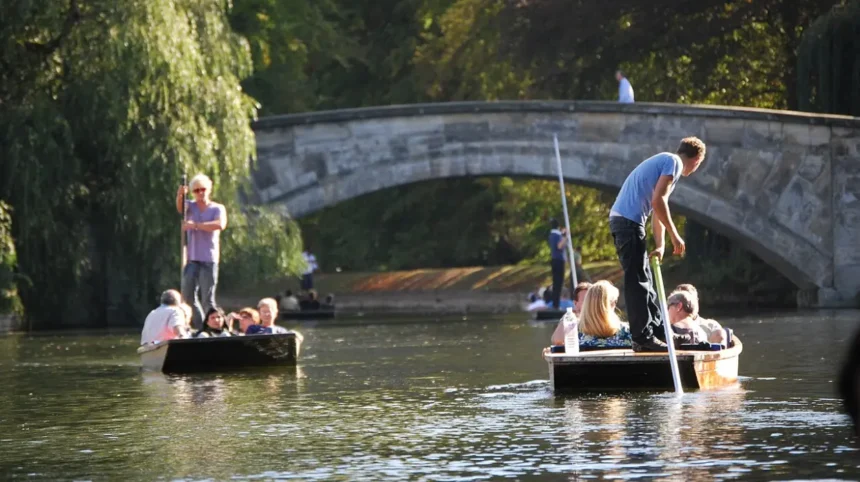
Punting relies on the physical principle of propulsion through a long pole made of wood or aluminum. The punter stands on the till or the deck and pushes the pole against the riverbed to move the vessel forward in water.
The standard length of a punting pole is approximately 5 meters. The punter must navigate the pole vertically to maintain a straight line while managing the drift caused by river currents. During sunset, navigation requires increased spatial awareness due to changing light levels and shadows. The flat-bottomed design of the boat allows it to operate in water as shallow as 30 centimeters. This shallow draft is essential for navigating the silt-heavy beds of historic rivers.
Steering is achieved by using the pole as a rudder at the end of a stroke. Professional chauffeurs often manage these vessels for tourists to ensure safety and provide historical commentary. The weight distribution in the boat must remain balanced to prevent tipping or grounding. 3 components of a punt include the pole, the till, and the cushions.
Why Do Geographical Locations Influence the Quality of Sunset Punting?
Geographical locations determine the architectural backdrop and ecological environment visible during sunset punting experiences. Specific river routes are engineered to showcase heritage sites, botanical gardens, and ancient bridges that are illuminated by the setting sun in distinct ways.
The River Cam in Cambridge is the most recognized location for sunset punting due to its proximity to the University of Cambridge colleges. This stretch of water, known as The Backs, offers views of 7 major colleges. These include King’s College, Trinity College, and St John’s College. Each college features Gothic or Neoclassical architecture that reflects light during the golden hour.
In Oxford, the River Cherwell provides a more natural and secluded environment characterized by overhanging willow trees and meadows. The orientation of the river relative to the setting sun dictates the level of glare and the quality of reflections on the water surface. Rivers with North-South orientations generally provide the most consistent side-lighting for photography. Coastal cities or those with high-rise buildings offer different aesthetic outcomes compared to low-rise historic university towns.
What Are the Economic Impacts of the Sunset Punting Industry on Local Tourism?
The sunset punting industry contributes significant revenue to local economies through ticket sales, employment, and secondary spending. These experiences act as a primary attraction that draws international tourists to specific regions, supporting seasonal and permanent labor markets.
Tourism statistics in the United Kingdom indicate that punting is a multi-million pound industry. In Cambridge alone, the industry supports dozens of licensed operators and hundreds of seasonal employees. Sunset tours command a premium price compared to midday tours due to the limited time window and high demand. This pricing structure helps maximize operator margins during peak summer months.
Local hospitality businesses, such as riverside pubs and hotels, benefit from the foot traffic generated by punting stations. 3 economic drivers include ticket revenue, corporate event bookings, and private tour upgrades. Data suggests that tourists who engage in punting are more likely to stay overnight in the city. This increases the average daily spend per visitor within the local municipality. Government regulations and licensing fees also provide a steady stream of public revenue used for river maintenance.
How Does the Environment Affect the Visual Experience of Sunset Punting?
Environmental factors such as atmospheric conditions, water clarity, and seasonal changes dictate the visual quality of sunset punting experiences. The scattering of light in the atmosphere creates the vibrant colors associated with the sky during these specific river tours.
The phenomenon of Rayleigh scattering is responsible for the red and orange hues seen at sunset. As the sun moves lower on the horizon, light must travel through more of the Earth’s atmosphere, filtering out shorter blue wavelengths. This leaves longer red wavelengths to dominate the visual spectrum. Water clarity affects the quality of reflections on the river surface.
Slower-moving rivers with low turbidity provide a mirror-like effect that enhances the architectural views. Seasonal variations change the timing of the sunset and the foliage of riverside vegetation. In spring, the presence of blossoms adds color, while autumn provides a palette of browns and golds. Cloud cover also plays a role in light diffusion. A thin layer of cirrus clouds can catch and reflect the sun’s rays, prolonging the visual experience after the sun has dipped below the horizon.
What Are the Safety Regulations and Environmental Protections for Punting?
Safety regulations for sunset punting involve strict licensing, capacity limits, and navigation rules enforced by local river authorities. Environmental protections ensure that the increased traffic does not damage riverbanks or disturb local wildlife during sensitive evening hours.
The Conservators of the River Cam and the Environment Agency in the UK set the standards for river safety. Every commercial punt must undergo regular inspections for structural integrity. Operators are required to provide life-saving equipment, although the shallow depth of punting rivers makes drowning risks lower than in deep-water sailing. During sunset, visibility decreases, making lights or reflective markers necessary in some jurisdictions.
Environmental laws protect the nesting sites of birds like the kingfisher and the swan. Heavy traffic can lead to bank erosion, so speed limits and punting zones are strictly defined. 3 environmental threats include water pollution, bank destabilization, and noise pollution. Waste management policies prevent litter from entering the river system from tour boats. These regulations preserve the ecological health of the river for future generations of residents and tourists.
How Does Architecture Enhance the Significance of Sunset Punting Experiences?
Architecture provides the visual narrative and historical context that makes sunset punting a culturally significant activity. The silhouettes of bridges, chapels, and libraries against a sunset sky create an immersive experience that connects tourists to the past.
Riverside architecture often represents centuries of design evolution. For example, the Mathematical Bridge at Queens’ College and the Bridge of Sighs at St John’s College are central landmarks. These structures are built from materials like limestone and brick, which absorb and reflect evening light differently. The heights of the buildings determine the timing of shadows cast across the water. Sunset punting allows viewers to see these structures from a lower perspective than a street-level tour. This angle emphasizes the scale and intricate detailing of stonework and stained glass. Many historic buildings were designed with river-facing facades to impress visitors arriving by water. 3 architectural styles often seen include Perpendicular Gothic, Neoclassical, and Victorian. The preservation of these skylines is often protected by local planning laws to maintain the aesthetic value of the river corridor.
What Role Do Sunset Punting Experiences Play in Modern Social and Cultural Life?
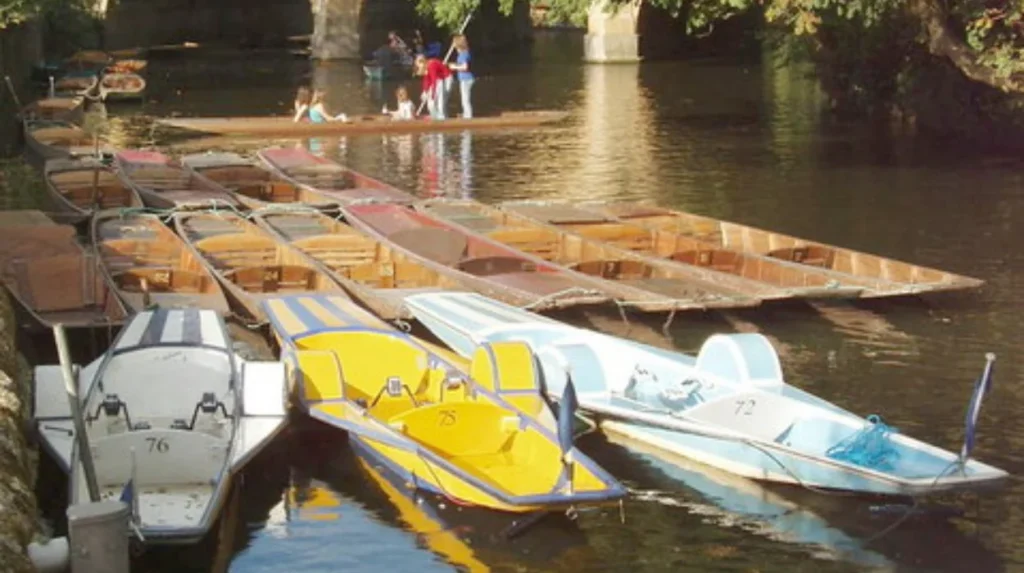
Sunset punting serves as a social venue for celebrations, romantic engagements, and educational tourism. It remains a deeply embedded tradition that symbolizes the intersection of leisure, academia, and nature in historic university cities across the world.
The cultural image of punting is frequently used in film, literature, and marketing to represent a quintessentially British lifestyle. It is a common setting for graduation celebrations and wedding photography. The quiet, slow-paced nature of the activity provides a contrast to the high-speed digital lives of modern tourists. This makes it a popular choice for mindfulness and relaxation. Many operators offer themed sunset tours, such as those including live music or historical lectures.
3 common social uses include proposals, family reunions, and corporate team building. The tradition is also passed down through student generations, with many university clubs maintaining their own fleets. This social continuity ensures that punting remains relevant despite the emergence of more modern water sports. It bridges the gap between historical preservation and contemporary recreation.
How Will Technology and Sustainability Shape the Future of Punting?
The future of punting involves the integration of sustainable materials and digital booking platforms to improve efficiency. While the core propulsion method remains manual, innovations in boat construction and river management will ensure the long-term viability of the industry.
Sustainable boat building is becoming a priority to reduce the carbon footprint of the tourism sector. Some manufacturers are experimenting with recycled composites to replace traditional hardwoods. Digital technology has already transformed how sunset punting experiences are marketed and managed. Online reservation systems and GPS tracking for rental boats improve safety and logistics. AI-driven weather forecasting allows operators to optimize tour schedules based on sunset times and cloud patterns.
There is also a growing movement to electrify support vessels used for maintenance and rescue. This reduces noise and chemical pollution in the river ecosystem. 3 future trends include eco-friendly hull coatings, augmented reality tour guides, and carbon-neutral operations. Despite these technological shifts, the manual skill of punting is expected to be preserved as a heritage craft. This balance of tradition and innovation will define the next century of river tourism.
Which is harder, Oxford or Cambridge?
Determining which is harder depends on the specific subject of study rather than a general ranking. Both institutions maintain identical entry requirements and rigorous academic standards. Cambridge often focuses more on scientific research, while Oxford is renowned for humanities and politics.
What are people who go to Oxford called?
Students and alumni of the University of Oxford are formally referred to as Oxonians. This term applies to anyone who has matriculated at the institution. During their studies, they are also members of specific colleges that define their social identity.
Which billionaires went to Oxford?
Several billionaires attended Oxford, including Michael Bloomberg, who studied at the business school, and Reid Hoffman, the co-founder of LinkedIn. Other notable wealthy alumni include members of the Hinduja family and various global venture capitalists who completed postgraduate degrees in England.
Who are the biggest donors to Oxford University?
The biggest donors to Oxford include Stephen A. Schwarzman, who contributed 150 million pounds for a humanities center, and the Reuben brothers. Significant funding also comes from the Rhodes Trust and various global philanthropic foundations that support specialized research and infrastructure.
Did Albert Einstein go to Oxford University?
Albert Einstein did not graduate from Oxford, but he held a research fellowship at Christ Church College in the early 1930s. He spent several terms in residence, delivering lectures on relativity and stayed there to escape the rising political tensions.