
The Bate Collection represents one of the most significant assemblages of historical musical instruments in the United Kingdom. Located at the Faculty of Music at Oxford University, this collection houses over 2000 instruments spanning five centuries of musical development. The collection serves scholars, musicians, performers, and students studying organology, historical performance practice, and music history. Named after Philip Bate, a distinguished oboist and instrument historian, the collection offers unique insights into the evolution of Western classical instruments. The instruments range from Renaissance recorders to 20th-century saxophones, documenting technological innovations, craftsmanship techniques, and changing musical aesthetics across European musical traditions.
- What is the Bate Collection of Musical Instruments?
- Where is the Bate Collection located, and how can visitors access it?
- What types of instruments are housed in the Bate Collection?
- Who was Philip Bate, and why did he establish this collection?
- What makes the Bate Collection important for music research and education?
- How does the Bate Collection preserve and conserve historical instruments?
- What can visitors expect to learn from visiting the Bate Collection?
- How has the Bate Collection influenced modern instrument making and performance?
- FAQs About the Bate Collection musical instruments
What is the Bate Collection of Musical Instruments?
The Bate Collection is a specialized museum and research facility at Oxford University containing over 2000 historical Western musical instruments from the Renaissance period to the present day, established to support music education, research, and historical performance practice.
The collection was founded in 1968 when Philip Bate donated his personal collection of woodwind instruments to Oxford University. Philip Bate was a professional oboist and musicologist who spent decades studying instrument construction, acoustics, and historical development. His donation formed the nucleus of what would become a comprehensive research collection. The Faculty of Music recognized the educational value of providing students and scholars direct access to historical instruments. Over subsequent decades, the collection expanded through purchases, donations, and bequests from collectors, instrument makers, and estates. Today, the collection occupies dedicated gallery space within the Faculty of Music building on St Aldate’s in central Oxford. The collection is managed by professional curators with expertise in organology and conservation.
Where is the Bate Collection located, and how can visitors access it?
The Bate Collection is located at the Faculty of Music, St Aldate’s, Oxford OX1 1DB, United Kingdom, and is open to the public Tuesday through Friday from 2:00 PM to 5:00 PM during university term time, with free admission.
The Faculty of Music building sits near Christ Church College in central Oxford, easily accessible from Oxford city centre. Visitors enter through the main faculty entrance, where clear signage directs them to the collection galleries. The collection occupies ground-floor display space with climate-controlled cases protecting instruments from environmental damage.
Access policies balance public engagement with conservation requirements and academic priorities. During university vacations, opening hours may vary, and visitors should verify schedules before planning visits. The collection welcomes individual visitors, school groups, and researchers, though advance booking is recommended for group visits. Photography is generally permitted for personal use without flash. Researchers requiring close examination of specific instruments must arrange appointments with curatorial staff. The location within an active music faculty means visitors may hear students practising or attending lectures, creating an immersive musical environment.
What types of instruments are housed in the Bate Collection?
The Bate Collection contains woodwind, brass, keyboard, string, and percussion instruments organized by family groups, with particularly strong holdings in woodwind instruments, including flutes, oboes, clarinets, bassoons, and saxophones from various historical periods.
The woodwind section represents the collection’s greatest strength, reflecting Philip Bate’s expertise and initial donation. This section includes Renaissance recorders, Baroque transverse flutes, 19th-century keyed flutes, and modern Boehm-system flutes documenting the instrument’s mechanical evolution. The oboe collection spans from early Baroque hautboys through Classical period instruments to modern conservatoire models, illustrating changes in bore design, keywork, and tonal characteristics. Clarinet holdings include instruments by significant makers such as Denner, highlighting the instrument’s 18th-century development from chalumeau origins.
The brass section features natural trumpets, slide trumpets, keyed bugles, cornets, trombones, and horns, demonstrating the transition from natural to valved brass instruments during the 19th century. Keyboard instruments include harpsichords, clavichords, fortepianos, and organs representing different national schools and construction techniques. String instruments encompass violins, violas, cellos, viols, lutes, and guitars from various periods. The percussion collection contains timpani, drums, and keyboard percussion instruments used in orchestral and chamber music contexts.
Who was Philip Bate, and why did he establish this collection?
Philip Bate was a British oboist, musicologist, and instrument historian born in 1909 who donated his personal instrument collection to Oxford University in 1968 to preserve historical instruments and support music education and research.
Bate performed professionally as principal oboist with distinguished British orchestras during the mid-20th century while simultaneously pursuing scholarly research into wind instrument history and acoustics. He authored authoritative texts, including “The Oboe” published in 1956, which remains a standard reference work on oboe construction, history, and playing techniques. His research methodology combined practical playing experience with technical analysis of instrument construction and acoustic principles.
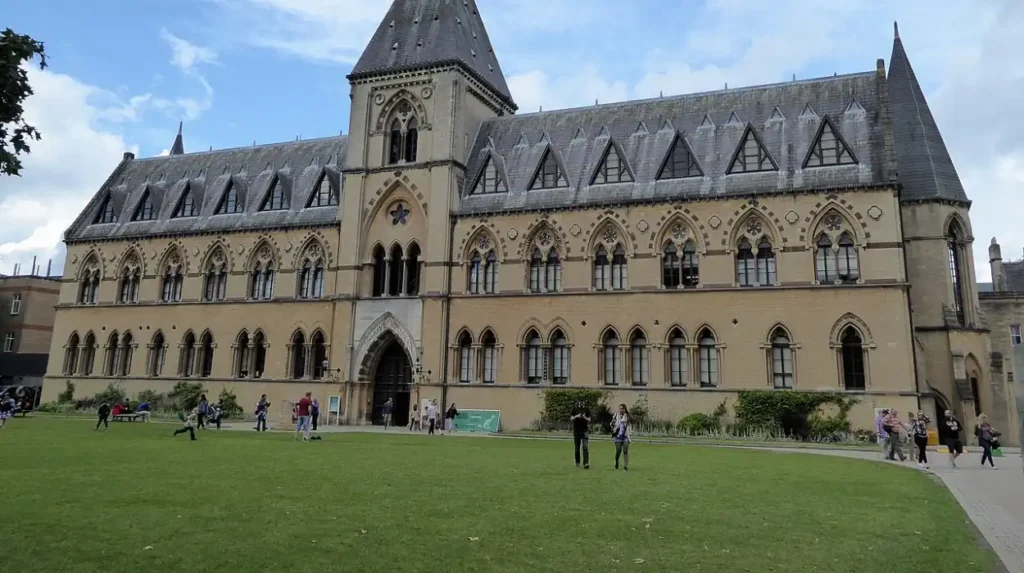
Throughout his career, Bate acquired historical instruments from dealers, makers, and private collections, recognizing that physical instruments provided irreplaceable evidence of past musical practices and technological development. He understood that instruments represent primary source documents for understanding how music sounded in different historical periods. His decision to donate his collection to Oxford University rather than selling instruments commercially demonstrated a commitment to education and scholarship over personal profit. Bate served as the collection’s first curator, establishing cataloguing standards and conservation policies. He died in 1999, having witnessed the collection’s growth into an internationally recognized research facility.
What makes the Bate Collection important for music research and education?
The Bate Collection provides researchers, students, and performers direct access to original historical instruments, enabling the study of construction techniques, playing characteristics, acoustic properties, and performance practices that cannot be fully understood through written sources alone.
Historical instruments constitute primary evidence for organological research, allowing scholars to document manufacturing methods, materials, dimensions, and mechanical innovations. Researchers can measure bore profiles, key spacing, and resonator dimensions, generating data for acoustic analysis and instrument reconstruction projects. The collection supports historical performance practice by enabling musicians to examine authentic instruments before concerts or recordings using period instruments. Music students at Oxford University regularly study a collection of instruments as part of coursework in music history, organology, and performance.
The collection facilitates comparative studies examining how specific instrument types evolved across different regions, time periods, and maker traditions. Conservation projects undertaken on collection instruments advance understanding of historical manufacturing techniques and appropriate restoration methods. The collection has contributed to numerous scholarly publications, doctoral dissertations, and museum exhibitions addressing instrument history and music technology. Public access programs introduce general audiences to musical heritage and instrument craftsmanship. The collection collaborates with other major instrument collections, including the Metropolitan Museum of Art, the Edinburgh University Collection of Historic Musical Instruments, and the Museum of Fine Arts Boston, participating in international research networks.
How does the Bate Collection preserve and conserve historical instruments?
The Bate Collection employs professional conservation standards, including climate control, specialised storage, preventive maintenance, and minimal intervention restoration approaches, to preserve instruments while maintaining their historical integrity and research value.
Environmental monitoring systems maintain stable temperature between 18 and 22 degrees Celsius and relative humidity between 45 and 55 per cent, preventing wood cracking, metal corrosion, and adhesive failure. Display cases use UV-filtering glazing to prevent light damage to organic materials, including wood, leather, and ivory. Instruments are stored or displayed on custom supports, preventing stress on fragile components. Regular condition assessments document any changes in instrument stability requiring conservation intervention. When restoration is necessary, conservators prioritise reversible treatments using historically appropriate materials and techniques.
Original maker marks, inscriptions, and patina are preserved as historical evidence. Some instruments remain in playing condition for research and demonstration purposes, but playing is strictly controlled to prevent wear. Documentation includes detailed photography, technical drawings, and written condition reports, creating permanent records of each instrument’s state. The collection maintains relationships with specialist instrument restorers and conservation scientists who provide expert consultation on complex conservation challenges. Conservation priorities balance preservation of material evidence with educational access and research requirements.
What can visitors expect to learn from visiting the Bate Collection?
Visitors to the Bate Collection gain an understanding of musical instrument evolution, European music history, instrument craftsmanship, acoustic principles, and the relationship between technological innovation and musical development across five centuries.
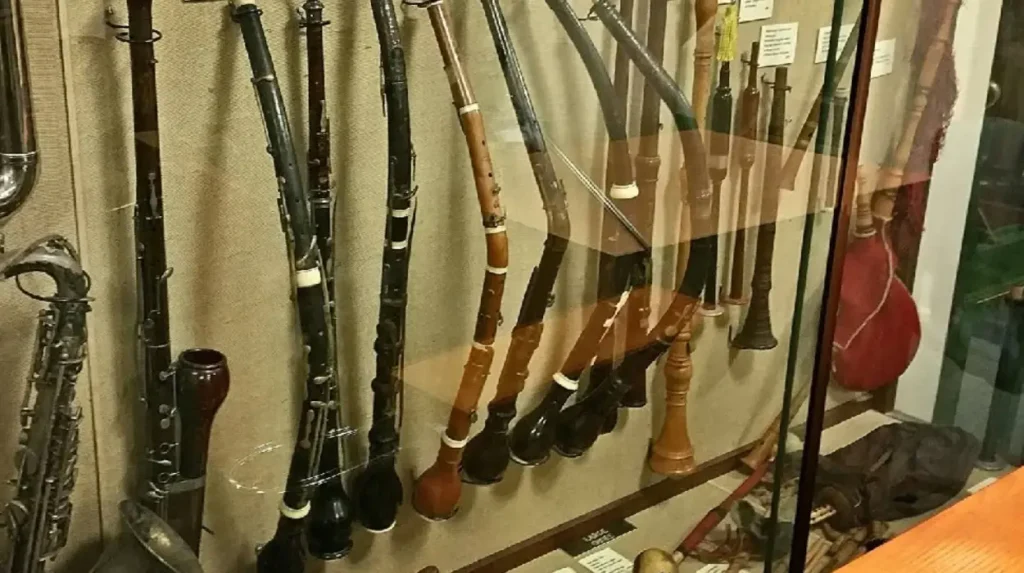
Display cases present instruments chronologically and by family groupings, allowing visitors to trace evolutionary developments in construction and design. Interpretive labels explain the technical features, historical context, and cultural significance of individual instruments. Visitors learn how mechanical innovations, such as key systems on woodwinds and valve systems on brass instruments, expanded instruments’ chromatic capabilities and technical flexibility. The collection illustrates national differences in instrument design, such as French versus German oboe traditions or Viennese versus English fortepiano construction. Visitors discover relationships between instrument makers, with examples showing how innovations spread through apprenticeship networks and commercial competition.
The collection demonstrates how changing musical aesthetics influenced instrument design, such as the transition from Baroque to Classical period tonal ideals. Visitors gain appreciation for the craftsmanship required to construct instruments using hand tools and traditional materials. Educational programs, including gallery talks, handling sessions, and demonstrations, enhance visitor understanding. The collection challenges common misconceptions about historical instruments, such as assumptions that old instruments were necessarily inferior to modern designs. Visitors leave with a deeper appreciation for musical heritage and the material culture of music making.
How has the Bate Collection influenced modern instrument making and performance?
The Bate Collection has informed modern historical instrument construction by providing makers access to original instruments for study and measurement, and has supported the historical performance movement by enabling performers to understand authentic playing techniques and tonal characteristics.
Since the 1970s, the early music revival has created demand for historically accurate instrument reproductions used in period instrument ensembles and recordings. Instrument makers regularly visit the collection to examine construction details, measure dimensions, and document decorative elements, informing their reproduction work. Makers have created copies of specific collection instruments used by prominent period instrument orchestras and chamber ensembles worldwide. The collection’s documentation projects have published technical specifications enabling makers to work from detailed data. Performers studying historical performance practice use collection instruments to understand original playing positions, fingering systems, articulation techniques, and tonal possibilities. These insights inform performance decisions even when using modern instruments. The collection has supported numerous recordings of Baroque, Classical, and Romantic repertoire on period instruments, contributing to broader public appreciation of historical performance aesthetics. Research findings from collection instruments have challenged assumptions about historical pitch standards, tuning temperaments, and instrumental techniques documented in historical treatises. The collection continues to support innovation in instrument making by preserving knowledge of historical manufacturing techniques that might otherwise be lost.
The Bate Collection stands as an essential resource for understanding the material history of Western music. Through careful preservation, scholarly research, educational programming, and public access, the collection ensures that future generations can study, appreciate, and learn from these remarkable instruments. The collection demonstrates that musical instruments are not merely tools for producing sound but cultural artifacts embodying human creativity, technical skill, and artistic vision across centuries of musical development.
FAQs About the Bate Collection musical instruments
Can you play the instruments in the Bate Collection?
Most instruments in the Bate Collection are not available for public playing due to conservation concerns and their fragility. However, select instruments in stable condition are occasionally used for research purposes and educational demonstrations by trained professionals. Researchers and musicians can request special access for academic study through formal arrangements with curatorial staff.
Is the Bate Collection free to visit?
Yes, admission to the Bate Collection is completely free for all visitors. The collection is open Tuesday through Friday from 2:00 PM to 5:00 PM during Oxford University term time. Visitors should check the Faculty of Music website for any schedule changes during university vacation periods. No advance booking is required for individual visitors, though group visits should be arranged in advance.
What is the oldest instrument in the Bate Collection?
The Bate Collection contains instruments dating back to the Renaissance period, with some pieces from the 16th century. The oldest instruments include Renaissance recorders, viols, and early keyboard instruments from the 1500s and 1600s. Specific dating of the oldest piece varies as the collection continues research and authentication work.
How big is the Bate Collection compared to other instrument museums?
The Bate Collection houses over 2000 instruments, making it one of the largest university-based musical instrument collections in the United Kingdom. While smaller than major institutions like the Metropolitan Museum of Art or the Musical Instrument Museum in Brussels, it ranks among the most significant academic collections globally.
Can students at Oxford University use the Bate Collection for research?
Oxford University students have privileged access to the Bate Collection for coursework, dissertations, and research projects. Music students regularly study instruments as part of formal courses in organology, music history, and historical performance practice. Graduate students conducting specialized research can arrange detailed examination sessions with specific instruments under curatorial supervision.