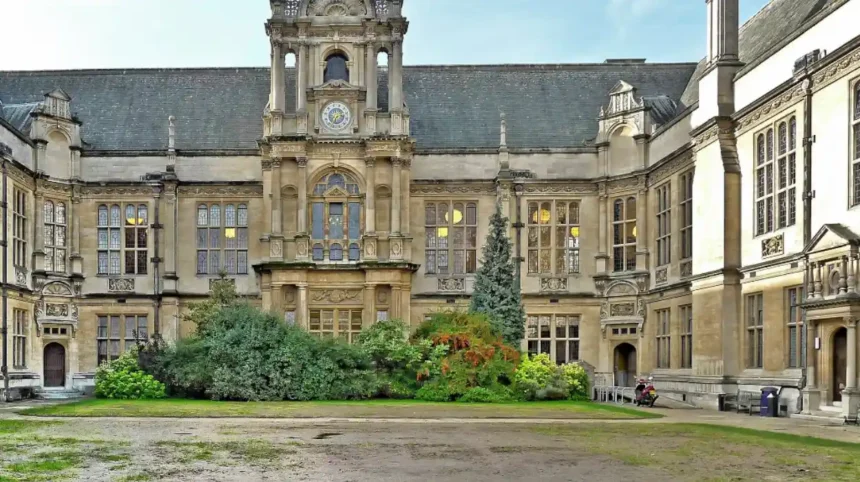
Oxford is a globally recognized center of academic excellence and cultural heritage located in Oxfordshire, England. This city features a unique landscape where medieval collegiate architecture intersects with a modern municipal economy. Visitors navigate the urban center to explore centuries of literary history, scientific discovery, and architectural progression. Understanding the structural layout and historical background of the city helps maximize the value of an itinerary.
- What Is the Best Way to Explore Historic Oxford University Colleges?
- Where Can Visitors Experience Oxford Literary and Cultural History?
- How Do Travelers Navigate Oxford Central Transport and Parking Systems?
- What Are the Best Outdoor and Recreational Activities in Oxford?
- What Family Activities Combine History and Entertainment in Oxford?
- Frequently Asked Questions
- What are the main sights to see in Oxford during a single day?
- Can you drive a personal vehicle into the center of Oxford?
- Are the university colleges open to the public throughout the year?
- Where can families find indoor activities in Oxford on rainy days?
- What is the historical significance of punting on the local rivers?
The municipality of Oxford developed around the University of Oxford, which represents the oldest university in the English-speaking world. Documented teaching structures existed in this location as early as 1096. The growth of the university led to the construction of 39 distinct colleges and numerous libraries that dominate the cityscape. This structural growth established the famous architectural profile commonly referred to as the city of dreaming spires. Today, the local economy balances educational operations with manufacturing, publishing, and digital technology sectors.
What Is the Best Way to Explore Historic Oxford University Colleges?
The most effective method to experience the university infrastructure involves a systematic pedestrian route through the historic core of the city. Visitors must plan entry around the specific seasonal timetables of individual collegiate properties.
Pedestrian exploration provides direct access to restricted academic quadrangles where vehicles cannot enter. The core architectural circuit begins at Broad Street, moving south through the old university precinct. This path guides visitors past the structural boundaries of iconic institutions.
The Bodleian Research Library stands as the primary academic repository, containing over 13 million printed items. Directly adjacent to this facility is the Radcliffe Camera, a circular library built between 1737 and 1749 in the neo-classical style.
Christ Church College represents the largest collegiate grounds in the city. The site contains the Tom Tower gatehouse designed by Christopher Wren and the cathedral spire from the twelfth century. Visitors must purchase admission tickets online in advance to secure entry slots for Christ Church. The college allows public access to the Great Hall, which served as the visual inspiration for film adaptations of the Harry Potter literary series.
Many university structures enforce strict visitor rules to protect active research environments. Local operations utilize Blue and Green Badge guides to lead official walking tours. These educational excursions depart from the modern Weston Library facility on Broad Street. Guides provide comprehensive academic histories while ensuring groups do not disrupt active lectures or examinations.
Where Can Visitors Experience Oxford Literary and Cultural History?

Cultural exploration in Oxford requires a balanced visit to institutional museums, historic print landmarks, and dedicated interactive narrative exhibits. The city contains a dense concentration of preserved historical artifacts and literary manufacturing sites.
Museum infrastructures provide free public access to foundational global art and archaeology collections. The Ashmolean Museum of Art and Archaeology, founded in 1683, houses relics from ancient civilizations, including Egyptian mummies and contemporary European paintings.
For modern perspectives, Modern Art Oxford on Pembroke Street provides changing exhibitions of international contemporary creative works. This space operates inside a former brewery building, focusing on progressive visual media and sound installations.
READ MORE: To discover more local cultural updates, check the latest reports on how Cate Blanchett becomes Oxford’s latest Mackintosh Visiting Professor to understand the evolving academic arts landscape.
Literary history remains connected to physical commercial locations across the urban center. The Story Museum on Pembroke Street serves as a specialized interactive space dedicated to regional children’s literature development. The museum highlights works by local authors, including Lewis Carroll, who wrote Alice in Wonderland, and J.R.R. Tolkien, who authored The Lord of the Rings.
Cultural narratives also extend into neighborhoods like Jericho, where the industrial print industry thrived. The Rickety Press publication landmark highlights this specific working-class history.
RELATED ARTICLE: For a deep dive into local pub heritage and community transition, read about what is the history and cultural impact of the Rickety Press in Oxford.
How Do Travelers Navigate Oxford Central Transport and Parking Systems?
Navigating the historic center of Oxford requires strict adherence to municipal environmental regulations and automated traffic management frameworks. The local authority prioritizes pedestrian safety and low-emission transit choices. The city center operates a strict Zero Emission Zone alongside general traffic bans on major thoroughfares. Drivers faces significant financial penalties if non-compliant vehicles enter restricted zones without pre-paid permits.
The Oxfordshire County Council manages these congestion metrics through automated camera networks. The Worcester Street Car Park provides standard vehicle storage option on the western edge of the central shopping district.
READ MORE: For a complete breakdown of central vehicle storage rates and entry protocols, see what is the complete guide to using Worcester Street Car Park Oxford.
The municipal public transportation network includes two primary bus operators: the Oxford Bus Company and Stagecoach. These services link the central city to regional hubs, including the Banbury residential dockyard zones. Travelers arriving via the southern corridors utilize lodging points along Abingdon Road to avoid inner-city vehicle use. The local hospitality network features major suburban investments, including the massive 74 million pound Courtyard by Marriott acquisition and accessible express options.
RELATED ARTICLE: Review the transit connections and spatial layout of southern lodging by reading what is the location and accessibility of Travelodge Oxford Abingdon Road Hotel Oxford.
What Are the Best Outdoor and Recreational Activities in Oxford?
Outdoor recreation in Oxford centers on traditional river navigation, exploration of public common lands, and historical botanical research gardens. These locations provide natural environments directly adjacent to the urban center. Punting represents the traditional method of river travel along the River Cherwell and the River Thames. Participants utilize a flat-bottomed boat propelled by a long aluminum or wooden pole shoved against the riverbed.

Rental stations operate at Magdalen Bridge and the Cherwell Boathouse. This activity requires physical balance and navigation knowledge to avoid collisions with regional watercraft.
Port Meadow represents the largest open common land area inside the municipal boundary, covering 440 acres of grazing pasture. The site has remained unploughed for over 1000 years, preserving Bronze Age archaeological remains. The River Thames runs through the western edge of this meadow, providing paths for long-distance walking. Visitors must watch for local livestock, including horses and cattle, which roam freely across the fields.
The University of Oxford Botanic Garden represents the oldest scientific garden in the United Kingdom, established in 1621. The site contains over 5000 distinct plant species configured across walled plots and glasshouse structures.
The garden serves as an active research asset for the Department of Plant Sciences. Visitors can observe specialized collections, including carnivorous plants, medicinal herbs, and tropical ferns.
What Family Activities Combine History and Entertainment in Oxford?
Family entertainment options within the city merge physical exploration with interactive historical education programs. These attractions feature costumed guides and dedicated hands-on exhibits designed for younger audiences.
Oxford Castle and Prison provides an educational asset detailing medieval penal history. The site features the eleventh-century St. George’s Tower, which visitors can climb to observe panoramic urban views.
Costumed historical guides lead families through underground candle-lit crypts and preserved eighteenth-century prison cells. The attraction provides educational worksheets that teach children about historical crime punishments.
The Oxford University Museum of Natural History houses extensive geological and zoological specimens inside a Victorian Gothic building. Major exhibits include regional dinosaur skeletons and the preserved remnants of the extinct Dodo bird.
The museum connects directly to the Pitt Rivers Museum, which contains global anthropological artifacts. Both institutions offer free admission and provide physical discovery kits containing magnifying glasses and specimen tracking cards for children.
Frequently Asked Questions
What are the main sights to see in Oxford during a single day?
A single day visit should focus on the central academic core along Broad Street and the High Street. Key landmarks include the Bodleian Libraries complex, the architectural exterior of the Radcliffe Camera, and the historic grounds of Christ Church College. Visitors can complete this route entirely on foot within a six hour period.
Can you drive a personal vehicle into the center of Oxford?
Driving personal vehicles into the immediate center is restricted by municipal emission regulations and physical bus lane gates. The local authority operates a Zero Emission Zone that charges fees to non-compliant vehicles. Travelers should utilize the Park and Ride bus stations located on the highway outskirts of the city.
Are the university colleges open to the public throughout the year?
Colleges open their gates to public visitors during specific afternoon hours, but schedules change based on the academic calendar. Structures close entirely during formal examination periods, graduation events, and winter administrative breaks. Visitors must verify daily opening statuses on individual college websites before arrival.
Where can families find indoor activities in Oxford on rainy days?
The Story Museum provides dedicated indoor narrative spaces and theatrical performances designed specifically for children. Additionally, the Museum of Natural History and the adjacent Pitt Rivers Museum offer extensive indoor educational galleries with free public entry. The central Westgate shopping development also features covered entertainment options.
What is the historical significance of punting on the local rivers?
What is the historical significance of punting on the local rivers?
Punting developed during the nineteenth century as a recreational past-time for university students and local residents. The activity utilizes traditional wooden craft designed specifically to navigate the shallow waters of the River Cherwell. Today, it remains a prominent seasonal outdoor tradition reflecting the Edwardian leisure history of the city.