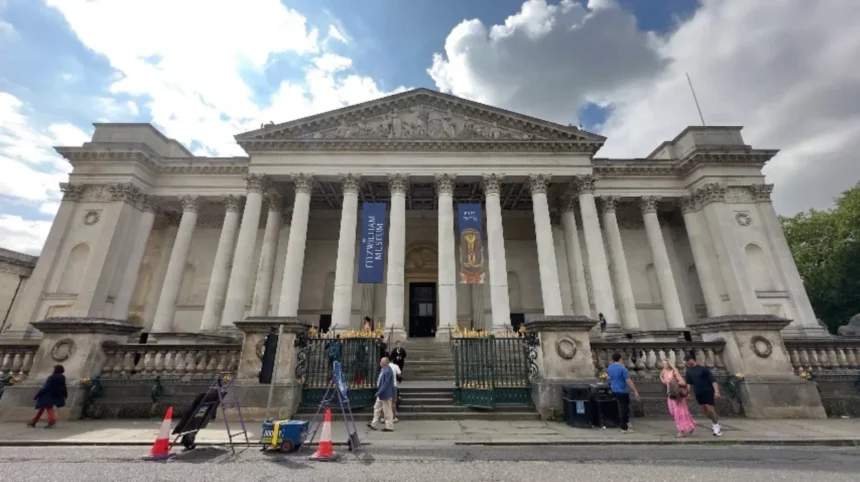
Cambridge University and Oxford University maintain equivalent global academic prestige, but their relative superiority depends entirely on individual degree programs, teaching methodologies, and research priorities. Oxford excels in humanities, social sciences, and formal PPE programs. Cambridge leads in natural sciences, technology, engineering, and mathematics subjects.
- How Do Academic Rankings Compare Between Oxford and Cambridge?
- What Are the Key Structural Differences in Degree Programs?
- How Do the History and Traditions of Oxford and Cambridge Differ?
- How Has the Collegiate Tradition Evolved Over Time?
- What Historical Rivalries Exist Between the Two Universities?
- What Is the Difference Between the Oxford Tutorial and Cambridge Supervision System?
- How Many Hours Do Students Spend in Small-Group Teaching?
- Who Conducts the Tutorials and Supervisions?
- How Do the Admissions Requirements and Acceptance Rates Compare?
- What Percentage of Applicants Receive Admission Offers?
- Why Cannot Students Apply to Both Universities in the Same Year?
- What Are the Differences in Subject Strengths and Academic Faculties?
- Which University Is Better for Computer Science and Engineering?
- Which University Is Better for Law and PPE?
- How Do the Campus Environments and College Structures Differ?
- What Are the Key Financial Differences Between Colleges?
- How Does Student Life and Transportation Compare?
- What Are the Employment Outcomes and Career Opportunities for Graduates?
- How Do Alumni Networks Support Graduate Careers?
- What Percentage of Graduates Pursue Higher Degrees?
- Which university is harder to get into, Oxford or Cambridge?
- Is Oxford or Cambridge better for science subjects?
- Why can you not apply to both Oxford and Cambridge in the same year?
- Are Oxford and Cambridge degrees valued equally by employers?
- What is the main difference between an Oxford tutorial and a Cambridge supervision?
The collective designation Oxbridge represents the two oldest collegiate universities in the English-speaking world. Both institutions operate as autonomous collegiate federations located in England. University of Oxford received its first teaching documentation in 1096, making it the oldest university in the English-speaking world. University of Cambridge was established in 1209 by scholars fleeing municipal conflict in Oxford.
Both institutions hold substantial state funding alongside private endowments. In 2023, Oxford managed an endowment of 1.6 billion pounds, while Cambridge managed a central endowment of 4.0 billion pounds. The two universities enroll approximately 24000 to 25000 students each. Undergraduate admissions operate under strict central regulations across the United Kingdom. Applicants cannot apply to both Oxford and Cambridge in the same academic cycle.
The two universities consistently occupy top five positions in major global academic rankings. The QS World University Rankings 2024 ranked Cambridge second globally and Oxford third globally. Times Higher Education World University Rankings 2024 placed Oxford first globally and Cambridge fifth. Academic superiority varies by subject area rather than overall institutional supremacy.
How Do Academic Rankings Compare Between Oxford and Cambridge?
Global ranking systems utilize varied methodologies including research impact, teaching reputation, international faculty ratios, and employment outcomes. Oxford consistently scores higher in humanities and social sciences disciplines. Cambridge consistently scores higher in natural sciences, veterinary medicine, and engineering disciplines.
What Are the Key Structural Differences in Degree Programs?
Oxford offers integrated joint honors degrees such as Philosophy, Politics and Economics alongside History and Modern Languages. Cambridge utilizes the Tripos system, which splits undergraduate degrees into separate parts. The Tripos allows students to study broad scientific disciplines before specializing in specific fields during final years.
How Do the History and Traditions of Oxford and Cambridge Differ?
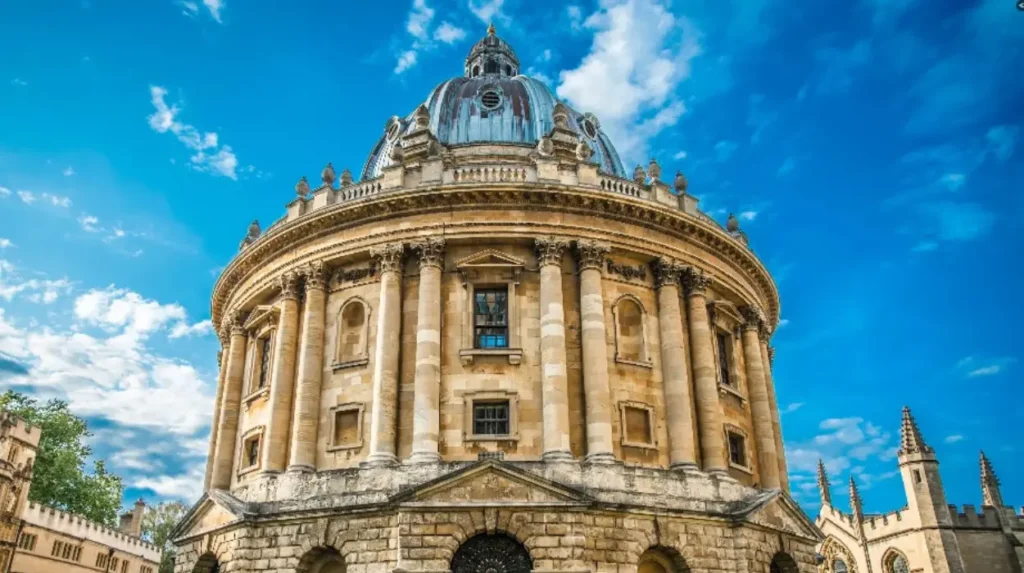
Oxford University developed organically from the 11th century as a municipal learning center, whereas Cambridge University originated in 1209 from academic migration. Oxford developed strong historical ties to political governance and royal administration. Cambridge developed historical strengths in mathematical tripos development and scientific discovery.
The historical evolution of Oxford University was influenced by medieval monastic orders and royal charters granted by King Henry III in 1231. The university established its first formal colleges, including University College, Balliol College, and Merton College, between 1249 and 1264. Early academic governance prioritized theology, canon law, classical literature, and scholastic philosophy.
The establishment of Cambridge University in 1209 resulted from an execution of three clerks in Oxford by civil authorities. Fleeing scholars gathered in the town of Cambridge to establish an alternative academic center. King Henry III granted Cambridge a royal charter in 1231, protecting scholars from local landlord exploitation and establishing academic autonomy.
The two institutions developed distinct intellectual traditions over subsequent centuries. Oxford produced 30 British Prime Ministers, including William Gladstone, Margaret Thatcher, Tony Blair, and Boris Johnson. Cambridge produced foundational scientific pioneers, including Isaac Newton, Charles Darwin, James Clerk Maxwell, and Alan Turing.
How Has the Collegiate Tradition Evolved Over Time?
Colleges originally served as residential hostels for scholars studying under central university faculties. Over time, colleges acquired property, private endowments, and direct teaching responsibilities. Modern colleges act as self-governing financial entities providing student accommodation, pastoral care, and small-group tutorial instruction.
What Historical Rivalries Exist Between the Two Universities?
The rivalry began with medieval jurisdiction disputes and formalized into intercollegiate athletic competitions during the 19th century. The annual Boat Race on the River Thames began in 1829. The annual Varsity Rugby Match began in 1872. These events maintain national broadcasting rights and international audience engagement.
What Is the Difference Between the Oxford Tutorial and Cambridge Supervision System?
The Oxford tutorial system and Cambridge supervision system both provide direct, small-group undergraduate instruction. Oxford tutorials typically pair one or two students with an academic tutor weekly. Cambridge supervisions pair one to three students with a supervisor weekly, focusing heavily on written essay critique and problem sets.
Small-group teaching forms the core instructional method for undergraduate education at both universities. Students produce written work, essays, or mathematical problem sheets prior to each session. The academic supervisor or tutor reviews the submitted work and conducts an intensive critical discussion during the scheduled hour.
At Oxford, the weekly session is formally termed a tutorial. Tutors expect students to defend arguments orally and debate foundational concepts. Oxford humanities students typically complete two tutorials per week, requiring two major research essays every eight days. The focus remains heavily theoretical and dialectical.
At Cambridge, the small-group session is formally termed a supervision. Supervisions align closely with specific lecture courses delivered by university faculties. Cambridge science students attend multiple supervisions weekly to solve complex problem sets. The focus emphasizes methodical application, technical precision, and analytical mastery.
How Many Hours Do Students Spend in Small-Group Teaching?
Undergraduates receive one to three hours of small-group teaching per week depending on subject choice. Humanities students attend fewer lectures and rely on independent library research for tutorials. Science and engineering students attend up to 20 lecture and laboratory hours alongside scheduled supervisions.
Who Conducts the Tutorials and Supervisions?
Sessions are conducted by senior professors, research fellows, or doctoral candidates specializing in specific academic subfields. College Directors of Studies arrange external supervisors if a college lacks an internal expert for a specific module, ensuring full curriculum coverage.
How Do the Admissions Requirements and Acceptance Rates Compare?
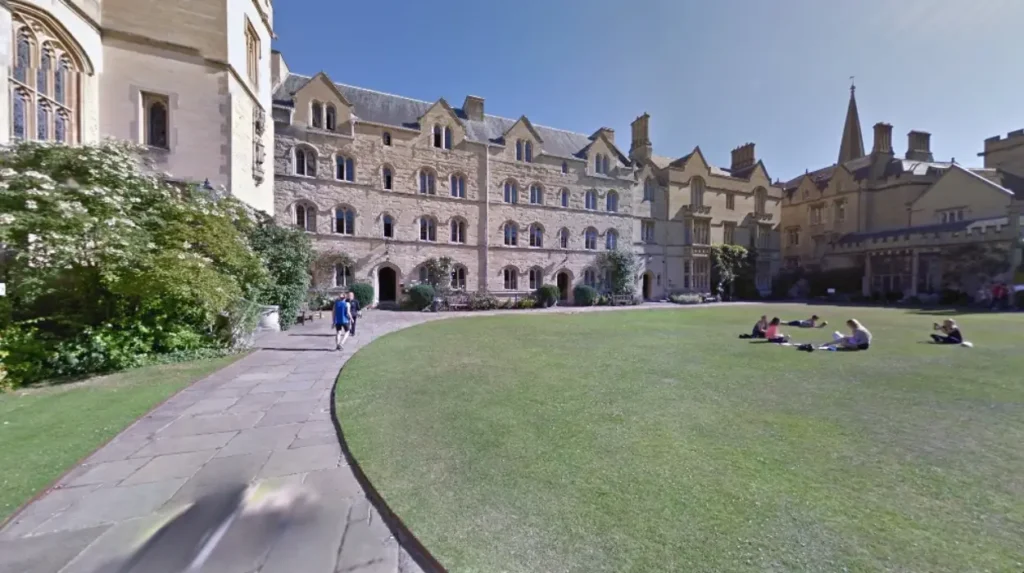
Oxford and Cambridge maintain competitive undergraduate selection processes with overall acceptance rates ranging between 14 percent and 18 percent. Oxford emphasizes standardized admissions tests and contextual GCSE performance. Cambridge emphasizes pre-interview assessments, direct subject interviews, and high A-level grade predictions.
Admissions requirements at both universities exceed standard UK higher education entry thresholds. Standard A-level offers at Oxford range from AAA to A*A*A depending on the subject. Standard A-level offers at Cambridge range from A*AA to A*A*A for science programs. International equivalents require high Advanced Placement scores or International Baccalaureate points ranging from 38 to 42.
Oxford requires standardized entrance examinations for most undergraduate courses prior to interview selection. Examples include the Thinking Skills Assessment, History Aptitude Test, and Physics Aptitude Test. Oxford utilizes these test scores alongside school references and personal statements to shortlist applicants for formal interviews.
Cambridge integrates subject-specific assessments into both pre-interview and at-interview stages. Cambridge places significant weight on high performance in national examinations such as GCSEs and predicted A-level marks. Cambridge interviews a higher percentage of applicants than Oxford, typically shortlisting over 75 percent of total applicants for interviews.
What Percentage of Applicants Receive Admission Offers?
In 2023, Oxford received over 23000 applications for approximately 3300 undergraduate places, yielding an acceptance rate of 14.3 percent. Cambridge received over 21000 applications for approximately 3500 undergraduate places, yielding an acceptance rate of 15.7 percent.
Why Cannot Students Apply to Both Universities in the Same Year?
UCAS regulations prohibit concurrent undergraduate applications to both Oxford and Cambridge in a single admissions cycle. This restriction was established to manage high application volumes and ensure fair distribution of top-tier applicants across both prestigious institutions.
What Are the Differences in Subject Strengths and Academic Faculties?
Oxford maintains world leadership in humanities, English literature, philosophy, politics, modern history, and clinical medicine. Cambridge holds world leadership in natural sciences, mathematics, computer science, engineering, chemical biology, and veterinary medicine. Subject selection remains the primary factor for choosing between universities.
Oxford’s Humanities Division incorporates world-leading faculties in Classics, History, Philosophy, and Theology. The university’s Social Sciences Division contains the Department of Politics and International Relations and the Saïd Business School. Oxford’s Medical Sciences Division ranks first globally in clinical and health subjects according to international metrics.
Cambridge’s School of Physical Sciences and School of Biological Sciences provide state-of-the-art research laboratories. The Cambridge Mathematical Tripos is internationally recognized for rigorous theoretical training. The Cambridge Engineering Department operates as a single unified department covering aeronautical, civil, electrical, and mechanical discipline streams.
Applicants evaluating course structures must examine module flexibility. Oxford requires applicants to select a specific joint or single honors program upon application. Cambridge allows science students to enroll in broad Natural Sciences or Flexible Humanities frameworks before selecting specialized honors tracks in subsequent academic years.
Which University Is Better for Computer Science and Engineering?
Cambridge is widely regarded as superior for computer science and engineering due to its proximity to Silicon Fen. Silicon Fen is Europe’s largest technology cluster, generating extensive corporate research partnerships, tech transfer opportunities, and graduate recruitment pathways.
Which University Is Better for Law and PPE?
Oxford is internationally renowned for Law and its flagship Philosophy, Politics and Economics program. Oxford Law graduates enter international legal practice with strong theoretical foundations. PPE graduates frequently enter high-level government administration, international diplomacy, and global journalism.
How Do the Campus Environments and College Structures Differ?
Oxford is an urban university integrated into a bustling city with heavy commercial infrastructure. Cambridge is a traditional university town dominated by academic architecture, green space, and the River Cam. Both universities split administrative and residential life across autonomous collegiate properties.
Oxford University operates 36 undergraduate colleges and 3 permanent private halls located throughout Oxford city center. The city population exceeds 150000 residents, creating a busy commercial environment. University buildings, including the Bodleian Library and Radcliffe Camera, sit directly adjacent to retail centers, corporate offices, and transport hubs.
Cambridge University operates 31 constituent colleges, with 29 admitting undergraduate students. The city population is approximately 145000, but academic infrastructure defines the physical geography. Colleges such as King’s College, Trinity College, and St John’s College line the River Cam, creating an extensive parkland corridor known as the Backs.
Collegiate life at both institutions provides students with localized dining halls, libraries, accommodation, and social clubs. Students belong simultaneously to their individual college and the central university faculty. Central faculties manage university lectures, laboratory practicals, central examinations, and degree conferrals.
What Are the Key Financial Differences Between Colleges?
College endowments vary substantially across both universities. Trinity College Cambridge holds over 1.3 billion pounds in assets, making it the wealthiest college. Wealthier colleges provide larger student bursaries, subsidized accommodation, research grants, and superior library resources compared to smaller colleges.
How Does Student Life and Transportation Compare?
Transportation at Cambridge relies predominantly on bicycles due to flat terrain and pedestrianized city streets. Transportation at Oxford relies on walking and public bus networks across a broader geographic radius. Both environments restrict student automobile ownership through central university statutes.
What Are the Employment Outcomes and Career Opportunities for Graduates?
Graduates from Oxford and Cambridge achieve equivalent employment outcomes, high starting salaries, and international recruitment rates. Corporate recruiters, financial institutions, strategy consultancies, and academic institutions treat degrees from both universities as highest-tier qualifications globally.
The UK Graduate Outcomes Survey consistently places Oxford and Cambridge at the top of graduate earnings tables. Within 15 months of graduation, over 90 percent of graduates from both institutions enter high-skilled employment or continue into postgraduate study. Average starting salaries exceed national graduate averages by 20 to 35 percent.
Major global employers recruit directly from both campuses through specialized career fairs and corporate presentations. Management consultancies such as McKinsey & Company, Boston Consulting Group, and Bain & Company recruit heavily from both student bodies. Investment banks including Goldman Sachs, Morgan Stanley, and J.P. Morgan maintain active campus recruitment tracks.
Technology corporations such as Google, Microsoft, Amazon, and Apple recruit heavily from Cambridge due to local research alignment. International diplomatic services, non-governmental organizations, and global law firms recruit extensively from Oxford due to specialized public policy and legal training programs.
How Do Alumni Networks Support Graduate Careers?
Both universities maintain global alumni networks exceeding 250000 individuals across 180 countries. College-specific alumni associations organize professional networking events, mentorship schemes, and career placement support in major financial capitals including London, New York, Hong Kong, and Singapore.
What Percentage of Graduates Pursue Higher Degrees?
Approximately 30 percent of undergraduate alumni from both institutions progress directly into master’s or doctoral research programs. The strong undergraduate research emphasis prepares students for competitive admissions at top international research universities including Harvard, Stanford, and MIT.
Which university is harder to get into, Oxford or Cambridge?
Both universities maintain highly competitive admissions with acceptance rates between 14% and 16%. Oxford requires standardized pre-interview aptitude tests for most courses, whereas Cambridge interviews a higher percentage of total applicants before making final decisions.
Is Oxford or Cambridge better for science subjects?
Cambridge is generally considered stronger for natural sciences, engineering, and technology due to its specialized Tripos system and proximity to the Silicon Fen tech cluster. However, Oxford ranks extremely high globally for medicine and life sciences.
Why can you not apply to both Oxford and Cambridge in the same year?
UCAS guidelines prevent candidates from applying to both Oxford and Cambridge in a single academic application cycle. This rule distributes high-achieving applicants evenly across both institutions and keeps application volumes manageable for university admissions departments.
Are Oxford and Cambridge degrees valued equally by employers?
Global employers and corporate recruiters treat undergraduate and postgraduate degrees from Oxford and Cambridge with equal prestige. Career outcomes and starting salary prospects depend far more on individual degree discipline, academic performance, and internship experience than the specific university chosen.
What is the main difference between an Oxford tutorial and a Cambridge supervision?
Oxford tutorials typically involve one or two students discussing theoretical essays directly with an academic tutor. Cambridge supervisions pair one to three students with a supervisor to discuss coursework, lectures, and specialized analytical problem sets in detail.