Cornmarket Street Oxford serves as the historic primary pedestrian thoroughfare in central Oxford, connecting Carfax Tower to Magdalen Street. The street features Anglo-Saxon landmarks, medieval timber buildings, modern retail hubs, and major pedestrian routes across the commercial core of Oxford City.
- What Is the History and Historical Significance of Cornmarket Street Oxford?
- What Are the Key Architectural Landmarks Located on Cornmarket Street Oxford?
- What Shopping and Commercial Facilities Are Available on Cornmarket Street Oxford?
- How Does Cornmarket Street Connect to the Broader Transport and Pedestrian Network of Oxford?
- What Is the Cultural and Modern Community Role of Cornmarket Street Oxford?
- What is the oldest building located on Cornmarket Street Oxford?
- Is Cornmarket Street Oxford fully open to car traffic?
- Where can visitors find historic wall paintings on Cornmarket Street Oxford?
- How do pedestrians reach the Oxford Covered Market from Cornmarket Street Oxford?
- What major street intersection marks the southern end of Cornmarket Street Oxford?
Cornmarket Street Oxford represents the principal commercial artery of the city center. It stretches north to south between the historic Carfax Tower intersection and Magdalen Street.
The thoroughfare operates as a fully pedestrianized zone managing thousands of daily visitors, shoppers, and university students. It forms a crucial part of the ancient street grid established during the Late Anglo-Saxon period.
The street connects prominent retail venues with centuries of architectural heritage. Modern retail storefronts operate directly alongside preserved medieval inn structures and ancient ecclesiastical sites.
What Is the History and Historical Significance of Cornmarket Street Oxford?
Cornmarket Street Oxford originated as a Late Anglo-Saxon axial road created around 900 AD within the fortified burh of Oxford. Originally called Northgate Street, it served as a central grain marketplace, trading center, and primary defensive route.
The historical development of Cornmarket Street Oxford traces back to the early tenth century. The route was aligned along a natural gravel ridge running north toward the River Thames.
The street functioned as the main northern entrance to the fortified settlement. It was fortified by the ancient city walls and the medieval North Gate barrier.
During the medieval period, the street was known as Northgate Street. It became a specialized hub for cloth merchants, drapers, and leather traders driving civic trade expansion.
In 1536, Oxford civic leaders constructed a covered grain storage house directly in the roadway. This municipal facility led to the permanent adoption of the name Cornmarket Street.
The street hosted several prominent coaching inns catering to travelers along the primary highway to London and Birmingham. Notable examples include the Crown Inn and the Golden Cross Inn.
The street maintained its role as an arterial road throughout the nineteenth and twentieth centuries. Increased vehicular traffic led municipal planners to fully pedestrianize the thoroughfare in 1999.
Today, the layout of Cornmarket Street preserves the narrow medieval plot boundaries known as burgage plots. These ancient boundaries continue to define the current urban pattern of central Oxford.
What Are the Key Architectural Landmarks Located on Cornmarket Street Oxford?
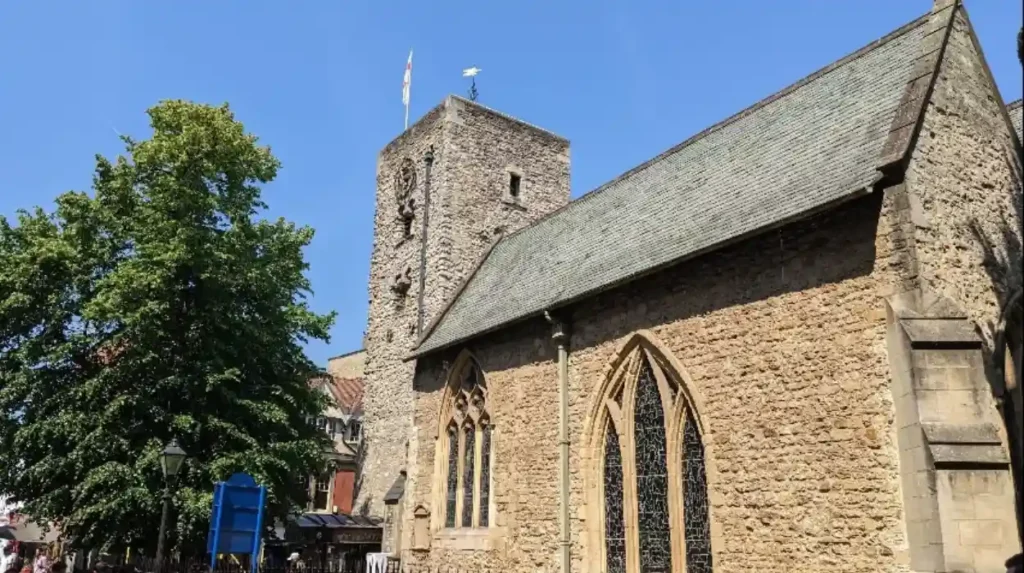
Cornmarket Street Oxford contains prominent heritage structures including the Saxon Tower at St Michael at the North Gate, Carfax Tower, the 1392 timber-framed New Inn, the Golden Cross passage, and the historic Painted Room.
The architectural landscape of Cornmarket Street Oxford features structural styles spanning over one thousand years. The oldest surviving building in Oxford stands at the northern end of the street.
The Saxon Tower of St Michael at the North Gate was constructed around 1040 AD. It served both as a church bell tower and a defensive military lookout beside the original city gate.
At the southern terminus of the street stands Carfax Tower, a grade six structure. It represents the remaining thirteenth-century tower of St Martin’s Church, offering panoramic urban views.
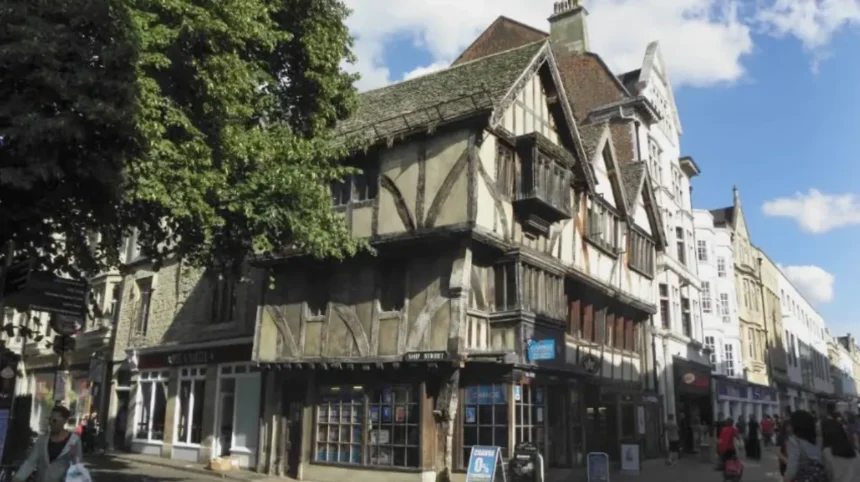
The street features outstanding examples of timber-framed domestic and commercial buildings. Number 26 and 27 Cornmarket Street form a reconstructed late medieval inn dating back to 1392.
The Golden Cross Yard contains preserved fifteenth-century timber ranges. This historic courtyard connects Cornmarket Street directly to the nearby Oxford Covered Market.
Number 3 Cornmarket Street houses the historic Painted Room, which contains rare Elizabethan wall paintings. The site was once part of the Crown Tavern, visited by prominent literary figures.
What Shopping and Commercial Facilities Are Available on Cornmarket Street Oxford?
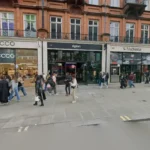
Cornmarket Street Oxford functions as the main retail core of Oxford, offering major national retail chains, department stores, health and beauty outlets, access to the Covered Market, and local dining locations.
Cornmarket Street Oxford acts as the commercial centerpiece of the city retail economy. The street offers high-level accessibility for shoppers, tourists, and resident university populations.
The retail mix includes prominent British high-street department stores and international fashion brands. Outlets such as Marks & Spencer and Boots occupy multi-story commercial spaces along the street.
The thoroughfare provides direct passage connections to historic shopping arcades. Visitors access the covered passages of Golden Cross to reach independent artisan boutiques and specialty coffee shops.
Cornmarket Street links directly with the Oxford Covered Market to the east. This integration offers shoppers fresh produce, craft goods, specialty meats, and local baked products.
The pedestrian layout enables street performers, buskers, and pop-up market stalls to operate alongside retail facades. The spatial breadth supports high-volume foot traffic throughout peak commercial hours.
Retail property managers have adapted historic facades to accommodate modern storefront technology. This architectural integration preserves exterior urban heritage while supporting high-density commercial space.
How Does Cornmarket Street Connect to the Broader Transport and Pedestrian Network of Oxford?
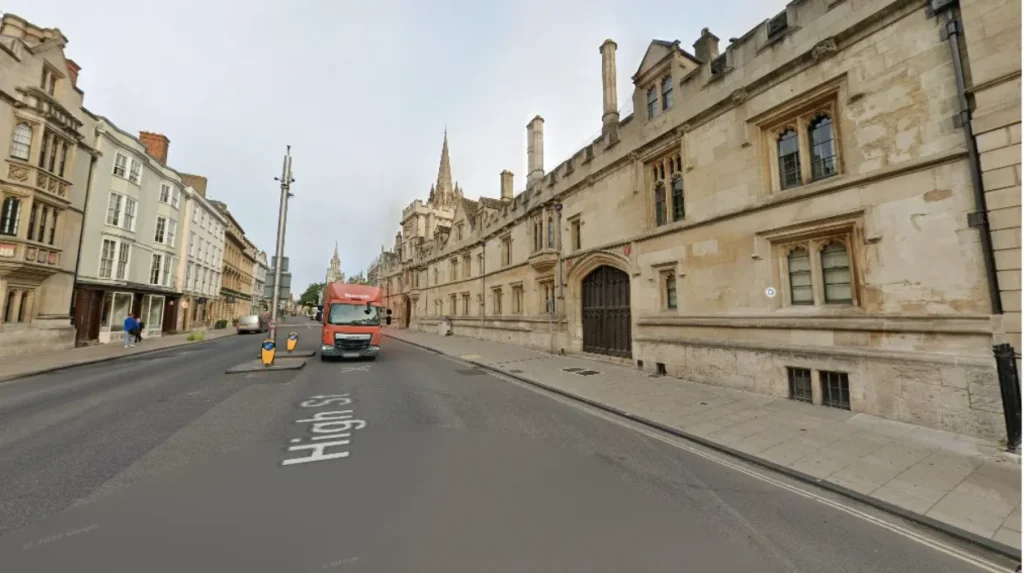
Cornmarket Street Oxford links directly to High Street, Queen Street, Broad Street, and George Street, serving as a primary pedestrian spine with nearby bus connections and railway access.
Cornmarket Street Oxford forms the central vertical axis of the cross-shaped pedestrian grid of Oxford. It intersects with major thoroughfares at both its northern and southern terminals.
At Carfax Tower in the south, the street connects directly with Queen Street, High Street, and St Aldate’s. This intersection forms the traditional central point of Oxford municipal activity.
At the northern terminus, the street meets Broad Street, George Street, and Magdalen Street. This junction links the retail district with major university libraries and theatre venues.
The street is closed to private vehicular traffic to maintain pedestrian safety and air quality standards. Delivery access is strictly restricted to early morning and late evening schedule windows.
Public transit services operate directly adjacent to the pedestrianized zone. High-frequency bus stops are situated along nearby High Street, Magdalen Street, and St Aldate’s.
Oxford Railway Station is located approximately 800 meters west of Cornmarket Street. Pedestrians access the station via Queen Street or George Street within ten minutes of walking time.
What Is the Cultural and Modern Community Role of Cornmarket Street Oxford?
Cornmarket Street Oxford serves as a dynamic gathering space for public entertainment, civic events, traditional ceremonies, street performance, and student life within central Oxford.
Cornmarket Street Oxford maintains a central role in the social and civic life of the local community. The wide, paved precinct creates an outdoor public hall for urban interactions.
Street entertainment forms a recognized component of the daily atmosphere along the thoroughfare. Musicians, acoustic performers, and living statues operate under municipal licensing guidelines.
The street plays a central part in traditional municipal ceremonies. Annual historic events such as the Beating the Bounds ceremony proceed through parish boundary points along the street.
The thoroughfare serves as an essential transit route for Oxford University students. Its position between college sites and departmental buildings ensures continuous student foot movement.
Tourism activity remains high across all four seasons of the year. Visitors use the street as a landmark starting point for historical walking tours and university architectural visits.
Urban planners continue to focus on public space maintenance and street lighting upgrades. These investments preserve the site as a safe, clean, and accessible space for all citizens.
What is the oldest building located on Cornmarket Street Oxford?
The Saxon Tower of St Michael at the North Gate is the oldest surviving building on Cornmarket Street, constructed around 1040 AD. The tower originally served as part of the defensive northern gate of the Saxon burh of Oxford.
Is Cornmarket Street Oxford fully open to car traffic?
Cornmarket Street is completely pedestrianized and closed to private vehicular traffic throughout the day. Deliveries are restricted to specific time windows in the early morning and late evening to ensure public pedestrian safety.
Where can visitors find historic wall paintings on Cornmarket Street Oxford?
Historic sixteenth-century Elizabethan wall paintings are preserved inside the Painted Room at 3 Cornmarket Street. Additional medieval interior wall art is preserved within the historic Golden Cross Yard buildings located along the street.
How do pedestrians reach the Oxford Covered Market from Cornmarket Street Oxford?
Pedestrians can reach the Oxford Covered Market directly by walking through the Golden Cross passage off Cornmarket Street. This historic covered alleyway provides a direct walk into the artisan market hall.
What major street intersection marks the southern end of Cornmarket Street Oxford?
The southern end of Cornmarket Street terminates at the historic Carfax intersection, marked by Carfax Tower. This junction connects Cornmarket Street with High Street, Queen Street, and St Aldate’s.