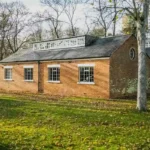
Jericho is a historic inner suburb of Oxford, England. It occupies the streets bounded by the Oxford Canal to the west, Worcester College to the south, Walton Street to the east, and Walton Well Road to the north. As of February 2021, the combined population of the Jericho and Osney wards stands at 6,995 residents. The suburb sits approximately 15 minutes on foot from Oxford Railway Station and 10 minutes from the city centre.
- What Is the Origin and Meaning of the Name Jericho in Oxford?
- How Did the Oxford Canal Shape Jericho’s Development as an Industrial Neighbourhood?
- What Are the Key Architectural and Cultural Features of the Jericho Neighbourhood?
- What Independent Shops, Cafes, and Restaurants Define the Jericho Neighbourhood Experience?
- How Do Visitors Access Port Meadow and the Oxford Canal from Jericho?
- What Community Organisations and Annual Events Does Jericho Oxford Support?
Jericho neighbourhood exploration draws thousands of visitors each year because of its rare combination of Victorian architecture, independent businesses, academic history, waterway access, and a living community identity that has survived repeated threats of demolition and redevelopment.
What Is the Origin and Meaning of the Name Jericho in Oxford?
Jericho takes its name from the ancient city referenced in the Bible, used locally to describe a remote place outside the city walls where travellers rested after Oxford’s gates had closed for the night. The name emerged during the medieval period and reflects the suburb’s geographic isolation from the walled city centre.
Oxford’s city walls were a defining boundary throughout the medieval era. Travellers who arrived after the gates were shut required shelter outside those walls. Jericho served precisely that function, a stopping point on the northern approach to Oxford. The term Jericho became synonymous with remote or outlying places in English slang, and the suburb adopted this identity formally. The biblical Jericho, one of the oldest continuously inhabited cities in the world, lent the Oxford suburb both its name and an implicit sense of antiquity.
The name reinforced the neighbourhood’s character as a place standing apart from Oxford’s formal institutional boundaries. This naming convention also appears in Thomas Hardy’s 1895 novel Jude the Obscure, in which the fictional city of Christminster, based on Oxford, references Jericho as a workers’ district outside the academic centre. St Barnabas Church on the Oxford Canal is specifically described in Hardy’s novel, making Jericho a documented literary landmark with a recorded connection to 19th-century English literature.
How Did the Oxford Canal Shape Jericho’s Development as an Industrial Neighbourhood?
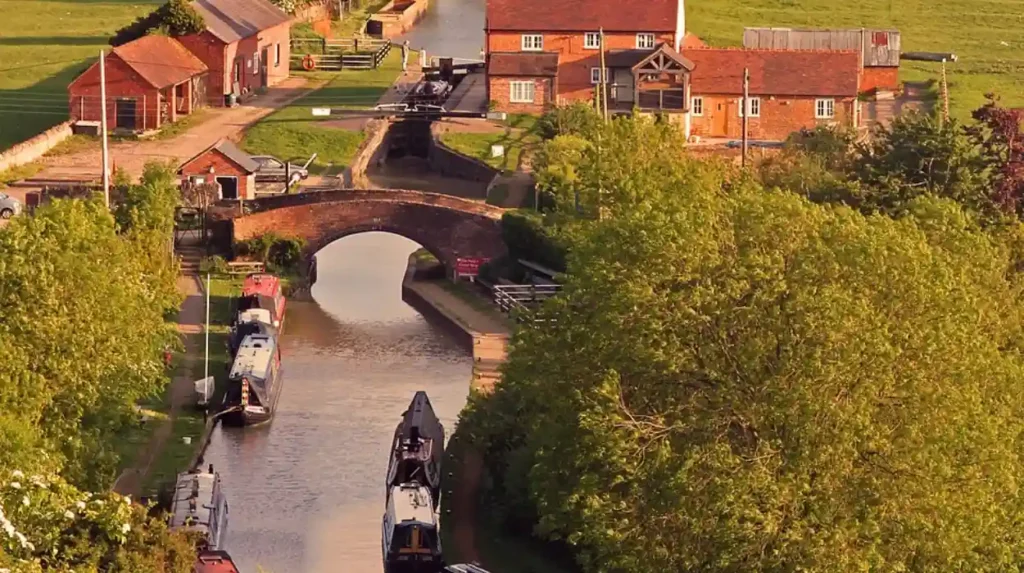
The Oxford Canal arrived in 1790 and transformed Jericho from a rural outskirt into an industrial hub. Factories, wharves, and workers’ housing were constructed rapidly along the canal, establishing the Victorian street grid that defines the neighbourhood today.
Minnie Bannister
The Oxford Canal opened on 1 January 1790, providing direct water transport between Oxford and the Midlands. This infrastructure unlocked commercial opportunities in Jericho. The Eagle Ironworks, operated by W. Lucy and Co. Ltd, was established in the area and became one of the most significant industrial employers in 19th-century Oxford. The ironworks have since been redeveloped into residential apartments, but its original footprint remains embedded in the urban fabric.
Oxford University Press, founded in 1586, relocated major printing operations to Walton Street in Jericho during the 19th century and became the neighbourhood’s largest employer at that time. The proximity of OUP to the canal enabled efficient distribution of printed materials across England. Castlemill Boatyard operated as a coal wharf by the 1840s and served canal traffic until it ceased trading in 1992. The canal also created a residential demand, and rows of two-up two-down Victorian terraced houses were constructed to house factory workers, printers, and canal labourers. This housing stock remains largely intact and gives Jericho its distinctive architectural character, now recognised as some of the most sought-after residential property in Oxford.
What Happened When the Government Planned to Demolish Jericho in the 1960s?
In the early 1960s, Oxford City Council proposed demolishing the entire Jericho neighbourhood and replacing it with light industrial units and new housing blocks. Local residents, led by city councillor Olive Gibbs and the Jericho Residents Association, organised a successful campaign that reversed the demolition plans entirely.
By the 1950s, Jericho’s Victorian housing stock had fallen into significant disrepair. The suburb had also briefly operated as a red-light district during the same decade, which contributed to its deteriorating public image. Local authority planners developed a proposal to clear the area entirely and construct modern industrial and housing facilities. This proposal met organised opposition from Jericho residents, who formed the Jericho Residents Association to coordinate their response. Councillor Olive Gibbs played a central role in rallying political support against the demolition.
The campaign succeeded in changing the policy. Only properties beyond structural repair were demolished. The majority of the Victorian terraces were retained and upgraded during the late 1960s and early 1970s using council grants. This rehabilitation programme attracted young professionals and families to the area. The demographic shift converted Jericho from a declining industrial workers’ district into one of Oxford’s most desirable residential neighbourhoods. The preservation of the original housing stock is now understood as a significant episode in British urban conservation history, demonstrating how community action can redirect municipal planning decisions with lasting effect.
What Are the Key Architectural and Cultural Features of the Jericho Neighbourhood?
Jericho is defined architecturally by rows of 19th-century red brick Victorian terraces, Anglo-Catholic churches, a former ironworks site, and the Oxford University Press building on Walton Street. Culturally, it operates as Oxford’s most independent and creatively active residential quarter.
The residential streets of Jericho are composed primarily of two-storey Victorian workers’ cottages built between 1830 and 1890. These terraces are arranged in a dense grid pattern between the Oxford Canal and Walton Street. St Barnabas Church, the Anglican parish church of Jericho, stands directly beside the Oxford Canal and represents the Anglo-Catholic tradition. It was built in 1869 to a design by architect Arthur Blomfield and features an Italianate tower visible across the neighbourhood. St Sepulchre’s Cemetery on Walton Street contains graves dating from the Victorian period. The Albert Street Chapel serves the Reformed Baptist congregation in the neighbourhood.
The Oxford Synagogue in Jericho is one of the few synagogues in England where multiple Jewish denominations share a single building under one roof. Oxford University Press occupies a neoclassical building on Walton Street, instantly recognisable by its collonaded facade. The Phoenix Picturehouse cinema began as the North Oxford Kinema in 1913, was renamed The Scala in 1925, then Studios 1 and 2 in 1970, and has operated as The Phoenix since 1977 after being acquired by Contemporary Entertainments. In 2017, its two screens were fully refurbished and reopened in October of that year. FREUD, a cocktail bar and bistro operating from a converted 19th-century Gothic church, opened in 1998 and retains original pre-Raphaelite stained glass windows throughout its interior.
What Literary Connections Does Jericho Oxford Have with Famous Authors
Jericho Oxford is directly referenced in two major works of English literature and provides the primary setting for a 2023 international bestseller. Thomas Hardy, Philip Pullman, and Pip Williams each placed Jericho at the centre of significant fictional works spanning three different centuries.
Thomas Hardy’s 1895 novel Jude the Obscure depicts the city of Christminster, a fictional version of Oxford. The novel includes a specific scene set at a church matching the description of St Barnabas, placing Jericho firmly within the English literary canon. Philip Pullman, who lived in Oxford for decades, used Jericho’s canal setting as the backdrop for the Gyptian community in Northern Lights and in the standalone novella Lyra’s Oxford. Pullman has publicly supported the rights of canal boat dwellers in Jericho, including those affected by the disputed Castlemill Boatyard closure.
Pip Williams published The Bookbinder of Jericho in 2023. This novel is set in the Oxford University Press bindery on Walton Street during World War One, while the Oxford English Dictionary was being compiled and printed. The twin protagonists live on a narrowboat on the Oxford Canal. The novel reached bestseller lists in multiple countries and introduced a new generation of readers to Jericho’s industrial and social history. These three literary associations give Jericho a documented cultural status that few English suburbs can match, supporting its identity as a place of intellectual and creative significance beyond its physical boundaries.
What Independent Shops, Cafes, and Restaurants Define the Jericho Neighbourhood Experience?
Jericho Oxford contains no chain stores along its primary shopping streets. Walton Street and Little Clarendon Street are lined with independent cafes, artisan food retailers, boutique clothing stores, vinyl record shops, and specialist restaurants, making the neighbourhood one of the most commercially distinctive urban areas in the United Kingdom.
Walton Street forms the commercial spine of Jericho and runs north from the junction with Little Clarendon Street. The absence of national retail chains is a deliberate characteristic of the area and a point of sustained pride among residents and traders. The Jericho Cheese Company on Little Clarendon Street specialises in British cheeses, offering tasting services and stocking products from regional producers across England. The Last Bookshop on Walton Street operates as a second-hand and specialist bookshop serving the large student and academic population.
The Oxford Wine Cafe on Little Clarendon Street offers structured wine tastings starting at 30 pounds per person and hosts professional Wine and Spirit Education Trust courses. Jericho Cafe on Walton Street operates without reservations on a first-come, first-served basis and features an outdoor terrace for warm-weather dining. Raoul’s cocktail bar is documented as one of Oxford’s most reviewed cocktail venues, with staff known for bespoke drink recommendations tailored to individual preferences. The Jericho Comedy Club has hosted nationally recognised comedians, including James Acaster and Ed Gamble. In 2017, TravelSupermarket ranked Jericho 11th on its list of the UK’s most hip destinations, specifically citing vegan cafes, independent bike shops, vinyl record stores, and independent coffee shops as the primary ranking criteria. By 2018, Jericho held the full marks score in the creative capital category for the second consecutive year.
How Do Visitors Access Port Meadow and the Oxford Canal from Jericho?
Port Meadow is a 350-acre area of unenclosed grassland directly accessible from the western edge of Jericho via the Oxford Canal towpath. The meadow borders the River Thames and has provided grazing rights to Oxford Freemen under a charter predating the Norman Conquest of 1066.
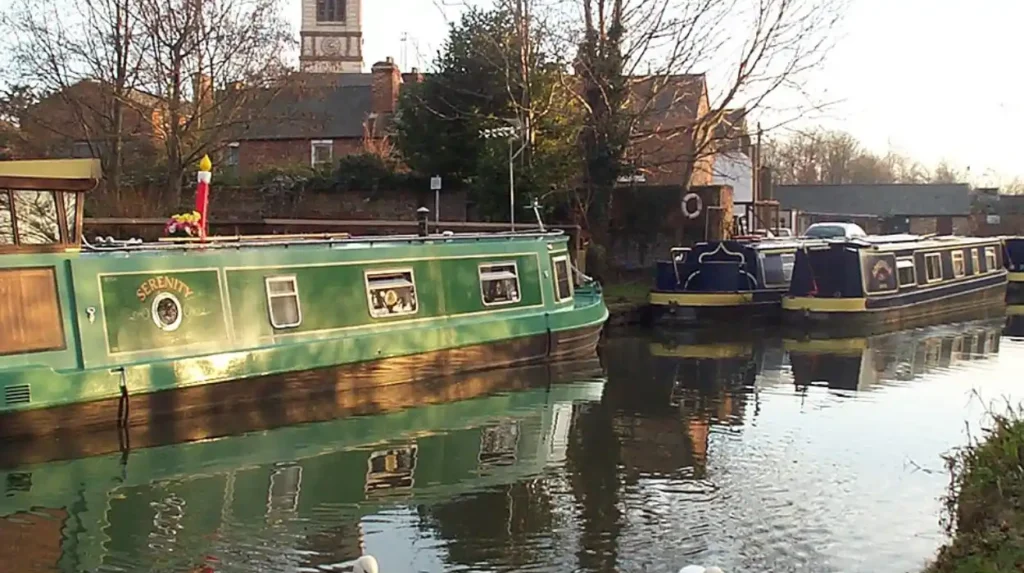
The Oxford Canal towpath runs alongside the western boundary of Jericho and connects directly to Port Meadow through the footbridge that replaced the former chain ferry near the Castlemill Boatyard site. Port Meadow is one of the largest areas of unimproved grassland in England within an urban boundary. Its grazing rights have been held by the Freemen of Oxford since before 1086, making it one of the oldest documented common lands in England. The meadow supports cattle and horses under these ancient grazing rights throughout the year.
During the summer months, the meadow is used for open-water swimming in the River Thames along its western edge. College Cruisers Wharf operates at the Canal Street access point in Jericho, providing narrowboat hire and services for visiting boats. The Godstow Abbey ruins lie approximately 2 miles north of Port Meadow along the Thames path, accessible on foot from Jericho. Founded in 1115 by Ediva of Winchester, the abbey received royal patronage from Kings Henry I and Henry II and was designated a site of national historical significance in 1949. The combination of the canal path, Port Meadow, and the River Thames makes Jericho one of the few urban neighbourhoods in England where a visitor can walk from a Victorian streetscape into an unimproved medieval common within ten minutes on foot.
What Community Organisations and Annual Events Does Jericho Oxford Support?
Jericho supports an active community infrastructure, including the Jericho Community Association, the Jericho Residents Association, and the annual Jericho Street Fair held each June. These institutions have maintained the neighbourhood’s social cohesion since the 1960s and continue to shape its local identity.
The Jericho Community Association operates from the Jericho Community Centre on Canal Street and manages the neighbourhood’s community website, Jericho Online. The annual Jericho Street Fair takes place each mid-June, timed around the feast day of St John the Baptist, whose name connects to the biblical associations embedded in the area’s identity. The fair closes Walton Street and the surrounding roads to traffic and features local traders, food stalls, live music, and community events across the afternoon. The Jericho Residents Association, which was instrumental in stopping the 1960s demolition plan, remains an active body engaging with planning applications and local authority consultations affecting the neighbourhood.
The Oxford University Press has maintained a physical presence in Jericho for over a century and contributes to the neighbourhood’s academic and intellectual profile. The Jericho Wharf Trust was established in 2012 to pursue community acquisition of the Castlemill Boatyard site, which has remained derelict since 1992. In 2024, the Trust formally petitioned Oxford City Council to use compulsory purchase powers to acquire the land from its current private owner following 25 years of dereliction. Jericho’s community infrastructure is considered a model of sustained civic engagement, with documented examples of successful opposition to redevelopment, community land campaigns, and annual cultural programming maintained over more than five decades.
What is Jericho in Oxford known for?
Jericho is Oxford’s most independent neighbourhood, known for its Victorian terraced housing, the Oxford University Press building on Walton Street, the Phoenix Picturehouse cinema established in 1913, the Oxford Canal towpath, and an entirely independent retail and dining scene with no chain stores. In 2017, TravelSupermarket ranked it the 11th hippest destination in the United Kingdom.
How did Jericho Oxford get its name?
Jericho Oxford takes its name from the biblical city of Jericho, used in English as a term for a remote or outlying place. The suburb sat outside Oxford’s medieval city walls and served as a resting point for travellers who arrived after the city gates had closed each night. The name was formalized during the medieval period and has remained in continuous use.
Is Jericho Oxford worth visiting?
Jericho Oxford is worth visiting for its concentration of independent cafes, restaurants, and specialist shops, the Phoenix Picturehouse cinema, the FREUD cocktail bar inside a converted Victorian church, and direct walking access to Port Meadow, 350 acres of ancient common land bordering the River Thames. The neighbourhood offers a distinct alternative to Oxford’s tourist-heavy city centre streets.
What famous books are set in Jericho, Oxford?
Three significant works of English literature are set in Jericho Oxford: Thomas Hardy’s Jude the Obscure published in 1895, which depicts scenes at a church matching St Barnabas; Philip Pullman’s His Dark Materials trilogy and Lyra’s Oxford, set partially in Jericho’s canal district; and Pip Williams’s The Bookbinder of Jericho published in 2023, set in the Oxford University Press bindery on Walton Street during World War One.
How do you get to Jericho from Oxford city centre?
Jericho is a 10 to 15 minute walk from Oxford city centre. Visitors can walk north along Cornmarket Street and Woodstock Road before turning left onto Little Clarendon Street, which leads directly into the heart of Jericho. Alternatively, the Oxford Canal towpath from Hythe Bridge Street provides a scenic walking route along the waterway and into the neighbourhood from its western boundary.