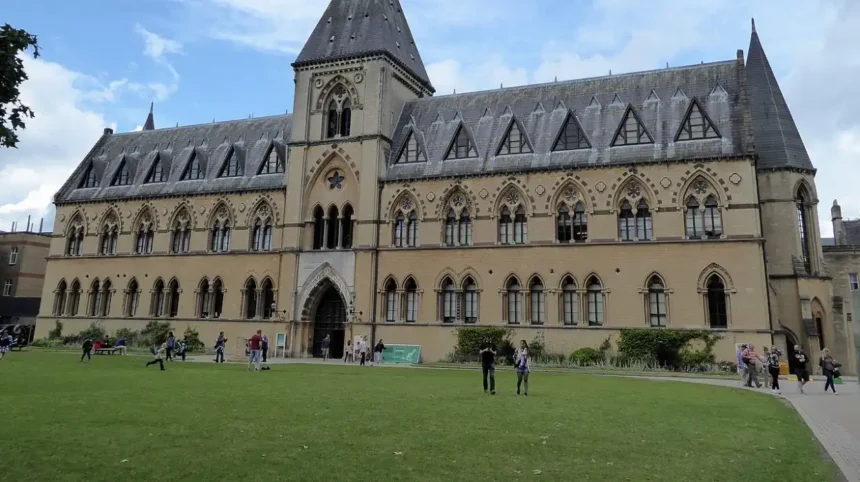
The University Parks nature trail is a network of informal walking paths through Oxford University Parks, a 74‑acre green space near Oxford city centre that lies along the River Cherwell. It follows established routes such as North Walk, Riverside Walk, Thorn Walk, Oak Walk and West Walk, threading through formal lawns, sports fields and semi‑natural riverside vegetation. These paths function as a continuous nature trail where visitors observe native trees, flowering borders, wetland plants along the river and resident birdlife, while passing University departments and sports grounds.
- How long is the University Parks nature trail, and what is the typical walking time?
- What are the main walking routes inside the University Parks nature trail?
- What is the terrain and surface like on the University Parks nature trail?
- What wildlife and plants can you see on the University Parks nature trail?
- What is the historical background of the University Parks nature trail?
- How hard is the University Parks nature trail and who is it suitable for?
- What safety and etiquette rules apply on the University Parks nature trail?
- What practical tips should visitors follow when walking the University Parks nature trail?
- How does the University Parks nature trail connect with wider Oxford green routes?
- Is the University Park’s nature trail worth visiting for a short walk?
- How long does it take to walk the full University Parks trail?
- Is the University Parks nature trail suitable for beginners or families?
- What kind of wildlife can you actually see in University Parks?
- Can you extend the walk beyond University Parks for a longer hike?
Typical trail loops range from 1.3 miles (about 2.1 km) inside the Parks to 4–7 km regional routes that connect to Old Marston Country Park and the Oxford Canal. The trail is open year‑round, free to access, and used by walkers, runners, students and families seeking a low‑elevation, low‑difficulty nature experience within an urban‑academic landscape.
How long is the University Parks nature trail, and what is the typical walking time?
The core University Parks nature trail forms a compact loop of about 1.3–1.4 miles (2.1–2.2 km) that circles the main park area, with an elevation gain of roughly 0 metres, making it suitable as a short, easy stroll. This inner‑park route takes most adults 20–30 minutes at a moderate pace, though many visitors extend this into 40–60 minutes by pausing at viewpoints, sports fields and borders. Longer regional nature‑trail itineraries that link University Parks with Old Marston Country Park or the Oxford Canal add roughly 4–7 km (2.5–4.3 miles) and increase walking time to 1.5–2 hours.
Public‑facing guides and local‑walk platforms describe these mixed‑length options as family‑friendly, with most routes classified as “easy” or “medium” difficulty. Trail apps and printed‑route cards often suggest a 1‑hour window for a substantial but relaxed loop through the park and adjacent green corridors. This allows time to see several named walks (Riverside, Thorn Walk, North Walk) and still return to the city centre without feeling rushed.
What are the main walking routes inside the University Parks nature trail?
Inside Oxford University Parks, the nature trail is built around several named paths that interlock to form a coherent walking circuit. North Walk runs along the northern edge of the park, lined with mature oaks planted in the late 1880s and supplemented by later additions in the 1950s and beyond, plus a notable Dawn Redwood specimen. Riverside Walk follows the River Cherwell, skirting the water’s edge and offering views of punt boats, reed‑beds and riverside shrubs, with places to stop and watch wildfowl. Thorn Walk showcases more than thirty species and varieties of hawthorn, with flowering in spring, fruit in summer and vivid autumn colour in the foliage.
Oak Walk, replanted in the 1980s after Dutch elm disease removed an earlier avenue, now features inter‑planted oaks, crab apples and cherries that create seasonal interest. West Walk passes under holly trees, including a weeping holly and a variegated specimen whose leaves change colour seasonally, framed by drought‑tolerant island beds. These named walks connect to informal grass‑level paths that cross the park’s sports fields, flower borders and lawns, allowing visitors to customise their own nature trail by combining two or more of these routes.
What is the terrain and surface like on the University Parks nature trail?
The University Parks nature trail mixes paved, compacted‑gravel and grass‑level surfaces, with most main routes using hard‑surfaced paths suitable for wheelchairs and pushchairs. Paved walkways and cycle‑compatible paths run along the central spines of North Walk, Thorn Walk and West Walk, while the Riverside Walk combines paved sections with short stretches of compacted‑gravel or stone‑dust track close to the river.
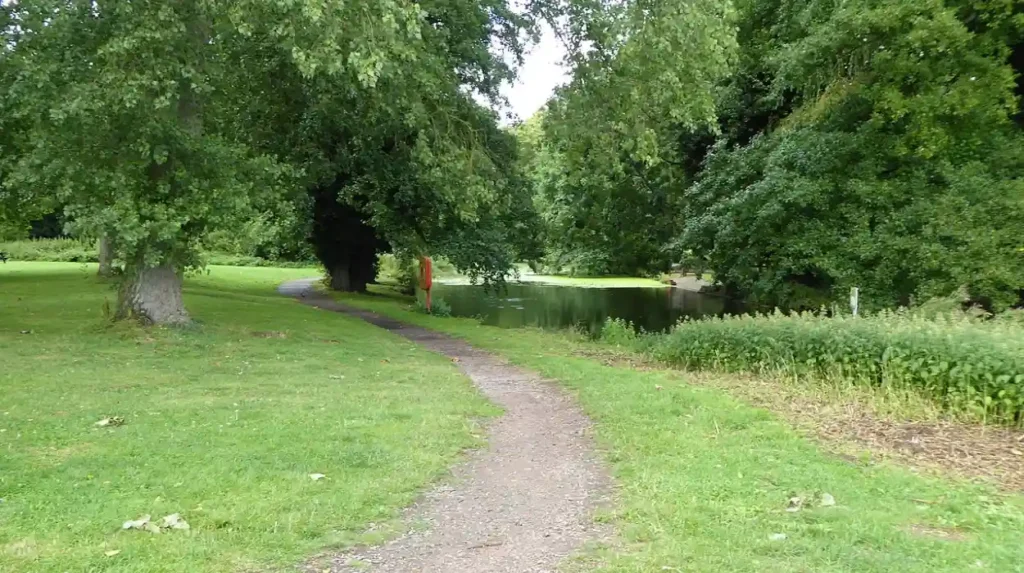
Grass‑level routes cut across the park’s playing fields and flower borders, offering a softer, more natural feel but becoming muddy after rain, especially near the Cherwell. These off‑pavement paths are generally flat, with less than 1–2 metres of elevation change over the entire loop, which underpins the “easy” rating. Tree‑lined stretches and bordered walkways provide some natural drainage, yet earth‑based sections can hold water and develop puddles in wet weather. The combination of hard‑surfaced main routes and softer grass‑level diversions lets visitors choose between a smooth, accessibility‑focused route and a more immersive, muddy‑shoes‑accepted nature trail.
What wildlife and plants can you see on the University Parks nature trail?
The University Parks nature trail supports a mix of native trees, flowering borders, riverine plants and common urban wildlife. Along North and Oak Walks, visitors see several oak species (including Sessile and English oak), plus crab apples and cherries that attract birds and insects. Thorn Walk’s hawthorn collection includes over thirty species, producing spring blossoms, summer berries and autumn‑coloured foliage that provide food and shelter for birds.
The Dawn Redwood, a rare deciduous conifer, grows in the North Walk, illustrating modern botanical reintroduction from Chinese seed stock. Riverside borders and lawns feature shrubs, bulbs and herbaceous plants adapted to alkaline soils and a dry‑summer climate, with seasonal colour from spring bulbs through summer perennials to autumn‑flowering shrubs. The River Cherwell zone hosts reeds, sedges and marginal plants where mallards, moorhens and other waterfowl frequently appear, while the grasslands and tree canopy support robins, great tits, blackbirds and squirrels. In wetter micro‑habitats, dragonflies and damselflies patrol the water’s edge, and occasional herons or kingfishers may be sighted near the river.
What is the historical background of the University Parks nature trail?
The University Parks nature trail sits within grounds that have been managed by the University of Oxford since the mid‑19th century, evolving from river‑adjacent meadows into a formal park. The park was established partly to provide open space for students and staff, with tree‑lined walks and sports fields added in stages from the 1880s onward. North Walk’s oaks date to the late 1880s, planted to offer winter interest and shelter, while later plantings after the 1940s expanded the arboretum‑like collection. Dutch elm disease in the 1970s removed an earlier elm avenue, leading to the creation of Oak Walk in the 1980s as a replacement tree‑lined route.
During the Second World War, part of the area between Oak Walk and Thorn Walk was turned into “Dig for Victory” allotments, before reverting to ornamental and sports use afterwards. Thorn Walk’s hawthorn assemblage began in the late 19th century and was enlarged in 1928–29, forming a deliberate botanical collection within the park. Over time, these structured walks became the backbone of what is now popularly described as the University Parks nature trail, blending landscape design with ecological function along the Cherwell.
How hard is the University Parks nature trail and who is it suitable for?
The University Parks nature trail is consistently rated as easy to medium difficulty, suitable for most ages and fitness levels. The core loop has minimal elevation change, typically under 1 metre, and uses wide, flat paths that allow brisk walking, jogging or wheelchair use. Short walkers can cover the 1.3–1.4 mile circuit in under 30 minutes, while families with children or older adults can take 45–60 minutes with breaks.
Regional extensions that link to Old Marston Country Park or the canal add distance but remain low‑gradient, classed as “medium” mainly due to length rather than steepness. The trail suits casual walkers, students seeking a study‑break stroll, and visitors wanting a gentle, low‑commitment nature experience within Oxford. Dog‑walkers and runners also use the paths, subject to usual local park rules about leashing and shared‑use etiquette near cyclists.
What safety and etiquette rules apply on the University Parks nature trail?
Visitors to the University Parks nature trail must follow standard park‑use and shared‑path rules aimed at safety and environmental protection. Cyclists use designated cycle tracks at moderate speeds, and pedestrians should stay to the left or use the nearest path verge to avoid conflicts. Runners and walkers should yield to faster users where space is tight, especially along narrow riverside sections.
Dogs require on‑lead or close‑control rules in many areas, and owners must remove faeces to maintain cleanliness and hygiene. Littering is discouraged; visitors are asked to carry waste out and use the bins located near entrances and popular stopping points. During wet weather, some grass paths and river‑edge spots become muddy and slippery, so appropriate footwear is essential. Visitors should respect playing‑field boundaries, avoid walking on freshly mown or marked‑out sports pitches, and follow any temporary signage for maintenance or events.
What practical tips should visitors follow when walking the University Parks nature trail?
Planning a visit to the University Parks nature trail improves comfort and accessibility, especially for those unfamiliar with Oxford. The park lies within a 10–15 minute walk from the city centre, with access via Parks Road, South Parks Road and nearby roads from the Jericho area. There are no public parking lots inside the park, so visitors commonly use nearby on‑street zones or off‑street car parks and then walk the final stretch. Public‑bus routes serving central Oxford stop within a short walk of the park entrances, making it convenient for day‑trippers without a car.
Walking between late morning and early afternoon offers the best light for photography and wildlife observation, while early‑evening visits provide quieter conditions. Wear comfortable shoes, bring water and a light waterproof layer, and consider a small backpack containing snacks, a phone and, optionally, a trail‑navigation app. Checking the University Parks website noticeboard before visiting helps identify any temporary closures for events, sports matches or maintenance.
How does the University Parks nature trail connect with wider Oxford green routes?
The University Parks nature trail links into a broader network of riverside and green‑space routes around Oxford, making it a node in a larger walking system. The Oxford Natural and Landscape History Walk uses University Parks as one segment, running from the Botanic Garden through the Parks and onward to the Natural History Museum and other green spaces. Regional walking guides describe routes such as Kidlington–University Parks (13 km) along the Cherwell, which terminate at or pass by the park, enabling longer riverside itineraries. Circular city‑walk brochures and local walking maps incorporate the Parks as a rest or orientation point within multi‑section loops. The Old Marston Country Park loop begins in University Parks and then extends across fields and lanes toward Old Marston village, adding a more rural, semi‑wooded character to the trail. These connections allow visitors to treat the University Parks nature trail as either a stand‑alone outing or a mid‑point in a multi‑kilometre exploration of Oxford’s green corridors.
Is the University Park’s nature trail worth visiting for a short walk?
Yes, it’s ideal for a quick, relaxing walk near the city centre. The main loop is only about 1.3–1.4 miles and takes 20–30 minutes. Despite being short, it offers riverside views, mature trees, and peaceful green space. It’s perfect if you want nature without leaving Oxford.
How long does it take to walk the full University Parks trail?
Most people complete the core loop in around 20–30 minutes at a steady pace. If you stop for photos, wildlife, or just relax, it can stretch to 45–60 minutes. Longer routes connected to the Oxford Canal can take up to 1.5–2 hours. It depends on how much you explore beyond the park.
Is the University Parks nature trail suitable for beginners or families?
Yes, it’s one of the easiest walks in Oxford. The terrain is flat with almost no elevation, and many paths are paved or gravel. Families, elderly visitors, and even wheelchair users can comfortably use the main routes. It’s a low-effort walk with plenty of open space for breaks.
What kind of wildlife can you actually see in University Parks?
You can spot common birds like robins, blackbirds, and ducks along the River Cherwell. Squirrels are frequently seen in tree-lined areas, and in warmer months, dragonflies hover near the water. Occasionally, you might even see herons or kingfishers. It’s a small but lively urban ecosystem.
Can you extend the walk beyond University Parks for a longer hike?
Yes, the trail connects to routes leading to Old Marston and surrounding countryside. These extensions add 4–7 km and give a more rural feel. You can follow riverside paths or canal routes for a longer experience. It’s great if you want to turn a short stroll into a half-day walk.