Key Points
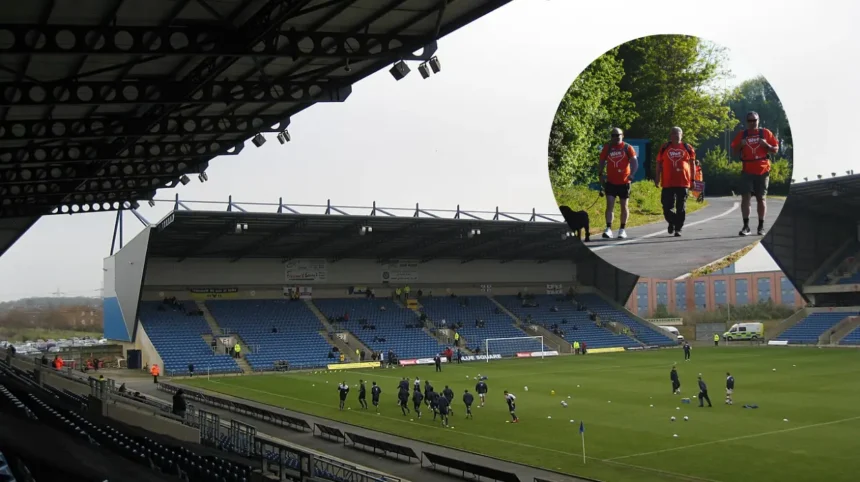
- Neil McManus, an Oxford United supporter from Chinnor, is walking 125 miles (201 km) to Millwall’s The Den stadium to attend Oxford United’s final Championship fixture of the 2025/26 season.
- The journey spans five days and is the equivalent of five consecutive marathons, symbolising his dedication to the club despite its relegation from the Championship.
- McManus is also using the trek to raise awareness and funds for Fight Bladder Cancer, a charity that supported him during his own diagnosis.
- The match against Millwall at The Den will be Oxford United’s last away game of the campaign, marking the end of their second‑tier season and the beginning of a return to the third tier.
- As reported by Richard Fisher of BBC News, fellow fans and friends have been following the walk with social‑media updates, while the club has publicly acknowledged the effort as a powerful example of supporter passion.
Oxford United(Oxford Daily)May 02,2026-As reported by BBC News on 2 May 2026, Oxford United supporter Neil McManus is walking 125 miles (201 km) to Millwall’s The Den stadium over five days, completing the distance of five consecutive marathons to attend the U’s final Championship match of the 2025/26 season.
- Key Points
- How does the walk relate to the club’s relegation and fan loyalty?
- What role does charity play in this marathon walk?
- How unusual is this type of fan journey in English football?
- Background: How does this moment fit into Oxford United’s recent history?
- Prediction: How might this story affect Oxford United fans and the local community?
The journey starts in Chinnor, Oxfordshire, and follows roads and country paths towards south‑east London, tracing a route that underscores both geographic and emotional distance between his hometown and the club’s last away game of the campaign. McManus began the trek on about 28 April and is expected to arrive at The Den in time for the match against Millwall on Saturday, 2 May, which will double as Oxford United’s final fixture in the Championship before their relegation to League One.
McManus told BBC News that the walk is not only about supporting his team but also about giving back to the charity that supported him personally.
“I wanted to contribute something for them to align with the end of the season.”
He said, referring to the charity Fight Bladder Cancer. Fight Bladder Cancer, based in Chinnor, provides support, information, and advocacy for patients and their families, as well as campaigning for more research into the disease.
How does the walk relate to the club’s relegation and fan loyalty?
Oxford United’s 2025/26 Championship campaign has ended in relegation, with the side confirmed to drop back into League One at the conclusion of the season. Despite the on‑field disappointment, the club has repeatedly emphasised how important fan backing has been throughout the season, both at home and away.
In the club’s own “Final Four” campaign messaging, Oxford United called on supporters to “all in, together” for the closing fixtures, including the final trip to The Den. McManus’s marathon‑style walk has become a striking physical manifestation of that sentiment, illustrating how some supporters view standing by the team even in relegation as a badge of honour rather than a burden.
BBC News notes that McManus plans to enjoy the occasion despite the outcome, describing his mood as anticipation to “relax and watch his cherished team conclude the season on a positive note.” Friends and fellow U’s fans have followed his progress online, sharing photos and short clips of him walking along country lanes and motorway service‑station stops, turning the private pilgrimage into a shared, public act of solidarity.
What role does charity play in this marathon walk?
Fight Bladder Cancer has been closely linked with McManus’s walk, with the charity publicly acknowledged as the beneficiary of both awareness and fundraising efforts surrounding the trek. The organisation confirmed that it reached out to McManus when he was first diagnosed with the disease, offering support that he now wants to repay through this long‑distance challenge.
BBC News quotes McManus saying:
“They contacted me when I was diagnosed. I wanted to contribute something for them to align with the end of the season.”
By framing the walk as a dual act supporting the football club and raising the profile of a cancer charity he has given the campaign a broader social dimension beyond the terrace.
The trek also highlights how football‑related stunts and fan‑driven “ultras”‑style gestures are increasingly being used to draw attention to health and community causes, blending sport with public‑health advocacy. Oxford United’s own communications around the “Final Four” stage of the season have subtly encouraged this kind of grassroots engagement, without explicitly endorsing individual challenges.
How unusual is this type of fan journey in English football?
Walking the equivalent of five marathons to a single away match is extremely rare in English football, where most supporters travel by car, coach, or train even for long‑distance trips. The 125‑mile (201 km) distance from Chinnor to The Den is comparable to the distance of several top‑level marathons stacked end‑to‑end, and completing it in five days requires a gruelling daily average of around 25 miles (40 km).
BBC News frames the walk as an example of “extraordinary dedication” that stands out even among Oxford United’s famously loyal fanbase, which helped the club celebrate promotion to the Championship in previous years. In contrast to grand coach‑emigration‑style trips to Wembley or other major showpieces, this is a quiet, personal kind of pilgrimage that relies on stamina and commitment rather than financial resources.
The story has also drawn favourable coverage from national outlets, with Yahoo Sports echoing the BBC’s description of the challenge as “the equivalent of five consecutive marathons” and underlining how the walk illustrates the emotional weight fans attach to the end of the domestic season.
Background: How does this moment fit into Oxford United’s recent history?
Oxford United’s fall back into League One follows a period of rapid ascent that began with their promotion to the Championship, when the club celebrated a major step up the English football pyramid. Supporters had previously paraded through the city in 2024 to mark that promotion, a moment that many fans still regard as one of the club’s high‑water marks in recent decades.
The 2025/26 Championship campaign, however, did not reproduce the success of the last campaign, and the club’s relegation means a return to the third tier after a relatively short stay in the second tier. This has made the final four fixtures—especially the away game at The Den- emotional bookends for a season defined by both hope and disappointment.
Club communications around the “Final Four” matches have leaned heavily on the language of togetherness, asking supporters to turn out in full force for the remaining games as a way of reinforcing the connection between the team and the community. In that context, McManus’s walk can be seen as an extreme, but symbolically coherent, extension of that collective ethos.
Prediction: How might this story affect Oxford United fans and the local community?
For Oxford United supporters, Neil McManus’s walk sets a new benchmark for what fan devotion can look like in the modern era, especially when club fortunes are falling rather than rising. It could inspire more grassroots‑style campaigns—not necessarily of the same physical scale but ones that combine match‑day attendance with charitable or community‑focused goals.
Within the local community of Chinnor and Oxfordshire, the story may strengthen the profile of Fight Bladder Cancer and similar charities, encouraging others to consider linking personal challenges with fundraising for health causes. At the same time, club officials may reflect on how such high‑profile gestures can be harnessed in broader supporter‑engagement strategies, without encouraging unsafe or unsustainable behaviour.
For the wider audience of English football fans, McManus’s trek offers a human‑interest counter‑narrative to the often‑commercialised image of modern football, reminding readers that emotional investment in a club can still manifest in remarkably personal and physically demanding ways.