The rivalry between Swansea City Association Football Club and Oxford United Football Club represents a significant intersection of Welsh and English football history, marked by distinct organizational evolutions, contrasting home venues, and recurring competitive fixtures in the English football league system.
- What is the history of Swansea City A.F.C.?
- What is the history of Oxford United F.C.?
- What are the key competitive dynamics between Swansea and Oxford?
- What role does venue and environment play in these fixtures?
- How do coaching and captaincy influence the success of these clubs?
- What does the data reveal about their recent head-to-head performance?
- Frequently Asked Question
What is the history of Swansea City A.F.C.?
Swansea City A.F.C. was founded in 1912 as Swansea Town, evolving into a professional club that represents Wales within the English football system, currently competing in the EFL Championship and playing home matches at the 21,000-capacity Swansea.com Stadium.
The club began its journey in the Southern League before joining the Football League in 1920. Throughout its century-long history, the “Swans” have navigated various tiers of English football. A defining early achievement was winning the Third Division South title in 1925 and 1949. The club’s trajectory included a high point in 1981, when they reached the First Division and secured a sixth-place finish, which remains a club record. The team has played at several iconic grounds, moving from their original home at Vetch Field to the modern Swansea.com Stadium in 2005. The ownership structure currently involves Swansea Football LLC, holding a majority stake, alongside minority stakeholders including Nigel Morris and the Swansea City Supporters Society Ltd.
What is the history of Oxford United F.C.?
Oxford United F.C., originally formed in 1893 as the amateur club Headington, transitioned to professional status in 1949, rebranded as Oxford United in 1960, and achieved its most significant major honor by winning the 1986 Football League Cup at Wembley.
The club’s early years were defined by its roots as “the boys from over the hill” in Headington. Following a merger with Headington Quarry in 1911, the club joined the Southern League in 1949, marking its entry into semi-professional and eventually professional football. A pivotal era began in 1962 with election to the Football League. The 1980s represent the club’s pinnacle, including successive promotions that saw Oxford reach the top tier of English football, where they competed for three seasons. Despite a period of decline that included relegation out of the Football League in 2006, the club demonstrated resilience by winning the Conference Premier play-off final in 2010 to regain professional league status.
What are the key competitive dynamics between Swansea and Oxford?
Matches between Swansea City and Oxford United are defined by their status as consistent competitors within the EFL Championship, characterized by fluctuating form, tactical variability, and historical significance that reflects their respective efforts to climb the English football pyramid.
Competition between these two entities has intensified as both clubs have occupied the second tier of English football. Their encounters are not traditionally framed as a geographic derby, yet they carry weight due to the competitive stakes of the EFL Championship. Statistics from recent years, including the 2025-26 season, highlight the closely contested nature of their fixtures. For instance, in a December 2025 encounter at the Kassam Stadium, Swansea secured a 1-0 victory through a Žan Vipotnik goal, contrasting with a 2-0 victory for Swansea at home earlier that same month. These results underscore a rivalry where tactical discipline and goal-scoring efficiency remain the primary determinants of match outcomes.
What role does venue and environment play in these fixtures?
Venue dynamics, specifically the distinct atmospheres at the Swansea.com Stadium and the Kassam Stadium, significantly influence match outcomes, as both clubs leverage home-field advantage to navigate the logistical and psychological demands of the grueling EFL Championship league schedule.
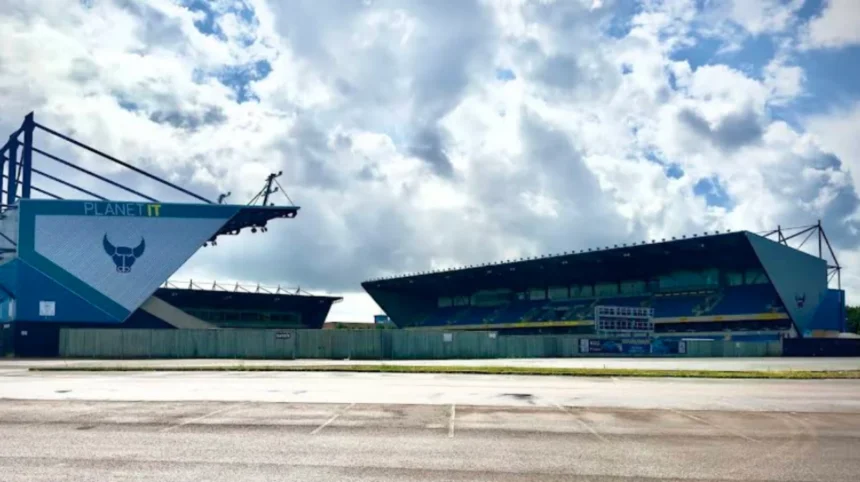
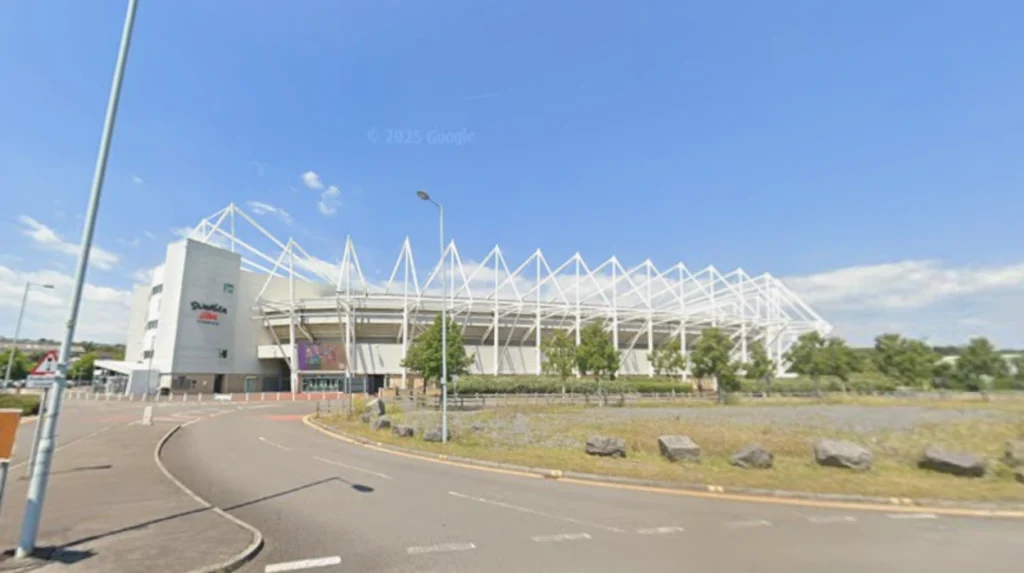
The Swansea.com Stadium, with its 21,000-seat capacity, provides a robust home environment for the Swans, characterized by strong regional support in Wales. In contrast, Oxford United’s Kassam Stadium serves as the central hub for the U’s, a venue that has hosted the club during its rise back through the league ranks. The physical nature of these stadiums impacts player performance, with home teams historically showing increased possession statistics and higher counts of touches within the opposition box. Effective home management is essential for survival in the Championship, where the consistency of results at these grounds often dictates a team’s position in the final league table.
How do coaching and captaincy influence the success of these clubs?
Coaching leadership and on-field captaincy are the primary drivers of organizational stability for both Swansea City and Oxford United, as demonstrated by the appointments of key figures like Vítor Matos and the tactical reliance on veteran captains.
At Swansea City, leadership under head coach Vítor Matos focuses on sustaining competitiveness in the second tier. Similarly, Oxford United has navigated periods of managerial transition, such as the appointment of caretakers and experienced staff to maintain continuity. The role of the captain is equally vital; for Oxford, players like Cameron Brannagan have become central figures, providing experience and goal-scoring capability from the midfield. These leadership structures are essential for managing squads that include a blend of seasoned veterans and young talents, ensuring that tactical instructions are executed effectively throughout the 46-game league season.
What does the data reveal about their recent head-to-head performance?
Recent data from the 2023–2025 period shows a competitive parity, with both Swansea City and Oxford United demonstrating the capacity to secure narrow victories, reflecting the high levels of tactical preparation and unpredictability inherent in Championship football.
Analysis of matches from July 2023 to December 2025 shows a series of tight results. For example, a friendly in July 2023 saw Oxford win 1-0, followed by a competitive 2-0 Swansea victory in December 2025 and a subsequent 1-0 win for the Swans at the Kassam Stadium later that month. These outcomes are backed by statistical indicators such as expected goals (xG) and ball possession percentages. In the December 2025 clash at the Kassam Stadium, Oxford held 47% possession against Swansea’s 53%, highlighting the fine margins between success and failure in these encounters. Such metrics allow analysts at organizations like Oxford Daily to track performance trends and predict future competitive outcomes.
Frequently Asked Question
What were the results of the most recent league meetings between Swansea City and Oxford United
During the 2025–26 EFL Championship season, Swansea City and Oxford United met twice. Swansea City won both encounters: they secured a 2–0 victory at the Swansea.com Stadium on December 6, 2025, and followed it with a 1–0 away victory at the Kassam Stadium on December 29, 2025.