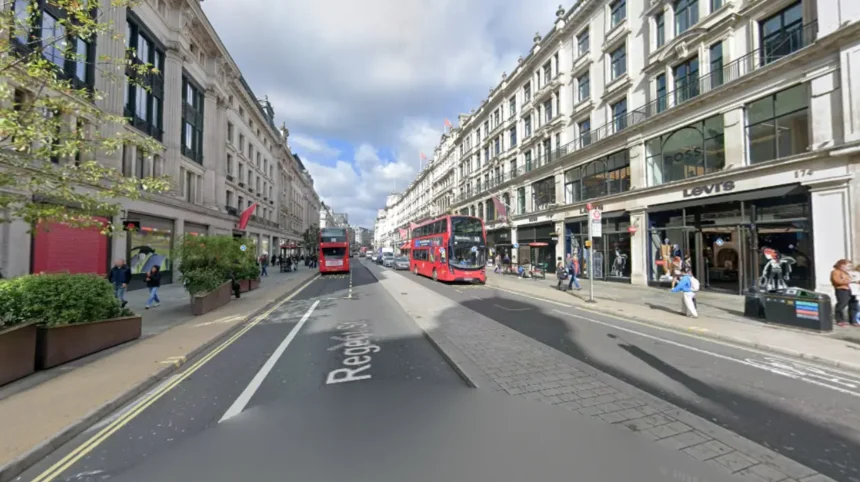
The Oxford Circus Christmas Lights are an iconic annual holiday lighting installation spanning Oxford Circus and Oxford Street in Central London, England. This event marks the official start of the festive season in West End London.
- When Do the Oxford Circus Christmas Lights Turn On?
- What Is the History of the Oxford Circus Christmas Display?
- How Are the Oxford Circus Christmas Lights Designed and Built?
- What Impact Do the Lights Have on London Retail Economy?
- How Can Visitors Access the Oxford Circus Christmas Lights Display?
- What Environmental and Sustainability Practices Power the Display?
- What are the best times of day to view the Oxford Circus Christmas Lights?
- Are the Oxford Circus Christmas Lights free to view for the public?
- How long do the Oxford Circus Christmas Lights stay up each year?
- Can double decker buses offer a good view of the lights display?
- Are there accessible routes for visitors with mobility impairments?
The Oxford Circus Christmas Lights represent one of the most prominent public holiday displays in the United Kingdom. Oxford Circus sits at the intersection of Oxford Street and Regent Street within the City of Westminster.
The display features thousands of energy efficient light emitting diode lights suspended across major retail thoroughfares. Millions of visitors travel to Central London between November and January to view the illumination project each year.
The display is managed through partnerships involving the New West End Company, local property owners, and the Westminster City Council. Commercial sponsors often collaborate with local authorities to fund the design, installation, and energy infrastructure.
The physical setup spans multiple city blocks, creating a continuous overhead canopy of light. The lights serve both as a cultural tradition and as a major economic driver for retail business in London.
When Do the Oxford Circus Christmas Lights Turn On?
The Oxford Circus Christmas Lights usually turn on during the first week of November each year and stay illuminated daily until early January. The lights operate from mid afternoon through late evening to maximize visibility during short winter daylight hours.
The official switch on schedule for the Oxford Circus display aligns with the broader Central London retail calendar. Installation teams begin mounting the structural support cables and light arrays in late October during overnight hours to minimize traffic disruption.
The lighting ceremony historically featured live entertainment and celebrity appearances, though recent operational models prioritize continuous, scheduled illumination to manage crowd density safely.
The operational hours of the lights are carefully managed to balance public enjoyment with energy conservation goals. The system turns on automatically around 3:00 PM as twilight begins in London and switches off at midnight.
The lights run continuously seven days a week through Christmas Eve, Christmas Day, Boxing Day, and the New Year holiday. The entire installation is completely dismantled by mid January to clear the street architecture for normal operations.
What Is the History of the Oxford Circus Christmas Display?
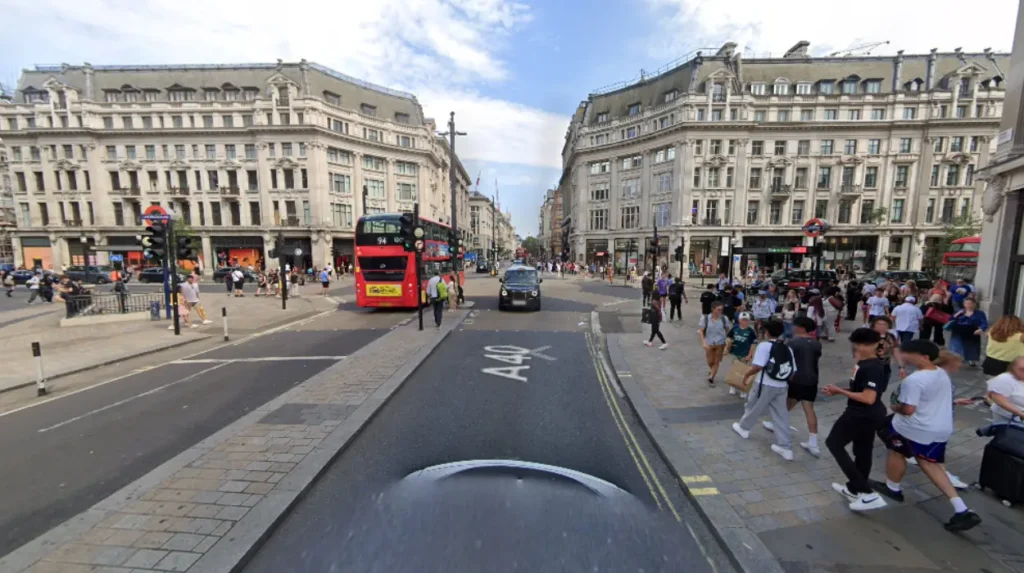
The Oxford Circus Christmas display began in 1959 when local shopkeepers organized decorated lighting across Oxford Street to boost postwar retail trade. The initiative established a seasonal tradition that transformed Central London into a international holiday destination.
The initial 1959 display featured simple pine garlands and traditional filament light bulbs funded directly by adjacent retail stores. The success of the inaugural lighting project led to the formation of formal merchant associations dedicated to expanding the scope of the installation.
By the 1970s, the display adopted specific annual thematic designs, incorporating complex metal frames and animated light elements that spanned the width of the street.
Technological advancements over the decades radically altered the construction and sustainability of the lighting display. The transition from incandescent bulbs to low voltage light emitting diodes occurred during the early 2000s, reducing electrical consumption substantially.
In recent years, public operators introduced recyclable materials and smart automated controls. Today, the historical legacy of the display continues to influence global city lighting projects while retaining its core function as a symbol of London festive heritage.
How Are the Oxford Circus Christmas Lights Designed and Built?
The Oxford Circus Christmas Lights are designed by specialized lighting architects and engineering firms using lightweight recyclable aluminum frames and smart LED arrays. The installation requires structural testing, electrical grid connection, and specialized overnight mounting over several weeks.
The engineering process for the display begins nearly a year before the installation date. Designers create structural schemes that must withstand heavy winter winds, cold temperatures, and urban precipitation.
Specialized fabrication plants construct modular lightweight frames using recycled aluminum to reduce stress on historic building facades. Every lighting element undergoes rigorous safety testing to ensure structural integrity and compliance with UK electrical standards.
Rigging crews install suspended catenary cables anchored to reinforced points on surrounding retail buildings along Oxford Street and Regent Street. Installation work occurs strictly between midnight and 5:00 AM to avoid closing major traffic lanes during peak hours.
Thousands of individual light emitting diodes are programmatically mapped to centralized control software. This software allows technicians to alter light intensity, project dynamic color patterns, and monitor real time energy consumption across the entire grid.
What Impact Do the Lights Have on London Retail Economy?
The Oxford Circus Christmas Lights generate substantial foot traffic that drives holiday revenue for hundreds of retail stores, restaurants, and hotels in the West End. The display attracts millions of domestic shoppers and international tourists during the peak fourth quarter commercial cycle.
The West End of London experiences its highest commercial sales volume between early November and late December. The visual spectacle of the lights serves as a primary anchor, drawing millions of visitors into the commercial district daily. Major department stores, including Selfridges and John Lewis, report significant increases in overall store visitation that directly correlate with the activation of the street lights.
The economic benefits extend beyond retail store purchases into the broader hospitality sector. Local restaurants, cafes, theaters, and hotel chains record elevated booking rates throughout the festive season.
Economic impact assessments show that the annual lighting project yields a positive multi million pound return on investment for the local economy. The high volume of foot traffic secures Central London as a competitive global shopping destination during the critical holiday quarter.
How Can Visitors Access the Oxford Circus Christmas Lights Display?
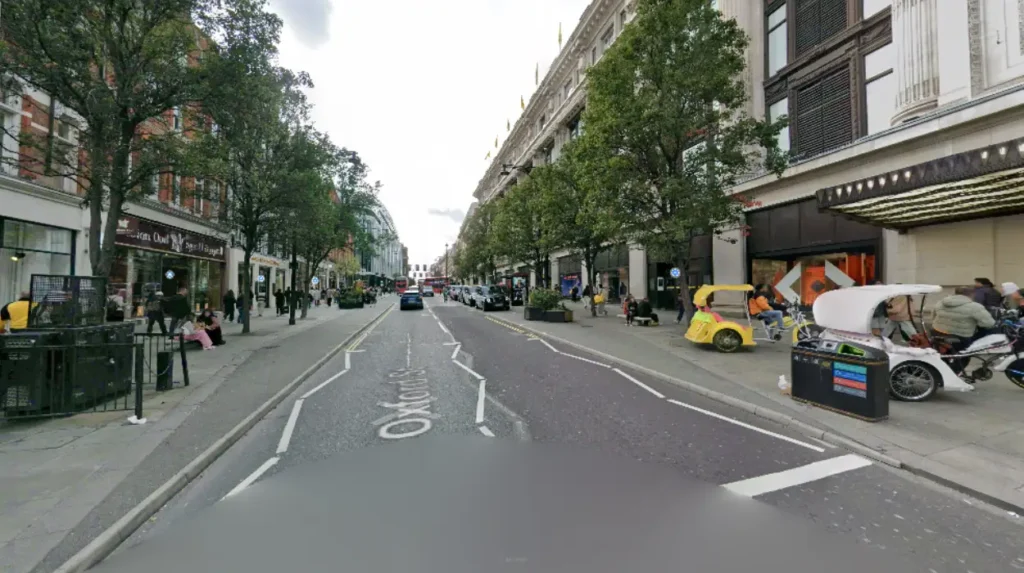
Visitors can access the display directly via the Oxford Circus Underground Station served by the Central, Victoria, and Bakerloo lines. Walking routes from nearby stations like Bond Street and Tottenham Court Road offer accessible alternative viewing pathways.
The Oxford Circus Underground Station provides direct pedestrian access to the center of the lighting installation. Due to heavy passenger volume during peak evening hours, station authorities frequently implement one way exit protocols or temporary entrance controls to prevent platform overcrowding.
Visitors seeking less congested routes are advised to exit at adjacent stations, such as Bond Street or Tottenham Road, and walk along Oxford Street.
Public bus routes also pass directly beneath the light installation along Oxford Street, providing elevated views from double decker buses. However, surface road traffic moves slowly during evening peak hours due to dense pedestrian activity.
Pedestrians should utilize designated signalized crossings and maintain spatial awareness along wide sidewalk areas. Early evening visits during weekdays offer the most comfortable viewing conditions with lower overall crowd numbers.
What Environmental and Sustainability Practices Power the Display?
The Oxford Circus display uses 100 percent renewable electricity combined with energy efficient LED bulbs and automated timing controls. The lighting components are built from recyclable materials that are reused, repurposed, or recycled after each season.
Environmental sustainability is a core requirement for the operational management of the Oxford Circus lights display. Modern installations utilize ultra low wattage light emitting diode bulbs that consume up to 90 percent less electrical power than traditional historical fixtures.
The total electricity required to power the display for the duration of the season is offset by certified renewable energy sources, including wind and solar generation facilities.
Operational run times are strictly managed using automated scheduling software to minimize unnecessary power usage overnight. Light components are designed within a circular economy model, ensuring that structural aluminum supports and plastic diffusers are recycled or reconfigured for future display concepts.
Local government directives require annual carbon footprint reporting, ensuring the holiday tradition continues to align with London long term environmental and climate goals.
What are the best times of day to view the Oxford Circus Christmas Lights?
The optimal viewing time is between 4:30 PM and 6:30 PM on weekday evenings. During these hours, daylight has fully faded to maximize light contrast while avoiding peak late night weekend crowds.
Are the Oxford Circus Christmas Lights free to view for the public?
Yes, the Oxford Circus Christmas Lights are entirely free for the public to view along Oxford Street and Regent Street. No tickets or paid entry reservations are required to walk along the public streets.
How long do the Oxford Circus Christmas Lights stay up each year?
The installation typically operates for approximately nine weeks from early November until early January. The lights are completely removed by mid January for maintenance and seasonal storage.
Can double decker buses offer a good view of the lights display?
Riding on the upper deck of a standard red London bus along Oxford Street offers a unique elevated viewpoint of the hanging light display. Bus routes 98, 139, and 390 pass directly through the illuminated zones.
Are there accessible routes for visitors with mobility impairments?
Oxford Street features wide paved footpaths and curb ramps at all major street intersections for wheelchair accessibility. Bond Street station offers step free access from street level as a convenient alternative to Oxford Circus station.