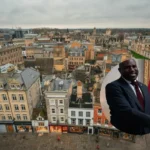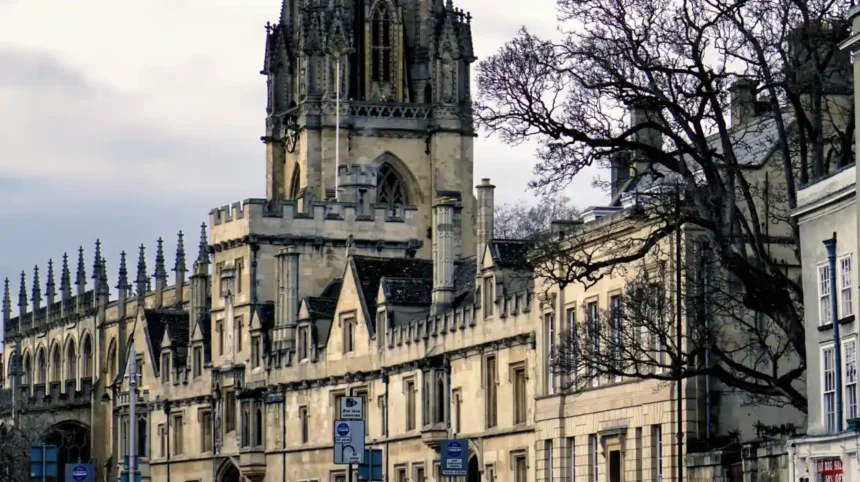
J.R.R. Tolkien, full name John Ronald Reuel Tolkien (1892–1973), spent the majority of his professional life in Oxford, England. He served as a professor of Anglo-Saxon at Pembroke College from 1925 to 1945, then as Merton Professor of English Language and Literature from 1945 to 1959. During those decades, Oxford’s pubs were not casual distractions for Tolkien. They were active intellectual and creative spaces where his most important works, including The Lord of the Rings (published 1954–1955) and The Hobbit (published 1937), were shared, read aloud, and refined among trusted peers. Three pubs in particular stand at the centre of Tolkien’s Oxford: The Eagle and Child, The Lamb and Flag, and The King’s Arms. Each has a distinct history, a documented connection to Tolkien, and an enduring place in literary heritage.
- What Was the Inklings Group and Why Did Oxford Pubs Matter to Tolkien?
- What Is the Eagle and Child, and Why Is It the Most Famous Tolkien Pub in Oxford?
- Why Did the Inklings Move from the Eagle and Child to the Lamb and Flag?
- Did Tolkien Drink at Any Other Oxford Pubs Beyond the Eagle and Child?
- When Did Tolkien Stop Going to Oxford Pub Meetings?
- What Is the Lasting Cultural Impact of Tolkien’s Oxford Pubs?
What Was the Inklings Group and Why Did Oxford Pubs Matter to Tolkien?
The Inklings were an informal Oxford literary group active from the early 1930s to the late 1940s. Members included Tolkien, C.S. Lewis, Charles Williams, Owen Barfield, and Hugo Dyson. Oxford pubs served as their primary social meeting venue, where they read unpublished manuscripts aloud.
The Inklings met on Thursday evenings at C.S. Lewis’s college rooms at Magdalen, where they would read and discuss various material, including their unfinished manuscripts. These meetings were accompanied with more informal lunchtime gatherings at various Oxford pubs.
The group had no formal membership list, no elected officers, no agenda, and no formal rules. Warren Lewis, C.S. Lewis’s older brother and also a writer and an Inkling, wrote that it was “neither a club nor a literary society, though it partook of the nature of both.” The absence of structure made the pub setting ideal. A public house offered warmth, ale, and privacy without the ceremony of a college hall or lecture room.
For Tolkien specifically, the pub meetings served a critical creative function. He was a slow, meticulous writer, and the peer feedback he received from the Inklings shaped his work’s direction. C.S. Lewis was among the earliest and most vocal champions of Tolkien’s mythology. Without those pub sessions, the publication of The Lord of the Rings may have been further delayed. Tolkien himself acknowledged the importance of Lewis’s encouragement to the work’s completion.
What Is the Eagle and Child, and Why Is It the Most Famous Tolkien Pub in Oxford?
The Eagle and Child, located at 49 St Giles’, Oxford, is the primary pub associated with Tolkien and the Inklings. The group held regular Monday or Tuesday lunchtime meetings there from the early 1930s onward in a private back room called the Rabbit Room.
The first record of the pub’s name is from 1684 when Richard Platt was granted a license to hang out a sign. The sign was derived from the crest of the Earl of Derby. The pub had been part of an endowment belonging to University College since the 17th century.
These Inkling meetings coalesced into a regular meeting held on Monday or Tuesday lunchtimes at The Eagle and Child, in a private lounge at the back of the pub called the “Rabbit Room.” The Rabbit Room was not a formal function room. It was a small, enclosed lounge that offered separation from the rest of the pub, giving the Inklings the privacy they needed to read drafts of ongoing manuscripts aloud without interruption.
The pub carried a well-known nickname. Tolkien and Lewis drank there and called it “the Bird and Baby.” The affectionate nickname reflected the group’s familiarity with the venue as a regular fixture of their weekly lives over more than a decade.
The significance of what was created during those sessions is extraordinary. It is believed that both Tolkien’s The Lord of the Rings and Lewis’s Out of the Silent Planet, and proofs for The Lion, The Witch and The Wardrobe, were first read aloud and critiqued by their peers at the pub. These were not readings of finished works. They were works in progress, and the Rabbit Room was where some of the most consequential peer critique in 20th-century literature occurred.
C.S. Lewis once said of the meetings:
“Many a golden session in front of a blazing fire, with a pint close to hand.”
What Does the Rabbit Room Look Like Today?
The Rabbit Room no longer exists in its original form. When The Eagle and Child was modernised in 1962, with the pub being extended to the rear, the Rabbit Room’s former privacy was inevitably destroyed. The space was absorbed into a larger open area as part of the renovation, eliminating the secluded character that had made it so suitable for the Inklings’ sessions.
In the back room, there is a small plaque on the wall commemorating The Inklings meetings. In April 2006, the Campaign for Real Ale (CaMRA) announced they would place commemorative plaques outside British pubs of historical or cultural significance, and The Eagle and Child was named in the initial list of 14 proposed plaques. Tolkien Gateway
The pub is decorated with drawings that show the journey from the home of Bilbo Baggins to distant snowy mountains. On one of the doors, there is a small map of Narnia.
What Is the Current Status of the Eagle and Child?
The historic Eagle and Child pub was forced to close its doors in March 2020 as a result of the coronavirus pandemic and has lain empty and closed for over three years since. The Ellison Institute of Technology (EIT), founded by Larry Ellison and Dr. David Agus, purchased the pub from St John’s College with a view to restoring and reopening it.
For the refurbishment of The Eagle and Child, EIT appointed Foster + Partners to lead the restoration. The design preserves the unique character of The Eagle and Child and respects its many layers of history. Some lighter interventions planned will bolster the pub’s two historic parlour rooms and the famous Rabbit Room. Original features being reinstated include the third parlour room to enhance social spaces.
Why Did the Inklings Move from the Eagle and Child to the Lamb and Flag?
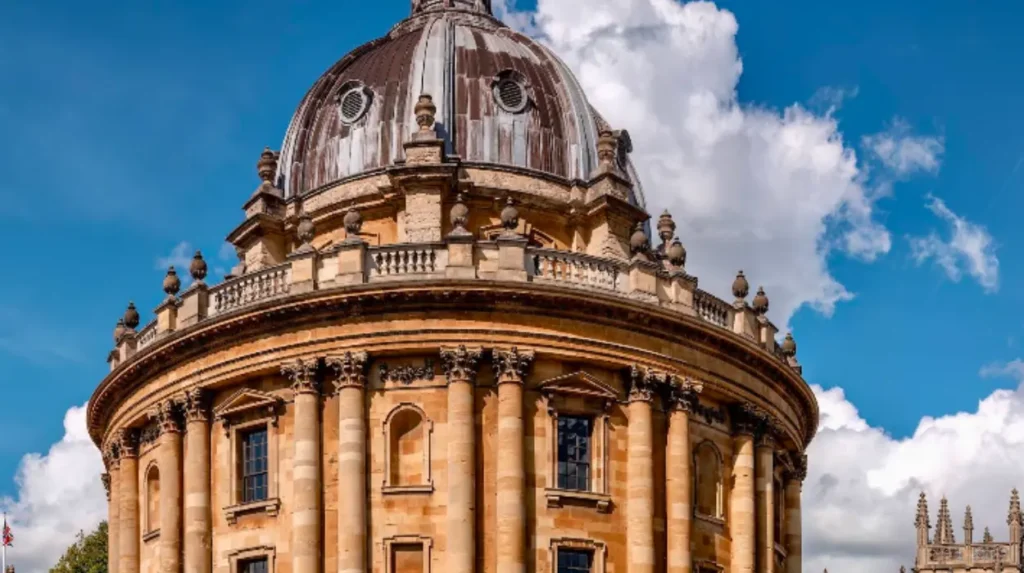
The Inklings relocated their meetings from the Eagle and Child to the Lamb and Flag, directly across St Giles’ Street, following the 1962 renovation that destroyed the Rabbit Room’s privacy. The group preferred a quieter setting that offered the same intimacy.
The group reluctantly changed its allegiance to the Lamb and Flag on the other side of St Giles’ after the Rabbit Room’s privacy was destroyed. The meetings in the Lamb and Flag were soon abandoned after Lewis’s death in 1963.
The Lamb and Flag at 12 St Giles’ is one of the oldest licensed premises in Oxford. The Lamb and Flag opened in 1613 and is owned by St John’s College. There is said to be a lost smuggling tunnel leading from the cellar, dug during the Civil War when Royalist Oxford was besieged by the Parliamentarians.
When The Eagle and Child was modernised in 1962, Tolkien and Lewis moved their pint glasses to the Lamb and Flag when the landlady installed a dartboard. The disruption to the ambient character of the Eagle and Child drove the shift, not merely the physical renovation.
The Lamb and Flag is particularly famous for its association with the Inklings, a literary group that included J.R.R. Tolkien and C.S. Lewis.
What Happened to the Lamb and Flag After the Inklings Era?
The Lamb and Flag also closed due to the COVID-19 pandemic in January 2021. More than 300 fellow drinkers purchased the Lamb and Flag as a community interest company, with each member paying a minimum of £1,000 for a renewable 15-year lease on the pub. The Lamb and Flag reopened at 6 p.m. on Thursday, October 6, 2022, which was possibly 111 years to the day that J.R.R. Tolkien first arrived in Oxford. That date, chosen deliberately, referenced the significance of 111 as Bilbo Baggins’s age in The Fellowship of the Ring.
The Lamb and Flag has a renovated snug celebrating the original Inklings in the spot where they liked to drink. The Georgian front room has been returned to its original dimensions, with an ugly 30-year-old bar removed.
Did Tolkien Drink at Any Other Oxford Pubs Beyond the Eagle and Child?
Tolkien and other Inklings members drank at several additional Oxford pubs, including The King’s Arms, The Mitre, and the Turf Tavern. These venues appear in historical accounts and letters by Inklings members as supplementary gathering places.
The King’s Arms, located at the junction of Holywell Street and Parks Road, sits near the Bodleian Library and Hertford College. It functions as one of Oxford’s most prominent academic pubs. A firsthand reference to the pub comes directly from an Inklings member. C.S. Lewis wrote after the death of Charles Williams: “I felt dazed and restless and went out to get a drink: choosing unfortunately the King’s Arms, where during the winter Charles and I more than once drank a pint after leaving Tollersat the Mitre, with much glee at clearing one’s throat of varnish with good honest beer as Charles used to say.”Tollers” was the Inklings’ nickname for J.R.R. Tolkien.
The Mitre, referenced in the same Lewis passage, was located on the High Street and served as another informal stop for Tolkien and his circle on evenings after or between meetings.
The Turf Tavern, located at 4 Bath Place off Holywell Street, also holds a documented connection to Oxford’s academic literary world. The Turf Tavern’s history can be traced back to the 14th century, when it was originally known as the Spotted Cow Inn. Its warren-like structure, tucked between medieval college walls, made it a popular retreat for scholars.
The Eastgate Hotel on the High Street served yet another function. Since Tolkien was a Fellow of Merton College and Lewis of Magdalen College, the Eastgate was a convenient place for them to meet. C.S. Lewis wrote in a letter to his brother in November 1939:
“On Thursday we had a meeting of the Inklings you and Coghill both absent unfortunately. We dined at the Eastgate.”
When Did Tolkien Stop Going to Oxford Pub Meetings?
Tolkien’s attendance at Inklings pub sessions declined progressively after the late 1940s and stopped largely by the late 1950s. The end of formal Thursday meetings in 1949 and changes within the group’s membership contributed to his withdrawal.
Tolkien and Lewis, and other members of the Inklings literary group, met, enjoyed a pint, and discussed their works between 1933 and 1962, though Tolkien stopped attending in the 1950s.
The formal Thursday meetings ended in October 1949 when interest in the readings petered out, but the meetings at the Eagle and Child continued. It was at one of those meetings in June 1950 that C.S. Lewis distributed the proofs for The Lion, The Witch and The Wardrobe.
Tolkien drifted away from the meetings in the late 1950s, whereas Lewis, who had lived around Oxford since 1921, was a central figure until his death in 1963. Relations between Tolkien and Lewis also cooled during this period, partly due to Lewis’s marriage to Joy Davidman in 1956, which Tolkien disapproved of.
What Is the Lasting Cultural Impact of Tolkien’s Oxford Pubs?
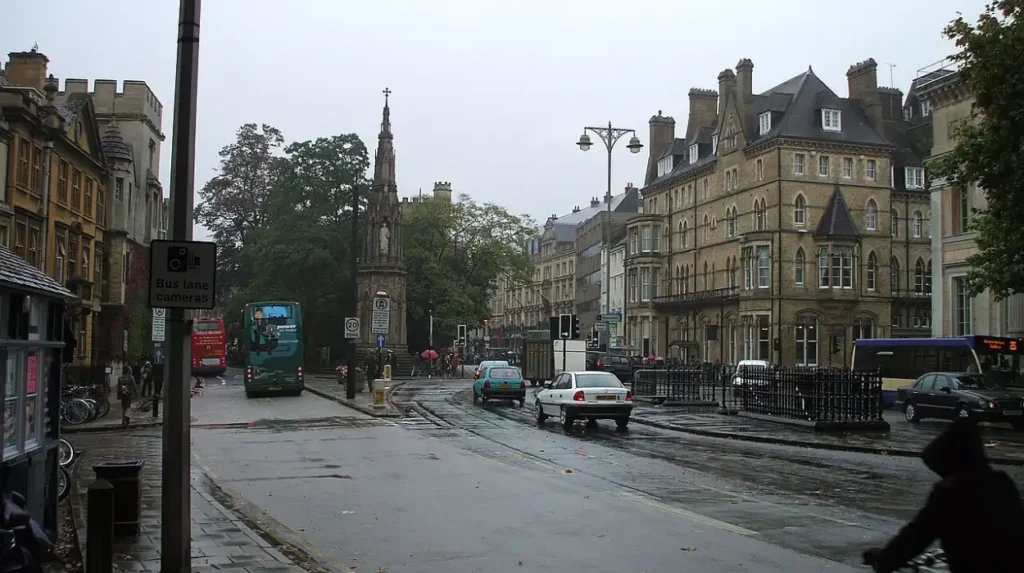
The Eagle and Child and Lamb and Flag are now recognised heritage sites on Oxford’s literary tourism map. Their connection to Tolkien and the Inklings shaped how both institutions are preserved, restored, and presented to global visitors.
Christopher Lee visited the Eagle and Child during the 1950s and, on one occasion, met J.R.R. Tolkien in person. Tolkien Gateway Lee, who later portrayed Saruman in Peter Jackson’s film adaptations of The Lord of the Rings, described the encounter as one of the defining moments of his life.
The pubs have also entered popular fiction independently. The Eagle and Child featured in Colin Dexter’s novel The Secret of Annexe 3, in which Inspector Morse and Sergeant Lewis read the wooden plaque to the Inklings in the pub’s back bar.
When The Lamb and Flag was generating profit in the 2000s, St John’s College used the pub’s revenue of approximately £50,000 per year to provide £12,000 scholarships for PhD students. A list of St John’s College Lamb and Flag Scholars hangs on one of its walls.
Both St Giles’ pubs, The Eagle and Child and the Lamb and Flag, stand within metres of each other on the same street in central Oxford. Together, they form an unbroken 90-year connection to the production of some of the most widely read literature of the 20th century. Tolkien arrived at Oxford in October 1911 as a student. He returned as a scholar after World War I and remained professionally rooted there until his retirement in 1959. The pubs he frequented were not backdrop; they were infrastructure for the creative process that produced Middle-earth.
J.R.R. Tolkien’s Oxford pub life concentrated primarily at The Eagle and Child on St Giles’ Street, where the Inklings held their most consistent Monday and Tuesday lunchtime sessions from the early 1930s through the late 1950s. The Rabbit Room at the back of that pub was the specific space in which The Lord of the Rings was read aloud in draft form and critiqued by peers. After the 1962 renovation destroyed the Rabbit Room’s privacy, the group briefly shifted to The Lamb and Flag directly across the street. Both institutions are now protected by heritage status, undergoing or having undergone significant restoration efforts, and remain active destinations on Oxford’s literary trail. Beyond these two primary venues, Tolkien’s Oxford pub connections extended to The King’s Arms, the Mitre on the High Street, and the Eastgate Hotel, all documented through letters and first-hand accounts by fellow Inklings members.
What pub did Larry Ellison buy in Oxford?
Larry Ellison, through his Ellison Institute of Technology (EIT), purchased The Eagle and Child at 49 St Giles’, Oxford, the historic pub where J.R.R. Tolkien and the Inklings met. EIT appointed Foster + Partners to lead its restoration and reopening.
Who owns the Eagle and Child in Oxford?
The Eagle and Child is now owned by the Ellison Institute of Technology (EIT), founded by American billionaire Larry Ellison. It was previously owned by St John’s College, Oxford, which sold it to EIT following the pub’s closure in March 2020.
How many pubs will close in 2026?
Industry bodies estimate hundreds of UK pubs close annually due to rising energy costs, business rates, and declining footfall. While exact 2026 figures are still emerging, the closures of iconic literary pubs like The Eagle and Child highlight why preservation efforts for heritage venues remain critically important.
What is the most unusual pub in the UK?
The Turf Tavern in Oxford, dating to the 14th century and hidden down a narrow alleyway between ancient college walls, is consistently ranked among the UK’s most unusual pubs. Tolkien and fellow Inklings members frequented this labyrinthine venue during their Oxford years.
Where do Oxford students go out?
Oxford students frequent The Turf Tavern, The King’s Arms near the Bodleian Library, and The Lamb and Flag on St Giles’. These same pubs formed the social circuit of J.R.R.