Key Points
- Residents in the small Oxfordshire village of Piddington staged a peaceful picnic protest to voice vehement opposition against controversial Home Office proposals to convert a nearby Ministry of Defence (MOD) site into a large-scale asylum accommodation centre.
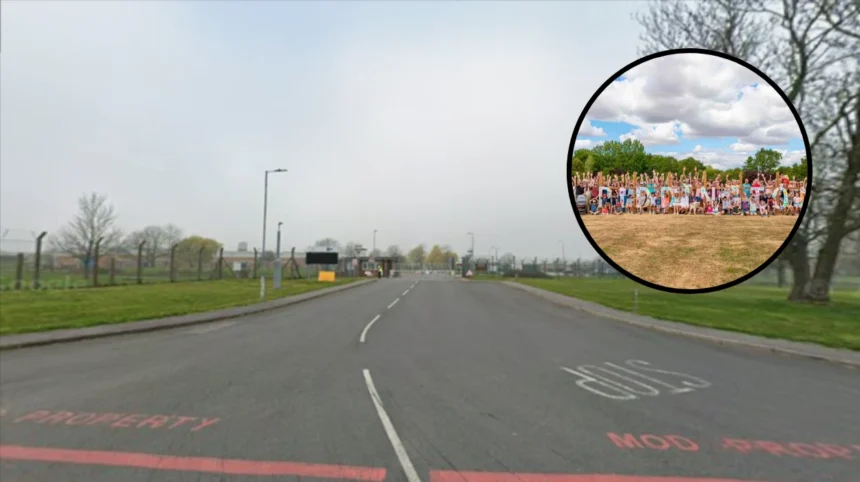
- The proposed facility at MOD Bicester (Site A), situated between Piddington and Upper Arncott, is intended to house approximately 1,250 single adult male asylum seekers, forming part of a wider governmental strategy to phase out hotel usage.
- Local community members, local authorities, and politicians have expressed profound frustration regarding a perceived lack of meaningful public consultation, transparency, and baseline infrastructure support.
- Cherwell District Council leader Councillor Lesley McLean slammed the announcement as an “arbitrary decision” made without prior local engagement.
- Escalating local pushback has even seen discussions and moves among locals exploring unconventional measures, such as a symbolic referendum regarding local governance, amid deep concerns over rural isolation and strain on community services.
Piddington (Oxford Daily) July 27, 2026 — Local residents staged a peaceful yet resolute picnic protest over contentious Home Office plans to transform a redundant Ministry of Defence storage site near Bicester into a major asylum accommodation facility.
The demonstration, organized to voice deep-seated community anxieties, brings to the fore an escalating local conflict over rural isolation, infrastructure strain, and governmental transparency. Under the controversial proposals revealed by central government authorities, the MOD Bicester site located between the villages of Piddington and Upper Arncott could host roughly 1,250 male asylum seekers as early as the end of this year. While ministers maintain that utilizing military assets is a vital step toward ending reliance on costly asylum hotels, rural communities and local leaders argue the location is fundamentally unsuited for a development of this magnitude.
Why Are Local Residents Objecting to the MOD Bicester Asylum Plans?
The core grievances driving the community mobilization center on the sheer scale of the proposed development and its perceived incompatibility with a rural, semi-derelict storage location. Protesters and campaigners argue that placing over a thousand single adult males in an isolated pocket devoid of robust public transport links or immediate healthcare amenities risks undermining social cohesion.
Reflecting on historical precedents during coverage of the unfolding local dispute, opponents have frequently highlighted a previous public inquiry held in 2003. As documented in local political campaigns, a planning inspector formally rejected a similar asylum accommodation center proposal back then, warning that the site was far too isolated, would severely strain local services, and posed notable risks to community integration. Campaigners argue that these fundamental geographic and structural constraints remain entirely unchanged decades later.
Explore More Bicester News
Vintage Bentley Experts Kingsbury Racing Expand at Bicester 2026
Bicester Leisure Centre Closes For Major Electrical Upgrades: Oxfordshire 2026
What Have Local Authorities and Officials Stated Regarding the Consultation Process?
The manner in which the proposals were rolled out has triggered fierce backlash from regional politicians and local government representatives over an apparent breakdown in communication. Cherwell District Council was officially informed of the Home Office intention via brief notification, sparking immediate institutional condemnation.
As reported by local news sources covering the administrative fallout, Cherwell District Council leader Councillor Lesley McLean expressed absolute astonishment at the central government’s approach. Councillor Lesley McLean stated that
“This is another arbitrary decision from the Home Office, taken yet again, without any consultation with the council, residents or locally elected members.”
Furthermore, emphasizing the urgent need for institutional answers and rigorous oversight, Councillor Lesley McLean added that
“It’s astounding to think that proposals of this scale are being brought forward by government without communication with the local authority and affected communities.”
Local leadership has subsequently pressed ministers for explicit clarity, demanding comprehensive guarantees that adequate financial resources and safeguards will accompany any potential opening to protect regional public services.
How Has the Central Government Responded to Community Concerns?
In defense of the nationwide initiative, official Home Office documentation and published factsheets emphasize that the utilization of redundant military properties forms a cornerstone of broader strategies to manage immigration pressures systematically. According to government guidelines, the MOD Bicester site is intended to provide basic, safe accommodation designed to be largely self-sufficient, thereby minimizing direct friction with surrounding neighborhoods.
Government authorities have clarified that if the site passes comprehensive feasibility assessments, occupancy will follow a carefully managed, phased approach rather than an immediate influx. Furthermore, the Home Office has stated that an experienced specialist provider will be appointed to oversee site management around the clock, ensuring that security protocols and wraparound health and wellbeing support systems are securely maintained. Officials maintain that residents accommodated at the facility will consist of single adult males aged between 18 and 65 who have completed baseline screening checks against standard policing and immigration databases.
What Are the Next Steps for the Piddington Community Campaign?
As grassroots resistance continues to harden across Oxfordshire, community organizers and local residents have shown no signs of backing down from their campaign. Alongside peaceful public demonstrations like the Piddington picnic protest, political groups and village representatives are exploring further legal, political, and democratic avenues to challenge the government’s timeline. With local frustrations reaching boiling point over perceived central government indifference, the standoff between rural residents and Whitehall is anticipated to intensify significantly in the coming weeks.