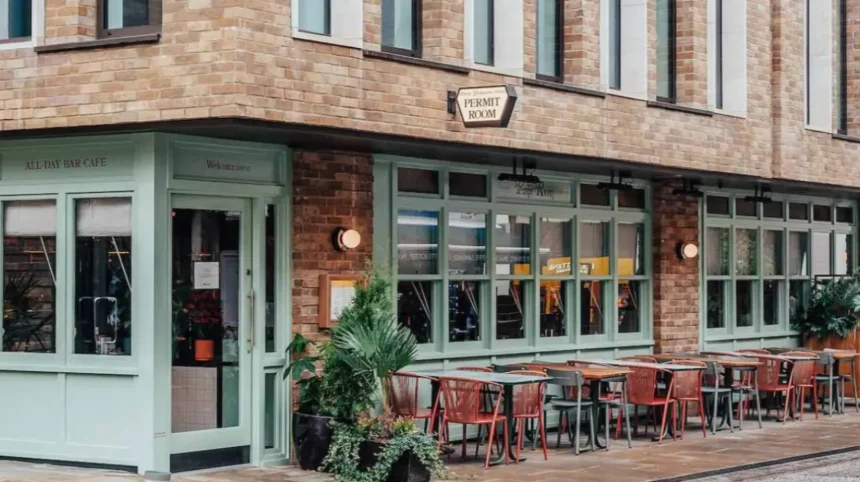
Oxford Daily presents an authoritative analysis of Dishoom Permit Room Oxford, a specialized all-day bar-café that combines historical Bombay drinking heritage with modern British hospitality.
- What is Dishoom Permit Room Oxford and how does it differ from traditional Dishoom restaurants?
- What is the historical background and concept behind Bombay permit rooms?
- Where is Dishoom Permit Room Oxford located and what are its operational details?
- What food items and beverage menus are served at Dishoom Permit Room Oxford?
- How does Dishoom Permit Room Oxford integrate music, cultural events, and local partnerships?
- What dietary options, accessibility features, and booking policies are available at Dishoom Permit Room Oxford?
- What is the economic and culinary impact of Dishoom Permit Room Oxford on the Oxford hospitality market?
What is Dishoom Permit Room Oxford and how does it differ from traditional Dishoom restaurants?
Dishoom Permit Room Oxford is an all-day bar-café concept created by Dishoom, located at North Bailey House on New Inn Hall Street in Oxford, which focuses on Indian bar snacks, craft cocktails, local craft beers, and vinyl DJ performances.
Dishoom, founded in 2010 by co-founders Shamil Thakrar and Kavi Thakrar, originally established itself across the United Kingdom through large-format restaurants modeled after the historic Irani cafés of Bombay. Traditional Dishoom locations operate as full-scale dining institutions with extensive menus featuring formal seated entrees, grilled dishes, and full breakfast service.
The Permit Room brand extension represents a pivot toward an intimate bar-café framework. While maintaining core culinary identity, Dishoom Permit Room Oxford emphasizes drink-led hospitality, fast-paced small-plate dining, and local neighbourhood integration.
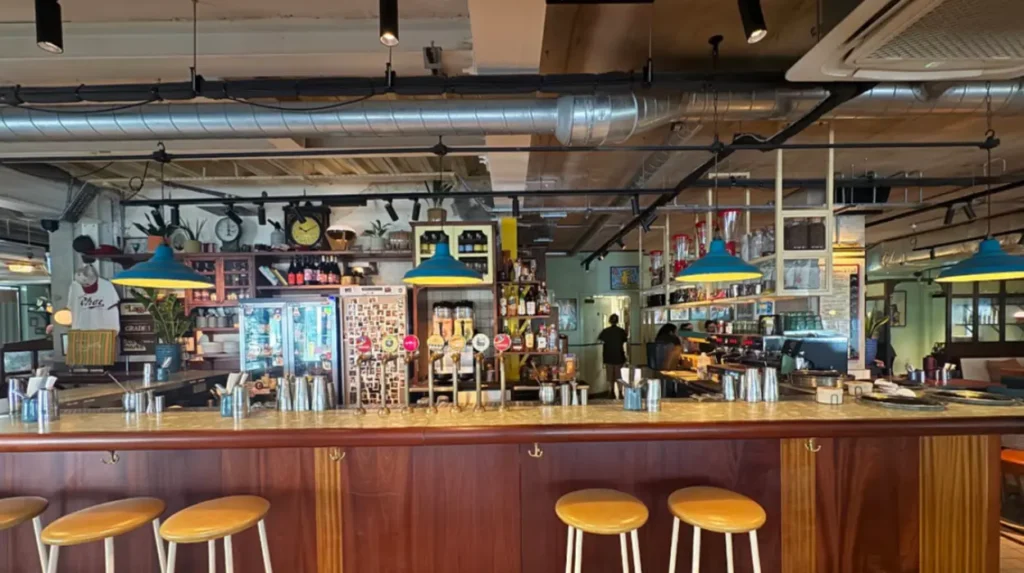
The venue operates in a dedicated 200-square-metre unit within North Bailey House. Traditional Dishoom establishments typically span 500 to 800 square metres to accommodate massive dining rooms. The interior design of Dishoom Permit Room Oxford trades the formal grandeur of 20th-century Irani cafes for a retro aesthetic inspired by 1970s Bombay drinking establishments.
The menu architecture reflects this structural shift. Traditional Dishoom menus center on large shared platters and complex biryanis. The Permit Room menu prioritizes fast-assembled bar snacks, crisped chaats, spiced chicken fried dishes, and single-portion curries tailored for pairing with alcoholic beverages.
The operational strategy of Dishoom Permit Room Oxford targets university students, local residents, and visitors seeking flexible dining timelines. Guests visit the location for single espresso orders, mid-afternoon beers, formal evening dinners, or late-night cocktails. The establishment integrates neighborhood partnerships, sourcing coffee from local roasters and brewing custom beers with regional breweries.
What is the historical background and concept behind Bombay permit rooms?
Bombay permit rooms originated under the Bombay Prohibition Act of 1949, which restricted alcohol sales in the state of Maharashtra, forcing citizens to obtain official medical permits to purchase and consume alcoholic beverages inside designated, regulated drinking establishments.
The state of Bombay enacted total alcohol prohibition on April 16, 1949, through the Bombay Prohibition Act of 1949, signed by Chief Minister B. G. Kher. The law aimed to eliminate public drunkenness and promote temperance across the state of Maharashtra.
The legal framework allowed exemptions only for foreign visitors and individuals who obtained official medical permits. Citizens secured medical permits by obtaining written certifications from registered medical practitioners stating that alcohol consumption was required for the preservation or maintenance of health.
During the strictest prohibition decade between 1950 and 1960, illegal alcohol distribution networks emerged across Bombay. Unlicensed drinking dens operated inside private residential rooms managed by local women known as Aunties.
These illicit establishments signaled their availability to patrons through subtle street indicators, such as placing a boiled egg vendor outside the entrance. Patrons consumed homemade spirits, including country liquor made from fermented sugarcane molasses or mahua flowers, inside these hidden spaces.
By the early 1970s, the Government of Maharashtra relaxed enforcement mechanisms and standardized commercial permit room regulations. Licensed hotel basements, backrooms, and street corner establishments received state authorization to operate official permit rooms.
These venues featured dim lighting, vinyl seating booths, wood paneling, low ceilings, and heavy curtains to conceal drinking activities from street view.
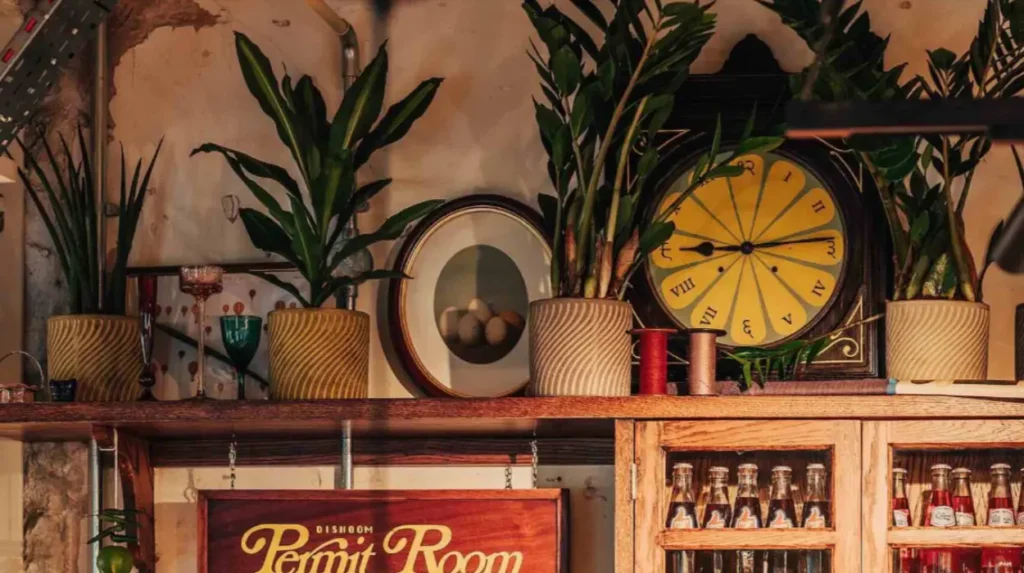
The venues served cold lagers, Indian whiskies, and spicy savory bar snacks designed to complement high-proof spirits. Dishoom Permit Room Oxford replicates this visual and cultural atmosphere through vintage artwork, retro illumination fixtures, period furniture, and mid-century music programming.
Where is Dishoom Permit Room Oxford located and what are its operational details?
Dishoom Permit Room Oxford is located at North Bailey House on New Inn Hall Street, Postal Code OX1 2RP, operating seven days a week from 9:00 AM to 10:00 PM with step-free accessibility and dog-friendly customer policies.
North Bailey House is a modern architectural redevelopment situated on New Inn Hall Street within the historic commercial center of Oxford. The development sits adjacent to key retail corridors, including Cornmarket Street and the Westgate Shopping Centre.
The physical location places the establishment 0.5 miles east of Oxford Train Station, making the venue accessible to rail commuters, local office workers, and university academic staff.
The site layout features two distinct seating zones: an indoor dining room decorated with historic Indian artwork and an outdoor street terrace. The venue maintains 100 percent step-free access at the main entrance on New Inn Hall Street and includes a designated restricted mobility bathroom complying with UK building regulations.
The restaurant permits dogs inside the premises on the condition that pets remain off the furniture at all times. Group reservations are accepted online up to four months in advance for parties of up to 16 guests, while parties exceeding 16 guests require direct coordination with management staff.
What food items and beverage menus are served at Dishoom Permit Room Oxford?
Dishoom Permit Room Oxford serves four main culinary collections: morning breakfast naans, crispy savory chaats, house signature curries, and charcoal-grilled meats, accompanied by custom craft beers, specialized wines, and high-proof spiced cocktails.
The culinary program divides into distinct service hours. Breakfast service operates from 9:00 AM to 11:45 AM daily. The primary breakfast offerings consist of freshly baked naan breads wrapped around savory fillings.
Morning Breakfast Options
- Bacon Naan Roll: Fresh naan brushed with cream cheese, chili tomato jam, and cilantro, filled with smoked bacon strips.
- Sausage Naan Roll: Handcrafted pork sausage seasoned with ground spices, wrapped inside warm tandoori-baked flatbread.
- Vegan Sausage Naan Roll: Plant-based pea and herb sausages wrapped in dairy-free naan dough with vegan spreads.
- Masala Eggs: Scrambled or fried eggs spiced with chopped green chilies, red onions, cumin, and fresh cilantro leaves.
All-day dining service begins at 12:00 PM and continues until closing at 10:00 PM. The menu emphasizes shareable drinking food engineered to pair with acidic, hoppy, or spirit-forward beverages.
The bar program includes exclusive draught and bottled beers produced through local microbrewery partnerships. Dishoom Permit Room Oxford collaborates with Earth Ale, a regional Oxfordshire craft brewery, to produce the custom Permit Room x Earth Ale Gose. This sour wheat beer incorporates local ingredients including sour rhubarb and fig leaf, designed to slice through rich, fried street foods.
Non-alcoholic beverages form a core component of the menu structure. The kitchen serves traditional spiced Chai tea brewed continuously in large metal cauldrons with whole cardamom pods, cinnamon sticks, fresh ginger, and milk.
Coffee offerings feature single-origin beans sourced directly from NewGround Coffee, an ethical coffee roaster operating in Oxford that provides employment and training opportunities for ex-offenders.
How does Dishoom Permit Room Oxford integrate music, cultural events, and local partnerships?
Dishoom Permit Room Oxford integrates weekly vinyl DJ performances, public Carrom gaming tournaments, local ethical coffee sourcing with NewGround Coffee, and custom craft beer collaborations with Earth Ale to build community engagement.
Music forms the foundational pillar of the internal atmosphere at Dishoom Permit Room Oxford. The sonic Curation derives inspiration from two historic music venues in 1970s Bombay: the Slip-Disc night club and the Rang Bhavan open-air amphitheater.
Slip-Disc operated as an underground music venue on Mandlik Road in Colaba, famous for hosting international rock groups such as Led Zeppelin in 1972. Rang Bhavan hosted annual jazz festivals and independence rock concerts throughout the late twentieth century.
The modern venue curates analog sound profiles spanning five specific musical genres:
- 1970s Funk and Disco: Vintage tracks sourced from South Asian and international recording studios.
- Art Rock and UK New Wave: Post-punk and experimental tracks reflecting British and global influences.
- Early Hip-Hop: Original B-Boy and B-Girl breakbeat recordings from the late 1970s and early 1980s.
- Bombay Psychedelic Rock: Rare 1960s and 1970s Indian garage band pressings.
- Rootsy World Rhythms: Global percussion tracks designed for background ambient dining.
Every Thursday evening, resident DJs perform live vinyl sets using analog turntables installed near the main bar area. The establishment maintains a public jukebox containing vintage vinyl records, allowing patrons to select tracks during non-DJ operational hours.
Cultural programming extends to traditional tabletop gaming events held inside the venue. Every Tuesday starting at 8:00 PM, Dishoom Permit Room Oxford hosts public Carrom nights. Carrom is a traditional Indian strike-and-pocket tabletop game originating in the 19th century across the Indian subcontinent.
Players use a heavier plastic or wooden disc, called a striker, to flick lighter wooden discs, called carrom men, into four corner pockets on a polished wooden board. The venue provides professional-grade carrom boards, carrom powder, and pieces for public competitive play.
Local economic integration centers on physical partnerships with Oxfordshire suppliers. NewGround Coffee supplies all roasted espresso and filter coffee beans used across morning and evening drink services.
Earth Ale supplies small-batch craft beer directly to the draught taps. These localized commercial arrangements reduce transport miles, support regional employment initiatives, and anchor the national Dishoom brand within the Oxford municipal ecosystem.
What dietary options, accessibility features, and booking policies are available at Dishoom Permit Room Oxford?
Dishoom Permit Room Oxford accommodates dietary requirements through certified Halal, vegan, vegetarian, and gluten-free menus, offers step-free physical access, and processes advance online bookings for groups up to 16 guests.
The kitchen framework utilizes strict ingredient segregation protocols to serve diverse dietary populations across Oxfordshire. The management publishes comprehensive allergen matrixes covering the 14 major allergens recognized under UK food safety law.
Dietary Accommodations
- Halal-Friendly Options: All chicken, lamb, and mutton meats served across the menu originate from certified Halal suppliers. Kitchen staff cook Halal ingredients using dedicated utensils and griddles to avoid cross-contamination with non-Halal pork items.
- Vegan-Friendly Options: The restaurant prepares dedicated vegan dishes, including vegan sausage naan rolls, vegetable curries, samosas, and dairy-free chaat options using plant-based yogurt alternatives.
- Vegetarian-Friendly Options: Over 50 percent of the food menu features lacto-vegetarian dishes, including paneer tikka, black daal, crispy chaat, and vegetable samosas.
- Gluten-Free Options: Kitchen staff provide modified gluten-free options, substituting flatbreads with spiced rice bowls, salads, grill items, and wheat-free lentil curries cooked without thickeners.
The venue handles physical access requirements through barrier-free architecture. The main entrance on New Inn Hall Street eliminates exterior steps or raised sills. Internal floor plans feature wide walkways connecting the main entrance, dining tables, outdoor terrace, and restrooms.
The accessible restroom features automated door controls, lowered sink basins, support bars, and an emergency assistance cord.
Reservation policies balance walk-in accessibility with advance booking certainty. Guests reserve dining tables up to four months in advance using the online reservation engine.
The system holds a portion of dining tables for unscheduled walk-in guests throughout operational hours, ensuring immediate availability for local visitors without advance reservations.
What is the economic and culinary impact of Dishoom Permit Room Oxford on the Oxford hospitality market?
Dishoom Permit Room Oxford enhances the local economy by creating hospitality jobs, increasing foot traffic on New Inn Hall Street, and earning national recognition, including a spot in the British Indian Good Food Guide Top 100.
The establishment of Dishoom Permit Room Oxford inside North Bailey House represents a substantial capital investment in the central business district of Oxford. Commercial real estate developments on New Inn Hall Street historically relied on traditional retail tenants.
The conversion of North Bailey House into a mixed-use commercial and hospitality hub reflects broader urban planning shifts toward experiential dining across the United Kingdom.
General Manager Richard Fernandes leads a team of over 40 full-time and part-time hospitality professionals, including kitchen chefs, front-of-house servers, mixologists, baristas, and sanitation staff. The venue generates continuous local economic activity through daily operations, commercial waste contracts, facilities maintenance, and local food procurement.
The culinary impact of the restaurant extends to industry accolades and national dining guides. The venue earned an official listing in the British Indian Good Food Guide – Top 100 Indian Restaurants (2025 Edition).
The publication highlighted the restaurant’s ability to balance nostalgic Bombay heritage dining with modern culinary creativity, praising signature menu items including the House Black Daal, Pau Bhaji, and house spiced cocktails.
Dishoom Permit Room Oxford acts as a structural model for brand extensions within the British food and beverage sector. By condensing a large restaurant format into an agile bar-café model, the parent company scales operations into historic cities with spatial development constraints.
The integration of mid-century Bombay cultural history, ethical supply partnerships, live music events, and versatile all-day dining positions Dishoom Permit Room Oxford as a permanent centerpiece of the hospitality ecosystem in Oxfordshire.
What is Dishoom Permit Room Oxford?
Dishoom Permit Room Oxford is an all-day Bombay-inspired bar-café located at North Bailey House, New Inn Hall Street, Oxford. It combines Indian street food, craft cocktails, local beers, music events, and the cultural atmosphere of historic Bombay permit rooms with modern British hospitality.