Key Points
- First Human Dose: A 37-year-old British man named Ed Hunt has become the first volunteer in the world to receive a brand-new experimental vaccine targeting the Ebola virus.
- Inspiration to Volunteer: As reported by the BBC, Mr Hunt stepped forward to take part after witnessing distressing news reports regarding the lethal Ebola outbreak unfolding in the Democratic Republic of Congo (DRC).
- Rapid Development: The novel vaccine was conceptualised and developed by scientists in Oxford in a remarkably short timeframe of just eight weeks.
- Trial Scope: Mr Hunt serves as the very first participant among a planned cohort of 50 healthy volunteers, aged between 18 and 55, who are being recruited for the ongoing clinical trial.
- Proven Technology: The experimental jab utilises the exact same viral vector technology as the Oxford-AstraZeneca Covid-19 vaccine, which was successfully administered to hundreds of millions of people globally throughout the pandemic.
- Scientific Leadership: Professor Teresa Lamb, who spearheaded the Ebola vaccine development team at the University of Oxford, noted that decades of foundational research made the swift eight-week turnaround possible.
- Target Species: While licensed vaccines already exist for the Zaire strain of Ebola, this marks the inaugural human trial for a vaccine targeting the Bundibugyo species, which is responsible for the current outbreak.
Oxford (Oxford Daily) July 24, 2026 – Medical history was made today as a 37-year-old UK resident became the first person globally to be administered an experimental vaccine designed to combat the deadly Ebola virus. The breakthrough candidate, engineered by leading researchers at the University of Oxford in a staggering window of just eight weeks, represents a critical milestone in global health defence against emerging viral threats. The inoculation programme marks the beginning of phase-one human trials involving 50 healthy adult volunteers aged 18 to 55, aiming to tame a severe pathogen strain that currently lacks any approved immunisation framework.
How Did the Global Trial Begin and Who Is the First Volunteer?
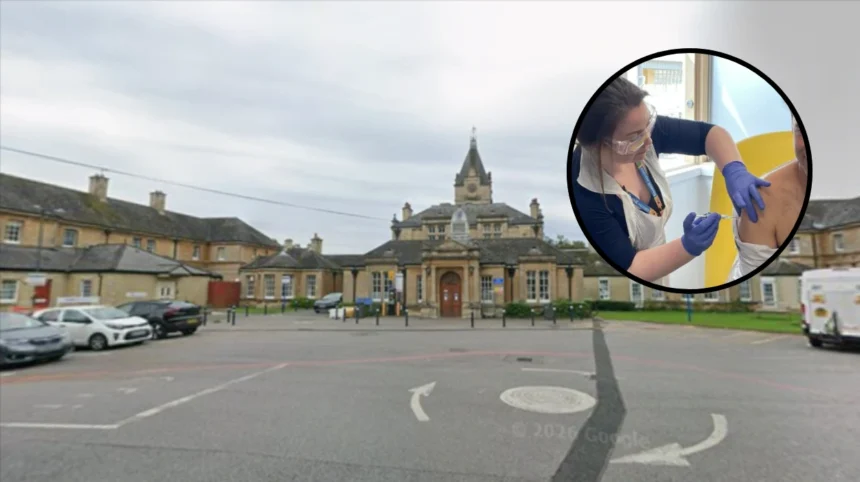
The pioneering phase of the trial commenced in Oxford, where health researchers welcomed Ed Hunt as the world’s inaugural recipient of the candidate vaccine. As reported by the BBC, Mr Hunt decided to volunteer after following media coverage detailing the severity of the active Ebola outbreak in the Democratic Republic of Congo (DRC).
Elaborating on his personal motivations to the BBC, Mr Hunt stated that:
“I had wanted to volunteer for the Covid vaccine trial but was unable to because of work commitments. After seeing news from DR Congo I thought I’d like to do my bit”.
His willingness to step forward has paved the way for the remaining 49 healthy participants who are currently being evaluated and onboarded into the clinical study framework.
What Technology Powers the New Ebola Vaccine?
The scientific methodology underpinning the new jab relies heavily on established medical innovation. According to details covered by the BBC, the vaccine uses the exact same underlying technology as the Oxford-AstraZeneca Covid-19 vaccine—a pharmaceutical platform that was scaled up and distributed to hundreds of millions of individuals worldwide during the height of the global pandemic.
By repurposing this proven vector system, Oxford scientists were able to compress years of exploratory design into a fast-tracked development window. As detailed in BBC news broadcasts, the entire candidate formula was successfully drawn up and manufactured in Oxford in a mere eight weeks.
Explore More Local Oxford News
River Thames Locks Partially Closed From Cotswolds to Oxford 2026
Oxford Explorer’s Passport Trail Guide for Families in Oxford 2026
Why Was the Vaccine Developed So Quickly?
Addressing the remarkable speed of the creation process, key academic leaders highlighted the years of cumulative groundwork that preceded the outbreak. As reported by the BBC, Professor Teresa Lamb—who led the dedicated Ebola vaccine research team at the University of Oxford—emphasised that the rapid creation was only feasible due to decades of prior scientific research.
Professor Lamb explained the core mechanisms and safety profile of the trial to the BBC, clarifying the absolute safety parameters built into the study design. She noted that it is biologically impossible for participants to contract the disease from the injection, stating that: “We will not be giving anybody Ebola in this trial or any trial”. Furthermore, Professor Lamb outlined the primary objectives to the BBC, noting that:
“The aim of the phase one clinical study is to look for the safety of the vaccine, and also to see if we’re getting a strong immune response that could be protective against the Bundibugyo species of Ebola”.
Which Strain of Ebola Does the Vaccine Target?
To fully understand the clinical significance of this trial, medical analysts look closely at the specific viral strain driving the current regional emergency. While multiple variants of the filovirus exist, the current outbreak in Central Africa has been triggered by the Bundibugyo species.
Current epidemiological data shows that although effective licensed vaccines already exist to combat the Zaire species of Ebola, those existing formulas offer no cross-protection against the Bundibugyo variant. In total, researchers note that there are currently four distinct candidate vaccines in various stages of development against the Bundibugyo species, but the Oxford trial stands out as the very first to successfully advance into human clinical trials.
What Are the Next Steps for the Oxford Clinical Trial?
With the first dose successfully administered to Mr Hunt in Oxford, the clinical research unit will closely monitor his vital signs and immune response over the coming weeks before expanding doses across the broader group of 50 volunteers. Medical experts and international health organisations will be watching the data closely. If the phase-one trial successfully demonstrates both human safety and robust immunogenicity against the Bundibugyo strain, the vaccine can advance to larger-scale phase-two and phase-three field evaluations in regions most affected by the virus.