Key Points
- Extreme Heat Impact: Rectory Farm Pick-Your-Own (PYO) in Stanton St John, near Oxford, is experiencing a significantly reduced strawberry yield due to sustained temperatures exceeding 30°C.
- Operational Shift: To protect customer goodwill, the popular farm has permanently scrapped its ticketing and booking requirements, including on high-demand weekends.
- Refund Policy: The agricultural business is issuing full refunds—including all booking fees—to any visitors who had pre-purchased entry passes.
- Biological Shutdown: When temperatures surpass the 30°C threshold, strawberry plants enter a survival state, aborting their flowers and halting fruit development.
- Alternative Crops: While strawberries remain scarce and highly fluctuating, other soft fruits like raspberries, redcurrants, and blackcurrants are thriving in the current climate conditions.
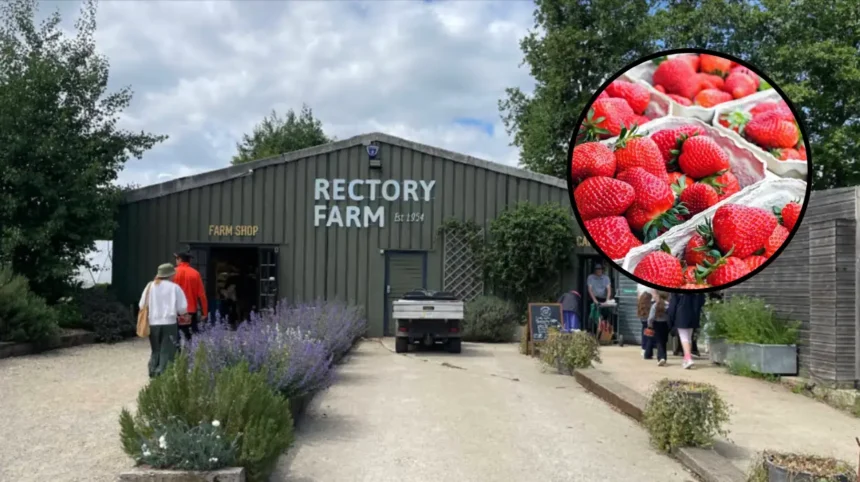
Stanton St John (Oxford Daily) July 15, 2026 – A premier pick-your-own agricultural site located on the outskirts of Oxford has formally abandoned its visitor booking system after an intense summer heatwave severely suppressed its seasonal strawberry yields. Rectory Farm PYO, situated in the village of Stanton St John, announced that it has removed all ticketing requirements, including for previously restricted weekend slots. Management confirmed that any customer who had already secured a paid reservation will receive a complete refund, including all associated processing fees, as the business transitions to a free-entry, open-access model.
- Key Points
- Why Is Rectory Farm PYO Removing Its Booking Requirements?
- How Does Extreme Heat Affect Strawberry Plant Biology?
- When Will Strawberries Be Available for Picking at the Stanton Site?
- How Are Other British Fruit Growers Faring in the Heat?
- Why Are Local Pick-Your-Own Farms Facing Long-Term Economic Pressures?
- What Technologies Are Commercial Farms Using to Fight Climate Volatility?
The strategic shift highlights the immediate, tangible pressures that erratic British weather patterns are exerting on local agritourism. With temperatures consistently breaching the 30°C mark across Oxfordshire, strawberry plants have effectively stopped producing marketable soft fruit. Rather than risk disappointing families arriving with pre-paid tickets to bare fields, the owners opted to remove the booking barrier entirely, urging visitors instead to monitor real-time crop updates via digital newsletters and social media before making the journey.
Why Is Rectory Farm PYO Removing Its Booking Requirements?
As reported by Matt Simpson, agricultural affairs reporter for the Oxford Mail, the management of Rectory Farm PYO stated:
“We may have fewer strawberries this weekend, and across the summer than we had hoped for, essentially due to the very prolonged heatwave we have been having. It’s hard to predict with certainty, but we feel the very fairest thing to do is allow you to come without tickets, and keep you as updated as possible on strawberry status via our social media and newsletters.”
By removing the financial commitment of a pre-booked ticket, the farm is shifting the operational risk away from the consumer. Historically, ticket systems were implemented by pick-your-own establishments to control crowd density and ensure a balanced ratio of eager pickers to ripe crops. However, when crop growth becomes highly unpredictable, rigid ticketing structures can lead to public relations challenges. The decision to refund all existing booking fees represents a significant short-term financial sacrifice aimed at preserving long-term community relations.
How Does Extreme Heat Affect Strawberry Plant Biology?
To understand the sudden shortage, one must examine the physiological response of soft fruit to thermal stress. As outlined in the Oxford Mail investigation by Matt Simpson, when ambient temperatures climb above the critical 30°C threshold, strawberry plants undergo a dramatic metabolic slowdown. Rather than channel energy into reproduction—which manifests as flowering and fruit development—the plants pivot to basic cellular survival.
During these heatwaves, the plants actively abort existing blossoms and refuse to set new flowers. This biological “pause” ensures that the plant does not dehydrate, but it leaves a massive gap in the harvesting calendar.
As detailed by the agronomy team at Rectory Farm PYO:
“Our strawberries are planted on a schedule that normally means we can open a fresh field for picking around every three weeks. But just like people, when it gets over 30 degrees, strawberries slow down, and growing stops.”
This creates an incredibly challenging “double-edged sword” for growers. While the intense heat pauses the development of green, upcoming crops, it simultaneously accelerates the ripening of any fruit that has already matured, forcing a compressed harvest window that is difficult to manage.
Explore More Local Oxford News
Oxfordshire County Council Withdraws Controversial Parking Guidance for Developers in Oxford, 2026
Spice Girls Row: Mel C Clash with Victoria Beckham, Oxford 2026
When Will Strawberries Be Available for Picking at the Stanton Site?
According to statements released by Rectory Farm PYO, the soft fruit season is expected to run through until September, but picking conditions will remain highly volatile. The staggered three-week planting cycle has been completely disrupted by successive regional heatwaves. Consequently, the farm cannot guarantee steady quantities of strawberries on any given day.
To offset the unpredictable strawberry supply, the farm’s retail and leisure facilities are operating at maximum capacity. The fields remain open to the public seven days a week from 09:00 BST, while the on-site café opens earlier at 08:00 BST to capture morning trade.
Despite the primary crop shortage, the farm has confirmed that several alternative summer crops are performing exceptionally well. Visitors can currently harvest abundant quantities of:
- Raspberries: Highly resilient to the current climate split.
- Blackcurrants & Redcurrants: Showing excellent size and rich colour.
- Sunflowers & Wildflowers: Available for hand-cutting and floral displays.
How Are Other British Fruit Growers Faring in the Heat?
The agricultural difficulties in Oxfordshire stand in stark contrast to broader national trends reported by industry representatives. While local pick-your-own farms face logistical headaches, commercial growers utilizing large-scale polytunnel infrastructures are seeing unique benefits from the current meteorological split.
According to data released by British Berry Growers, the official organisation representing the UK’s commercial soft fruit industry, this summer’s raspberry crop is showing unprecedented quality. The group revealed that British raspberries are up to 50% sweeter than usual, attributing this directly to the meteorological combination of a cool, wet spring followed by sudden, record-breaking summer sunshine.
Furthermore, as noted in a national supply update published by the Oxford Mail via the PA News Agency, major commercial growers in the south of England have managed to bypass traditional seasonal limitations entirely. Jack Darnes, commercial director for West Sussex-based commercial giant The Summer Berry Company, explained that a combination of sophisticated glasshouses, hydroponic systems, and LED lighting has allowed commercial operations to produce hundreds of tonnes of fruit ahead of schedule, insulating them from the volatile weather spikes that plague open-field operations.
Why Are Local Pick-Your-Own Farms Facing Long-Term Economic Pressures?
The struggle at Stanton St John is part of a much broader, highly concerning shift in the British agritourism landscape. Cultivating soft fruits for the public has become increasingly high-risk and low-margin, leading to structural changes across the county.
Just a few miles away from Rectory Farm, another landmark Oxfordshire institution recently reached a breaking point. As reported by regional journalists for the Oxford Mail, the historic Millets Farm Centre in Frilford announced the permanent closure of its pick-your-own fruit activities after 70 continuous years of operation.
In a formal statement, a spokesperson for Millets Farm Centre lamented the end of an era:
“Many of our customers will have fond memories of picking fruit with us over the past 70 years, but sadly we have decided to close our fields for Pick Your Own fruit for good. This hasn’t been an easy family decision. Over the years we have tried various methods to make the pick your own successful and financially viable but unfortunately, due to the ever-increasing costs and legislative demands this is becoming ever harder, and after a number of loss making years, it is time to bring an end to this chapter.”
While Millets Farm Centre will continue to run its autumn pumpkin patch and sell locally grown strawberries within its central farm shop, the complete abandonment of its summer fruit fields underscores the severe financial risks that modern British farmers face. Rising labour costs, stringent agricultural regulations, and the constant threat of climate-driven crop failures are forcing multi-generational farms to re-evaluate their business models.
What Technologies Are Commercial Farms Using to Fight Climate Volatility?
As independent pick-your-own sites struggle with field-grown crop vulnerability, corporate-scale agricultural suppliers are turning to high-tech indoor environments to guarantee yields.
According to a technical report by the PA News Agency, West Sussex producers such as Wicks Farm and The Summer Berry Company have pioneered commercial, year-round British strawberry production. David Moore, managing director of Wicks Farm, explained to reporters that their systems grow strawberries hydroponically in stacked layers within fully indoor, climate-controlled environments. Mr Moore stated:
“This guarantees yields while improving the supply of healthy, nutritious food and minimising the miles involved in its distribution.”
Additionally, Bartosz Pinkosz, UK operations director at The Summer Berry Company, detailed how their facilities utilize combined heat and power plants alongside 2,600 advanced LED units. This setup artificially recreates spring-like growing conditions even in the depths of winter, keeping temperatures strictly between 18°C and 22°C.
While these multi-million-pound industrial advancements ensure that supermarket shelves remain fully stocked with uniform, sweet varieties like Malling Centenary and Fandango, they remain economically unviable for traditional, open-air community PYO farms like Rectory Farm. For the independent local grower, adapting to climate change still relies on tactical operational flexibility, open communication with the local community, and a hope that the unpredictable British weather will eventually stabilise.