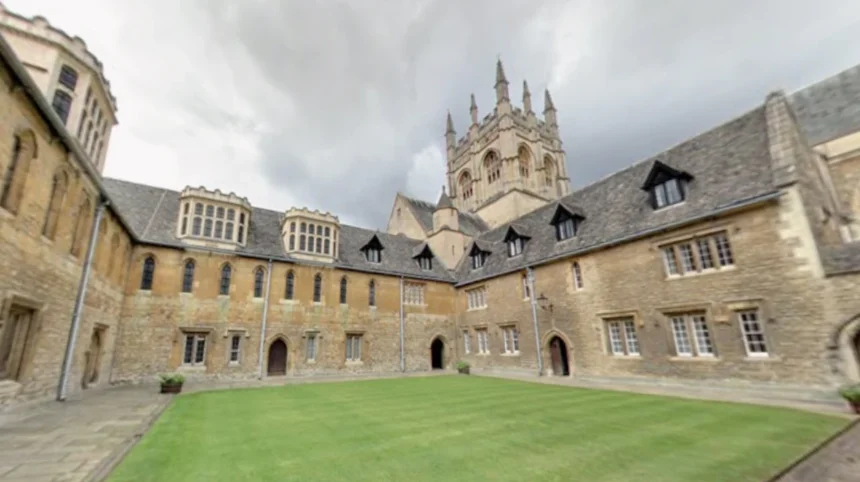
Merton College Fellows’ Garden is one of Oxford’s best-known collegiate green spaces, combining historic character, managed planting, and views across Christ Church Meadows. It serves as a private college garden, a study and social space for members, and a distinctive example of Oxford’s long tradition of enclosed academic landscapes.
- What is Merton College Fellows’ Garden?
- Why is Merton College important?
- What does the garden contain?
- How is the garden used today?
- What is its historical context?
- What makes the garden notable in Oxford?
- What can visitors expect?
- Why do college gardens matter?
- How does it fit Oxford’s heritage landscape?
- Why does it remain relevant?
- What should readers remember?
What is Merton College Fellows’ Garden?
Merton College Fellows’ Garden is the main garden at Merton College, Oxford, used by college members for study, relaxation, and events. It is a landscaped collegiate garden with an ancient mulberry, specimen trees, a long mixed border, herbaceous planting, and wide views over Christ Church Meadows.
The garden sits within Merton College, one of the oldest colleges in Oxford, founded in 1264 by Walter de Merton. The garden belongs to the college’s living academic environment rather than functioning as a public municipal park. Its purpose is practical as well as decorative, because it supports daily college life, outdoor work, and seasonal gatherings.
The Fellows’ Garden is also a strong example of Oxford collegiate identity. College gardens in Oxford often combine enclosed privacy, horticultural care, and visual links to surrounding historic landscapes. Merton’s garden does this especially well because of its size, planting structure, and position beside one of Oxford’s most recognisable open views.
Why is Merton College important?
Merton College is important because it is the first fully self-governing college in the University of Oxford and was founded in 1264 by Walter de Merton. Its age, institutional influence, and architectural survival make its garden part of a much larger historic setting.
Merton’s historical significance shapes the meaning of the garden. The college’s long continuity gives the Fellows’ Garden a value that goes beyond horticulture. It belongs to an institution that helped define the Oxford college model for later foundations. That historical depth matters because gardens in Oxford often reflect the development of the colleges that own them.
The college also has major architectural and scholarly landmarks, including Mob Quad, widely described as the oldest quadrangle in the University, and the chapel quire begun in the late 1280s. This means the Fellows’ Garden is not an isolated feature. It is part of a broader medieval and post-medieval campus that still functions as a working academic community.
What does the garden contain?
The Fellows’ Garden contains an ancient mulberry tree, specimen trees, a long mixed border, and herbaceous beds, with views toward Christ Church Meadows. These features give the garden a layered structure that combines heritage planting, seasonal colour, and open landscape views.
The ancient mulberry is the best-known plant in the garden. It is traditionally associated with James I, which gives the tree cultural interest as well as botanical value. The presence of a notable specimen tree is typical of historic college gardens, where individual plants often carry symbolic or commemorative meaning.
The mixed border and herbaceous bed provide seasonal variety. In practical terms, this means the garden changes through the year as flowering plants move from spring growth to summer colour and autumn structure. The specimen trees contribute height and form, while the open view over Christ Church Meadows adds a wider Oxford setting that connects the enclosed garden to the city’s landscape.
How is the garden used today?
The garden is used today as a study area, picnic space, and social venue for Merton students and staff. It also hosts outdoor tutorials, an annual garden play, and garden parties during the warmer months.
This use matters because it shows the garden is not only historical decoration. It remains part of everyday college life. That active function helps preserve the garden’s relevance and supports the Oxford tradition of blending scholarship with shared outdoor space.
The garden’s year-round maintenance also matters. According to Merton College sources, it is tended throughout the year by the college gardening team. That continuous care supports both appearance and usability. It also explains why the garden can serve multiple purposes at once: quiet work, informal recreation, and formal social events.
What is its historical context?
The garden belongs to a college founded in 1264, but its present form reflects later phases of Oxford college development, landscape management, and modern use. Its significance comes from both medieval institutional history and later horticultural refinement.
Oxford colleges changed over time from purely academic and residential foundations into complex institutions with libraries, quadrangles, chapels, lawns, and gardens. Merton is especially important because it was a pioneer in collegiate architecture and governance. The college’s history includes the development of Mob Quad in stages between the late 13th and 14th centuries and later expansions such as the Fellows’ Quadrangle from 1608 to 1610.
That layered history explains why the Fellows’ Garden is best understood as part of a campus with multiple historical periods. The garden reflects later patterns of college life, where cultivated outdoor space became an essential component of institutional identity. In Oxford, such gardens often express continuity, status, and scholarly calm. Merton’s garden does this with unusual clarity because of the college’s age and setting.
What makes the garden notable in Oxford?
The garden is notable in Oxford because it combines historic association, strong views, and a rare mix of private collegiate function and landscape quality. It stands out as a mature Oxford garden with documented planting, heritage associations, and active academic use.
Oxford has many college gardens, but not all of them combine the same features. Some gardens are small and strictly ornamental. Others serve mainly as enclosed courtyards. Merton’s Fellows’ Garden is broader in character because it supports formal and informal college life while also offering a substantial green setting.
Its view of Christ Church Meadows is especially valuable. In Oxford, landscape context matters because the city’s identity depends on the relationship between stone buildings, lawns, river meadow, and spires. A garden with an open view into that landscape becomes more than a closed interior space. It becomes part of Oxford’s public image, even when access remains limited to college members or special visitors.
What can visitors expect?
Visitors can expect a historic collegiate garden with mature planting, a notable mulberry tree, broad meadow views, and a peaceful atmosphere. Access depends on college policy and opening arrangements, so the garden remains primarily a college space rather than a general public park.
When open for visits, the garden offers a compact but rich experience. The key visual features are easy to identify: the ancient mulberry, the layered planting borders, and the view over the meadows. These features make the garden useful for heritage visits, photography, and interest in Oxford’s cultural landscape.
Because it is a working college garden, visitors should understand its character as a shared institutional space. That means the atmosphere is quieter and more ordered than a public ornamental park. This distinction matters for planning a visit, interpreting the space, and understanding how Oxford colleges manage access to historic grounds.
Why do college gardens matter?
College gardens matter because they preserve historic planting traditions, support biodiversity, improve daily life for students and staff, and maintain Oxford’s distinctive relationship between scholarship and landscape. Merton’s Fellows’ Garden shows all of these functions in one place.
A college garden is not only decorative. It supports mental rest, social interaction, informal teaching, and seasonal ecological care. In a university setting, these spaces are part of the educational environment. They also preserve historic landscape design that would otherwise disappear under development pressure.
Merton’s garden adds a conservation dimension. The ancient mulberry and mature tree structure indicate long-term stewardship rather than short-term landscaping. The garden also supports wildlife and biodiversity, which is increasingly important in historic urban settings. In that sense, the garden links heritage preservation with environmental management.
How does it fit Oxford’s heritage landscape?
Merton College Fellows’ Garden fits Oxford’s heritage landscape by linking medieval college history with living green space and preserved views across the city’s meadows. It represents the Oxford model of enclosed scholarship set within a managed historic environment.
Oxford is shaped by institutions that combine buildings, cloisters, lawns, and gardens. Merton’s garden belongs to that pattern, but it is especially effective because of the college’s early foundation date and its visible continuity. The garden helps explain why Oxford feels like a historic city of colleges rather than a single campus.
This matters for heritage interpretation. The garden is part of the same historical ecosystem as the college’s quads, chapel, library traditions, and surviving medieval fabric. A visitor who understands the Fellows’ Garden also understands something larger about Oxford: its identity comes from the interaction between built form, academic function, and maintained landscape.
Why does it remain relevant?
The garden remains relevant because it continues to serve college life while preserving a historic Oxford setting. Its combination of daily use, heritage planting, and strong visual identity keeps it meaningful for students, staff, visitors, and conservation-minded audiences.
Relevance in a historic place depends on use. A garden that survives only as a relic loses much of its value. Merton’s Fellows’ Garden stays relevant because it is still active. It supports study, events, and rest, while also representing centuries of collegiate continuity.

That active role also strengthens its future relevance. Historic gardens survive best when they remain useful. Merton’s example shows how a college can keep a heritage landscape alive without turning it into a static exhibit. The result is a garden that remains readable as history and functional as part of modern Oxford life.
What should readers remember?
Readers should remember that Merton College Fellows’ Garden is a historic Oxford collegiate garden with real academic use, notable planting, and a setting tied to one of the University’s oldest colleges. It is both a heritage landscape and a living part of college life.
The garden’s importance comes from the combination of history, planting, and function. It belongs to Merton College, a foundation dating to 1264. It contains mature and distinctive garden elements, including an ancient mulberry and mixed borders. It also continues to support student and staff life through tutorials, relaxation, and events.
For anyone interested in Oxford, the garden is a compact example of the city’s larger character. Oxford’s colleges are not only buildings. They are landscapes, communities, and long-lived institutions. Merton College Fellows’ Garden captures that reality in one carefully maintained space.