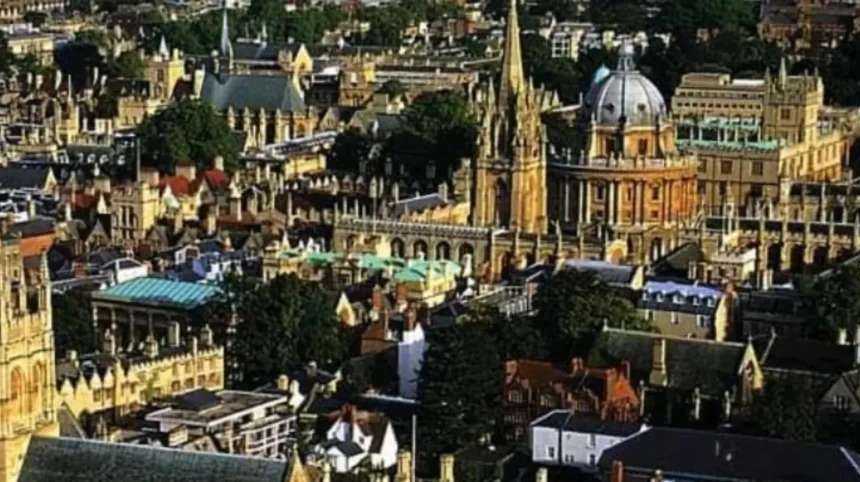
Oxford’s May Morning stands as one of the city’s most cherished traditions, drawing thousands to the streets before dawn on May 1st each year. This vibrant event, centered around Magdalen College Tower, blends ancient rituals with contemporary revelry, creating an evergreen tapestry of cultural heritage that continues to captivate locals and visitors alike. Its enduring appeal lies in its deep historical roots, which trace back centuries and resonate with timeless themes of renewal and community.
Pagan Foundations of May Morning
The origins of May Morning celebrations in Oxford are firmly planted in pre-Christian pagan festivals that honored the arrival of spring. Long before Christianity took hold in Britain, Celtic tribes observed Beltane, a fiery festival marking the midpoint between the spring equinox and summer solstice, around May 1st. This event symbolized fertility, abundance, and the earth’s awakening, with bonfires lit to purify and protect livestock and communities from winter’s lingering spirits.
Roman influences further enriched these customs through the Floralia, a week-long festival dedicated to Flora, the goddess of flowers and springtime growth. Held during late April or early May in the Roman Republic, Floralia featured theatrical performances, games, and the release of animals like hares and goats into fields to promote fertility. Ovid, the Roman poet, documented rituals such as the Florifertum, where bundles of wheat ears were carried to shrines on dates like April 27th or May 3rd, invoking prosperity for the growing season. These pagan practices, emphasizing nature’s rebirth, laid the groundwork for May Day observances across Europe, including what would evolve into Oxford’s unique tradition.
In medieval Northern Europe, these rituals morphed into widespread May Day festivities, where communities “brought in the May” by gathering hawthorn blossoms—known simply as “May”—to adorn homes and doorways. Hawthorn, blooming vibrantly in early May, represented Flora and warded off evil, a custom that persisted despite early Christian overlays. Oxford, as a scholarly hub, absorbed these continental influences, blending them with local folklore to create a distinctly English expression of seasonal joy.
Early Records in Oxford’s History
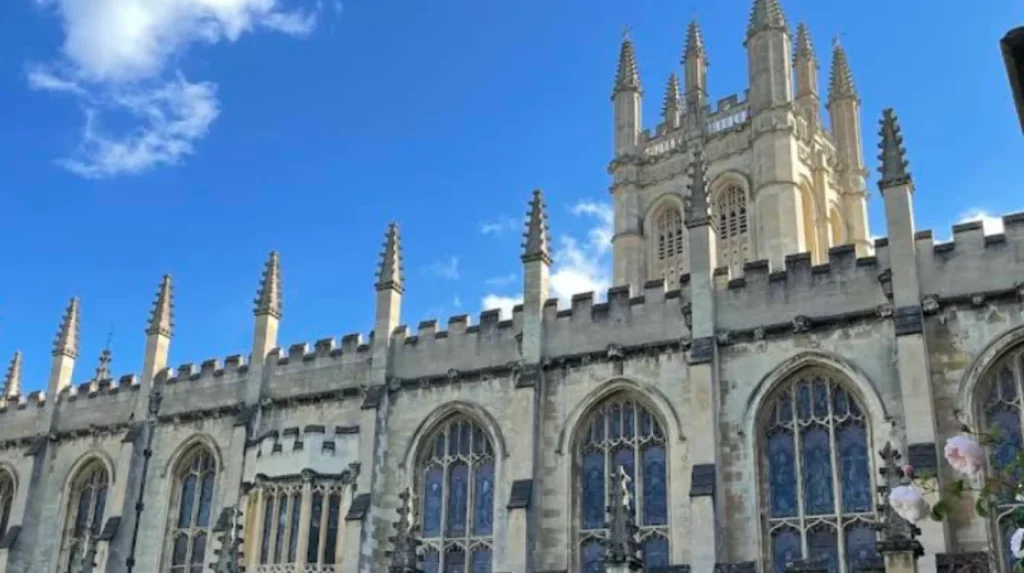
The first documented hints of May Morning in Oxford emerge in the late 17th century, though the practice likely predates written accounts. Anthony Wood, a meticulous Oxford antiquarian born in 1632 and devoted to chronicling the university’s past, provides the earliest specific reference in 1695. He described how the “choral ministers” of Magdalen College saluted Flora “every year on the first of May, at four in the morning, with vocal music of several parts,” delighting the neighborhood below the tower. Wood portrayed the scene vividly: lords and ladies in garlands, accompanied by fifes, flutes, drums, dancing, and music praising the “great goddess Flora,” an invocation to summon summer’s warmth.
Even earlier allusions appear in 1674, when Wood noted an “ancient custom” of saluting Flora with vocal music from the tower, suggesting the tradition was already well-established by then. Claims of a 500-year history persist in popular accounts, implying origins around the late 15th or early 16th century, though concrete evidence remains elusive. Magdalen College, founded in 1458 by William Patten, became the epicenter, with its 15th-century bell tower—standing 144 feet tall—serving as the perfect stage for these dawn serenades.
Medieval Oxford was no stranger to such festivities, but they weren’t without controversy. In 1250, the university chancellor banned “dancing in masks or with disorderly noises, and all processions of men wearing wreaths and garlands made of leaves of trees or flowers,” reflecting tensions between rowdy pagan holdovers and emerging Christian order. Puritans in later centuries echoed these prohibitions, viewing May Day as idolatrous, yet the custom endured, evolving quietly amid Oxford’s spires.
Evolution Through the Centuries
By the 18th century, May Morning had solidified as a staple of Oxford life, uniting town and gown in shared exuberance. Revelers gathered on Magdalen Bridge before sunrise, listening to choirboys sing from the tower, a practice that shifted from explicit Flora worship to more neutral seasonal greetings. The Hymnus Eucharisticus, now the ceremony’s centerpiece, only became standard in the 19th century, infusing Christian liturgy into the pagan framework.
The Victorian era romanticized the event, with Phyl Surman recalling 1920s scenes of undergraduates leaping between punts on the River Cherwell, often tumbling into the water amid laughter. Morris dancing emerged as a key feature, with troupes like the Oxford City Morris Men performing energetic jigs to melodeons and fiddles beneath dancing trees—symbolic maypoles adorned with ribbons and blossoms. These performances hark back to medieval mummers, preserving folk rhythms that echo ancient fertility rites.
Despite interruptions—such as during World War II or the COVID-19 pandemic—the tradition rebounded resiliently, adapting to modern crowds of up to 30,000. Today, the choir’s hymns at 6:00 AM are followed by madrigals from the tower’s pinnacle, sung by trebles whose voices carry over the throng. Post-ceremony, the streets fill with cheese-rolling down University College hill, morris dances in Radcliffe Square, and pancake races, blending nostalgia with spontaneous joy.
Symbolism and Cultural Significance
At its core, May Morning embodies renewal, a bridge between winter’s end and summer’s promise. The dawn timing invokes solar alignments from pagan solstice rites, while the floral motifs—hawthorn garlands and maypole dances—pay homage to Flora’s legacy. In Oxford, this manifests as a rare moment of communal transcendence, where academic rigor yields to primal celebration.
The event fosters unity in a divided world, drawing students, families, and tourists into a shared ritual that transcends class and creed. Magdalen Bridge becomes a vantage point for reflection, the choir’s ethereal notes mingling with birdsong and river murmurs. Historically, it countered Puritan austerity, affirming life’s cyclical vitality against mortality’s shadow.
Anthropologically, May Morning exemplifies “liminality”—a threshold state where normal rules suspend, allowing revelry and inversion. From Roman games to modern punting mishaps, it channels collective energy into harmless chaos, reinforcing social bonds. For Oxford residents, it’s more than tradition; it’s identity, a living link to ancestors who danced under the same skies.
Modern Celebrations and Traditions
Contemporary May Morning begins in the pre-dawn chill, with crowds assembling from 4:00 AM on High Street. At 5:55 AM, Magdalen College’s choir ascends the tower, followed by the college president processing to the top. The Imparative, a call to praise, rings out, then the Hymnus Eucharisticus resounds, its Latin verses echoing Thomas Wood’s 17th-century descriptions.
Madrigals follow, performed by children high above, their pure tones piercing the misty air. Below, morris dancers clad in white with bells and hankies weave intricate patterns, sticks clashing in rhythmic fury. Post-singing, punters crowd the Cherwell for leaps from bridges, while others seek bacon butties from food stalls before the streets thicken.
Safety measures now include bridge closures and crowd control, reflecting the event’s scale—yet its spirit remains untamed. Families picnic on college lawns, students in subfusc mingle with locals, and global visitors capture the magic on phones. Rain rarely deters; umbrellas bob amid the throng, turning mishaps into memories.
Scholarly Perspectives and Academic Insights
Historians view May Morning as a palimpsest, layers of belief overwriting yet preserving pagan essence. Anthony Wood’s diaries, housed in Oxford’s Bodleian Library, offer primary evidence, cross-referenced with continental May rites. Folklorists like Cecil Sharp documented morris dancing’s survival, linking it to 15th-century mummers’ guilds.
Academic papers on British festivals, such as those from the Folklore Society, trace Floralia’s migration via Roman Britain to Anglo-Saxon customs. Oxford University’s own studies, including those by the Pitt Rivers Museum, highlight hawthorn’s dual role as fertility symbol and fairy tree in Celtic lore. Puritan edicts from 1640s Oxford underscore resistance, with diarists noting clandestine gatherings.
Recent ethnomusicology research analyzes the choir’s repertoire, blending 17th-century anthems with folk harmonies, underscoring cultural hybridity. These scholarly lenses affirm May Morning’s value as a living archive, studied in anthropology courses worldwide.
Enduring Legacy in Oxford Culture
May Morning’s origins, from Beltane fires to Anthony Wood’s choral salutes, illustrate humanity’s quest to ritualize renewal. Over five centuries, it has weathered bans, wars, and plagues, emerging stronger as Oxford’s soul. This evergreen tradition invites perpetual participation, its dawn chorus a perennial call to celebrate life’s bloom.
For Oxford’s audience, it roots the present in antiquity, fostering pride in a heritage that defies time. As the city evolves, May Morning endures—a beacon of joy, history, and unity amid the dreaming spires.
Is Oxford older than Aztec?
Oxford’s history traces back to around 912 AD with early settlements, while the Aztec Empire began in 1325 AD with Tenochtitlan’s founding. Thus, Oxford predates the Aztecs by over 400 years, tying into its ancient May Morning traditions from the 16th century.
Why is May Day celebrated in Oxford?
May Day in Oxford, known as May Morning, celebrates spring’s arrival with Magdalen College Choir singing from the tower at dawn on May 1st, a custom documented since 1695 by Anthony Wood. Rooted in pagan Beltane and Roman Floralia festivals.
Did the Aztecs believe in Jesus?
No, the Aztecs did not believe in Jesus; their polytheistic religion centered on gods like Quetzalcoatl and Huitzilopochtli, with no pre-Columbian Christian influence.
Is Oxford University Press a good publisher?
Yes, Oxford University Press is a world-leading academic publisher, known for rigorous peer-reviewed works in history, sciences, and humanities since 1586.
Is 2000 pounds enough to live in Oxford?
£2000 monthly can cover basics for a single person in Oxford—rent (~£900-1100 shared), food (~£300), and utilities—but leaves little for luxuries amid high costs.