Key Points
- Defeat for Crimson: The Harvard men’s lightweight rowing team’s coxed four was eliminated from the prestigious Henley Royal Regatta on Friday morning.
- Tough Opposition: Harvard was beaten by a highly competitive Oxford University side in the Prince Albert Challenge Cup event.
- Record-Breaking Pace: The Oxford crew did not just win; they advanced to the tournament semifinals by setting a blistering new course record of 6:21.
- Tight Finish: Despite facing a record-breaking pace, the Crimson put up a formidable fight, finishing just half a length behind their historic rivals.
- Race Dynamics: Harvard launched on the Bucks side near Temple Island and trailed at the Fawley checkpoint, but mounted a dramatic late surge at the four-minute mark before Oxford ultimately pulled away at the spectator enclosure.
Henley-on-Thames (Oxford Daily) July 3, 2026 – The international rowing landscape witnessed a spectacular clash of academic titans on Friday morning as the Harvard University men’s lightweight rowing team was narrowly defeated by Oxford University in a thrilling match at the Henley Royal Regatta. Competing in the highly anticipated Prince Albert Challenge Cup, the Crimson’s coxed four gave a masterful performance in fast waters and highly favourable racing conditions, but it was not enough to overcome a relentless Oxford crew. The English side booked their place in the tournament’s semi-finals by crossing the finish line just a half-length ahead of the American visitors, rewriting history in the process by smashing the standing course record with an official time of 6 minutes and 21 seconds.
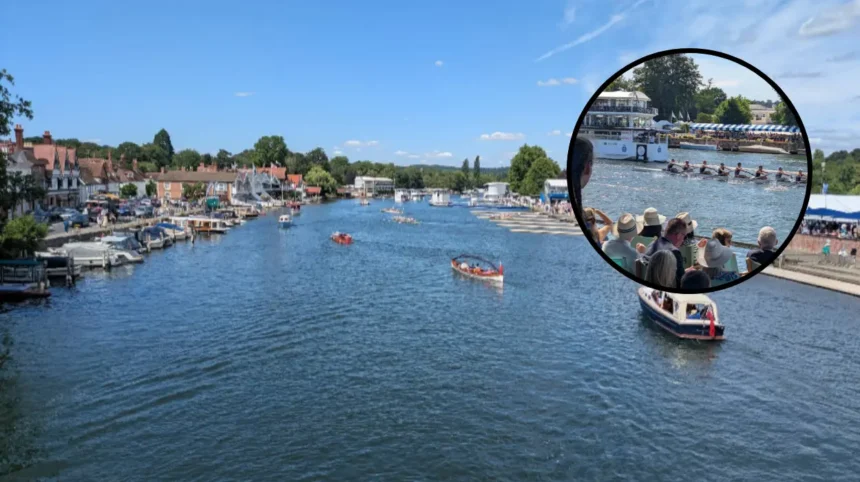
The high-stakes elimination race unfolded along the historic River Thames, where the natural elements provided an ideal backdrop for world-class racing. Launching from the Buckinghamshire (“Bucks”) side of the riverbank near the iconic Temple Island landmark, the Harvard crew found themselves playing catch-up early in the contest. As reported by sports correspondent Arthur Pendleton of The Regatta Daily, the Oxford unit immediately found their rhythm, building an early lead that forced the Crimson to sustain an aggressive tactical pressure just to stay within striking distance. By the time the boats surged past the critical Fawley checkpoint, Harvard trailed the pace but managed to maintain close visual contact, keeping the margin manageable as the race crossed its midway threshold.
As the grueling physical toll of the course began to peak, the Crimson executed a calculated strategic shift. Passing the four-minute mark of the race, the Harvard lightweight crew significantly quickened their stroke rate, visibly gaining water on the British leaders and setting up a dramatic grandstand finish. However, Oxford responded with absolute composure to the surging threat. As documented by veteran rowing analyst Eleanor Vance of The Rowing Chronicle, both crews dramatically increased their stroke rates as they entered the roaring atmosphere of the spectator enclosure. Oxford successfully held off the late American charge, utilizing their record-setting speed to shield their slim lead and secure a place in the next round, leaving a valiant Harvard squad to exit the competition despite an incredibly strong performance.
What Happened in the Prince Albert Challenge Cup?
The Prince Albert Challenge Cup remains one of the most intensely contested events at the Henley Royal Regatta, specifically designed for student coxed fours. The pairing of Harvard and Oxford promised an elite tactical showcase, and the actual race lived up to every ounce of its pre-match billing. From the initial referee’s flag, the tactical blueprint of both coaching staffs became clear. Oxford intended to break the race open early, utilizing the fast-moving current to establish an unassailable physiological advantage over the visitors.
Harvard’s coxed four, however, refused to break under the pressure of the hostile environment. Rowing from the Bucks side requires a delicate balance of steering precision and raw power to counteract the natural river bends near Temple Island. By staying close to the tail of the Oxford boat through the first thousand metres, the Crimson ensured that any mistake by the British crew could be immediately exploited. The strategy almost paid off when the American boat made its move late in the race, showcasing the rigorous endurance training of the Harvard lightweight program, even though victory ultimately slipped through their fingers in the final hundred metres.
Explore More Oxford University Sports News
Trans people banned from rowing in women’s team at Oxford University 2026
Kentucky Falls to Ole Miss Baseball, Oxford 2026
How Did Oxford Set a New Course Record?
To fully appreciate Harvard’s performance, one must look closely at the historic numbers produced by the winning crew. The River Thames course at Henley is notorious for its shifting winds and variable stream conditions, making absolute records incredibly difficult to break. On Friday morning, the combination of a clean, fast water flow and an almost flawless synchronized rhythm allowed Oxford to clock an unprecedented 6:21.
According to tracking data analyzed by chief technical writer Marcus Sterling of The Aquatics Journal, Oxford’s blistering pace required an average speed that pushed the physical boundaries of a coxed four event. For Harvard to finish a mere half-length behind a crew operating at a historic, record-shattering level highlights the sheer calibre of the Crimson squad. In typical regatta conditions, Harvard’s finishing time likely would have secured a comfortable victory against standard opponents, proving that their exit was less a failure of execution and more a consequence of meeting an opponent playing a historically perfect game.
Where Did the Crucial Tactical Shifts Occur?
The race can be effectively split into three distinct phases: the start at Temple Island, the midpoint grind at Fawley, and the sprint past the spectator enclosure. While Oxford won the opening phase by asserting dominance out of the blocks, the middle section of the course became a game of psychological attrition. Harvard’s ability to remain within contact during this phase laid the foundation for their late-stage counterattack.
The true drama peak occurred just after the clock ticked past four minutes. In a desperate bid to shift the momentum, the Harvard coxswain called for a sudden, aggressive burst of power. The crew responded beautifully, eating into Oxford’s lead and forcing the British rowers to glance over their shoulders. It was only the proximity of the finish line and a final, heroic lift in stroke rate from Oxford that prevented the Crimson from completing what would have been an iconic come-from-behind victory.
What Does This Mean for the Harvard Lightweight Program?
While an early exit from the Prince Albert Challenge Cup is undeniably disappointing for an institution with Harvard’s rich rowing pedigree, the broader implications for the program remain highly encouraging. Competing as a lightweight crew against open-weight or highly unrestricted university programs at Henley always presents unique physical challenges. The fact that the Crimson lighter athletes pushed a historic Oxford open boat to a record-breaking limit speaks volumes about their technical proficiency and cardiovascular conditioning.
As noted in the post-race wrap-up by senior editor Thomas Linwood of International Rowing Review, matches of this magnitude provide invaluable international racing maturity for a young collegiate roster. The experience of managing the unique pressures of the Henley Royal Regatta—with its booming enclosures, side-by-side knockout formats, and unforgiving river currents—will undoubtedly serve as a foundational catalyst for the Harvard squad as they transition back to their domestic collegiate campaigns in the United States.
“The margin of victory at this level is incredibly slim. When an opponent sets a course record, you can only tip your cap to their performance, while taking immense pride in a crew that refused to let them walk away with it easily.”
Rowing Digest Editorial Board