Key points
- Transgender women have been barred from competing in the women’s category at Oxford University’s rowing teams under revised rules.
- The change was made by Oxford University Rowing Clubs (OURCs), which set the rules for college‑level rowing in the university.
- Athletes must now be “assigned female at birth” to race in women’s boats; transgender women are directed instead into an “open” or mixed‑gender category.
- The policy shift followed a formal vote by college rowing captains and pressure from central university authorities over compliance with broader equality and sporting‑governance frameworks.
- The decision has sparked debate on campus and beyond about fairness, inclusion, and the role of universities in setting eligibility rules for competitive sport.
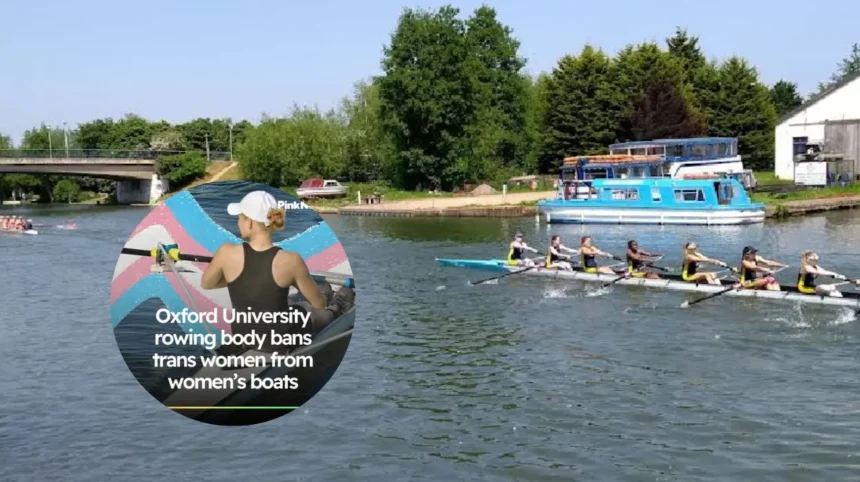
Oxford University Sports (Oxford Daily)May 21, 2026 – Transgender women have been banned from competing in the women’s category of Oxford University’s rowing teams after OURCs updated its Rules of Racing to require that only athletes who were assigned female at birth may race in women’s boats.
As reported by Charlie Smith of Cherwell, the change means that any rower who is not assigned female at birth is now excluded from the Women’s Division, regardless of their gender identity or medical transition status. The new rules instead place such athletes into an “open” division, which functions broadly as a mixed‑gender category incorporating men, women, and non‑binary competitors.
OURCs, which govern the internal competition structure for college rowing at Oxford, framed the move as a response to questions about consistency with wider sporting‑governance standards and university equality‑law obligations. A statement shared via THEIR social channels noted that the policy had been adopted after “a thorough review of how the rules align with current best practice and with the expectations of national sporting bodies.”
What led to the trans inclusion ban?
A key factor behind the ban was deliberation among college rowing captains, who voted in 2025 to exclude transgender women from the Women’s Division. According to reporting by Imogen Smith of Varsity, the captains expressed concerns that the continued inclusion of some transgender women risked creating “perceived unfairness” and potential disputes over eligibility in the tightly contested bumps races.
As stated by the OURCs president in a public statement carried by Cherwell, the leadership had been aware for some time of “a situation regarding a small number of rowers who do not fit neatly within the existing women’s category,” and had sought to clarify the rules “in a way that is transparent and legally defensible.” The president added that the decision was not made lightly and followed “consultation with equality‑law experts and officials within the university.”
Critics argue, however, that the change effectively treats transgender women as a separate category rather than as women, which some staff and students say undermines the university’s own commitments to inclusive education. Several student‑union spokespeople quoted in Varsity said they were “deeply disappointed” by the outcome, warning that the move could dissuade transgender students from taking part in collegiate sport at all.
How does the new policy work in practice?
Under the revised framework, any rower who is not assigned female at birth is no longer eligible to compete in the Women’s Division, even if their gender identity is female. As explained by OURCs’ president in a statement posted on OURCs’ Instagram account, transgender women are instead encouraged to enter boats in the “open” division, which does not draw the same strict sex‑based category line.
The open division, once a relatively minor category, is now expected to become a more prominent competitive space, particularly for transgender and non‑binary rowers. However, coaches and captains told Varsity that the open category remains less prestigious and receives fewer resources than the men’s and women’s divisions, raising concerns that the policy may in effect sideline some athletes.
Student‑athletes quoted by Cherwell described the revision as a “practical” attempt to remove ambiguity, but also acknowledged that it could feel exclusionary to particular individuals. One college captain, speaking anonymously, said:
“The worry is less about performance and more about having clear rules that everyone can understand, but we recognise that clarity for the group can sometimes feel like exclusion for the individual.”
Wider reactions and concerns
The decision has split opinion within the student body and among university staff. LGBTQ+ student groups at Oxford told Varsity that the new rules risk sending a message that transgender women are not “fully women” in the eyes of the university’s sporting structures. A representative from the Oxford University LGBTQ+ Society stated that they were “concerned that the policy may normalise the idea that trans women are fundamentally different from other women,” and warned that it could affect sense of belonging among trans students.
At the same time, some rowers and coaches have welcomed clearer category definitions, arguing that the previous, more flexible approach had invited disputes and uncertainty. One senior coach interviewed by Cherwell said:
“We want to be fair and inclusive, but we also need rules that are administrable and that can withstand legal scrutiny; this change was driven by that need for clarity.”
Beyond campus, the policy has drawn attention from advocacy organisations and commentators outside Oxford. Social‑media posts circulating in early May 2026 highlighted the decision as part of a wider national debate about how universities and sports bodies should balance fairness, safety, and inclusion in gendered competitions.
H2: Background of the policy change
The exclusion of transgender women from Oxford’s women’s rowing category is rooted in a gradual tightening of sex‑based rules at the collegiate level, rather than a sudden shift. Before the 2025–26 academic year, many college rowing captains had interpreted the existing Rules of Racing with some flexibility, allowing individual transgender women to race in women’s boats on a case‑by‑case basis, often supported by letters from medical professionals.
However, as national sporting bodies updated their transgender‑competition policies, pressure mounted on university‑level organisers to clarify how college‑level rules aligned with those frameworks. British Rowing’s trans and non‑binary eligibility policy, last revised in 2025, preserves separate men’s and women’s categories, requiring participants to meet specific criteria if they wish to compete in the category corresponding to their gender identity. This national context helped motivate OURCs and the college captains to codify a stricter, more uniform rule at Oxford.
The 2025 vote by college rowing captains to exclude transgender women from the Women’s Division set the stage for the formal rule change adopted in 2026. In that vote, the captains opted for a “clear” line based on sex assigned at birth as a way of avoiding protracted disputes over hormone‑therapy requirements, testosterone thresholds, or individual medical histories. The resulting policy, therefore, exemplifies a compromise between a desire for legal clarity and administrative manageability on one side, and ideals of inclusion and recognition of gender identity on the other.
Predictions: How this could affect students and the sport
Moving forward, the new rule is likely to reshape how transgender and non‑binary students at Oxford engage with rowing. For some, the shift to the open division may feel like a reasonable accommodation that still allows them to compete, whereas others may experience it as a reduction in opportunities and status, particularly given that the women’s and men’s divisions typically receive more attention and resources.
Among the broader student‑athlete population, the policy could influence perceptions of whether Oxford’s sporting culture is genuinely inclusive of diverse identities. Student‑union sources interviewed by Varsity suggested that if similar rules are adopted in other sports, transgender applicants or current students might question whether they will feel welcomed as full members of the university’s sporting community.
For coaching staff and college captains, the change may simplify eligibility decisions but could also increase the burden of explaining why certain categories are sex‑based and others are not. As noted by a coach quoted in Cherwell, the hope is that a publicly visible rule will reduce behind‑the‑scenes disputes about individual cases, but that same clarity may also make the university a reference point in wider debates about how higher‑education institutions should regulate gendered sport.