Key Points
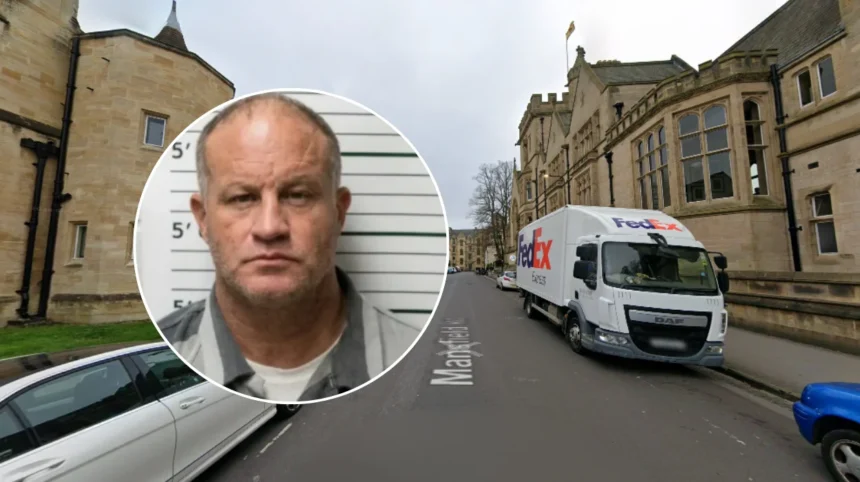
- Republican Christopher “Chris” Paul, 48, is set to become the police chief in Elizabeth, Louisiana, after his only rival dropped out of the race.
- Police arrested Paul in September on two counts of second-degree rape following allegations from about 20 years ago involving two 13-year-old victims.
- Nonpartisan candidate Zachary LaCaze withdrew from the contest because his job at the Fort Polk military facility made his candidacy a violation of the federal Hatch Act.
- Louisiana state law allows individuals with pending criminal charges to run for and hold public office unless they receive a felony conviction.
- The Elizabeth Board of Aldermen passed an ordinance putting a measure on the next ballot to convert the police chief post from an elected position to an appointed one.
Elizabeth (Oxford Daily) October 12, 2026 – A small Louisiana municipality is set to elect a police chief who is currently awaiting trial on felony sex crime charges following the sudden withdrawal of his sole political opponent.
Christopher Paul, a 48-year-old Republican, stands unopposed for the top law enforcement position in the village of Elizabeth after nonpartisan rival Zachary LaCaze dropped out of the race.
The political developments follow Paul’s arrest by law enforcement authorities in September.
The Allen Parish Sheriff’s Office formally charged Paul with two counts of second-degree rape. According to law enforcement officials, the allegations stem from incidents reported to have occurred nearly 20 years ago involving two victims who were 13 years old at the time.
Why Did the Sole Opposing Candidate Withdraw From the Race?
As reported by local television station KPLC and covered by national press agencies, independent candidate Zachary LaCaze stepped down from the ballot after discovering a federal employment conflict.
LaCaze, who works at the Fort Polk military facility, stated that his campaign ran afoul of the Hatch Act, a federal statute restricting political activities by executive branch employees.
LaCaze explained that he originally believed running as a nonpartisan candidate would satisfy employment regulations. However, federal authorities subsequently informed him that he must choose between his military installation employment and continuing his political campaign.
“Faced with a choice between keeping his job and continuing his campaign for police chief, LaCaze decided to withdraw,” noted local coverage detailing the decision, as LaCaze affirmed his need to retain his employment to support his family.
Because the withdrawal occurred after official deadlines, election authorities confirmed that LaCaze’s name may still appear on printed paper ballots. However, election officials noted that formal notices will be posted across polling locations stating that the race is canceled and that votes cast for LaCaze will not be counted.
What Are the Legal and Municipal Frameworks Governing the Office?
Under existing Louisiana state election laws, the presence of active criminal indictments or pending felony charges does not bar a candidate from seeking or assuming municipal office. State regulations mandate that disqualification occurs only if a candidate is formally convicted of a felony.
The Secretary of State’s office verified that Paul remains legally eligible to hold the position of police chief despite the pending prosecution. In response to growing community interest and public scrutiny, municipal leaders highlighted the presumption of innocence guaranteed under the constitution.
As reported by The Guardian, Elizabeth Mayor Mandy Green stated: “Charges are allegations, not a conviction. The candidate in question has been arrested and charged, but has not been convicted of any crime. Under the law, anyone accused of a crime is presumed innocent until proven guilty in a court of law. This is an important part of our justice system.”
In an effort to address community concerns, the Elizabeth Board of Aldermen voted to approve an ordinance for an upcoming municipal ballot. The measure asks local voters to decide whether to convert the police chief role from an elected office into an appointed position, which would give municipal leaders authority over appointment and removal.
Additionally, civil rights groups such as the Youth Peace & Justice Foundation have publicised requests calling on Paul to voluntarily step aside while his criminal trial remains pending.
Background of the Development
The situation in Elizabeth highlights long-standing state election laws in Louisiana regarding candidate eligibility during active criminal proceedings.
Under Title 18 of the Louisiana Revised Statutes, qualifications for local elected office rely on residency, voter registration, and the absence of a final felony conviction.
Because an indictment or arrest does not constitute a legal conviction, municipal governments lack statutory authority to unilaterally remove a candidate from an active ballot.
Historically, small rural municipalities in Louisiana have maintained elected chief of police positions as provided by the Lawrason Act, which governs statutory municipalities across the state.
In recent years, several small towns have faced similar logistical and governance challenges when candidates encountered unexpected legal or regulatory disqualifications close to election dates.
The conflict involving the Hatch Act—a 1939 federal law prohibiting certain federal employees from running in partisan or designated political elections—frequently impacts local races in areas with heavy civilian military employment, such as those surrounding Fort Polk.
Prediction: How This Development Can Affect the Local Community and Public Trust
This ongoing development is likely to have immediate effects on the residents of Elizabeth, local law enforcement operations, and municipal governance.
- Impact on Local Residents and Public Trust: The assumption of the chief law enforcement role by an individual facing severe criminal charges may create significant apprehension among town residents regarding local law enforcement administration. Community engagement at local council meetings is expected to remain high as citizens seek clarity on public safety protocols.
- Municipal Governance and Legislative Reforms: The prospective change from an elected to an appointed police chief could permanently alter how the village selects its law enforcement leadership. If voters approve the upcoming ballot ordinance, future leadership decisions will shift directly to the mayor and the Board of Aldermen, limiting direct voter selection for the position in future cycles.
- Legal and Institutional Precedent: The resolution of Paul’s criminal proceedings in Allen Parish will dictate the long-term stability of the police department. Should the case proceed to trial resulting in a conviction, statutory provisions would trigger an immediate vacancy, forcing the town council to appoint an interim chief and schedule a special election. Conversely, an acquittal or dismissal would leave Paul in office for the duration of the term, pending any structural legislative changes enacted by local voters.