Key Points
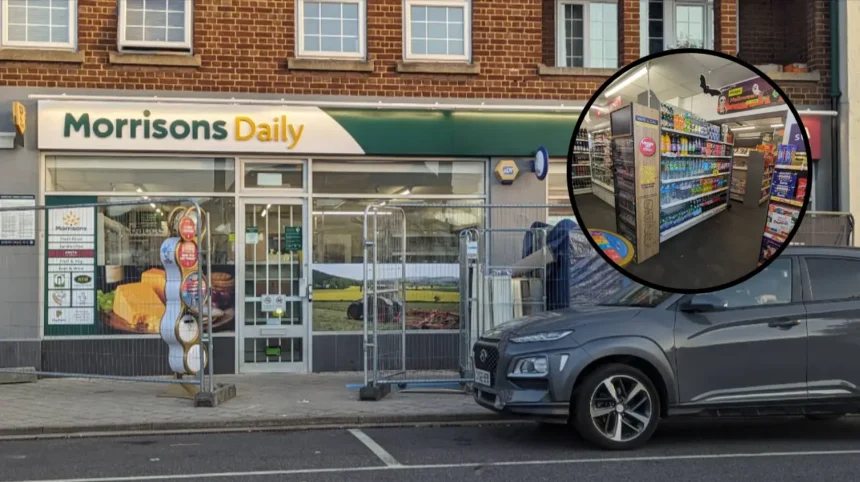
- First Branch Closes: UK supermarket giant Morrisons has officially shut its first branch under a wider rationalisation programme, closing a site located just across the Oxfordshire border in Berkshire.
- 100 Stores Targeted: The closure marks the beginning of a sweeping restructuring campaign that will see approximately 100 Morrisons Daily convenience stores shuttered nationwide.
- Former McColl’s Sites: The locations selected for closure are former McColl’s shops that Morrisons acquired during a £190 million rescue takeover in 2022, which have reportedly remained unprofitable for years.
- Post Office Disruption: At least 52 Post Office branches housed inside these Morrisons Daily convenience stores across England, Scotland, and Wales will be forced to shut down.
- Redundancy Risk: Hundreds of retail and shop workers are understood to be facing the risk of redundancy as the proposals are executed over the coming months.
- Oxfordshire Safeguarded: While the first closure occurred adjacent to its border, local representatives have confirmed that no Morrisons supermarkets, convenience shops, cafés, florists, or pharmacies within Oxfordshire itself are slated for closure this year.
- Service Relocation Efforts: The Post Office network has indicated it is actively seeking alternative retail partners within the affected communities to host replacement services and minimise local disruption.
Oxfordshire (Oxford Daily) July 20, 2026 – The British supermarket giant Morrisons has officially initiated a sweeping restructuring programme that will see the closure of up to 100 convenience stores across the United Kingdom, commencing with the shuttering of its first branch located just across the Oxfordshire border. The strategic retrenchment targets underperforming Morrisons Daily branches that were rescued during a multi-million-pound acquisition of the collapsed McColl’s retail chain. The commercial fallout extends beyond grocery retail, as the downsizing campaign triggers the simultaneous loss of at least 52 Post Office counters housed within the targeted premises. Hundreds of shop floor workers are currently facing the threat of redundancy as the supermarket chain seeks to eliminate long-term unprofitable assets from its convenience retail estate, which spans roughly 1,700 smaller shops alongside its 500 core supermarkets.
Why Is Morrisons Closing Convenience Stores Across the UK?
The ongoing closure programme stems directly from the financial legacy of Morrisons’ aggressive expansion into the convenience sector via corporate acquisition. As detailed in the reporting by Alexandra Carter, Senior Reporter for the Oxford Mail, the locations earmarked for decommissioning have been identified as structurally unprofitable for a number of consecutive years.
These sites were originally part of the extensive McColl’s convenience network. Morrisons acquired the struggling brand out of administration in May 2022 in a rescue deal valued at £190 million. While the acquisition successfully safeguarded thousands of jobs at the time and allowed Morrisons to rapidly convert hundreds of premises into the modern “Morrisons Daily” format, a significant portion of the inherited estate has failed to achieve financial viability. As reported by the Oxford Mail editorial team, corporate analysts determined that continuing to operate these heavily underperforming former McColl’s units was unsustainable amid rising operational overheads, prompting the board to approve a phased reduction of up to 100 retail units to protect the group’s wider profit margins.
Which Morrisons Branch Was the First to Shut Down?
The operational execution of the closure scheme began with a prominent site located right on the edge of the Oxfordshire county line, causing immediate concern for local commuters and nearby residents who relied on the branch for daily essentials.
As reported by Alexandra Carter of the Oxford Mail, the first casualty of the corporate downscale was the Morrisons Daily branch located in Crockhamwell Road in Woodley, Berkshire. The location had only recently transitioned into the supermarket chain’s portfolio, having officially become a branded Morrisons Daily convenience store in November 2024. However, less than two years after its grand conversion, the branch was permanently closed last week. The rapid turnaround from a newly rebranded convenience asset to a shuttered storefront underscores the aggressive pace at which the Bradford-based supermarket group is reviewing its retail footprint.
Explore More UK News
Guide to Bargain Hunting at the Weekly Car Boot Sale, Oxford
O2 Launches 5G+ Standalone Network Across Oxfordshire: £700m Project, 2026
How Will the Closures Affect Local Post Office Services?
One of the most significant societal impacts of the corporate rationalisation is the collateral damage inflicted on the national postal and banking network, particularly in suburban and rural localities where alternative provisions are scarce.
Writing for the Oxford Mail, Senior Reporter Alexandra Carter established that the overarching closure project will directly collapse at least 52 Post Office branches across England, Wales, and Scotland. A considerable concentration of these affected counters is situated across southern England. The closure of the Crockhamwell Road branch in Woodley, for instance, simultaneously ended the operations of a local Post Office that had served the immediate Berkshire community from that specific street for approximately 60 years.
The loss of these counters strips vulnerable residents of essential services, including cash withdrawals, bill payments, and parcel distributions. In response to the growing concern over these community deficits, the Oxford Mail noted that corporate coordinators are understood to be actively looking for replacement shops, independent newsagents, or alternative local businesses that could step forward to host the displaced Post Office services within the affected neighbourhoods.
Are Morrisons Stores Inside Oxfordshire Safe From Closure?
While the inaugural closure occurred just outside the political boundaries of Oxfordshire, causing anxiety among local retail workers, subsequent corporate disclosures have provided clarity regarding the immediate future of the brand’s operations within the county itself.
According to institutional data compiled by the Oxford Mail, Morrisons maintains a substantial operational footprint within Oxfordshire, featuring large-scale supermarkets in Banbury, Carterton, and Faringdon, complemented by a network of smaller Morrisons Daily convenience branches situated in Oxford city, Abingdon, Thame, and Banbury. Representatives have officially confirmed that Morrisons will not close any of its Oxfordshire shops, cafés, florists, or pharmacies during the current calendar year. The regional exemption suggests that the county’s current configuration of convenience and supermarket locations meets the necessary profitability thresholds required by corporate headquarters.
Will There Be Retail Redundancies Due to the Closures?
Yes. As reported by the Oxford Mail editorial staff, hundreds of shop workers are currently understood to be at risk of redundancy as the proposals move forward over the next few months. Because the closures involve the complete structural decommissioning of up to 100 physical properties, front-line retail assistants, store managers, and key-holders are directly impacted. While Morrisons, which employs roughly 95,000 staff members across its entire UK network, has historically attempted to redeploy displaced workers to nearby profitable branches or larger supermarkets where vacancies exist, the geographical dispersion of these convenience units means that outright redundancies will be unavoidable for a significant portion of the affected workforce.
What Is the Scale of Morrisons’ Total Retail Estate?
Despite the ongoing targeted reductions, the supermarket group remains one of the dominant forces within the competitive British grocery sector. The current operational reduction represents an optimization strategy rather than a wholesale retreat from the high street.
As the data illustrates, the reduction of 100 convenience shops constitutes a modest percentage of the brand’s massive 1,700-strong convenience empire. The aggressive expansion orchestrated through the McColl’s acquisition afforded Morrisons immense market penetration, but the current economic climate—characterised by volatile consumer spending and elevated utility costs—has forced the grocery giant to refine its portfolio, prioritizing high-yield locations over absolute volume. The company’s core network of 500 supermarkets remains the financial anchor of the corporation as it navigates this retail transition.