Key Points
- A new partnership has been announced in Oxford, Ontario, to protect farmland and open‑space lands from future development.
- The agreement involves Oxford County, the local agricultural community, and a conservation group, with an emphasis on permanent land‑protection tools such as easements and purchase‑of‑development‑rights models.
- As reported by Heart FM’s local news desk, the initiative targets several hundred acres of high‑quality farmland and natural habitat, with the first parcels expected to be legally secured by late 2026.
- County officials have framed the deal as a response to residents’ long‑standing concerns about unchecked urban expansion and loss of rural character, echoing earlier community‑consultation feedback collected through the “Speak Up Oxford!” platform.
- Agricultural stakeholders, including local farmers and the Oxford Land Trust, have welcomed the partnership, arguing it will help keep farmland productive while supporting ecological resilience and local food security.
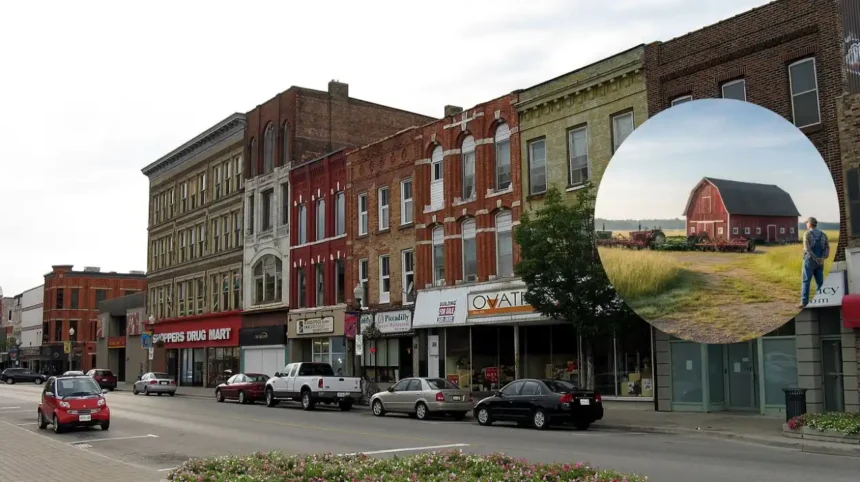
Oxford(Oxford Daily) April 29, 2026 – Oxford County, Ontario, has launched a new partnership that could permanently shield significant tracts of farmland and open space from future development, according to a report by Heart FM’s local‑news team. The initiative brings together Oxford County planners, the agricultural community, and a regional conservation organisation in an effort to balance growth with environmental and rural‑land protection, a move that comes amid growing pressure from residents and farmers to preserve the county’s rural character.
As reported by Heart FM’s community‑news desk, the agreement is built on a mix of conservation easements and purchase‑of‑development‑rights mechanisms, which allow landowners to retain ownership while legally restricting future densification or subdivision. The first phase of the project targets several hundred acres of Class 1 and 2 farmland, along with associated wetlands and riparian areas, with the expectation that more parcels will be added over the next five years. County sources told the outlet that the goal is to scale up protection “in a way that is financially sustainable and does not place an unfair burden on individual farmers.”
Why is Oxford County protecting these lands now?
The timing of the deal reflects broader land‑use planning pressures in Oxford County. As noted in earlier county documents and community‑consultation records compiled through the “Speak Up Oxford!” feedback portal, residents have repeatedly urged officials to create a green‑belt‑style buffer around towns and villages to prevent “urban sprawl” from consuming productive farmland. Those concerns appear to have crystallised in the current partnership, which earmarks priority areas identified in previous planning studies and zoning‑review processes.
In the same vein, recent county‑level planning files, such as the 2026 application for an Official Plan Amendment (OP 25‑15‑7), show ongoing debates over how much farmland should be converted to low‑density residential uses. The new partnership, as Heart FM’s reporters explain, is framed by the county as a “middle‑ground” response: it allows growth in designated nodes while ring‑fencing key agricultural corridors and natural habitats. A senior planner quoted in the Heart FM piece stressed that the model is “not anti‑development, but pro‑smart development,” saying that the aim is to avoid “cutting off our own food‑supply options in decades to come.”
How will the partnership work on the ground?
Heart FM’s coverage outlines three main components of the partnership. First, participating landowners will enter into long‑term conservation agreements that prohibit subdivision and limit non‑agricultural uses, while allowing normal farming operations to continue. Second, the county and its conservation partner will jointly fund easement‑purchase and stewardship costs, with a portion of the money earmarked for habitat‑management activities such as wetland restoration and native‑species planting. Third, the agreement includes a public‑access component, with selected parcels designated for low‑impact, passive recreation such as walking trails and educational nature walks.
The Oxford Land Trust, a local non‑profit established in 1988 to preserve the rural character of parts of the Oxford region, has publicly supported the initiative. In a statement quoted by Heart FM, a Trust representative said the partnership “aligns with our long‑standing mission to protect open space, wetlands, and unique scenic and historic sights,” and emphasised that farmland protection is not just about “scenery” but about sustaining “working landscapes” that support local food systems. Farmers interviewed by the station similarly welcomed the model, noting that it can help younger operators afford land by lifting the pressure to sell to developers.
What does this mean for residents and taxpayers?
For residents of Oxford County, the deal is presented as a way to maintain the area’s rural identity while still accommodating population growth. As Heart FM’s report notes, feedback from earlier “Speak Up Oxford!” surveys highlighted worries that unchecked expansion could erode farmland, increase traffic, and strain infrastructure. The county’s communications team has, in turn, cast the partnership as a “pre‑emptive” measure to channel growth into existing serviced areas, rather than “leap‑frogging” into productive agricultural land.
At the same time, officials acknowledge that the scheme will require ongoing public investment. The Heart FM piece references county budget documents that allocate several hundred thousand dollars over the next few years to easement‑acquisition and stewardship, with the county hoping to leverage additional grants from provincial and federal conservation programmes. Officials told the outlet that the long‑term land‑management costs are expected to be modest compared to the cost of future infrastructure if the same land were developed, but warned that the success of the partnership will depend on “consistent political will and community buy‑in.”
Background: How this land‑protection model developed
The current partnership in Oxford County did not emerge in isolation. Over the past decade, local planners and activists have repeatedly called for stronger green‑belt‑style protections to limit sprawl, a demand echoed in earlier “Speak Up Oxford!” feedback and in various planning‑policy discussions. The county’s own planning documents show an evolving tension between the economic benefits of new residential development and the desire to retain its rural agricultural base.
At the same time, broader policy signals from provincial and federal governments have favoured “public‑money‑for‑public‑goods” approaches, akin to the UK’s Sustainable Farming Incentive and similar land‑management schemes, which tie public payments to environmental stewardship rather than purely production‑oriented subsidies. In this context, the Oxford County partnership represents a local adaptation of that logic: using public funds to secure permanent land‑use outcomes that support biodiversity, farmland preservation, and community recreation. By combining easements with targeted stewardship, the model draws on both municipal‑level planning tools and established conservation‑trust practices, creating a framework that could be replicated in other rural‑urban transition areas.
Predictions: What this could mean for Oxford County and similar communities
If fully implemented, the Oxford‑County land‑partnership model could have several notable effects on the local audience. For farmers and landowners, the availability of easement and purchase‑of‑development‑rights deals may make it easier to retain ownership while locking in long‑term protection, reducing the risk that children or heirs will be forced to subdivide for financial reasons. This could help stabilise the local agricultural base and support a more predictable supply of locally grown food.
For local residents and taxpayers, the arrangement may slow the outward creep of subdivisions, preserving open‑space views and reducing the immediate pressure to extend roads, sewers, and other infrastructure. However, it could also mean that available housing land becomes scarcer in certain zones, potentially pushing development and prices toward already‑denser nodes unless the county adjusts its overall growth strategy.
For other rural‑urban regions, the Oxford partnership offers a template for balancing growth with protection. By tying conservation easements to active farmland use and low‑impact public access, counties elsewhere may be able to replicate a model that avoids the “binary” choice between untrammelled development and locked‑up wilderness, instead favouring mixed‑use landscapes that combine productive agriculture, ecological function, and community‑oriented recreation. Over time, such approaches could become a standard feature of 21st‑century land‑use planning in areas where farmland, nature, and expansion pressures intersect.