Key Points
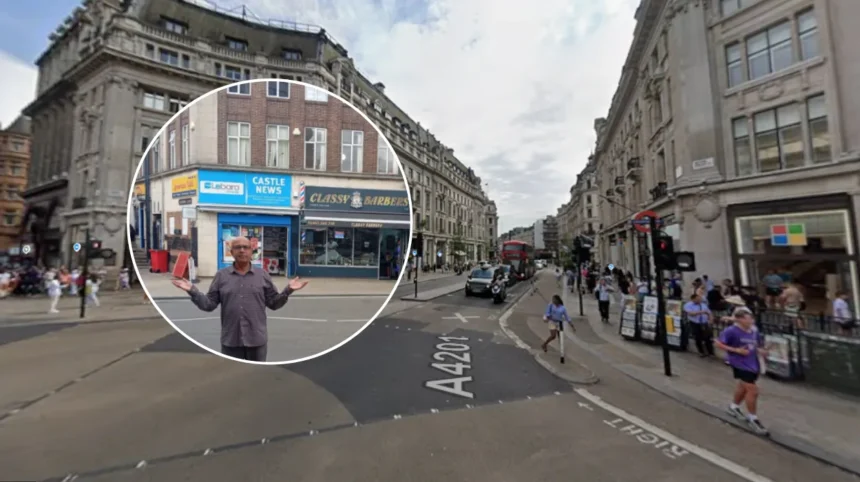
- Property Sale Proposal: Oxford City Council is considering selling its council-owned building at 11 New Road to St Peter’s College, Oxford.
- Student Bedroom Expansion: The college plans to redevelop the property to increase its capacity from six student bedrooms to 24.
- Local Opposition: Opponents, including Councillor Saj Malik, have called on the council to reject the sale and convert the site into social housing rather than student accommodation.
- Impact on Existing Businesses: The ground-floor barber shop and off-licence will stay in place, but first-floor nail salon American Nails will be removed to build student flats.
- Rental Income and Debt: The property currently brings in £110,280 in annual rent for the council, which plans to use the sale proceeds to reduce its borrowing.
- Decision Dates: The city council cabinet votes on the disposal on Wednesday, 16 September 2026, and the formal planning application (26/01994/FUL) has a target determination date of 12 October 2026.
Oxford (Oxford Daily) September 16, 2026 – As reported by Isabella Harris, Local Democracy Reporter for Hits Radio Oxfordshire, and updates in the Oxford Mail, Oxford City Council is facing intense community and political opposition over its plans to sell a city centre council-owned property to St Peter’s College, Oxford. The building, located at 11 New Road near the Westgate shopping centre and County Hall, is recommended for disposal by council officers following an offer submitted by the higher education institution.
- Who is opposing the sale and what are their arguments?
- How will St Peter’s College transform the building under planning application 26/01994/FUL?
- Which local businesses will be affected by the redevelopment?
- Why is St Peter’s College seeking additional student accommodation?
- How does Oxford City Council justify disposing of the municipal asset?
- What is the background to Oxford City Council selling municipal property?
- What does this development mean for Oxford residents and students?
The proposal, which was scheduled to be put to a vote by the city council’s cabinet on Wednesday, 16 September 2026, seeks to hand over ownership of the commercial and residential plot contingent on planning approval. If the sale goes through, St Peter’s College intends to quadruple the capacity of student accommodation within the building, expanding the current provision of six bedrooms into 24. However, the proposal has drawn severe criticism from political opponents who argue that municipal assets should be redirected toward tackling the city’s urgent affordable housing crisis rather than assisting university expansion.
Who is opposing the sale and what are their arguments?
As reported by the Oxford Mail, Opposition Councillor Saj Malik has strongly voiced his disapproval of the recommended sale. Malik has formally called on the local authority to reject the college’s offer and instead retain the property to convert it into municipal social housing. Critics maintain that transferring public assets to well-funded university entities deprives local working-class residents of potential council homes at a time when waiting lists across Oxfordshire remain acute.
Community members and local campaigners have also expressed frustration regarding the ongoing trend of local authority properties being sold off to institutional tenants. Opponents highlight that the building currently brings in a stable, recurring revenue stream of £110,280 annually for the local authority. Selling the site removes a long-term yield for the taxpayer in exchange for a short-term capital sum.
How will St Peter’s College transform the building under planning application 26/01994/FUL?
As reported by Isabella Harris of Hits Radio Oxfordshire, St Peter’s College has submitted a formal planning application (reference 26/01994/FUL) to redevelop 11 New Road. The college is currently a leaseholder of the second floor, which operates as a six-bedroom House in Multiple Occupation (HMO). Under the new plans, the college intends to reconfigure and extend the site to create 24 student bedrooms distributed evenly across three floors (eight rooms per floor), alongside shared kitchen facilities, bathrooms, and subterranean amenity space in the basement.
Architectural plans submitted by Lee Fitzgerald Architecture on behalf of the college indicate that the front of the structure will be extended by 1.06 metres into the existing St Peter’s College grounds behind New Road. This design adjustment intends to give the facade a 1930s ‘Arts and Crafts’ aesthetic to align visually with the adjacent Stokes’ pastry school building and the surrounding collegiate architecture.
Which local businesses will be affected by the redevelopment?
As reported by the Oxford Mail, the site currently hosts three commercial premises across its ground and upper floors:
- Castle News (Ground Floor): An off-licence shop that will remain in place under the proposed plans.
- Classy Barbers (Ground Floor): A local barber shop that will also be retained.
- American Nails (First Floor): A nail salon that will be displaced as the first floor is renovated and converted into permanent residential units for students.
While the ground-floor retail units are slated to be preserved, the elimination of the first-floor business space has added to local concerns over the loss of small commercial premises in Oxford’s city centre.
Why is St Peter’s College seeking additional student accommodation?
As stated in planning documentation submitted to Oxford City Council, St Peter’s College highlighted a “significant shortfall” in available housing for both undergraduate and postgraduate students. The college revealed that it was short of 44 student bedrooms during the current academic year. By acquiring and redeveloping 11 New Road, the college aims to centralise its residential provision, reduce reliance on private sector rentals scattered across the city, and guarantee housing on or adjacent to its primary site.
How does Oxford City Council justify disposing of the municipal asset?
According to the official council report cited by Hits Radio Oxfordshire, local authority officers recommended the disposal of 11 New Road to generate immediate capital funding. Council documents state that the capital release from the transaction will be utilised to “reduce borrowing” and ease fiscal pressures facing the authority. Specific financial figures regarding the agreed sale price remain confidential under restricted commercial terms until the legal contracts are completed.
The decision is currently before Oxford City Council in its dual role as landholder and planning authority, with a target determination date for the planning application set for 12 October 2026.
What is the background to Oxford City Council selling municipal property?
The planned sale of 11 New Road follows a wider pattern of asset disposals by Oxford City Council in recent years aimed at rationalising its property portfolio and raising capital receipts.
In 2025, the local authority approved the sale of North Gate Hall—a Grade II listed building situated opposite the Oxford Union—to its existing tenants, the Oxford Evangelical Presbyterian Church. Similar to the 11 New Road transaction, that decision sparked municipal debates surrounding the long-term privatization of publicly held assets versus immediate financial returns for council coffers.
Oxford City Council has simultaneously faced severe housing pressures, with local home prices and private rents among the most unaffordable relative to median earnings anywhere in the United Kingdom. As university colleges consistently look to expand their footprints to meet rising enrollment demands and guarantee student accommodation, competition between educational institutions, commercial developers, and social housing advocates for scarce city centre land has intensified dramatically across the local government area.
What does this development mean for Oxford residents and students?
The sale and conversion of 11 New Road will have distinct consequences for different segments of the Oxford community:
- For Local Residents and Social Housing Applicants: The transaction signifies a missed opportunity for the municipal housing stock. With the site transferred to a private university body, low-income families and individuals on the city’s housing register will see no increase in affordable residential options in the central ward, reinforcing reliance on peripheral housing developments.
- For St Peter’s College and Students: The expansion directly relieves accommodation pressures by creating 18 additional beds, bringing the site total to 24. This helps cover nearly half of the college’s reported 44-bed deficit, keeping more students housed directly on collegiate grounds and potentially easing pressure on the broader private rented sector in surrounding suburbs.
- For City Centre Businesses: Ground-floor retail continuity offers stability for Castle News and Classy Barbers. However, the closure and displacement of American Nails highlights the shrinking availability of upper-floor commercial space for independent service providers in central Oxford.
- For Taxpayers: While the council loses £110,280 in annual recurring rental income, the lump-sum capital injection will immediately offset debt obligations, temporarily shielding municipal services from steeper interest-payment burdens.