With an unquestionable housing issue (due to its Green Belt protected land ring policy restriction that does not permit it to extend outward), Oxford faces a severe housing issue.
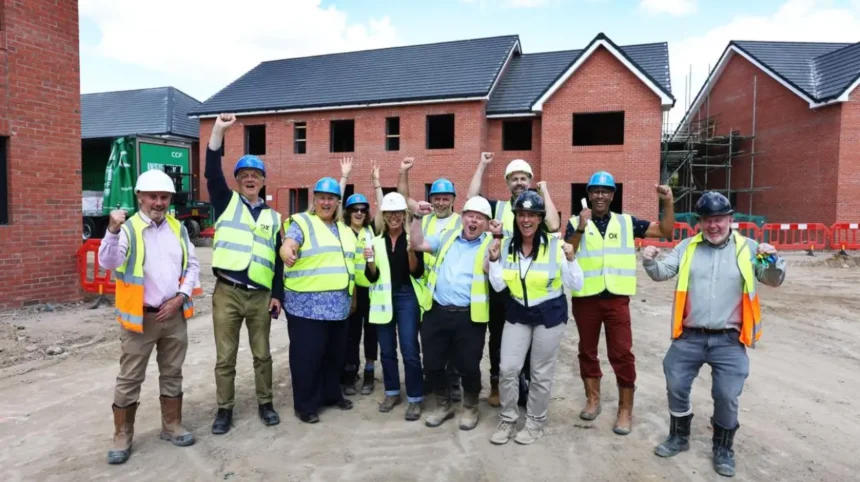
Therefore, in order to manage its housing, Oxford has to opt for an inward strategy. The newest such initiative (in Oxford) unfolds at Railway Lane in uk/local/littlemore/">Littlemore, where a former industrial oil depot messy space has been transformed into a housing estate called ‘Keepers Place’.
Delivered by the Oxford’s city council’s housing company (OX Place) alongside Cantay Estates, the project essentially goes past the private market and offers designated affordable options (90 homes more exactly). Out of these 90 homes, 47 of them are for genuine social rent in order to help people on the local housing register, while the rest of 43 homes are meant for shared ownership (it provides first-time buyers an actual chance to get on the property ladder).
The project was a complex initiative as the ground had to be first thoroughly cleared up before any construction could be started (this, of course, to guarantee a safe housing space).
From industrial oil to a high-tech energy efficiency… the entire neighbourhood is 100% electric. Instead of traditional gas boilers, the houses use air-source heat pumps and rooftop solar panels. Moreover, the ‘fabric first’ design followed by the builders ensures well-insulated and airtight walls, windows and roofs that does not let heat escape.
The nature of the concept of these houses cuts carbon emissions by at least 65% in comparison to standard building norms and rules, which essentially not only helps the environment but also prevents low-income tenants getting hit by massive heating bills.
Additionally, the layout aids the transport aspect as it introduces new walking and cycling paths through to Thompson Terrace and making it easier for people to walk over to Oxford Science Park without relying on cars.
This Littlemore housing project actually brings together two different issues (the housing crisis and the climate crisis) that are separately talked about and shows they can be solved at the same time by simply recycling old land.
The full project is expected to be completed by early 2027.