
The choice between the University of Oxford and the University of Cambridge involves comparing two of the world’s oldest and most prestigious higher education institutions. Both collegiate universities offer exceptional academic standards, top global rankings, and specialized teaching frameworks.
- Is Oxford or Cambridge Higher Ranked Globally?
- How Do Courses Differ Between Oxford and Cambridge?
- What Is the Difference Between Tutorials and Supervisions?
- Which University Has Harder Entry Requirements?
- How Do Living Costs and Tuition Fees Compare?
- What Are the City Environments and Campus Cultures Like?
- Which University Delivers Better Graduate Career Outcomes?
Students must evaluate course structures, entry requirements, location characteristics, and academic style to decide which university fits their long-term career goals.
The University of Oxford operates as a public research university located in Oxford, England, with formal evidence of teaching dating back to 1096. The University of Cambridge, established in 1209 by scholars leaving Oxford, operates in Cambridge, England. Together, these institutions are historically referred to as Oxbridge. They share a unique collegiate structure where students belong to both an overarching university department and an independent self-governing college.
The two universities maintain different spatial and academic profiles. Oxford features 39 constituent colleges and six permanent private halls serving approximately 26,500 total enrolled students. Cambridge comprises 31 constituent colleges serving roughly 24,500 students. Oxford is located in a larger, urbanized city center 60 miles northwest of London. Cambridge rests 60 miles north of London in a smaller, quieter city environment defined by cycling infrastructure and historic river paths.
Choosing between Oxbridge requires understanding strict administrative limits set by United Kingdom application systems. UCAS rules explicitly prevent undergraduate candidates from applying to both Oxford and Cambridge in the exact same admissions cycle. Candidates must select a single university based on precise subject offerings, assessment methods, and institutional strengths.
Is Oxford or Cambridge Higher Ranked Globally?
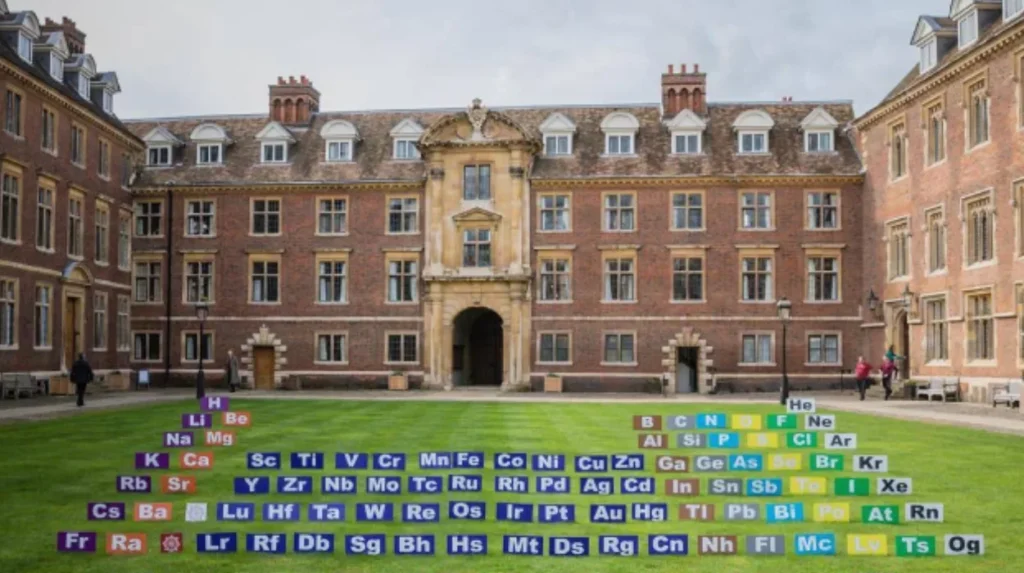
The University of Cambridge and the University of Oxford consistently alternate top positions across international university rankings, with both institutions placing within the global top ten based on academic reputation, employer metrics, and research citations.
Global league tables demonstrate minimal statistical variance between both institutions across annual evaluation cycles. The QS World University Rankings 2024 placed the University of Cambridge second worldwide and the University of Oxford fourth worldwide. The Times Higher Education World University Rankings regularly places Oxford in the first global position due to high research income, citation impact, and international industry collaboration metrics.
The Academic Ranking of World Universities evaluates scientific research output, Nobel Prize affiliations, and papers published in Nature and Science journals. Under these criteria, Cambridge frequently secures a higher position due to its extensive historical output in scientific breakthroughs and field fields. Conversely, Oxford leads global humanities and social science tables, ranking first internationally for arts and humanities disciplines.
Rankings reflect overall institutional capacity rather than specific individual degree performance. A subject-level assessment shows Oxford leading in Politics, Law, English Literature, and Medicine. Cambridge holds higher league positions in Natural Sciences, Mathematics, Chemical Engineering, and Archaeology. Prospective applicants must evaluate specific department performance instead of relying strictly on overall university scores.
The impact of global rankings directly influences employer recruitment pipelines worldwide. Global corporations, financial institutions, and academic centers recruit heavily from both campuses without preference. The choice between the two based solely on prestige yields no operational advantage, as both carry equal weight in professional markets.
How Do Courses Differ Between Oxford and Cambridge?

Oxford offers specialized single-subject degrees and unique interdisciplinary combinations like PPE, while Cambridge utilizes flexible broad-subject frameworks like Natural Sciences that allow students to explore multiple scientific disciplines before specializing during later academic years.
Degree design represents the largest operational difference between both academic institutions. Oxford requires applicants to choose a specific degree course upon submitting their initial UCAS application. Students who apply to Oxford for Chemistry or History study that exact discipline from their first term, with structured module options selected within that single faculty department.
Cambridge employs a broad Tripos system for many of its undergraduate programs. The Natural Sciences Tripos allows students to study physical and biological sciences simultaneously during year one before picking a final specialization such as Physics, Genetics, or Chemistry in years three and four. This structure benefits students who want scientific breadth before committing to a final specialization.
Interdisciplinary course options differ significantly between the two universities. Oxford is famous for its flagship Philosophy, Politics, and Economics BA degree, a program created in 1920 that trained numerous world leaders. Cambridge does not offer a direct PPE equivalent, offering instead Human, Social, and Political Sciences or Economics as separate Tripos degrees.
Assessment timing represents another critical variation in course design. Oxford assesses undergraduate students through formal examinations known as Moderations or Prelims at the end of year one, followed by Final Honour School exams at the end of year three that determine the entire degree classification. Cambridge assesses students through formal examinations at the end of every academic year, accumulating results continuously toward the final degree.
What Is the Difference Between Tutorials and Supervisions?
Oxford utilizes a small-group teaching method called tutorials, whereas Cambridge utilizes an identical teaching framework named supervisions, both involving one to three students discussing weekly essay submissions or problem sheets with an expert academic.
The core learning method at Oxbridge centers on personalized small-group instruction delivered outside main university lecture halls. At Oxford, these sessions are called tutorials; at Cambridge, they are called supervisions. Despite the terminology difference, the operational mechanism, preparation requirements, and educational goals of both systems remain fundamentally identical across both universities.
A standard tutorial or supervision takes place once or twice a week per subject module. Prior to the meeting, students must independently complete extensive reading lists, write an analytical essay of 2,000 words, or solve complex mathematical problem sets. During the session, the tutor or supervisor critiques the submitted work, tests logical arguments, and debates academic concepts directly with the students.
This teaching framework forces undergraduates to defend their ideas verbally against rigorous academic scrutiny. Large-group lectures and faculty laboratory practicals supplement tutorials and supervisions by supplying foundational knowledge. The small-group model ensures early identification of academic difficulties, as students cannot pass courses passively without demonstrating individual mastery during weekly meetings.
College fellows, postdoctoral researchers, and doctoral candidates conduct these sessions inside college tutorial offices. The system creates direct intellectual contact between undergraduate students and active researchers. The intensive nature of tutorials and supervisions demands high self-discipline, time management skills, and independent research capacity from every enrolled student.
Which University Has Harder Entry Requirements?
Cambridge sets slightly higher standard A-Level grade offers for science courses at A*A*A, while Oxford requests A*A*A to AAA depending on the specific humanities or science degree program selected by the undergraduate applicant.
Admissions standards at both universities rank among the most selective globally. Cambridge standard undergraduate offers typically require A*A*A for STEM subjects and A*AA for humanities subjects. International Baccalaureate candidates applying to Cambridge face minimum score requirements of 41 to 42 points out of 45. Oxford standard offers range from AAA for selected humanities degrees up to A*A*A for Mathematics and Computer Science programs, with IB requirements set between 38 and 40 points.
Acceptance rates reflect the intense competition for places at both institutions. Oxford reports an overall undergraduate acceptance rate of approximately 13 to 17 percent. Cambridge accepts roughly 16 to 21 percent of total applicants annually, varying by subject applicant volume. Specific subjects maintain much lower success rates; Oxford Economics and Management accepts only 5.1 percent of applicants, while Oxford Computer Science accepts 8.2 percent.
Subject-specific admissions tests form a compulsory component of the selection procedure at both institutions. Oxford utilizes standardized tests such as the Physics Aptitude Test, the Mathematics Admissions Test, and the Thinking Skills Assessment. Cambridge requires subject assessments such as the Engineering Admissions Assessment and the Test of Mathematics for University Admission. Candidates must sit these examinations in October before interview invitations are issued.
Academic interviews represent the final stage of the application screening process. Shortlisted applicants complete one to three academic interviews conducted by college tutors. Interviews evaluate logical problem-solving ability, adaptability to new concepts, and academic enthusiasm rather than general general knowledge. Offers are made based on combined assessment of predicted grades, personal statements, admissions test scores, and interview performance.
How Do Living Costs and Tuition Fees Compare?
Home undergraduate tuition fees are identical at £9,250 per year across both universities, while international tuition ranges from £29,052 to £70,554 annually depending on the degree subject and clinical training requirements.
Tuition structures for United Kingdom domestic students are regulated by national policy caps. Domestic undergraduates pay £9,250 per academic year at both Oxford and Cambridge, with government tuition fee loans available to cover the full balance. Postgraduate fees vary widely by course type, department, and degree duration across both campuses.
International tuition fees differ based on course lab requirements. At Oxford, international undergraduate tuition fees range between £37,380 and £62,820 per year for non-clinical courses. Cambridge international tuition fees range from £29,052 to £44,214 for arts and humanities, reaching £70,554 for clinical medicine and veterinary medicine programs. International students must also factor in mandatory college fees where charged separately.
Living expenses remain comparable between both university locations, averaging £1,200 to £1,500 per month for accommodation, food, study materials, and personal living costs. Both universities mandate that undergraduate students live within specified distances of the city center, usually within college-owned accommodation for at least two to three academic years. College housing costs are generally lower than private sector rental prices in both cities.
Financial support mechanisms are available to alleviate student financial burdens. Oxford offers the Crankstart Scholarship and Oxford Bursaries, providing need-based financial aid to low-income home students. Cambridge provides support through the Cambridge Bursary Scheme, offering up to £3,500 per year for qualifying domestic undergraduates. Major international scholarships include the Clarendon Fund at Oxford and the Cambridge Trust awards.
What Are the City Environments and Campus Cultures Like?
Oxford provides a larger, urbanized city setting with industrial roots and active commercial nightlife, whereas Cambridge offers a smaller, picturesque town environment centered around river punting and widespread cycling culture.
The physical environment of each university shapes the daily experience of enrolled students. Oxford has a total city population exceeding 150,000 residents, creating a busy urban atmosphere where university buildings intermingle with commercial retail districts and modern industries. Cambridge features a smaller population of approximately 124,000 residents, resulting in a compact, self-contained environment dominated by academic colleges and open parklands.
Transportation habits reflect geographic differences between the two locations. Cambridge is flat, leading to a dominant cycling culture where students travel between lectures, libraries, and college campuses on bicycles. Oxford features a more compact, walkable urban core alongside hilly surrounding areas, relying on foot travel and local bus transport links. The River Cherwell in Oxford and the River Cam in Cambridge both host traditional punting activities.
Social structures are heavily centered around the individual colleges at both institutions. Colleges provide student dining halls, accommodation rooms, libraries, common rooms, and sports facilities. Formal dinners, where students wear academic gowns, occur regularly in college dining halls across both campuses. Oxford offers more commercial clubs and music venues, while Cambridge social life relies more heavily on college-hosted events and student society gatherings.
Traditional events showcase long-standing rivalries between both academic communities. The annual Oxford and Cambridge Boat Race, held on the River Thames in London since 1829, serves as a major inter-university athletic competition. Other historic events include Oxford’s May Morning celebrations at Magdalen College and Cambridge’s post-examination May Balls hosted by individual constituent colleges.
Which University Delivers Better Graduate Career Outcomes?
Graduates from both Oxford and Cambridge achieve exceptionally high employment rates exceeding 80 percent within 15 months of graduation, securing competitive starting salaries across corporate, technical, and academic sectors.
Career prospects for Oxbridge graduates rank among the highest worldwide due to institutional reputation and direct corporate recruitment pipelines. According to Higher Education Statistics Agency data, over 80 percent of Oxford and Cambridge graduates enter full-time paid work or further higher-degree study within 15 months of completing their undergraduate courses. Median starting salaries for graduates hover around £35,700, rising sharply within five years of entering professional employment.
Sector destinations vary according to academic specialization strengths across each university. Oxford produces high volumes of graduates entering public policy, civil service, international law, management consultancy, and media industries. The Oxford Politics, Philosophy, and Economics degree remains a primary recruitment pool for political figures, journalists, and global policy directors.
Cambridge maintains a dominant footprint in technology, scientific research, engineering, and quantitative finance. The surrounding region, known as Silicon Fen, contains one of Europe’s largest technology clusters. This proximity enables Cambridge computer science and engineering graduates to connect directly with technology firms, research laboratories, and venture capital funds operating near the university campus.
Both institutions maintain dedicated central career services that host global employer recruitment fairs, alumni networking events, and internship placements. Top-tier global management consultancies, investment banks, Magic Circle law firms, and tech multinationals recruit heavily from both campuses annually. The global alumni networks of both universities offer lifelong professional access across major world markets.
Which university is older Oxford or Cambridge?
The University of Oxford is older, with teaching documented as early as 1096. The University of Cambridge was formed later in 1209 by scholars who migrated from Oxford.
Can I apply to both Oxford and Cambridge in the same year?
No, UCAS rules explicitly prevent undergraduate applicants from applying to both Oxford and Cambridge in the same application cycle. Candidates must choose one institution per year.
Is Oxford better for humanities and Cambridge for science?
Oxford is traditionally recognized for humanities, law, and social sciences, while Cambridge excels in natural sciences, engineering, and mathematics. However, both rank in the global top ten across all major disciplines.
Are tutorials at Oxford different from supervisions at Cambridge?
Tutorials and supervisions are identical small-group teaching formats where one to three students meet weekly with an academic expert to critique essays or problem sheets. Only the name varies between universities.
Which city is bigger to live in Oxford or Cambridge?
Oxford is a larger city with a population over 150,000 and a busier urban feel. Cambridge is smaller with around 124,000 residents, offering a quiet, bicycle-friendly environment.