
Oxford gardens represent over four centuries of botanical research, architectural design, and horticultural heritage within the United Kingdom. Established initially for medicinal research and scholarly retreat, these green spaces preserve global plant biodiversity and historic landscape aesthetics.
- What are the key features of the University of Oxford Botanic Garden?
- Which University of Oxford colleges have the most notable gardens?
- What plant collections and rare species grow in Oxford gardens?
- How do seasonal changes affect visits to Oxford gardens?
- What role do Oxford gardens play in scientific research and conservation?
- How can visitors plan a tour of Oxford gardens?
- Are college gardens in Oxford open to the general public?
- What is the best time of year to visit the Oxford Botanic Garden?
- Can you bring dogs or picnics into Oxford college gardens?
- How far is Harcourt Arboretum from the main Oxford Botanic Garden?
- Do I need to book tickets in advance to see Oxford gardens?
The establishment of green spaces in Oxford began in 1621 when Henry Danvers, the First Earl of Danby, donated funds to create the Oxford Physic Garden. This site was founded as a dedicated medical research facility for the University of Oxford to grow plants for scientific analysis.
Over successive centuries, the university colleges constructed private quadrangle lawns, ornamental borders, and wooded paths to support academic contemplation and preserve native plant species. The development of Oxford gardens shifted from purely functional medicinal crop cultivation toward public conservation, international taxonomy, and environmental research.
Today, these sites contain thousands of living plant species sourced from every continent except Antarctica. The total managed green acreage across the university grounds, college quadrangles, and suburban arboretums exceeds 300 acres of protected land.
These locations attract international scholars, horticultural experts, and public visitors year round. The management of these spaces requires ongoing effort from professional horticulturists, academic researchers, and groundskeepers employed by the university and city authorities.
What are the key features of the University of Oxford Botanic Garden?
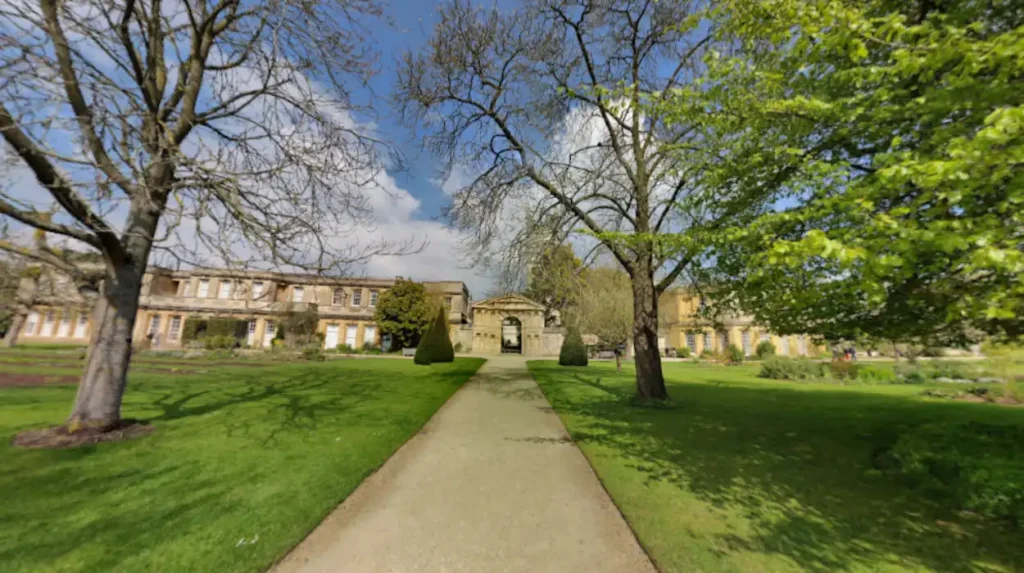
The University of Oxford Botanic Garden features a historic 17th-century walled garden, seven climate-controlled glasshouses, and extensive experimental plant beds. It houses over 5,000 distinct plant species across a compact 4.5-acre site near the River Cherwell.
The layout of the Botanic Garden consists of three primary zones: the Walled Garden, the Glasshouses, and the Lower Garden. The Walled Garden retains its original 1621 stone perimeter and contains systematically arranged beds grouped by plant family and evolutionary taxonomy.
The Glasshouses replicate global climates, including tropical rainforests, arid deserts, and alpine environments. These structures accommodate sensitive species such as the Nymphaea x daubenyana giant water lily, carnivorous pitcher plants, and desert succulents.
The Lower Garden features informal plantings, including the Medicinal Forest, the Herbaceous Border, and a gin botanical collection. Research facilities within the garden support global plant conservation programs, seed banking initiatives, and educational workshops for students.
The institution maintains strict records regarding plant lineage and geographic provenance to assist international botanical research network operations. Visitors access the site via Rose Lane, adjacent to Magdalen College, with structured pathways designed to protect sensitive soil zones.
Which University of Oxford colleges have the most notable gardens?
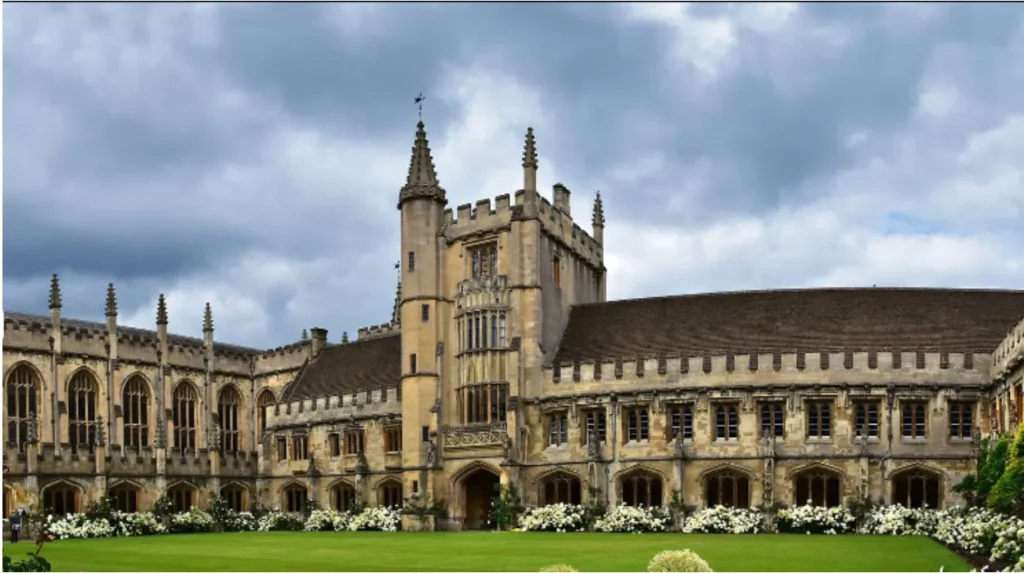
Magdalen College, Worcester College, Christ Church, and New College contain the most expansive and historically significant college gardens in Oxford. These private lands feature deer parks, serpentine lakes, ancient stone walls, and formal flower displays.
Magdalen College spans 100 acres and includes the Meadow, a site enclosed by the River Cherwell that hosts wild snake’s head fritillaries each spring. The college also maintains a functional deer park populated by fallow deer beneath mature oak trees.
Worcester College possesses 26 acres of land incorporating a large ornamental lake, formal lawns, and a woodland walk. Christ Church features the War Memorial Gardens and broad avenues leading toward the Christ Church Meadow, a massive flood plain bordered by the Thames and Cherwell rivers.
New College preserves a section of the 13th-century Oxford city wall within its garden grounds, surrounded by herbaceous borders and historic mound structures. Trinity College and St John’s College feature open quadrangle lawns, rock gardens, and perennial borders designed by prominent 18th-century landscape architects.
Each college grounds department operates independently, selecting plant varieties that align with historic landscape records while adapting to changing microclimates. These gardens function as private residential spaces for students while opening for public access during designated hours throughout the calendar year.
What plant collections and rare species grow in Oxford gardens?
Oxford gardens cultivate rare endemic plants, international timber specimens, medicinal flora, and critically endangered botanical species from global habitats. Highlights include the national collection of Euphorbia, giant sequoias, and historic carnivorous plant lineages.
The scientific collections managed across Oxford grounds prioritize conservation of endangered species facing extinction in their native environments. The University Botanic Garden holds the UK National Collection of Euphorbia, conserving rare varieties such as Euphorbia stygiana from the Azores.
Medicinal beds showcase plants classified by therapeutic application, including cardiac glycosides from Digitalis purpurea and anti-cancer agents derived from Taxus baccata. At Harcourt Arboretum, an outlying 130-acre site managed by the Botanic Garden, giant sequoias (Sequoiadendron giganteum) grow alongside coast redwoods planted in the 19th century.
The glasshouse complex protects tropical economic plants, including Theobroma cacao, Coffee arabica, and Oryza sativa. Glasshouse humidity levels are maintained between 70% and 90% to sustain tropical epiphytes and fern collections.
Outdoor beds feature cold-hardy species from East Asia, North America, and the Mediterranean basin, arranged to demonstrate geographic adaptive traits. Botanic staff conduct seed collection expeditions worldwide to continually expand genetic diversity within these living research archives.
How do seasonal changes affect visits to Oxford gardens?
Seasonal shifts transform plant displays, operational hours, bloom cycles, and wildlife activity across all Oxford gardens throughout the calendar year. Spring brings bulb blooms, summer activates glasshouse collections, autumn alters foliage colors, and winter highlights hardscape design.
Spring, lasting from March through May, initiates the flowering cycle of snowdrops, daffodils, magnolias, and bluebells. Magdalen College Meadow displays thousands of flowering Fritillaria meleagris during April.
Summer, spanning June through August, marks peak bloom for herbaceous borders, rose gardens, and aquatic plants in the Botanic Garden glasshouse lily ponds. Operating hours extend until 6:00 PM during these months to accommodate higher visitor volume.
Autumn, occurring from September through November, highlights deciduous tree foliage at Harcourt Arboretum, where Japanese maples and ancient oaks change color. Winter, from December through February, reduces outdoor foliage, directing attention to evergreen pinetum collections, glasshouse exhibits, and structural architectural elements.
Opening hours contract during winter, closing by 4:00 PM due to reduced daylight hours. Temperatures dictate glasshouse heating protocols to ensure sub-tropical and tropical species maintain baseline survival requirements throughout freezing periods.
What role do Oxford gardens play in scientific research and conservation?
Oxford gardens serve as active field laboratories for biodiversity conservation, climate impact studies, plant taxonomy, and public ecological education. Scientists utilize these living plant collections to investigate plant evolution, genetic resistance, and ecosystem health.
Researchers affiliated with the Department of Biology at the University of Oxford use the garden collections to study plant-pollinator interactions, soil biome dynamics, and genetic adaptation mechanisms.
The genetic materials stored in the collection support global studies on crop resilience and climate adaptation. Staff members collaborate with Botanical Gardens Conservation International to monitor endangered flora and manage off-site reintroduction projects.
Educational outreach programs host thousands of school pupils annually, teaching fundamental principles of photosynthesis, ecology, and plant systematics. Conservation protocols require precise documentation of every living specimen, including its geographical origin, planting date, and propagation history.
Sustainable management practices, such as zero-pesticide application policies in select beds, integrated pest management, and rainwater harvesting systems, reduce the environmental footprint of maintenance operations.
The site also functions as an urban green sink, sequestering atmospheric carbon and supporting native urban wildlife, including wild bees, amphibians, and bird populations.
How can visitors plan a tour of Oxford gardens?
Planning a tour of Oxford gardens requires checking individual college opening times, booking entry tickets, and selecting appropriate transportation options. Most central gardens lie within walking distance of Oxford city center and main transit stations.
Visitors can access the University Botanic Garden daily from 10:00 AM, with timed admission tickets available online or at the Rose Lane entrance gate. University students and staff receive free entry, while general public tickets help fund ongoing garden maintenance and research operations.
College garden access varies significantly; Christ Church and Magdalen charge entry fees, whereas Worcester and University College offer free or restricted access depending on term-time schedules.
Comfortable walking shoes are required, as paths consist of gravel, stone paving, and natural lawn surfaces. Visitors traveling to Harcourt Arboretum must take public bus routes or drive six miles south along the A4074 road toward Nuneham Courtenay. Photography is permitted for personal use, though commercial filming requires advance permits from university administration.
Accessible pathways cover major zones in the main Botanic Garden, ensuring wheelchair users can navigate the glasshouses and outdoor borders smoothly. Visitors should allocate two to three hours for a thorough tour of the main Botanic Garden site.
Are college gardens in Oxford open to the general public?
Most Oxford college gardens are open to the public, though operating hours and entry rules vary. Colleges like Magdalen and Christ Church charge an entry fee, while others like Worcester offer free access during specific afternoon hours. Opening schedules may change during university exam periods or private academic events.
What is the best time of year to visit the Oxford Botanic Garden?
Spring and early summer, from April to July, offer the best experience due to peak floral blooms and open glasshouse displays. April features the famous snake’s head fritillaries, while June and July showcase full herbaceous borders and blooming water lilies. Autumn is also ideal for visiting the nearby Harcourt Arboretum foliage.
Can you bring dogs or picnics into Oxford college gardens?
Picnics are permitted on designated lawns in specific colleges like Worcester and Christ Church Meadow, as well as parts of the Botanic Garden. However, assistance dogs are generally the only animals allowed inside the main Botanic Garden and college grounds to protect sensitive plant beds and native wildlife.
How far is Harcourt Arboretum from the main Oxford Botanic Garden?
Harcourt Arboretum is located approximately six miles south of Oxford city center in Nuneham Courtenay. It acts as an extension of the Botanic Garden, housing tree species that require more space or acidic soil. Visitors can reach the arboretum via a 15-minute drive or by taking local bus services from the city center.
Do I need to book tickets in advance to see Oxford gardens?
Advance ticket booking is recommended for the University Botanic Garden during peak summer months to guarantee entry during busy time slots. College gardens usually sell tickets at their main gate lodges on arrival. University of Oxford students and staff can access most gardens for free with a valid ID card.