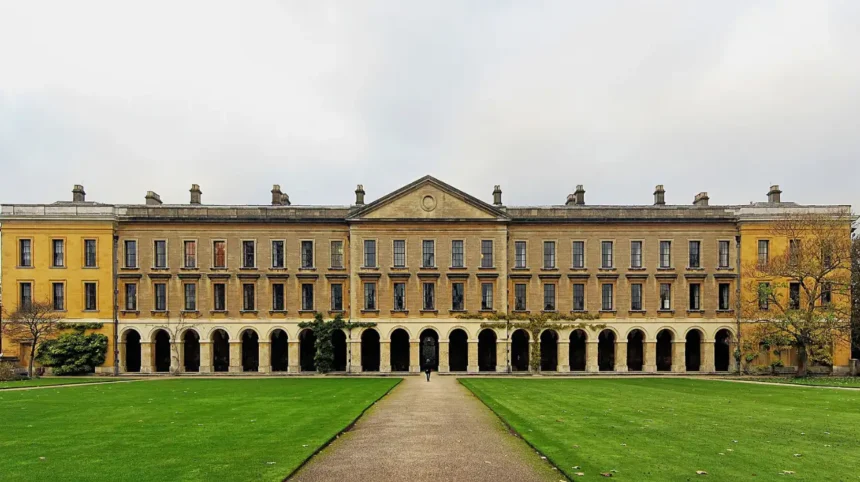
The history of the Gaudy feast at Oxford is one that traces its roots to the medieval period, when the first collegiate institutions were established in the city. Formal dinners at Oxford evolved from the 14th-century statutes of early colleges like Merton (founded 1264) and Oriel (1326), which mandated collective eating in halls to promote discipline and camaraderie among members. These early communal meals were deeply influenced by monastic practice. Scholars living and studying together in enclosed communities mirrored the routines of religious orders, including the ritual meal spoken over in Latin.
- Who Attends a Gaudy? The Alumni Reunion Model
- The Customs and Rituals of a Gaudy Feast
- The Latin Grace
- The High Table and Hierarchical Seating
- Gowns and Black Tie
- The Multi-Course Meal
- Speeches, Toasts, and the Latin Oration
- Evensong and Chapel Services
- The Gaudy in Literature: Dorothy L. Sayers and “Gaudy Night”
- Gaudy Traditions Beyond Oxford: Durham, St Andrews, and Beyond
- Why Oxford’s Gaudy Tradition Endures
These feasts served as key social and ritual occasions, often beginning with the recitation of grace before meals, a practice inherited from clerical routines, to invoke blessings, followed by toasts to the college, its patrons, and absent members. Over time, these founding-day and anniversary commemorations grew richer and more defined, eventually crystallising into what we now recognise as the Gaudy.
College accounts from the period detail the funding and organisation of commemorative events, with provisions for enhanced meals, wine, and entertainment on foundation days or anniversaries, drawing revenues from endowments like lands and rents. The format of these feasts was inseparable from the monastic template upon which Oxford’s colleges were originally modelled.
By the 19th century, the Gaudy had taken on a more structured form. In the 19th century, Gaudy dinners became more formalised amid the expansion of British universities and increasing student numbers at Oxford and Cambridge. Traditions evolved from occasional commemorations to more regular feasts held in college halls, featuring elaborate multi-course menus.
The word “Gaudy” itself may even predate its current institutional use. An 1782 copy of Bailey’s Dictionary records: “Gaudy Days: (cf. gaudere, L., to rejoice) certain Festival Days observed in Inns of Court and Colleges. Gaudies: double Commons allowed to Students on Gaudy Days.” It is also worth noting that Shakespeare used the phrase “gaudy night” in Antony and Cleopatra, suggesting that the word had a wider cultural currency in the English language long before it became fixed to the Oxford institution we know today.
Who Attends a Gaudy? The Alumni Reunion Model
Today, Oxford’s Gaudy functions primarily as a reunion for former students. A Gaudy is a formal celebratory dinner or reunion feast hosted by colleges of the University of Oxford for groups of alumni, typically featuring a black-tie meal in the college hall, speeches, and sometimes evensong or presentations by fellows.
The invitation model varies from college to college, but the overriding principle is that alumni are grouped by their matriculation year and invited back at regular intervals. Colleges such as Merton invite groups like those who matriculated between 1995 and 1999, while Worcester College organises Gaudies for cohorts such as 1995 to 1997, and Christ Church holds them for periods like 2007 to 2009.
At St John’s College, the system is especially well organised. From 2027, the College will be hosting three Gaudies per year, with cohorts able to attend their Gaudies every seven years. If you matriculated in 1965 or earlier, you will be invited to the biennial President’s Lunch, a special occasion that brings together all alumni who matriculated at St John’s sixty or more years ago.
Merton College provides a typical example of what a Gaudy weekend involves. The Gaudy begins on Saturday afternoon when Mertonians usually arrive in plenty of time to find their rooms before the Warden’s presentation at 4pm. The programme includes a Chapel Service, followed by a drinks reception in the Ante-chapel. The highlight is a black-tie dinner in Hall, with an after-dinner speech by a representative from the year group. The College has a limited number of rooms for the Saturday night, with breakfast on Sunday morning.
The event is, in the truest sense, a homecoming, complete with overnight stays in college rooms that alumni may not have slept in since their undergraduate years.
The Customs and Rituals of a Gaudy Feast
The Latin Grace
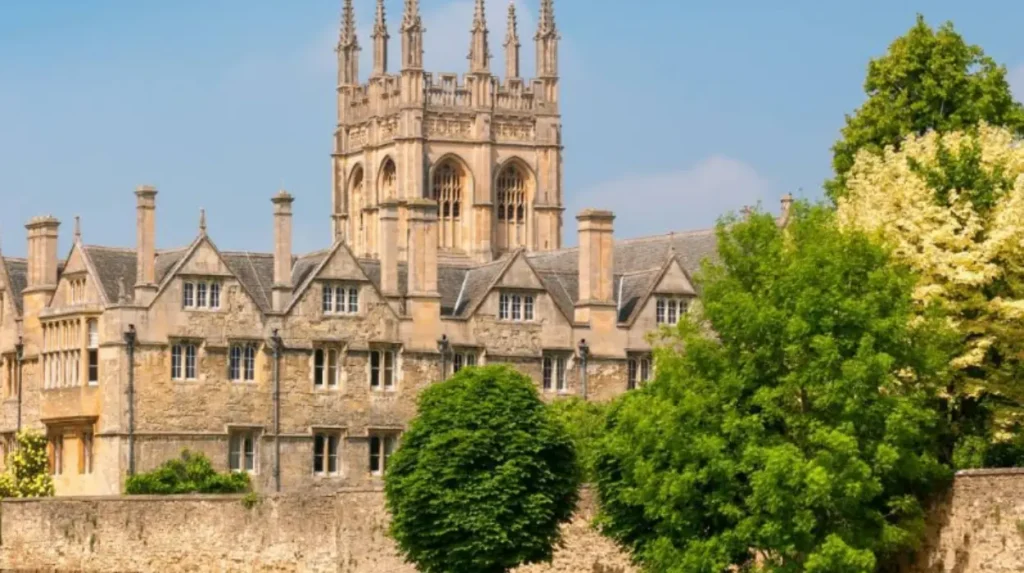
No aspect of the Oxford Gaudy is more immediately striking to the uninitiated than the Latin grace recited before the meal. This practice is one of the oldest unbroken threads connecting modern Oxford to its medieval origins. It is customary to stand and keep quiet when important people at the High Table enter the dining hall. A signal, often the striking of the table with a hammer, calls everyone to stand and join in reciting an ancient Latin prayer, expressing gratitude to God for the food.
The precise words of the grace differ between colleges, and this variation has itself become a point of collegiate pride. University College has long claimed to have the longest grace of any Oxford college, though the claim has not gone unchallenged. At Merton College, the opening grace echoes around the dining room: Oculi omnium in te respiciunt, Domine. Tu das escam illis tempore opportuno. Aperis manum tuam, et imples omne animal benedictione tua. Benedicas nobis, Deus, omnibus donis quae de tua beneficentia accepturi simus. Per Iesum Christum dominum nostrum, Amen. Translated, this asks that the eyes of all turn to the Lord, who gives them food in due season, and opens his hand to fill every living thing with blessing.
The High Table and Hierarchical Seating
The physical organisation of the Oxford dining hall is itself a statement of hierarchy. The high table neatly demonstrates the hierarchy of the dining hall; it is literally a table that is raised at the front of the room, where coupled with the visual spectacle of men in dinner jackets, members of the college don academic robes.
This arrangement has deep historical roots. Senior fellows, the head of house, and honoured guests are seated at the elevated High Table, while alumni and other attendees are seated in the body of the hall. The physical elevation of the High Table is not mere symbolism: it was historically designed so that the senior members of the college could be seen by all those assembled below, reinforcing the social and academic order of the institution.
Gowns and Black Tie
Dress code at a Gaudy is non-negotiable. The format of an Oxford Gaudy centres on a grand, multi-course black-tie dinner held in the college hall, where attendees wear academic gowns over formal attire to evoke the university’s historic customs. The sight of hundreds of alumni filing into a medieval hall in evening dress and gowns is one of the most visually distinctive features of the Oxford tradition, and one that distinguishes the Gaudy from almost any other alumni event in the world.
The Multi-Course Meal
The food at a Gaudy is intended to be a statement in itself. These are not ordinary dinners. In the 19th century, traditions evolved from occasional commemorations to more regular feasts held in college halls, featuring elaborate multi-course menus, with savouries emerging as a distinct service between 1850 and 1870.
Contemporary Gaudy menus typically progress through several courses, with carefully paired wines throughout. At Merton, dinner commences with fish soup, followed by generous pours of wine, over main courses that might include a robust chicken and leek pudding. The evening does not end with a single dessert. In the tradition of Oxford’s High Table, a second dessert course follows, at which it is custom to sit next to people you have not previously talked to during the evening. Set before diners are three glasses: one for port, another for sauternes, the other for claret. You top your glass and pass the bottles to your left, and the bottles may make two or three turns around the table before the evening is done.
The passing of port to the left is one of those Oxford customs that appears arcane to outsiders but is observed with great seriousness within college walls. Its origins lie in British naval and formal dining traditions, where the direction of circulation signified courtesy and continuity.
Speeches, Toasts, and the Latin Oration
Speeches are a centrepiece of any Gaudy. Colleges typically invite a distinguished member of the matriculation year to address the gathering, reflecting on shared memories, the college’s achievements, and the passage of time. At St John’s College, a Classics scholar composes and reads, in Latin, a summary of events at the college between the time the assembled years of alumni left and the present date when they returned. This practice of composing a Latin narrative for the occasion is a remarkable survival of classical scholarship in a living institutional context.
Toasts to the college, its founders, and to absent members form an important part of the evening’s structure, reinforcing the sense of continuity and remembrance that distinguishes the Gaudy from a simple reunion dinner.
Evensong and Chapel Services
Many colleges incorporate a chapel service or evensong into the Gaudy programme, particularly when the event extends over a full day or weekend. The evening typically begins with a chapel service or evensong, followed by a Latin grace recited before the meal, preserving medieval liturgical elements in modern observance.
At St John’s College, the connection between the Gaudy and the chapel is especially strong. At St John’s, an evening Gaudy comes with an evensong, for which the choir is paid to come back and sing. The combination of sacred music in a medieval chapel followed by a formal feast in a candlelit hall is, for many alumni, the emotional heart of the Gaudy experience.
The Gaudy in Literature: Dorothy L. Sayers and “Gaudy Night”
The Oxford Gaudy has achieved a lasting cultural presence in part through literature. Dorothy L. Sayers’ 1935 detective novel Gaudy Night is set against the backdrop of a reunion feast at a fictional women’s college in Oxford, called Shrewsbury College. The novel captures the atmosphere of the all-women’s college against the backdrop of Oxford’s dreaming spires, and it introduced the Gaudy tradition to generations of readers who had never set foot in an Oxford dining hall.
The novel’s enduring popularity has meant that for many people, their first encounter with the word “Gaudy” is through Sayers rather than through a college invitation. It remains one of the most vivid literary portraits of Oxford collegiate life, and its depiction of the Gaudy feast as a moment of return, reflection, and revelation resonates with anyone who has attended one.
Gaudy Traditions Beyond Oxford: Durham, St Andrews, and Beyond

While the Gaudy is most closely associated with Oxford, the tradition has spread to other ancient universities, each adapting the custom to its own collegiate character.
At Durham University, Gaudy traditions form a key part of the collegiate system’s emphasis on community and celebration, adapted from the Oxford model established in the mid-19th century. The university’s first college, Hatfield, was founded in 1846 with policies shaped by its Principal’s experiences at Brasenose College, Oxford, including the adoption of graces from Oriel College. This influence extended to formal dining practices, which evolved into regular Gaudies or “feasts” within Durham’s colleges.
At the University of St Andrews, there is a ceremony known as the Gaudie, which involves a gowned torchlight procession and singing of the Gaudeamus in memory of a student, John Honey, who risked his life in 1800 to save survivors of a shipping accident offshore. This commemorative dimension reveals how deeply the spirit of the Gaudy, the celebration of community and the honouring of shared history, can be adapted across different institutional settings.
Why Oxford’s Gaudy Tradition Endures
In an age when formal dining customs have declined in most institutions, the Oxford Gaudy has not only survived but continued to flourish. The reasons for its endurance are worth examining.
First, the Gaudy addresses a human need that transcends academic life: the desire to return. Oxford’s collegiate system creates bonds that are unusually intense and unusually specific. Graduates do not simply attend a university; they belong to a college, sleep in its rooms, dine in its hall, and walk its quadrangles for years. The Gaudy formalises the return to that place, giving it ceremony and structure that amplifies its emotional significance.
Second, the rituals of the Gaudy, the Latin grace, the gowns, the port passing, the evensong, all serve to compress time. When alumni stand in the same hall where they once sat as undergraduates and hear the same grace intoned in the same Latin, the years between dissolve. The Gaudy is, in this sense, a technology of memory.
Third, the colleges of Oxford have always understood that tradition is not static but living. Contemporary journalistic accounts have featured personal reflections on Gaudies, emphasising their role as nostalgic reunions in modern university culture. In a 2019 article, author Marcus Berkmann described attending a Gaudy at Worcester College for the class of 1981, noting the event’s free access, multi-course dinners with fine wines, and extended socialising in the college gardens until late evening, observing an increase in attendance compared to previous gatherings. The Gaudy is not a museum piece but a living tradition that adapts with each generation while preserving its essential character.
The Gaudy feast is one of the most distinctive institutions in British academic life. Rooted in medieval collegiate custom, shaped by centuries of scholarship, ceremony, and conviviality, it offers alumni something that no digital reunion or virtual gathering can replicate: the physical experience of return. To sit once more in a hall where you first learned to argue, question, and think; to hear a grace that has been spoken in the same words for generations; to pass a decanter of port in the flickering candlelight of one of England’s oldest rooms: this is the Gaudy. It is, as the Latin root of its name promises, an occasion of pure and considered joy.
Is Oxford older than the Aztecs?
Teaching at Oxford began around 1096 AD, making it one of the world’s oldest universities. The Aztec civilisation did not emerge until around 1300 AD, meaning Oxford predates the Aztecs by roughly two centuries. The Gaudy feast tradition at Oxford itself dates to at least the mid-16th century.
What is the hardest subject to get into at Oxford?
Medicine consistently records the lowest acceptance rate at Oxford, often admitting fewer than one in ten applicants. Law and Computer Science also sit among the most competitive courses. Successful applicants frequently attend the very Gaudy feasts later in life that are celebrated in Oxford’s collegiate tradition.
When did Oxford University allow female students?
Women were first admitted to Oxford colleges in 1879 with the founding of Somerville and Lady Margaret Hall, though they could not receive degrees until 1920. The last all-male Oxford colleges opened their doors to women in 1974. Today, women attend Gaudy feasts as full members of their colleges.
What did Kate Beckinsale study at Oxford?
Kate Beckinsale read French and Russian Literature at New College, Oxford, where she also won awards for her creative writing. She left before completing her degree to pursue her acting career. New College is one of Oxford’s oldest colleges and holds its own Gaudy, known there as a “gaude.”
Does Zara Tindall have a degree?
Zara Tindall, granddaughter of Queen Elizabeth II, studied Physiotherapy at the University of Exeter, graduating in 2003. She did not attend Oxford. Her sporting achievements, particularly in equestrian eventing, brought her greater public recognition than her academic career.