The competitive series between Bristol City Football Club, founded in 1894 in Bristol, and Oxford United Football Club, founded in 1893 as Headington United in Oxford, Oxfordshire, spans 56 years of English professional football history. The two clubs have competed against each other in 3 primary domestic competitions (the English Football League Second Division, the EFL Championship, and the EFL Cup). Across all 25 competitive fixtures, the teams have combined for 59 goals, with Oxford United scoring 32 goals and Bristol City scoring 27 goals.
- What was the origin and early history of matches between Bristol City and Oxford United?
- How have Bristol City and Oxford United performed in recent Football League fixtures?
- What tactical structures and operational mechanisms define matches between Bristol City and Oxford United?
- What key statistics and metrics separate Bristol City and Oxford United in competitive fixtures?
- What notable individual performances and key personnel have defined the Bristol City versus Oxford United matchup?
- How do home stadium factors and venue dynamics influence Bristol City versus Oxford United outcomes?
- What is the strategic significance and future outlook of the Bristol City versus Oxford United matchup?
The distribution of head-to-head outcomes highlights distinct venue performance patterns for both organizations. In matches played at Oxford United home venues (the Manor Ground historically and the Kassam Stadium currently), Oxford United holds a record of 6 victories, 5 draws, and 3 defeats against Bristol City. In matches hosted at Bristol City home venues (Ashton Gate Stadium), Oxford United maintains a record of 5 victories, 2 draws, and 4 defeats. This gives Oxford United an overall win percentage of 44 percent, compared to Bristol City win percentage of 28 percent and a draw rate of 28 percent.
Competitive balance between the two side exhibits long periods of competition across tier-two and tier-three leagues in the English Football League structure.
The overall scoring average stands at 2.36 goals per game, reflecting dynamic tactical exchanges across 6 decades. Statistical tracking confirms that Oxford United averages 1.28 goals per match against Bristol City, while Bristol City averages 1.08 goals per match against Oxford United.
What was the origin and early history of matches between Bristol City and Oxford United?
The fixture originated during the 1970–1971 Football League Second Division season when Oxford United secured a 4–0 victory over Bristol City at the Manor Ground on October 31, 1970, establishing an immediate regional football rivalry between both clubs.
The inaugural match on October 31, 1970, marked the first official Football League encounter between the clubs following Oxford United ascension through the non-league and lower division ranks in the 1960s. Oxford United recorded the largest margin of victory in fixture history during that first meeting by defeating Bristol City 4–0 at the Manor Ground in Oxford.
In the return fixture of the 1970–1971 season at Ashton Gate Stadium on March 20, 1971, Bristol City and Oxford United played to a 0–0 draw, establishing defensive resilience as a recurring theme in the series.
During the 1970s, the clubs competed in 10 Football League Second Division matches. Bristol City achieved its largest historic victory over Oxford United on September 12, 1975, securing a 4–1 home win at Ashton Gate Stadium.
Bristol City repeated this strong performance during the 1975–1976 season, winning 2–0 away at the Manor Ground on January 10, 1976. That victory propelled Bristol City toward promotion to the Football League First Division at the conclusion of the 1975–1976 campaign.
The 1980s and 1990s introduced cup competitions and crucial league clashes that expanded the fixture narrative. In 3 separate cup ties (the 1983–1984 EFL Cup First Round, the 1988–1989 EFL Cup Second Round, and the 2002–2003 EFL Cup First Round), Oxford United demonstrated superior tournament knockout outcomes.
On September 28, 1988, Oxford United defeated Bristol City 4–2 in the first leg of the EFL Cup second round at the Manor Ground, advancing on aggregate despite a 2–0 second-leg victory by Bristol City at Ashton Gate Stadium on October 11, 1988.
How have Bristol City and Oxford United performed in recent Football League fixtures?
In recent fixtures between 2023 and 2026, Oxford United earned a 3–1 away win at Ashton Gate on September 21, 2025, following a 0–0 draw at Kassam Stadium on January 17, 2026, in the EFL Championship.
Modern competitive interactions between Bristol City and Oxford United resumed in earnest following Oxford United promotion to the EFL Championship for the 2024–2025 season, ending a 23-year league hiatus between the two clubs. Prior to this league reunion, the teams met in the EFL Cup first round on August 9, 2023, where Bristol City secured a 5–1 victory at Ashton Gate Stadium.
The 2024–2025 EFL Championship season featured two tightly contested fixtures:
- September 21, 2024 (Ashton Gate Stadium): Bristol City secured a 2–1 victory against Oxford United in front of 28,125 spectators. Bristol City converted two second-half goals to overcome an early Oxford United structural lead.
- February 1, 2025 (Kassam Stadium): Oxford United and Bristol City recorded a 1–1 draw in Oxford. Oxford United opened the scoring before Bristol City equalized in the second half, distributing one league point to each club.
The 2025–2026 EFL Championship campaign produced two distinct tactical battles:
- September 21, 2025 (Ashton Gate Stadium): Oxford United achieved a 3–1 away triumph against Bristol City. Goals from forward Nik Prelec in the 19th minute, winger Przemysław Płacheta in first-half stoppage time, and defender Greg Leigh in the 90th minute secured all 3 points for Oxford United, while midfielder Anis Mehmeti scored Bristol City lone goal in the 53rd minute.
- January 17, 2026 (Kassam Stadium): Oxford United and Bristol City played to a 0–0 draw before 11,160 spectators. Referee Tim Robinson managed a physical contest featuring 5 yellow cards, where Oxford United accumulated 1.20 expected goals (xG) on 9 total shots compared to Bristol City 0.44 expected goals on 6 total shots.
What tactical structures and operational mechanisms define matches between Bristol City and Oxford United?
Matches between Bristol City and Oxford United feature contrasting tactical structures, where Bristol City utilizes a fluid 3–4–3 formation emphasizing wing-back progression, while Oxford United deploys a structured 4–2–3–1 system prioritizing defensive mid-block stability and rapid counter-attacks.
Tactical deployments in modern head-to-head encounters reflect distinct coaching philosophies implemented by both management teams. Bristol City utilizes a 3–4–3 shape designed to control central possession and construct attacks through wide central defenders and attacking wing-backs. In this system, 3 central defenders (Zak Vyner, Robert Dickie, and Robert Atkinson) initiate buildup play from the defensive third, distributing passes to double-pivot midfielders (Sam Morsy and Adam Randell).
Oxford United operates primarily in a 4–2–3–1 defensive structure under head coach guidance, focusing on spatial compactness and high-intensity defensive transitions. The defensive backbone relies on 2 central defenders (Michał Helik and Ciaron Brown) flanked by full-backs (Sam Long and Jack Currie). The midfield base uses 2 holding midfielders (Cameron Brannagan and Brian De Keersmaecker) to disrupt opponent passing lanes and break up opposition central progressions.
Mechanisms of goal creation in this matchup depend heavily on transitional execution:
- Oxford United Attacking Mechanisms: Oxford United targets quick vertical transitions through attacking wingers (Stanley Mills and Siriki Dembélé) and central attacking midfielder Myles Peart-Harris. When recovering possession in the middle third, Oxford United feeds forward Will Lankshear or Mark Harris to isolate opposition center-backs in 1-on-1 situations.
- Bristol City Attacking Mechanisms: Bristol City relies on possession overload in wide channels through wing-backs (George Tanner and Neto Borges) combined with inverted wingers (Anis Mehmeti and Scott Twine). Forward Emil Riis Jakobsen operates as a central focal point to create space for late midfield runs into the penalty box.
Defensive pressing mechanisms differ between both teams. Bristol City applies a high-pressing block, engaging opposition defenders near their penalty area to force turnovers. Oxford United employs a mid-block trigger, allowing Bristol City defenders to hold possession in their own half before executing aggressive tackle traps once the ball enters the central midfield zone.
What key statistics and metrics separate Bristol City and Oxford United in competitive fixtures?
Oxford United averages 1.68 goals per game against Bristol City in home matches, whereas Bristol City maintains higher average ball possession percentages exceeding 53 percent and superior aerial duel win rates reaching 58 percent in modern EFL encounters.
Statistical analysis of recent head-to-head data reveals clear performance differences across 4 primary performance metrics (ball possession, expected goals generation, passing accuracy, and physical duels won).
In the January 17, 2026 fixture at Kassam Stadium, detailed performance tracking established the following data parameters:
- Ball Possession and Passing Volume: Bristol City controlled 53 percent of overall ball possession and completed 420 passes with a passing accuracy rate of 78.3 percent. Oxford United held 47 percent possession, completing 290 passes at a 68.3 percent accuracy rate.
- Expected Goals (xG) and Shot Quality: Oxford United generated 1.20 expected goals from 9 total shots, with 19 touches inside the opposition penalty area. Bristol City generated 0.44 expected goals from 6 total shots, recording 16 touches inside the opposition box.
- Physical and Aerial Duels: The teams contested 100 total duels during the 90 minutes. Bristol City won 52 total duels, including 29 aerial duels at a 58 percent win rate. Oxford United won 48 total duels, including 27 ground duels at a 54 percent win rate.
- Disciplinary Record: Across their last 4 Championship fixtures, the teams accumulated 19 yellow cards and 0 red cards. In the September 2025 clash at Ashton Gate, Bristol City received 5 yellow cards (Anis Mehmeti, Scott Twine, Jason Knight, Zak Vyner, and Robert Dickie), while Oxford United received 4 yellow cards (Nik Prelec, Przemysław Płacheta, Will Vaulks, and Greg Leigh).
Distance covered metrics during the January 2026 fixture showed high physical output from both squads. Oxford United players covered 116.2 kilometers collectively, while Bristol City players covered 116.7 kilometers, demonstrating identical tactical work rates across both team lineups.
What notable individual performances and key personnel have defined the Bristol City versus Oxford United matchup?
Key personnel in the fixture include forward Mark Harris and midfielder Cameron Brannagan for Oxford United, alongside defenders Robert Dickie and Zak Vyner for Bristol City, all contributing decisive goals and defensive actions in head-to-head matches.
Individual performances have dictated match outcomes throughout the historic and modern eras of this fixture. Key players who have influenced results across both rosters include 6 prominent performers across forward, midfield, and defensive roles:
- Cameron Brannagan (Oxford United Midfielder): Operating as Oxford United midfield anchor, Brannagan has dictated tempo in 4 head-to-head fixtures since 2024. His set-piece delivery and defensive interceptions (averaging 3.2 per match against Bristol City) consistently neutralize opposition counter-attacks.
- Robert Dickie (Bristol City Defender): A central defender who previously played for Oxford United between 2018 and 2020, Dickie provides insider knowledge and aerial dominance. Dickie won 7 aerial duels during the January 2026 0–0 draw at Kassam Stadium.
- Anis Mehmeti (Bristol City Midfielder): Mehmeti scored Bristol City lone goal during the 3–1 home loss to Oxford United on September 21, 2025. His dribbling success rate of 75 percent makes him Bristol City most dangerous wide driver against Oxford United full-backs.
- Mark Harris (Oxford United Forward): Harris leads Oxford United attacking line, providing energetic pressing and key goal contributions in Championship matches.
- George Tanner (Bristol City Defender): Tanner earned the highest individual match rating (8.1 out of 10) during the January 17, 2026 fixture, recording 4 tackles, 3 interceptions, and 5 clearances from his right center-back position.
- Jamie Cumming (Oxford United Goalkeeper): Cumming recorded a clean sheet at Kassam Stadium on January 17, 2026, making 3 key saves to maintain the 0–0 scoreline.
Managerial leadership plays an equally vital role in preparing both squads. Oxford United tactical setup relies on high-discipline defensive organization, while Bristol City management focuses on positional play and possession structure.
How do home stadium factors and venue dynamics influence Bristol City versus Oxford United outcomes?
Home stadium conditions significantly alter match outcomes, with Bristol City achieving a higher win probability at Ashton Gate Stadium before crowds exceeding 24,000 spectators, while Oxford United leverages the 12,500-capacity Kassam Stadium to limit away scoring chances.
Venue characteristics exert a direct influence on gameplay parameters, player fatigue, and tactical approaches in this fixture. The 2 home stadiums present stark structural and atmospheric contrasts:
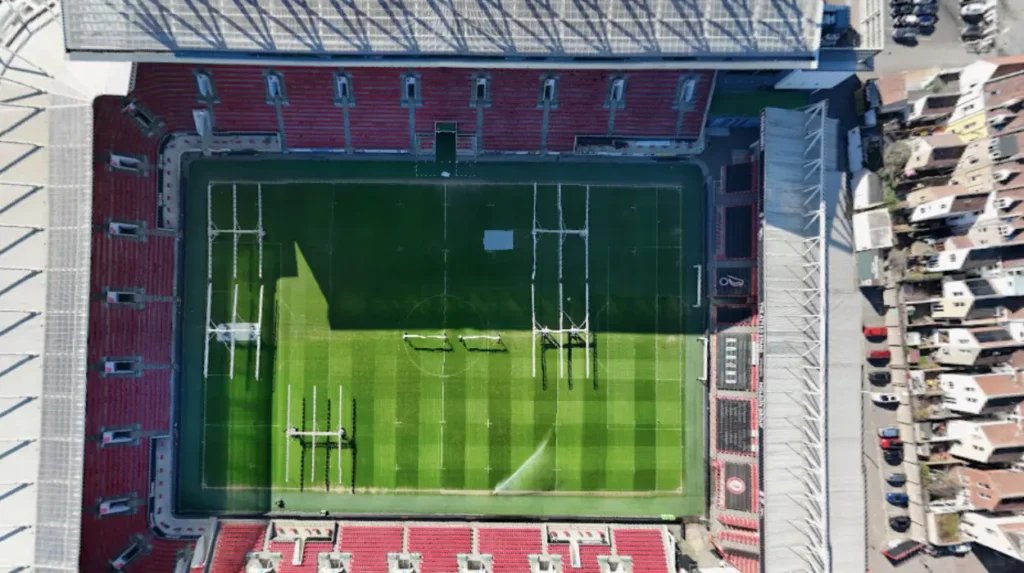
- Ashton Gate Stadium (Bristol): Ashton Gate Stadium features a total seating capacity of 27,000 spectators and pitch dimensions measuring 105 meters by 68 meters. Average attendance for Bristol City home fixtures against Oxford United stands at 24,125 fans. The larger pitch surface at Ashton Gate favors teams that utilize expansive passing structures and wide wing-back overlap play. Bristol City capitalizes on this wide playing area to stretch opposition mid-blocks.
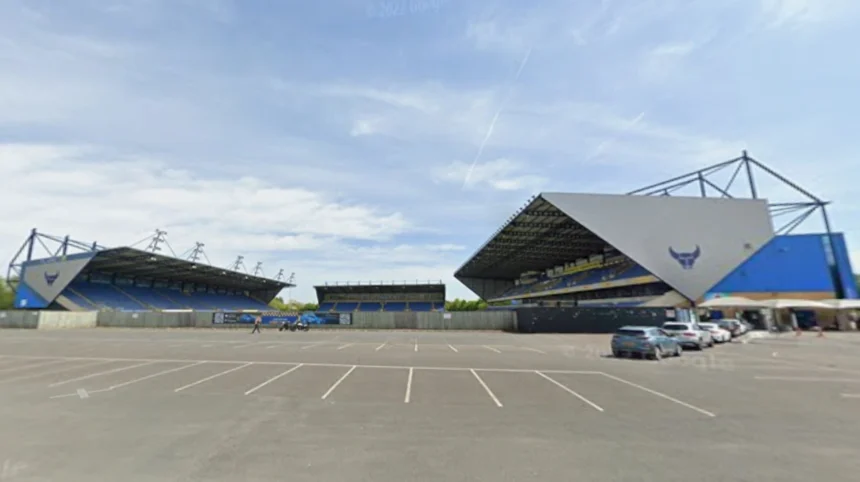
- Kassam Stadium (Oxford): Kassam Stadium features a total seating capacity of 12,500 spectators with an open three-sided stadium architecture. Pitch dimensions measure 102 meters by 68 meters. Average attendance for Oxford United home matches against Bristol City stands at 11,250 fans. The compact layout at Kassam Stadium reduces space in central zones, allowing Oxford United to execute aggressive pressing traps and restrict long-range passing combinations.
Statistical data demonstrates that Oxford United scores an average of 1.68 goals per match when playing at home against Bristol City, compared to 1.10 goals per match when playing away at Ashton Gate Stadium. Conversely, Bristol City averages 1.35 goals per match at Ashton Gate Stadium, compared to 0.63 goals per match when traveling to Kassam Stadium.
Home refereeing decisions and crowd acoustics also impact disciplinary totals. In fixtures hosted at Ashton Gate, away teams receive an average of 2.8 yellow cards per game due to sustained home crowd pressure on refereeing personnel. In fixtures hosted at Kassam Stadium, discipline remains evenly distributed, averaging 2.2 yellow cards per team per match.
What is the strategic significance and future outlook of the Bristol City versus Oxford United matchup?
The fixture carries high strategic significance for EFL Championship standings, influencing promotion playoff qualification, league survival points, and regional recruiting prestige across the South West and Thames Valley corridors for both Bristol City and Oxford United.
The long-term significance of the Bristol City versus Oxford United rivalry extends across 3 primary strategic domains (league table positioning, regional player recruitment, and commercial revenue generation).
In the context of the EFL Championship league table, matches between these two clubs carry direct implications for league placement. During the 2025–2026 season, both clubs fought for critical points to secure mid-table stability and challenge for promotion playoff spots (6th position or higher).
Head-to-head fixtures represent six-point swings between direct regional competitors in the English football pyramid.
Regional recruiting and talent acquisition represent another critical dimension. Bristol and Oxford occupy adjacent geographical zones in Southern England, separated by approximately 70 miles along the A420 and M4 transit corridors.
Both clubs operate category-two youth academies that recruit elite young players from overlapping catchment areas in Gloucestershire, Oxfordshire, Wiltshire, and Berkshire. Victory in head-to-head fixtures enhances a club local prestige, directly influencing youth talent retention and academy enrollment decisions.
Commercial and broadcast metrics reflect growing fan interest in this regional match. Media viewership for Bristol City versus Oxford United fixtures has increased following Oxford United return to the second tier of English football.
Attendance figures across both Ashton Gate Stadium and Kassam Stadium routinely reach 90 percent of total venue capacity for this matchup, ensuring robust gate receipts and merchandise revenue for both institutions.
As both clubs continue to invest in squad infrastructure, sports science analytics, and stadium development, the head-to-head dynamic between Bristol City and Oxford United remains a pillar of regional Football League competition in Southern England.