Key Points
- Morrisons has rolled out a “shop to light” feature that uses flashing electronic shelf labels to help customers find products in its stores.
- Customers confirm their aisle in the Morrisons mobile app’s product locator tool, which makes the selected item’s digital shelf label flash magenta.
- The supermarket says the system is a first for the UK grocery sector, following a similar rollout by US retailer Walmart.
- Developed with technology partner Vusion, the feature is launching across more than 200 stores first, with plans to reach all 497 UK supermarkets next year.
- The tool is built to help shoppers locate seasonal goods ahead of Christmas and navigate crowded aisles stocked with herbs, spices, and sauces.
United Kingdom (Oxford Daily) November 12, 2026 – British supermarket chain Morrisons has officially launched a new in-store technology featuring flashing electronic shelf labels to help customers locate products more quickly across its aisles.
The system, known as “shop to light,” connects the retailer’s digital shelf-edge labels with the product finder tool inside the Morrisons mobile app.
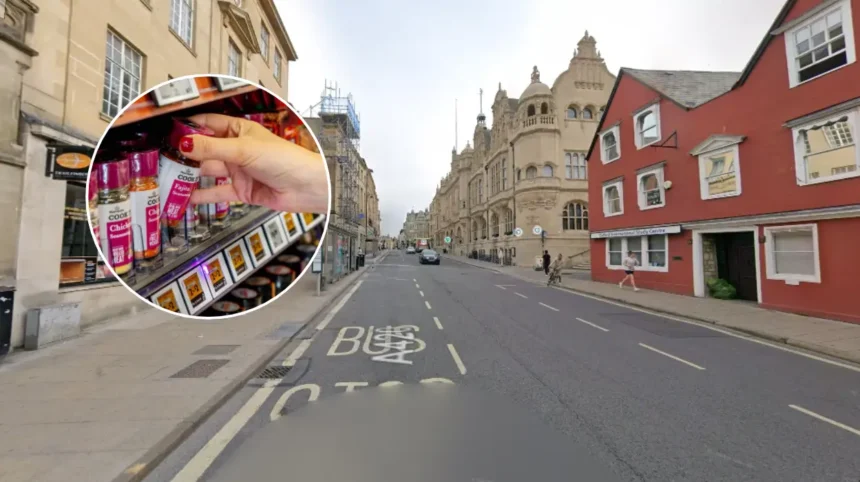
When a customer searches for an item on their smartphone, the app shares its in-store location, asks the shopper to confirm they are in the correct aisle, and subsequently prompts the corresponding shelf label to flash magenta.
How does the new Morrisons “shop to light” feature work for shoppers?
As reported by The Independent and The Standard, Morrisons believes the rollout is a first for the United Kingdom supermarket sector. The concept mirrors a similar “shop to light” system already widely adopted by retail giant Walmart in the United States.
According to The Independent, the feature operates directly through the retailer’s existing mobile application. Once a user enters the aisle specified by the app’s product locator, a blinking light is activated on the specific shelf edge to highlight the exact position of the desired product.
As reported by the Hillingdon Times, the grocer stated that the technology is particularly suited for navigating crowded, high-density product sections. These include aisles stocked with small jars and packets such as herbs, spices, and sauces, alongside popular seasonal goods like cranberry sauce.
As reported by the Hillingdon Times, Gordon Macpherson, group productivity director at Morrisons, stated that: “We know that Christmas is one of the busiest times of the year for our customers and we’re always looking for new ways to make their shopping experience as easy and convenient as possible. Our new ‘shop to light’ feature is a great example of how we’re using technology to make a real difference in-store, helping our customers find the products they need quickly, whether they’re shopping for their Christmas dinner or just popping in to pick up a few last-minute essentials.”
Which technology partner is powering the electronic shelf labels?
To deliver the infrastructure, Morrisons has partnered with digital retail solutions provider Vusion. Beyond assisting customers with product discovery, the electronic shelf labels allow the supermarket to automate price updates and improve overall pricing accuracy on the shop floor.
As reported by Birmingham Mail content editor James Rodger, the new system also integrates with Morrisons’ digital shelf-edge cameras. This integration is designed to guide store colleagues toward product gaps to speed up shelf replenishment, while simultaneously assisting e-commerce staff with faster and more accurate online order picking.
As reported by the Hillingdon Times, Roy Horgan, UK and Ireland chief executive at Vusion, stated that: “Technology has a huge role to play in making the shopping journey simpler, faster and more enjoyable for customers. ‘Shop to light’ is a great example of how we can help customers find what they need while making stores more seamless.”
How many Morrisons stores will receive the flashing shelf labels?
As reported by Express.co.uk audience writer Holly Kintuka, the “shop to light” tool was scheduled for introduction across more than 200 Morrisons stores already equipped with electronic shelf-edge labels by the end of November.
Following this initial phase, the supermarket chain anticipates expanding the technology across all 497 of its UK supermarkets during the following year.
As reported by Grocery Gazette journalist Kieran Howells, the investment follows a period of trading momentum for the grocer, which recorded a 3.2 per cent increase in like-for-like sales during its third quarter, up from 2.2 per cent in the preceding three months.
Background of the Development
Morrisons began exploring the transition from traditional paper price tickets to Electronic Shelf Edge Labels (ESELs) several years ago to reduce manual labour and improve operational efficiency across its estate of roughly 500 stores.
Early trials in locations such as York focused on developing bespoke data strips capable of securely holding digital labels onto existing shelving units.
While electronic shelf labels have been standard across many European supermarkets for years, large-scale deployments in the UK grocery market historically progressed at a slower pace. Throughout 2026, however, British grocers—including Asda and Waitrose alongside Morrisons—accelerated the installation of connected digital tags.
In September 2026, Morrisons first confirmed plans to upgrade its existing digital infrastructure by linking its Product Finder tool with Vusion’s blinking light hardware, adapting a model proven at scale by Walmart in North America.
Future Predictions
For everyday supermarket shoppers, the rollout of “shop to light” technology is expected to reduce the time spent searching for niche ingredients or festive staples during peak trading periods such as Christmas.
Shoppers who frequently struggle to locate specific items in densely packed aisles—such as spices, condiments, and seasonal promotions—stand to gain a more straightforward, self-guided navigation experience without needing to locate a member of staff.
For store colleagues and retail operations, the combined use of flashing labels and automated pricing systems will likely reduce time spent manually replacing paper tickets and answering routine directional queries.
As the technology expands to all 497 branches next year, competitors within the UK grocery sector may face increased pressure to introduce similar app-to-shelf interactive features to match customer expectations for connected in-store convenience.