Key Points
- Thames Valley Police’s Cherwell team is using updated Section 59 powers to seize illegal e-bikes and e-scooters on the spot, without giving prior warnings.
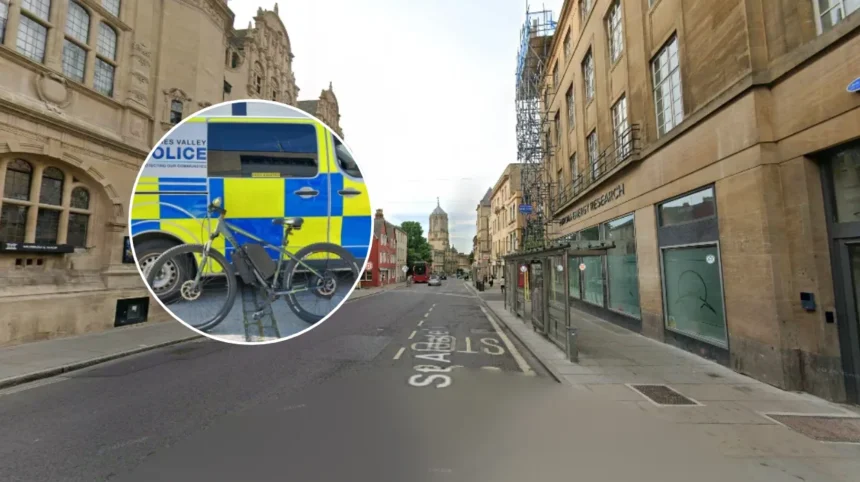
- Officers in Cherwell have impounded seven illegal e-bikes and e-scooters during recent local patrols.
- In Banbury, police sprayed a masked Sur-Ron e-bike rider with SelectaDNA forensic spray as he fled, later arresting him after testing the mark under ultraviolet light.
- Oxford East police added road-legal e-bikes to their patrol fleet to cover narrow pathways, leading to stop-and-search operations and drug seizures.
- Legal changes under the Crime and Policing Act 2026 updated Section 59 rules to give police broader authority against dangerous and anti-social vehicle use.
Oxfordshire (Oxford Daily) October 28, 2026 — Thames Valley Police have begun executing streamlined vehicle seizure powers under Section 59 rules to target dangerous and anti-social e-bike and e-scooter usage throughout Oxfordshire. The updated measures allow neighbourhood officers to confiscate offending non-compliant vehicles immediately upon identifying an offence on public highways or pedestrian areas.
The active enforcement surge has already yielded multiple seizures. As reported by the news team at the Oxford Mail, the Cherwell unit confirmed that officers have confiscated seven illegal e-bikes and e-scooters across the local district as part of targeted enforcement patrols.
“The concerns raised by our communities help shape our neighbourhood priorities and the action we take. We are committed to tackling anti-social driving, improving road safety, and taking robust action where offences are identified.” — Thames Valley Police spokesperson
How Are Officers Using Forensic Spray To Trace Fleeing Riders?
Alongside updated legal powers, neighbourhood policing teams in Banbury have integrated advanced forensic marking technologies to identify offenders attempting to escape on high-powered off-road electric bikes.
In a recent operational deployment, officers targeted a rider wearing a balaclava who was operating a high-powered Sur-Ron e-bike. Rather than engaging in high-speed pursuits that could endanger the public, officers pulled alongside the vehicle and sprayed the rider and bike with SelectaDNA synthetic marking solution before the suspect rode off.
Follow-up investigations at a connected address allowed officers to locate the suspect and verify the invisible forensic tags under ultraviolet light, resulting in a swift arrest and vehicle seizure.
“SelectaDNA is a powerful tool that allows offenders to be linked to incidents long after the initial encounter, even if they attempt to hide their identity. A message to those riding illegally, dangerously, or causing anti-social behaviour on off-road bikes in Banbury: you can cover your face, but you can’t hide from the evidence.” — Thames Valley Police Banbury Neighbourhood Team
Why Are Police Adopting Road-Legal E-Bikes For Local Patrols?
To maintain parity with agile offenders and navigate pedestrianised zones, police teams across Oxford East have equipped officers with road-legal e-bikes. These fleet additions allow officers to access alleyways, parks, and narrow thoroughfares that remain inaccessible to standard patrol cars.
As reported by journalists at the Oxford Mail, Oxford East neighbourhood officers utilized these agile patrols to conduct numerous stop-and-search operations, resulting in the confiscation of illicit substances and the arrest of a suspected drug dealer whose case has been submitted to the Crown Prosecution Service.
Background of the E-Bike Legal Framework Development
The legislative framework governing electric micro-mobility in the United Kingdom distinguishes strictly between Electrically Assisted Pedal Cycles (EAPCs) and unclassified high-powered electric vehicles.
Under UK road traffic legislation, EAPCs must have a maximum continuous rated motor power of 250 watts and an electrical assistance speed cap of 15.5 mph. Vehicles exceeding these limits, including popular high-output models such as Sur-Ron and Talaria off-road bikes, are legally classified as motor vehicles, requiring registration, tax, licensing, approved helmets, and third-party insurance to be operated lawfully on public roads or pavements.
Historically, police enforcement under Section 59 of the Police Reform Act 2002 required officers to issue an official written or verbal warning to a driver or rider prior to seizing a vehicle for anti-social or careless driving, unless specific exceptions applied.
Following statutory updates enacted through the Crime and Policing Act 2026, the procedural requirement for a preliminary warning was officially removed for designated anti-social vehicle offences.
This legal adjustment enables police forces across England and Wales to impound non-compliant e-bikes, modified e-scooters, and off-road motorcycles immediately upon observation on public land.
Prediction: How This Development Will Affect Local Communities and Road Users
The rollout of immediate Section 59 seizure powers and forensic tagging tools across Oxfordshire is expected to have a direct operational impact on local residents, commuters, and retailers:
- Pedestrians and Urban Residents: Enhanced confiscation powers and high-visibility e-bike patrols will likely lead to a measurable reduction in pedestrian-zone collisions, sidewalk near-misses, and noise complaints associated with unregistered off-road bikes in residential neighborhoods.
- Delivery Riders and Commuters: Legitimate gig-economy workers and daily commuters utilizing standard, factory-compliant EAPCs (250W max, 15.5 mph cap) will face increased spot-check scrutiny during police sweeps. However, compliant riders will benefit from clearer distinctions between lawful e-bikes and illegal high-powered motor vehicles.
- Illegal E-Bike and E-Scooter Operators: Individuals operating modified, unregistered, or high-wattage e-vehicles face a significantly higher probability of immediate impoundment, financial recovery penalties, and forensic prosecution, even when wearing identity-concealing clothing.