Key Points
- Former Glasgow gangland enforcer turned true-crime author Paul Ferris has been buried following a service at Daldowie Crematorium. He was 62.
- Medical documents confirmed Ferris died on 6 October 2026 from multiple organ failure caused by decompensated alcoholic liver disease.
- Family and friends attended the service for Ferris, who said he stayed away from crime for 25 years after leaving prison.
- Relatives asked those attending the funeral to donate to local homelessness charities in Glasgow.
- Ferris became known in the 1980s as an associate of crime boss Arthur Thompson Sr, before his acquittal in 1992 in Scotland’s longest murder trial.
Glasgow (Oxford Daily) October 19, 2026 – Mourners have gathered on the outskirts of Glasgow to pay their final respects to former underworld enforcer turned bestselling author Paul Ferris, who died aged 62 following a short illness.
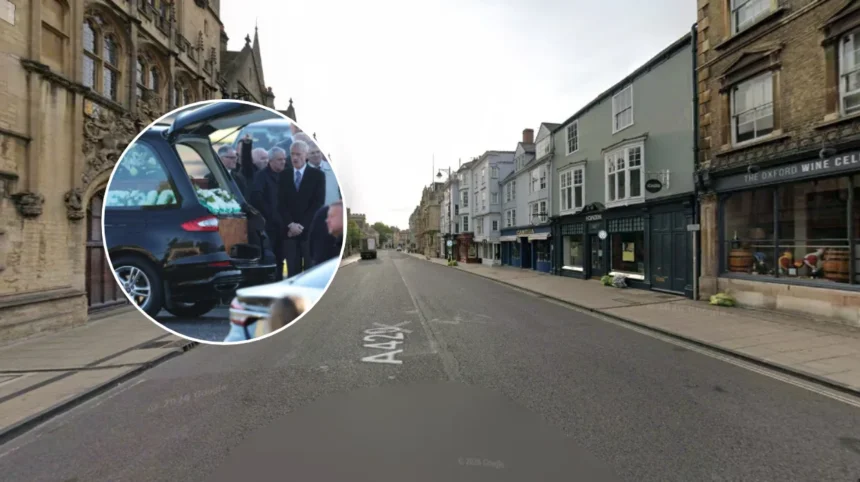
The funeral service took place at Daldowie Crematorium in Uddingston, drawing family, friends, and associates to mark the end of one of Scotland’s most documented underworld figures.
As reported by Stacey Mullen of the Glasgow Times, family and close associates arrived at the crematorium in Uddingston on Monday, October 19, to bid farewell to the author and former gangland enforcer, who died on October 6.
Official medical documents later confirmed the cause of death as multiple organ failure resulting from decompensated alcoholic liver disease.
“News of his death will come as a shock to many who knew him throughout the different chapters of his life. Paul went straight for 25 years and wrote several best selling books.”
As reported by Ryan McDougall of The Independent, photographer Brian Anderson announced the death online, stating: “News of his death will come as a shock to many who knew him throughout the different chapters of his life. Paul went straight for 25 years and wrote several best selling books. Our sincere condolences go to Paul’s family, friends and loved ones at this extremely difficult time.”
Who Was Paul Ferris and How Did He Transition From Crime to Writing?
Born in Blackhill, Glasgow, Paul Ferris first came to prominence during the 1980s as an associate and debt collector for crime boss Arthur “The Godfather” Thompson Sr. His life took a historic turn in 1992 when he stood trial at the High Court in Glasgow accused of the murder of Arthur “Fat Boy” Thompson Jr. Ferris was acquitted of all charges following a 54-day trial, which became the longest and most expensive criminal trial in Scottish legal history.
As reported by Norman Silvester of the Daily Record, mourners were asked to contribute to charities supporting homeless people in Glasgow prior to the service, with family members noting: “Because sometimes, one of the most meaningful ways to honour someone’s memory is to help someone else.”
Following his acquittal, Ferris was later convicted in 1998 at the Old Bailey in London for weapons conspiracy offences, receiving a ten-year sentence that was subsequently reduced to seven years.
During his imprisonment, he turned to writing, co-authoring his debut autobiography The Ferris Conspiracy with Reg McKay in 2001.
“Because sometimes, one of the most meaningful ways to honour someone’s memory is to help someone else.”
Following his release from prison, Ferris maintained that he had completely stepped away from criminality, focusing instead on writing, public speaking, and consultancy work regarding prison reform and true crime.
His life story was later adapted into the 2013 BAFTA-winning feature film The Wee Man, in which actor Martin Compston portrayed Ferris.
Background of the Particular Development
The death and subsequent funeral of Paul Ferris mark the final chapter in the era of 20th-century Glasgow gangland history. During the 1980s and 1990s, the city’s criminal landscape was dominated by high-profile rivalries, gun-running networks, and protracted legal battles.
Ferris’s acquittal in 1992 remains a landmark moment in Scottish criminal jurisprudence, demonstrating the complexities of high-security prosecution during that era.
His subsequent pivot to commercial publishing through titles such as The Ferris Conspiracy and Deadly Honour established a major commercial market for Scottish true-crime memoirs. His literary output shifted public debate surrounding the rehabilitation of former prisoners and the commercialisation of criminal memoirs in the UK media.
Prediction: How This Development Affects True-Crime Readers and Media Historians
The passing of Paul Ferris is expected to prompt renewed public interest in Scottish true-crime literature, historical criminal archives, and cinematic adaptations covering the late 20th century.
For readers of Scottish crime history and media analysts, his estate’s management of unpublished material and existing literary rights will likely lead to retrospective releases, documentary retrospectives, and discussions regarding the legacy of reform for former convict-authors.