Key Points
- Magistrates have sentenced a 45-year-old driver for speeding at 35mph in a 30mph village zone.
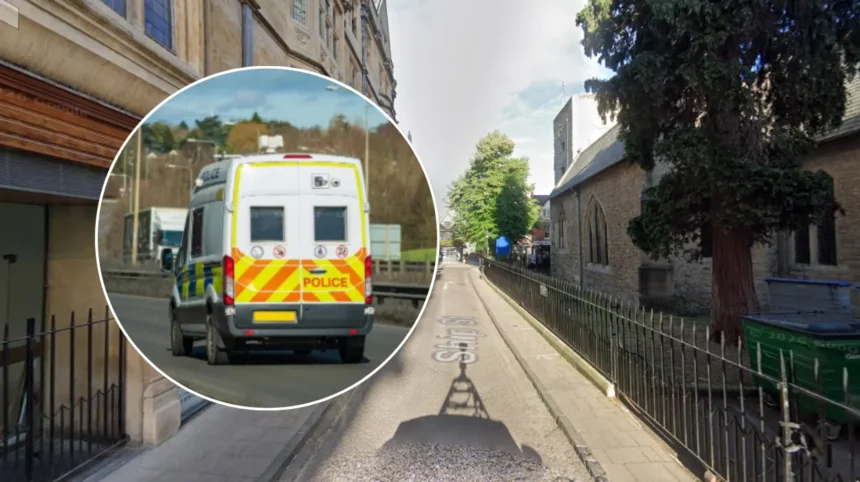
- Manned speed-enforcement equipment, operated directly by trained staff, caught the driver on Cuddesdon Road in Horspath.
- The driver did not turn up to Milton Keynes Magistrates’ Court and was convicted in his absence.
- The court ordered him to pay a £220 fine, £85 in prosecution costs, and an £88 victim surcharge, bringing the total to £393.
- Magistrates also added three penalty points to his driving licence.
Oxfordshire (Oxford Daily) October 13, 2026 — A 45-year-old motorist has been ordered to pay nearly £400 in financial penalties and received endorsement points on his driving licence after being taken to court for exceeding a 30mph speed limit by just 5mph.
As reported by Albert Tait of the Oxford Mail, Lee Mansell, residing at Howe Close in Wheatley, was recorded travelling at 35mph in a black Volkswagen Scirocco along Cuddesdon Road in Horspath. The incident, which occurred on 18 May, was detected by manned speed-enforcement equipment positioned along the village thoroughfare.
Following the detection, the case was referred to the judicial system and subsequently heard at Milton Keynes Magistrates’ Court. Mansell did not attend the scheduled hearing; however, magistrates proceeded with the case and found him guilty in his absence, as confirmed by official court records.
Magistrates penalised the 45-year-old driver by issuing three penalty points on his driving licence alongside a £220 fine. Additionally, the court ordered Mansell to pay £85 in prosecution costs and an £88 victim surcharge, bringing the total financial penalty to £393.
“Court documents confirm the driver was caught by a manned speed camera, which includes any speed-enforcement equipment operated directly by a police officer, PCSO or trained enforcement staff rather than functioning as an automated fixed unit.” — Oxford Mail
Why Was the Speeding Case Referred Directly to the Magistrates’ Court?
Under standard United Kingdom motoring prosecution procedures, minor speeding offences are frequently resolved via a Fixed Penalty Notice (FPN), which carries a standard £100 fine and three penalty points. However, cases are referred directly to magistrates’ courts when a driver fails to respond to initial notices, chooses not to pay an issued fine, or fails to appear in court to enter a plea.
As detailed in official court records, the detection in Horspath was made using manned enforcement gear. Unlike static, automated speed cameras, manned speed units are operated on-site by police officers, Police Community Support Officers (PCSOs), or designated mobile traffic enforcement operatives.
“Speed limits are set for a reason and exceeding them is illegal. The minimum penalty for speeding is a fixed penalty fine of £100 and three points added to your licence.” — Devon & Cornwall Police Road Safety Guidance
What Financial Consequences and Penalties Do Speeding Drivers Face?
When a speeding offence progresses to a formal court hearing, magistrates possess statutory powers to issue higher fines based on the driver’s income band and the specific circumstances of the infraction. While conditional offers or awareness courses may be offered for minor single-digit threshold violations, non-compliance with statutory notifications escalates the matter to judicial sentencing.
The breakdown of the total £393 order issued against Mansell demonstrates the cumulative costs of court proceedings:
Background of the Particular Development
In the United Kingdom, speed enforcement guidelines set by the National Police Chiefs’ Council (NPCC) suggest a general enforcement threshold of “10% plus 2mph” above the posted limit before formal prosecution is typically initiated by officers. On a 30mph road, this discretion threshold traditionally begins at 35mph.
While this guidance offers operational latitude to police forces, it does not constitute a legal entitlement, and driving at any speed above the posted statutory speed limit remains an offence under the Road Traffic Regulation Act 1984.
Over recent years, regional police services and road safety partnerships across Oxfordshire and Buckinghamshire have intensified traffic monitoring efforts within rural villages and residential areas. Community complaints regarding anti-social driving and excessive speed through narrow village corridors, such as Horspath, have led to increased deployments of mobile manned enforcement teams.
The prosecution of margin offences—even those recorded at the lower bound of enforcement discretion—reflects a strict administrative policy to process non-responsive or unacknowledged traffic notices through local magistrates’ courts.
Prediction: How This Development Can Affect Motorists and Road Users
This judicial outcome serves as a stark precedent for vehicle owners across Oxfordshire and the wider UK driving public. Motorists who assume minor speeding margins (such as 5mph over the limit) will be overlooked or dismissed without consequence face a heightened risk of formal court summons and inflated financial penalties.
For the average motorist, failing to address initial postal correspondence—such as a Notice of Intended Prosecution (NIP) or Section 172 driver identification request—can quickly escalate a standard £100 fixed penalty or speed awareness option into a court case resulting in fines nearly four times higher, alongside mandatory court surcharges.
Furthermore, the accumulation of penalty points impacts driver insurance premiums for up to four years, placing drivers closer to the 12-point threshold that triggers a mandatory driving disqualification under statutory “totting-up” rules. Consequently, road users are likely to exercise greater caution near low-speed village zones and adhere strictly to posted speed limits to avoid costly legal proceedings.