Key Points
- A person died on the tracks at Didcot Parkway station in Oxfordshire on Sunday afternoon.
- Emergency crews and paramedics arrived at the scene shortly after receiving the call at 2:36 pm on 20 September 2026.
- British Transport Police said the death is not suspicious and officers are preparing a file for the coroner.
- The emergency response forced officials to evacuate Didcot Parkway station and close lines connecting Swindon, Reading, and Oxford.
- Passengers out of London Paddington faced severe delays and cancellations on Great Western Railway services to Wales and the South West.
Didcot (Oxford Daily) September 21, 2026 — A tragic incident resulted in a fatality at Didcot Parkway railway station on Sunday afternoon, prompting the closure of major rail lines and causing widespread travel disruption across Southern England and Wales.
What Happened at Didcot Parkway Railway Station?
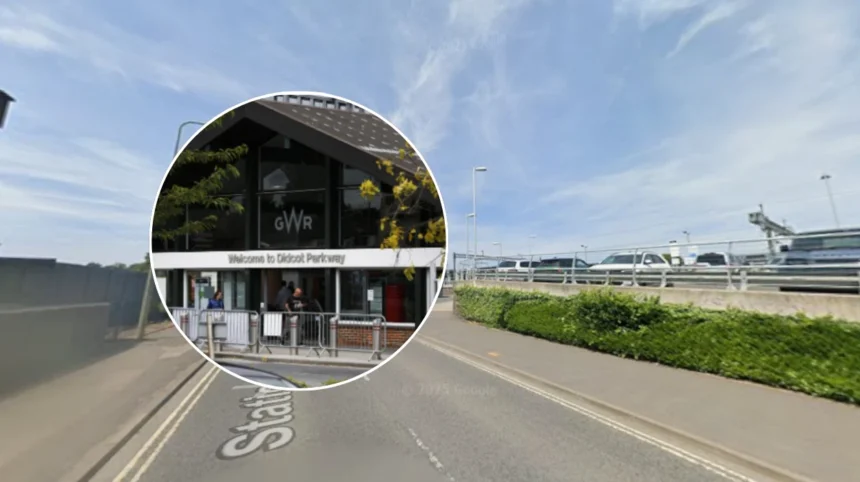
As reported by Matthew J C Evans of the Oxford Mail, emergency services were dispatched to Didcot Parkway railway station shortly after 2:30 pm on Sunday, 20 September 2026, following urgent reports of a person on the tracks.
As reported by Matthew J C Evans of the Oxford Mail, a spokesperson for British Transport Police stated: “We were called to Didcot Parkway railway station at 2.36pm on 20 September to reports of a casualty on the tracks. Paramedics also attended and sadly a person was pronounced dead at the scene. This incident is not being treated as suspicious, and a file will be prepared for the coroner.”
As reported by Shannon Brown of Bristol Live, Great Western Railway initially confirmed that a person was struck by a train, forcing rail operators to bring all train movements across the affected corridor to an immediate halt while emergency personnel secured the area.
How Were Train Services and Passengers Affected?
As reported by Matthew J C Evans of the Oxford Mail, the emergency response resulted in the evacuation of Didcot Parkway railway station, with eyewitnesses describing a severe scene as platform operations were suspended. The stoppage affected the line running through Reading and Didcot Parkway up to Oxford, as well as the main line connecting Reading and Swindon.
As reported by Matthew J C Evans of the Oxford Mail, Great Western Railway stated: “Due to the emergency services dealing with an incident between Swindon and Reading the line is blocked. Train services running to and from these stations may be cancelled or delayed.”
As reported by Shannon Brown of Bristol Live, Great Western Railway further stated: “We’re working with Network Rail and the emergency services to deal with the incident as sensitively, quickly and safely as possible. Your journey is likely to be delayed and could take up to 90 minutes longer to complete. Some trains will be revised, only completing parts of their normal journeys, and there will also be some cancellations.”
The disruption extended to services outbound from London Paddington, where multiple long-distance departures were delayed or cancelled. Cross-country and regional lines connecting to Bristol Temple Meads, Bristol Parkway, Weston-super-Mare, and Cheltenham Spa were impacted into Sunday evening before lines were reopened around 5:30 pm.
Both rail operators and emergency services issued public advice following the event, reminding travelers and individuals affected by the incident that support networks remain available.
As reported by Matthew J C Evans of the Oxford Mail, a spokesperson for Great Western Railway added: “If you are onboard one of the services in this incident and have been affected by this incident or know someone else who needs support, there is always someone to talk to. Contact a Samaritan on 116 123 for free, any time, on any phone. Help is only a phone call away.”
Background of Rail Safety and Incident Protocols in Oxfordshire
Didcot Parkway serves as a crucial junction on the Great Western Main Line, connecting London Paddington with Oxford, Bristol, South Wales, and the West Country. Due to its position as a high-speed interchange, any blockage at or near Didcot Parkway creates immediate knock-on effects across the entire Great Western network.
Standard emergency protocols require British Transport Police and Network Rail to implement immediate line blocks whenever a casualty is reported on the tracks. These protocols ensure the safety of first responders and medical teams while evidence is gathered for the coroner. Network Rail and train operating companies regularly partner with mental health charities, including Samaritans, to provide support infrastructure at key stations and onboard passenger trains.
Prediction: How Will This Development Affect Passengers and Network Operations?
The resolution of the police investigation at Didcot Parkway allows normal line speeds to resume, but operational impacts typically persist beyond the immediate reopening of tracks.
- Passengers and Commuters: Travelers using Great Western Railway and connecting CrossCountry services between London, Reading, Oxford, and the South West may experience minor timetable adjustments as rolling stock and train crews are repositioned into their scheduled locations.
- Network Rail and Infrastructure Teams: Rail authorities will evaluate the incident management process to ensure station evacuation procedures and service diversion routes operated effectively during the mainline block.
- Local Authorities: British Transport Police will complete their investigation report and submit their findings to the coroner’s office in Oxfordshire to formally conclude the inquiry into the fatality.