Key Points
- Firefighters at Bicester Fire Station responded to 57 emergency call-outs in September.
- Operational calls included rescuing someone trapped in playground equipment and freeing people from stuck lifts on two separate occasions.
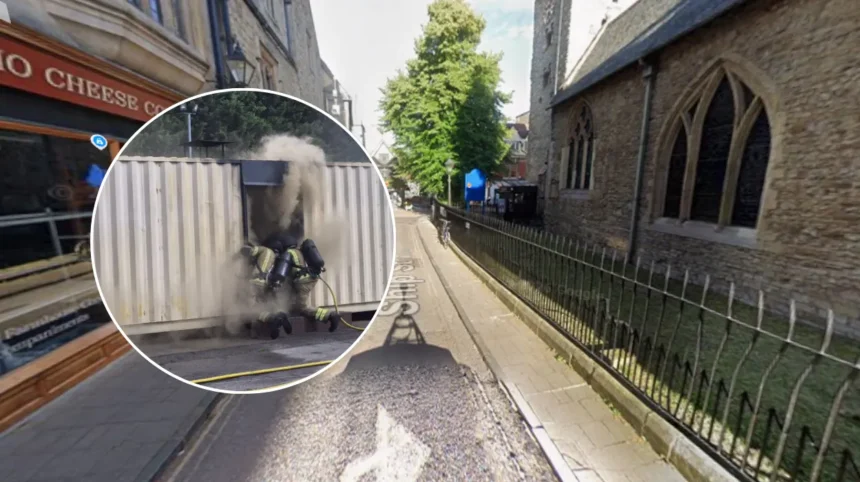
- Crews extinguished fires involving a conventional vehicle, a hybrid vehicle, and a local prison, while also carrying out two water rescues.
- Firefighters attended two house fires, four alarm calls at retail and public premises, three ring removals, and provided standby cover for nearby stations twice.
- Personnel carried out nine free Safe and Well home visits, ran station familiarisation exercises, and attended a Family’s Day at St David’s Barracks.
- Station crews completed live-fire training at the Fire Service College in Moreton-in-Marsh, while recruitment for on-call firefighters remains open during Tuesday drill nights from 7 pm to 9 pm.
Bicester (Oxford Daily) October 1, 2026 – Crews from Bicester Fire Station recorded 57 emergency call-outs during the month of September, attending a wide dynamic of incidents spanning structural fires, specialized vehicle blazes, water rescues, and unusual community extractions across the local authority area.
Data released by Oxfordshire Fire and Rescue Service details the full operational activity of the station over the 30-day period. As reported by reporter standard news coverage from the Oxford Mail and The Oxford Times, emergency personnel encountered a varied workload ranging from high-risk technical rescues to essential proactive home safety assessments.
What emergency incidents did Bicester firefighters attend during September?
According to operational logs released by Oxfordshire Fire and Rescue Service and reported by local media outlets including the Oxford Mail, Bicester crews were dispatched to 57 separate incidents throughout September.
Among the primary emergency deployments were two water rescues and two domestic property fires. Vehicle incidents required significant resources, with crews called out to extinguish a fire involving a large conventional vehicle, alongside a separate, high-risk fire involving a large hybrid vehicle.
In addition, firefighters attended a fire within a prison facility. Operational statistics further show that Bicester crews provided standby cover for neighboring stations on two occasions to maintain regional response capability.
The month’s response log also included:
- Four alarm activations: Investigated at various retail units and public community buildings.
- Three ring removals: Carried out to assist individuals experiencing medical discomfort or circulation issues.
- Technical extractions: Included two separate call-outs to free individuals trapped inside malfunctioning lifts.
- Playground intervention: Responding to an unusual incident where a member of the public had become trapped in playground equipment.
How did Bicester Fire Station contribute to community safety and training?
Beyond reactive emergency responses, personnel at Bicester Fire Station undertook preventative community work and intensive operational training across the month.
As detailed in the station report, firefighters conducted nine home Safe and Well visits across Bicester and surrounding rural villages. These complimentary assessments provide residents with tailored advice regarding domestic fire prevention, smoke alarm installation, and emergency escape planning, which the service highlights as vital in reducing preventable home emergencies.
Community engagement also included station participation in the Family’s Day event hosted at St David’s Barracks. On the operational preparation front, personnel completed site familiarisation visits to local commercial structures and attended advanced live-fire training sessions held at the Fire Service College in Moreton-in-Marsh.
To maintain frontline capacity, Bicester Fire Station continues its campaign to recruit on-call firefighters. Oxfordshire Fire and Rescue Service invites interested residents to attend weekly drill nights, held every Tuesday evening between 7:00 pm and 9:00 pm at the station, to discuss recruitment criteria and training obligations.
Background of Bicester Fire Station’s Operational Framework
Bicester Fire Station forms an integral part of the Oxfordshire Fire and Rescue Service, operating under a hybrid staffing model that combines retained (on-call) firefighters with whole-time personnel to deliver 24-hour emergency cover to Cherwell District and surrounding motorway networks, including the M40 corridor.
The station’s call-out profile regularly involves complex technical responses due to the area’s mixed geography, which encompasses dense residential expansions, major retail hubs, industrial parks, rural waterways, and key transport infrastructure.
On-call firefighters live or work within close proximity to the station, responding to emergency pagers to crew appliances when incidents arise. Monthly statistics published by individual stations serve to inform local tax-paying communities of service deployment patterns, resource allocations, and preventative outreach benchmarks.
Prediction: How will these development statistics affect the local community?
The release of September’s operational figures directly impacts several core stakeholder groups across Bicester and Cherwell:
- Local Residents: The report highlights ongoing operational risks—such as specialized hybrid vehicle fires and water-based emergencies—emphasising the continued importance of public compliance with domestic fire safety guidelines and free Safe and Well visits.
- On-Call Recruitment Candidates: The detailed operational volume (57 incidents in a single month) demonstrates the active nature of the station, which may encourage prospective applicants seeking meaningful community involvement to attend Tuesday evening drill sessions.
- Local Authorities and Emergency Planners: The variety of calls—spanning prison facilities, commercial properties, and transport networks—provides empirical data for Oxfordshire Fire and Rescue Service management to allocate future training resources, such as hybrid vehicle containment gear and technical rescue equipment.