Key Points
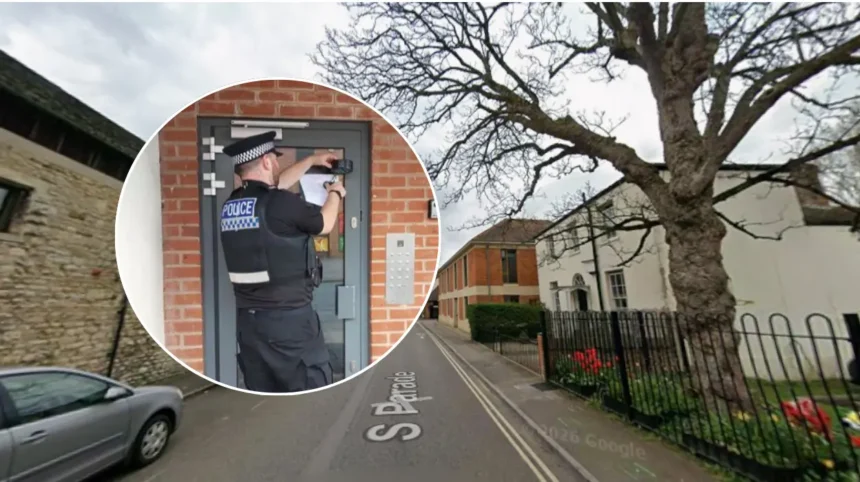
- Thames Valley Police have executed closure orders at several residential properties in Banbury town centre.
- Officers took action following complaints from residents about drug use, suspected drug dealing, and anti-social behaviour.
- Police said local intelligence from residents and cooperation with partner agencies were essential to targeting the properties.
- The orders make it illegal for unauthorized people to enter the properties, with violators facing criminal prosecution.
BANBURY (Oxford Daily) September 29, 2026 — Thames Valley Police have executed a series of formal closure orders at multiple property addresses situated within the town centre of Banbury, Oxfordshire, following repeated community concerns regarding illicit drug activity and persistent anti-social behaviour.
As reported by Matthew J C Evans of the Oxford Mail, law enforcement personnel moved to secure the targeted properties to curb recurring public nuisance, protect vulnerable inhabitants, and suppress local criminal networks operating within residential quarters. The enforcement measures come as part of a targeted regional initiative aimed at disrupting organized drug networks and associated disturbance tactics that compromise neighborhood stability.
As detailed by Matthew J C Evans of the Oxford Mail, a official spokesperson for Thames Valley Police addressed the public, issuing a clear warning regarding community safety measures and law enforcement priorities:
“Your information makes a difference. When communities and partner agencies work together, we get results. If you’re causing misery in our neighbourhoods, expect action. If you’re reporting concerns, know that we’re listening.”
What Specific Measures Do These Statutory Closure Orders Impose?
Under UK legislation, a closure order issued by the local Magistrates’ Court grants law enforcement authorities and local councils the immediate power to seal off a designated location. The order legally restricts access to the premises for a specified duration—typically up to three months, with statutory provisions permitting extension under judicial review.
Except for designated property owners, housing association supervisors, or statutory emergency services, all individuals are strictly prohibited from entering or remaining inside the shut premises. Anyone found breaching the terms of a closure order commits a criminal offence under Section 80 of the Anti-social Behaviour, Crime and Policing Act 2014, subjecting offenders to summary arrest, fine structures, or potential custodial sentencing.
The implementation of closure notices frequently addresses cases involving “cuckooing”—a practice where criminal syndicates exploit vulnerable individuals, taking over their homes to store or distribute controlled substances, host illicit activities, or harbor external offenders.
Background to This Particular Development
Over recent years, Thames Valley Police, operating in conjunction with the Oxfordshire District Councils and social housing providers, have increasingly deployed anti-social behaviour legislation to target persistent disturbance and drug distribution nodes throughout Oxfordshire.
Historically, urban and market towns across the county—including Banbury, Oxford, and Didcot—have seen instances of county lines drug operations, where networks operating from major metropolitan centres establish local footholds. To counter these developments, local neighbourhood policing teams rely heavily on civil enforcement toolkits, such as closure orders and anti-social behaviour injunctions, to dismantle operational bases without awaiting long-term criminal prosecution trials.
Recent operations across Thames Valley have resulted in numerous closure enforcement measures designed to mitigate neighborhood degradation and safeguard victims of cuckooing. Law enforcement officials repeatedly emphasize that legal thresholds for obtaining court-issued closures require comprehensive evidence logs, including precise reporting from local residents, housing officers, and active patrol units.
Future Predictions: How Will This Development Affect Local Residents and the Community?
The enforcement of closure orders across Banbury town centre is anticipated to deliver direct and structural impacts across multiple segments of the local community:
- Local Residents and Surrounding Communities: Residents in the immediate vicinity of the closed properties are expected to experience a distinct decrease in noise pollution, localized foot-traffic disturbance, and public order incidents. In the short-to-medium term, successful closures generally enhance feelings of neighbourhood security and increase community confidence in public reporting channels.
- Vulnerable Tenants and Victims: Individuals whose residential premises may have been targeted or coerced by external drug operators gain an immediate legal shield. This window allows statutory social services, mental health providers, and council housing officers to intervene, provide support, or arrange alternative secure housing arrangements.
- Local Law Enforcement and Housing Authorities: The successful execution of court orders reinforces joint-agency strategies between Thames Valley Police and local council teams. However, enforcement agencies must maintain active monitoring to ensure criminal activity does not simply displace to nearby, unmonitored residential streets or adjacent rural villages.