Key Points
- Thames Valley Police scanned 15,628 faces during a four-hour operation on Witney High Street on Wednesday, 16 September 2026.
- The live facial recognition van ran from 10:30 am to 2:30 pm, producing three confirmed alerts and one arrest.
- A top-mounted 360-degree camera captured biometric data from passers-by and checked it against a police watchlist.
- System software immediately deletes images and biometric data for anyone who does not match the watchlist.
- Councillor David Edwards-Hughes, Chairman of Witney Town Council, defended the operation as a proactive Conservative-led safety measure.
- The technology was first used in Oxfordshire in December 2025 on Cornmarket Street in Oxford.
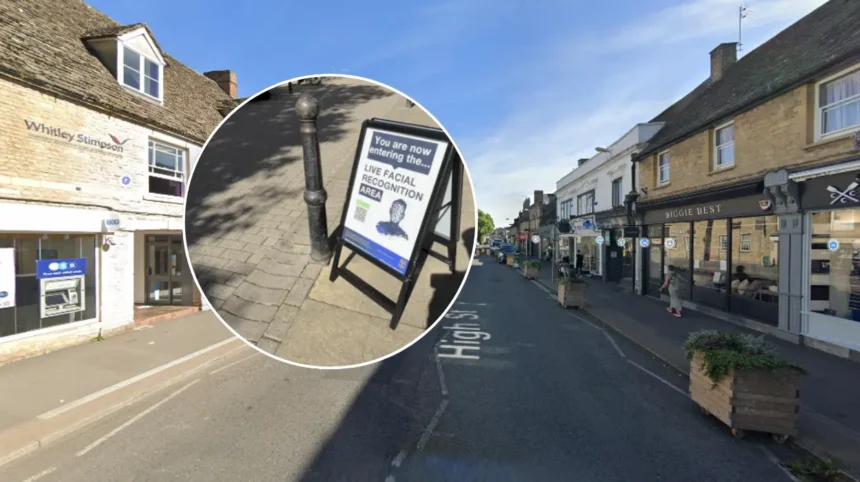
WITNEY (Oxford Daily) September 17, 2026 – Thames Valley Police scanned more than 15,600 faces in just four hours during a targeted live facial recognition operation on Witney High Street on Wednesday, 16 September 2026, resulting in three confirmed alerts and one arrest.
- Key Points
- How did Thames Valley Police conduct the facial recognition operation in Witney?
- What happens to the scanned images of innocent members of the public?
- How have local civic leaders and officers responded to the deployment?
- Background of the particular development after the news
- Prediction: How this development can affect local high street shoppers and residents
How did Thames Valley Police conduct the facial recognition operation in Witney?
As reported by David Edwards-Hughes and news staff at the Oxford Mail, a specialized police vehicle equipped with live facial recognition (LFR) technology was parked on Witney High Street between 10:30 am and 2:30 pm. The vehicle utilises a top-mounted 360-degree camera lens to scan the faces of members of the public walking along the thoroughfare.
During the four-hour operational window, the system scanned precisely 15,628 faces. The scanning software converts key facial features into digital biometric representations and compares them against a custom “watchlist” created by the police force. This deployment yielded three confirmed biometric alerts, which prompted officers on the ground to intervene, culminating in one suspect being taken into custody.
What happens to the scanned images of innocent members of the public?
According to operational guidelines published by Thames Valley Police, the LFR technology is designed purely as an intelligence tool to cross-reference individuals against active mugshot databases of wanted criminals or vulnerable missing persons.
When a passer-by’s image does not trigger a match against the active watchlist, the system automatically and instantaneously deletes the captured photograph and its corresponding biometric data. Police authorities emphasise that the system does not retain records or track the routine movements of law-abiding citizens.
How have local civic leaders and officers responded to the deployment?
As quoted by the Oxford Mail, Chairman of Witney Town Council, Councillor David Edwards-Hughes, voiced strong political support for the technology following his visit to the town centre during the operation. Councillor Edwards-Hughes stated:
“Supporting our police with modern technology to catch wanted criminals and keep our high streets safe is central to Conservative policy. Having spent time in the town centre yesterday, it was clear that Thames Valley Police were taking a very proactive approach—officers on the ground were making a real effort to speak with passers-by and explain how the deployment works.”
Acknowledging public privacy debates surrounding automated surveillance, Councillor Edwards-Hughes added:
“While it’s natural for residents to have questions when new technology is introduced, operational safeguards mean images of members of the public who aren’t on a watchlist are deleted immediately. Broadening public understanding of how these safeguards work is key to maintaining trust while allowing the police to get on with keeping Witney safe.”
Police representatives also noted that prior notification is provided to local communities before deploying LFR vans to maintain operational transparency and deter criminal activity.
Background of the particular development after the news
Live facial recognition technology was first introduced to Oxfordshire by Thames Valley Police in December 2025, when surveillance vans were deployed along Cornmarket Street in Oxford city centre. The initiative forms part of a broader, national expansion across English and Welsh police forces aimed at locating high-harm offenders, including individuals wanted for violent assaults, robbery, sex offences, or breaches of court-ordered conditions.
The deployment in Witney represents an extension of this technology from major urban hubs into smaller market town high streets. Under standard operating frameworks, police forces generate unique watchlists tailored specifically to each individual deployment. Operational protocols mandate that an alert generated by the facial recognition software does not automatically lead to an arrest; instead, trained human operators must manually review and verify any potential biometric match before officers on the ground engage with the subject.
Prediction: How this development can affect local high street shoppers and residents
The integration of mobile live facial recognition on local high streets is expected to have notable effects on shoppers, local businesses, and community policing dynamics in Witney and similar market towns:
- Shift in High Street Crime and Security Perception:The visible presence of LFR units on high streets is likely to serve as an active deterrent against retail crime, anti-social behaviour, and persistent offending. Retailers and shoppers may experience an heightened sense of safety, encouraging higher footfall in town centres. However, repeat offenders or individuals with active warrants are increasingly likely to avoid public retail hubs during announced deployments.
- Heightened Public Scrutiny and Privacy Debates:As facial recognition expands into regional market towns, civil liberties groups and local residents are likely to increase scrutiny over the proportionality and legal oversight of mass biometric scanning. While immediate data deletion safeguards exist, public discourse regarding state surveillance in everyday spaces will remain a central point of debate between civic leaders and privacy advocates.
- Normalization of Biometric Policing:With forces demonstrating quick operational yields—such as identifying suspects and executing arrests within a few hours—the routine deployment of LFR vans is expected to become a standard tool in regional neighbourhood policing strategies across the UK.