Key Points
- Thames Valley Police will station Live Facial Recognition (LFR) vans in Market Square, Witney, on Wednesday, 16 September 2026.
- The mobile unit will operate alongside local officers to identify wanted suspects and deter criminal activity.
- Police officials said advance warnings are published before LFR units deploy to inform the public.
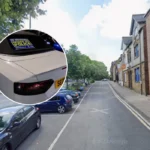
- Onboard cameras scan faces in passing crowds and match biometric data directly against police watchlists in real time.
- Trained officers must manually confirm every biometric match alert before taking action, as the software does not make automated arrests.
- Civil liberties groups raised concerns over the deployment, warning that wide-scale biometric scanning creates excessive public surveillance.
Witney (Oxford Daily) September 10, 2026 — Thames Valley Police will deploy Live Facial Recognition (LFR) vans in Market Square, Witney, on Wednesday, 16 September 2026, as part of a targeted initiative to locate wanted suspects and prevent local crime.
- Key Points
- How Does Live Facial Recognition Technology Function on the Ground?
- What Rules and Regulations Govern Police Use of Biometric Vans?
- Why Are Privacy Groups and Campaigners Opposing LFR Deployments?
- Background of Live Facial Recognition in UK Policing
- Predictions: How This Development May Affect the Local Community
As reported by Alexandra Carter, Senior Reporter at the Oxford Mail, police confirmed that the specialized mobile unit will work alongside local neighborhood officers in West Oxfordshire throughout the day. The primary purpose of the deployment is to scan public areas, identify individuals on police watchlists, and deter criminal activity.
In an official public statement issued by Thames Valley Police, a spokesperson explained: “We make sure to let you know before our LFR vans are in use, so everyone stays informed about what’s happening. While this can mean some individuals choose to avoid us, the vans can help deter crime and keep the area safer. Preventing crime is just as important as catching those who break the law”.
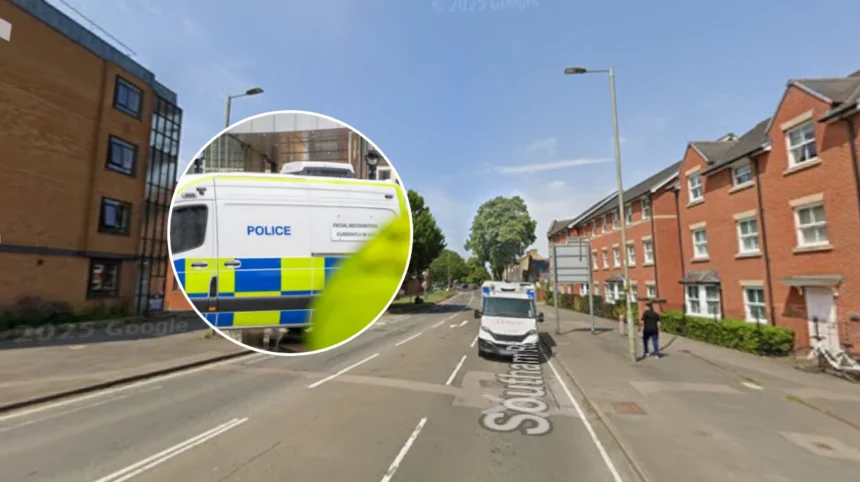
The deployment forms part of wider efforts by UK law enforcement agencies to integrate advanced biometric capabilities into routine town centre policing. Marked police vehicles equipped with camera arrays process real-time video footage of passing crowds. The system extracts biometric data, measuring key facial geometry features, and instantly compares those metrics against a pre-selected watchlist of wanted suspects.
How Does Live Facial Recognition Technology Function on the Ground?
The technical setup involves camera equipment mounted onto marked police vehicles. These systems capture optical feeds of individuals walking within the camera field of view. The underlying algorithm analyzes facial structures—such as the distance between an individual’s eyes, the breadth of the nose, and the contours of the jawline—to convert physical features into digital code.
When the system detects a potential biometric match between a passer-by and an image stored on the active police watchlist, it generates an automatic alert for officers stationed inside the vehicle.
Law enforcement officials stress that the technology does not operate autonomously. As detailed in technical briefings by Nottinghamshire Police regarding similar vehicle deployments, Detective Superintendent Will Henley noted: “It is not the computer saying ‘yes or no’ when an alert is issued. The officer on the ground will still need to carry out the relevant checks”.
When a match alert triggers, a human operator inspects the captured image alongside the watchlist file to assess its accuracy. If the officer confirms the match is plausible, uniformed officers positioned nearby are instructed to approach the individual, verify their identity using standard procedures, and determine whether further law enforcement action is required. If the system does not identify a match, biometric data gathered from members of the public is deleted immediately without human interaction or persistent storage.
What Rules and Regulations Govern Police Use of Biometric Vans?
The operational criteria for deploying facial recognition vans fall under national guidelines set out by the College of Policing and the Surveillance Camera Code of Practice. Police forces are required to issue advance notice to the public prior to placing LFR vehicles in public settings. Clear signage must also be displayed around the operational perimeter to notify pedestrians that live facial scanning is taking place.
To address concerns regarding algorithmic performance, independent assessments were conducted on the software systems utilized by UK police. Independent testing performed by the National Physical Laboratory (NPL) evaluated the software for demographic accuracy. As noted in Home Office reporting, NPL testing determined that when configured to police operational settings, the algorithm demonstrated high accuracy across demographics without statistical bias regarding age, gender, or ethnicity.
Police watchlists are compiled for specific operational goals prior to each deployment. These lists include individuals wanted for serious offenses—such as violent assault, robbery, burglary, and sexual crimes—as well as persons subject to court order restrictions or individuals reported missing who require urgent safeguarding.
Why Are Privacy Groups and Campaigners Opposing LFR Deployments?
Despite police assurances regarding operational oversight, the expansion of LFR units has drawn criticism from civil liberties groups and digital rights advocates.
As reported by The Independent, civil rights organization Big Brother Watch has publicly criticized the expanding use of LFR vans across the country. Rebecca Vincent, Interim Director at Big Brother Watch, warned: “This unprecedented escalation in the use of facial recognition technology across the UK is alarming and represents a significant expansion of the surveillance state. Live facial recognition turns every passerby into a walking barcode and treats us all as a nation of suspects”.
Campaigners argue that the reliance on existing general policing powers lacks explicit parliamentary legislation dedicated to governing real-time biometric scanning. Opponents also highlight instances of misidentification, raising concerns over potential unlawful stops and the psychological impact of intrusive public monitoring.
In response to legislative concerns, the Home Office previously indicated plans to conduct national public consultations aimed at establishing a statutory legal framework designed specifically for law enforcement biometric usage.
Background of Live Facial Recognition in UK Policing
The introduction of LFR technology into British law enforcement began through early operational trials led by the Metropolitan Police Service and South Wales Police. Initial pilot schemes focused on large-scale public events, commercial shopping precincts, and major transport hubs to assess whether real-time biometric matching could assist officers in pinpointing high-risk offenders within large crowds.
Following early testing phases, the Home Office allocated dedicated capital funding to expand LFR capabilities across additional regional forces. This expansion program financed additional specialized vans equipped with 360-degree dual-camera systems, expanding coverage beyond London and South Wales into regional territories including Greater Manchester, West Yorkshire, Surrey, Sussex, Bedfordshire, Hampshire, and the Thames Valley.
Supporters of the technology emphasize that LFR enables officers to screen public areas efficiently, identifying wanted individuals much faster than traditional manual checks. Conversely, legal analysts and rights organizations continue to push for explicit statutory controls, arguing that clear legal limits are necessary to protect public privacy and maintain community trust as surveillance technology advances.
Predictions: How This Development May Affect the Local Community
The scheduled deployment of LFR vans in Witney Market Square is expected to produce several operational and social impacts for local residents, shoppers, and business owners:
- Impact on Local Criminality: The visible presence of marked LFR units and uniformed officers in central shopping corridors is likely to deter opportunistic street crime, anti-social behavior, and retail theft during operational hours.
- Impact on Law Enforcement Operations: Regional police forces may see an increase in immediate interventions and arrests involving wanted individuals who pass through monitored zones, helping resolve outstanding warrants more efficiently.
- Impact on Public Perception and Town Centre Footfall: Public reactions are likely to vary. While some visitors may welcome the visible police presence as a reassuring safety measure, others who hold privacy concerns may choose to avoid monitored zones entirely while biometric cameras are operating.