Key Points
- Systemic Failures Uncovered: A landmark national investigation chaired by Baroness Valerie Amos has exposed severe operational, cultural, and structural deficiencies across Oxford University Hospitals NHS Foundation Trust (OUH) maternity units.
- The “Oxford Way” Culture: Staff close to physical and mental burnout revealed a entrenched institutional “blame culture” governed by the dismissive phrase, “that’s the Oxford way”.
- Silenced Voices of Families: Bereaved and harmed families repeatedly described being systematically dismissed, ignored, and excluded from critical clinical decision-making when raising warning signs.
- Severe Understaffing Pressures: National data indicates OUH is operating in the highest 20 per cent band for midwife workloads, averaging 27.3 deliveries per midwife compared to the national baseline of 23.1.
- Preventable Harm and Loss: The inquiry detailed heart-breaking accounts of avoidable stillbirths, severe brain hemorrhages, and emergency intubations attributed directly to clinical delays and poor risk management.
- Maternity Commissioner Demanded: Baroness Amos has urged the British Government to legally establish a statutory National Maternity and Neonatal Commissioner to enforce nationwide systemic and cultural transformations.
- Unreserved Trust Apology: The leadership of OUH has accepted the findings in full, issuing an unreserved apology for failing families at their most vulnerable moments.
Oxford (Oxford Daily) July 1, 2026 – A damning independent report into the maternity and neonatal services at Oxford University Hospitals NHS Foundation Trust has revealed a deeply troubled system where vulnerable patients were systematically ignored, clinical staff operated on the brink of burnout, and an institutional “blame culture” compromised maternal and infant safety.
- What Did the Baroness Amos Report Uncover About Oxford’s Maternity Culture?
- Why Did Harmed Families Feel Systematically Ignored by OUH Staff?
- What Do the Maternity Ward Statistics Reveal About Workforce Pressures?
- How Inadequate Are the Hospital Buildings and Digital Systems?
- What Are the Core National Recommendations of the Baroness Amos Review?
- How Has the Leadership of Oxford University Hospitals Responded?
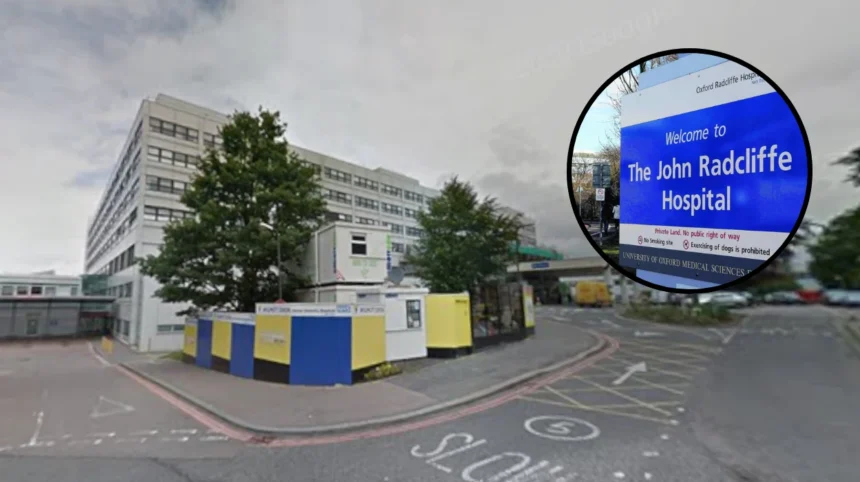
The extensive local evaluation, published in full by reporter Matt Simpson of the Bicester Advertiser, forms a critical component of the broader National Maternity and Neonatal Investigation overseen by Baroness Valerie Amos. Investigators conducted highly sensitive, trauma-informed evidence sessions with affected families alongside site inspections at the John Radcliffe Hospital in Oxford and the Horton General Hospital in Banbury. The final text lays bare a pattern of structural, technical, and cultural failures that led to preventable harm, permanent birth injuries, and infant loss.
In response to the publication, the leadership of the under-fire trust has issued an immediate, unreserved apology to families whose lives were permanently altered by the care they received. While a concurrent Care Quality Commission (CQC) inspection noted that structural adjustments have commenced, the independent investigation warns that the trust has an incredibly long distance to travel to reconstruct public trust. Amidst rising national anger over repeated scandals across the National Health Service (NHS), Baroness Amos has formally petitioned the government to establish a statutory National Maternity Commissioner backed by explicit legal powers to drive immediate, systemwide accountability.
What Did the Baroness Amos Report Uncover About Oxford’s Maternity Culture?
As reported by journalist Matt Simpson of the Bicester Advertiser, the independent inquiry found a deeply toxic workplace environment that directly hindered the delivery of safe and compassionate medical care. Staff members who came forward to speak with assessors described an environment thick with institutional exhaustion, severe recruitment vacancies, and an overbearing fear of clinical errors exacerbated by intense public scrutiny.
According to the text of the report compiled by Baroness Amos, a prevalent attitude encapsulated by the phrase “that’s the Oxford way” was frequently cited by employees to describe an unyielding status quo that resisted modernization and normalized hazardous operational pressures. In the report, Baroness Amos noted that frontline healthcare teams were operating with “high levels of vacancies” or consistently working well beyond their contracted hours.
The investigation emphasized that under these extreme structural conditions, critical human values like empathy and clinical compassion were frequently noted by the staff themselves as being “the first thing to go.” Furthermore, the inquiry identified a distinct “blame culture” inside the departments, which prevented mid-level medics and junior midwives from freely raising clinical safety concerns or challenging senior decisions without fear of professional reprisal.
Why Did Harmed Families Feel Systematically Ignored by OUH Staff?
As documented by reporter Ciaran Fitzpatrick of ITV News Meridian, the investigation uncovered a heartbreaking and consistent theme: women and their partners were systematically pushed out of their own care pathways. The report detailed that families harbored a “strong belief that harm was preventable,” with their accounts underpinned by a series of clinical omissions.
In the report, Baroness Amos stated that:
“Families repeatedly stressed to us the following concerns: missed warning signs, failure to act on known risks, and repetition of the same mistakes time and time again, affecting different families. Many linked this to a culture where decisions were made without consultation with families.”
The ITV News Meridian coverage brought forward devastating testimonies from local parents who suffered under this culture of dismissal. As reported by Ciaran Fitzpatrick, local mothers Joy and Daniel Kabiri received a formal apology from the trust after a catalog of communication errors and clinical oversights led directly to their son, Elkan, being stillborn. Joy Kabiri explained that the system entirely let her down during her pregnancy. As reported by Ciaran Fitzpatrick, Joy Kabiri stated that:
“As it was my first pregnancy, they kept telling me that I had no idea what discharges were normal and what they look like, I’m being worried… I was being dismissed every single time I went in.”
Similarly, the investigation reviewed the case of a baby named Aria, who had to be urgently intubated after her heart stopped, subsequently suffering a severe bleed on the brain. Her parents, Angel-Kay Mason and Marley Mason, have joined a growing cohort of families seeking legal justice through specialized medical negligence firms. The report detailed that critical indicators such as physical bleeding, reduced fetal movements, and the leaking of amniotic waters were routinely overlooked by hospital personnel, who frequently advised patients “not to worry” without performing proper physical examinations.
Explore More Banbury News
Broughton Castle Sportive raises funds for Banburyshire charities 2026
Banbury Dockyard History Revealed in New Armitage Research 2026
What Do the Maternity Ward Statistics Reveal About Workforce Pressures?
The full text published by Matt Simpson in the Bicester Advertiser provides a comprehensive statistical breakdown comparing national datasets with internal figures provided by Oxford University Hospitals. The data confirms that the trust’s midwifery workforce is enduring a workload that ranks among the heaviest in the entire country.
According to national published statistics cited in the report from January 2026, the trust employed 278.9 full-time equivalent midwives and 84.3 full-time equivalent doctors within its obstetrics and gynaecology divisions. The data revealed that during the 2024/25 period, the total number of deliveries per individual midwife at OUH stood at an alarming 27.3. As noted by Matt Simpson, this figure places Oxford firmly within “quintile 5″—signifying the highest 20 per cent band for staff workload across England, vastly exceeding the national average delivery ratio of 23.1 per midwife.
The report also highlighted a significant upward trajectory in complex surgical interventions. In February 2026, national datasets showed that 43.0 per cent of all deliveries within the trust were carried out via caesarean section, reflecting a sharp increase from the 38.2 per cent recorded just three years prior in February 2023. Trust-specific internal records varied slightly, documenting 7,551 total births for 2024/25 and a caesarean rate of 41.9 per cent for February 2026, yet both frameworks illustrated a service heavily burdened by high-acuity patient needs and shrinking operational capacity.
How Inadequate Are the Hospital Buildings and Digital Systems?
In the full text of the report published by the Bicester Advertiser, Baroness Amos directed sharp criticism toward the physical infrastructure and electronic frameworks at the John Radcliffe Hospital site. The estate was deemed old, heavily congested, and entirely out of step with the requirements of a modern, 21st-century medical facility.
The evaluation noted that the cramped conditions directly constrained how the hospital coped with sudden influxes of patients, frequently forcing clinical decisions to be dictated by “available space and patient flow rather than clinical need.” Furthermore, the layout severely impacted patient dignity, with the report stating that women and families routinely “lacked privacy for sensitive conversations” during moments of intense grief, trauma, or clinical crisis.
In tandem with the failing physical infrastructure, the investigation exposed critical vulnerabilities in the hospital’s digital environment. Frontline teams are currently forced to navigate multiple, disconnected IT systems that completely fail to communicate or share vital patient data efficiently. This digital fragmentation frequently resulted in missing medical histories, delayed clinical assessments, and a failure to track escalating risks as patients moved between different departments.
What Are the Core National Recommendations of the Baroness Amos Review?
As reported by ITV News, the broader findings of the National Maternity and Neonatal Investigation—which evaluated 12 poorly performing NHS trusts across England—concluded that structural and systemic flaws have rendered regional maternity services unfit for contemporary medical realities. To rectify these deep-seated failures, Baroness Amos has put forward a sweeping package of eight core systemic recommendations designed to enforce immediate institutional transformation.
In her national address, Baroness Amos emphasized that while the majority of births in England culminate safely, the structural decay within the NHS cannot be ignored. As reported by the Switalskis legal framework, Baroness Amos stated that:
“For too many (depending on where they live, who they are or simply the day they give birth), the care they receive is not good enough and can result in avoidable harm for women, birthing people and babies. Every instance of avoidable harm is one too many. The emotional toll and cost to families is indescribable. As a country, as a community, we cannot continue like this.”
How Has the Leadership of Oxford University Hospitals Responded?
Following the immediate public release of the local and national findings, the executive leadership team at Oxford University Hospitals issued an expansive, unreserved institutional apology to every patient let down by their care. The statement explicitly acknowledged that the trust had failed families at their most vulnerable life stages.
In an official public brief released by the trust, the Interim Chief Executive Officer of Oxford University Hospitals, Simon Crowther, expressed profound remorse for the historical and ongoing distress caused by the department’s systemic oversight. As published by the trust’s executive board, Simon Crowther stated:
“Today is about the women, babies and families whose lives have been changed by the care they received in our services. The report describes harm, distress and loss. It describes women and families who raised concerns about their own or their baby’s health, and who did not feel listened to or taken seriously… For that, we are deeply sorry. We apologise unreservedly to the women, babies and families who suffered in our care, or whose experience caused them grief or distress.”
Addressing the operational steps being taken to mitigate these risks moving forward, Simon Crowther further noted:
“In response to the investigation findings, we have delivered additional training and guidance to help ensure maternity staff are able to identify and manage similar risk factors during pregnancy.”
The trust’s leadership concluded by pledging that the lived experiences documented by Baroness Amos would serve as the foundational baseline for their long-term clinical strategy. They committed to involving patients directly in rewriting safety protocols and vowed to maintain absolute transparency regarding their progress, acknowledging that public trust can only be rebuilt through verified operational actions rather than corporate promises.