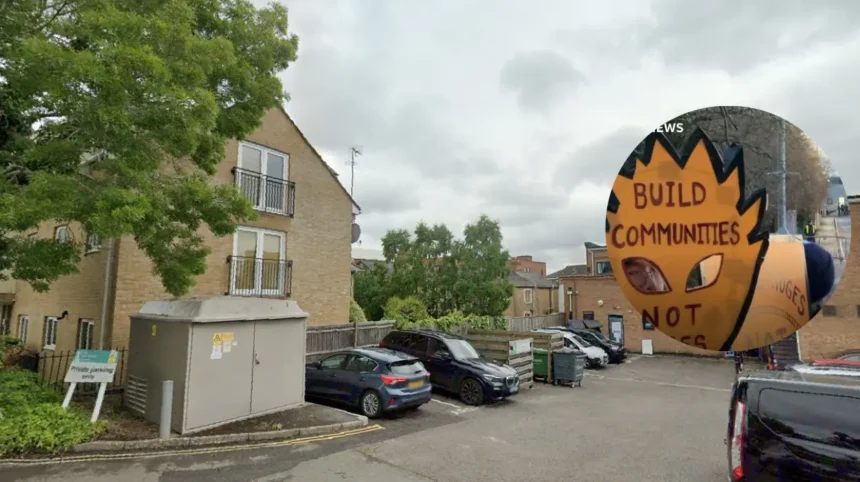
Key Points
- A protest is scheduled for Saturday, 30 May 2026, at 12:00 noon at Campsfield House Immigration Removal Centre in Kidlington, Oxfordshire
- The Coalition to Close Campsfield is organising the demonstration against the newly re-opened detention facility
- Campaigners condemn the wages paid to detainees as “slave labour,” with detainees typically paid £1–£1.50 per hour
- Campsfield Immigration Removal Centre officially reopened in December 2025 after closing in 2018
- The Home Office spent £70 million refurbishing the centre, which currently holds around 50 detainees out of 160 spaces
- Detainees are defined as “volunteers” and can legally be paid much less than the national minimum wage
- The centre houses foreign national criminals, immigration violators, small boat arrivals, and unsuccessful asylum seekers
- Oxford Student Action for Refugees (STAR) and other groups have joined previous protests calling for the centre’s closure
- Oxford City Council passed a motion opposing the reopening, with 38 of 40 councillors supporting the closure
- Former detainees have expressed dismay at the centre’s reopening, citing past riots, escapes, and poor conditions
Oxford (Oxford Daily)May 30, 2026 — Campaigners are preparing to stage a major protest at the newly re-opened Campsfield Immigration Removal Centre over what they describe as “slave labour” wages paid to detained migrants. The demonstration, organised by the Coalition to Close Campsfield, is set for Saturday, 30 May 2026, at 12:00 noon at Campsfield House, Langford Lane, Kidlington OX5 1RE.
- Key Points
- Why Are Detainees Called “Volunteers” and Paid So Little?
- How Did Campsfield Immigration Removal Centre Reopen in 2025?
- What Has Been the Community Response to Campsfield’s Reopening?
- What Did Former Detainees Say About Campsfield Conditions?
- How Does This Compare to Other Immigration Detention Wage Cases?
- Background of the Development
- What Impact Will This Development Have on Oxfordshire Residents and Migrant Communities?
As reported by the Coalition to Close Campsfield, the recent reopening of Campsfield House Immigration Removal Centre marks “a sad and unjust moment” for migrant rights advocates. The coalition states that people held at the facility are detained arbitrarily and indefinitely, in inhumane conditions with little respect for their human rights and harmful consequences on their wellbeing.
Why Are Detainees Called “Volunteers” and Paid So Little?
Detained migrants can legally be paid much less than the national minimum wage in UK immigration detention centres. According to research from the University of Leeds, migrant detainees who work at the centres are defined as “volunteers” and are paid an average of £1–£1.50 per hour in the UK. This amount is approximately 85% lower than the national minimum wage, which the courts have upheld as lawful in previous cases.
As documented in academic research, this pay structure has been described as “slave labour” that flouts the spirit of UK Minimum Wage law and constitutes gross exploitation of people in vulnerable positions. The court previously upheld that detainees make no more than £1.25 an hour, which is significantly below the national minimum wage.
How Did Campsfield Immigration Removal Centre Reopen in 2025?
The Home Office confirmed the official reopening of Campsfield Immigration Removal Centre in December 2025, with the first detainees arriving on Wednesday and Thursday of that week. According to the Home Office, Campsfield has been refurbished at a cost of £70 million and has been “redesigned to meet high security standards”.
Currently, the centre offers around 160 accommodation spaces, with plans to eventually increase capacity to 400 men. However, The Telegraph reported in January 2026 that the £70m migrant camp was still only a third full, six weeks after opening, with approximately 50 detainees out of 160 spaces. In its inaugural week, the facility had merely nine detainees.
As stated by Home Office officials, detainees are transported to Campsfield “either directly from prison, from a short-term holding facility following their unlawful entry into the UK, or after enforcement actions like arrests for illegal work”. They will include foreign national criminals, immigration violators, individuals arriving via small boats illegally, and unsuccessful asylum seekers.
What Has Been the Community Response to Campsfield’s Reopening?
The reopening of Campsfield House has faced opposition from demonstrators, Members of Parliament, local residents, charities, and the Oxford City Council. Oxford City Council, led by a minority Labour administration, enacted a resolution against the reopening during a meeting on Monday evening, with 38 of 40 city councillors present supporting the motion to keep the detention centre shut.
As reported by the BBC, a demonstration occurred outside the immigration removal facility prior to the first group of detainees arriving, with the Coalition to Close Campsfield labeling the reopening as “a significant regression” and “a terrible step backwards”. The Coalition to Keep Campsfield Closed, co-founded by Asylum Welcome in July 2022 alongside Oxford Student Action for Refugees (STAR), organised previous protests on Saturday 22 November 2025.
Students from the University of Oxford society Student Action For Refugees (STAR) joined protests outside Campsfield House in Kidlington on 28 February 2026, calling for the centre’s closure. Protesters held placards reading “Freedom is a human right” and “Keep Campsfield Closed,” as chants echoed across the site calling for the detention centre to remain shut.
What Did Former Detainees Say About Campsfield Conditions?
A former Campsfield detainee expressed dismay at the reopening of the centre, which was closed in 2018 due to numerous issues including riots, escape incidents, and complaints regarding its conditions. The BBC reported that former detainees have highlighted the harmful consequences of detention on wellbeing.
As documented in previous coverage, contractors such as Mitie have been accused of making profits from “making detainees lives a misery”. The detention centre has a history of riots and protests, with nine photos of past disturbances documented when Labour confirmed plans to reopen Campsfield House in August 2024.
How Does This Compare to Other Immigration Detention Wage Cases?
The issue of “slave labour” wages in immigration detention is not unique to the UK. In the United States, migrant detainees are paid an average of $1 per day, and the Supreme Court delivered a ruling unfavorable to a private prison firm embroiled in litigation claiming immigration detainees were compelled to work for merely $1 a day in Colorado. Participants in hunger strikes at ICE detention facilities in March 2023 cited poor living conditions and wages of $1 a day as pushing them to launch weeks-long protests.
In the UK, campaigners have drawn parallels between detention centre wages and farm labour exploitation. A Home Office post described a migrant who arrived on a short work visa only to find “slave labour on a farm; starting at 3am and working the whole day”.
Background of the Development
The Coalition to Close Campsfield, an Oxfordshire-based coalition aiming to close Campsfield House IRC, was formed to oppose the detention centre’s operations. The coalition announced the demonstration to close Campsfield for Saturday, 30 May 2026, at 12:00 noon. The coalition’s position is that “No to border profiteers!” and that the centre represents profit-driven immigration detention.
Campsfield House originally closed in 2018 following incidents of riots, escapes, and numerous complaints regarding its conditions. The Labour Party confirmed plans to reopen and expand Campsfield House in August 2024, with Home Secretary Yvette Cooper pledging to increase immigration detention capacity at Haslar and Campsfield immigration removal centres. Asylum Welcome remains opposed to this plan and continues to play an active role in the Coalition to Keep Campsfield Closed.
The new Immigration Removal Centre was designed to take the place of the former Campsfield site and will house up to 400 men at any one time, though it is a men-only facility of high security. The Immigration Detention Centre was not expected to begin operation until late 2023, but the actual reopening occurred in December 2025.
What Impact Will This Development Have on Oxfordshire Residents and Migrant Communities?
This development will affect multiple audiences in significant ways. For Oxfordshire residents, the reopening means increased immigration enforcement activity in Kidlington, with detainees being transported directly from prisons and holding facilities. Local residents have united with partner organisations in solidarity with people whose lives are harmed by detention, as demonstrated at the November 2025 protest.
For migrant communities, particularly foreign national criminals, immigration violators, small boat arrivals, and unsuccessful asylum seekers, the centre represents the possibility of arbitrary and indefinite detention with harmful consequences on wellbeing. The £70 million refurbishment means taxpayers are funding expanded detention capacity while detainees work for wages 85% below the national minimum wage.
For migrant rights activists and campaigners, the protest demonstrates continued opposition to detention centres and calls for community-based alternatives to detention. The Coalition to Close Campsfield demands an end to “degrading places” and shows solidarity with people unjustly detained.
For Oxford University students, particularly those in Student Action For Refugees (STAR), the reopening means continued activism and protest involvement, as seen in their February 2026 demonstration calling for closure.
The wage controversy also affects public debate about labour exploitation, with critics arguing that the “volunteer” classification flouts the spirit of UK Minimum Wage law and constitutes gross exploitation. As the centre expands to 400 spaces, the scale of potential wage exploitation could increase significantly.