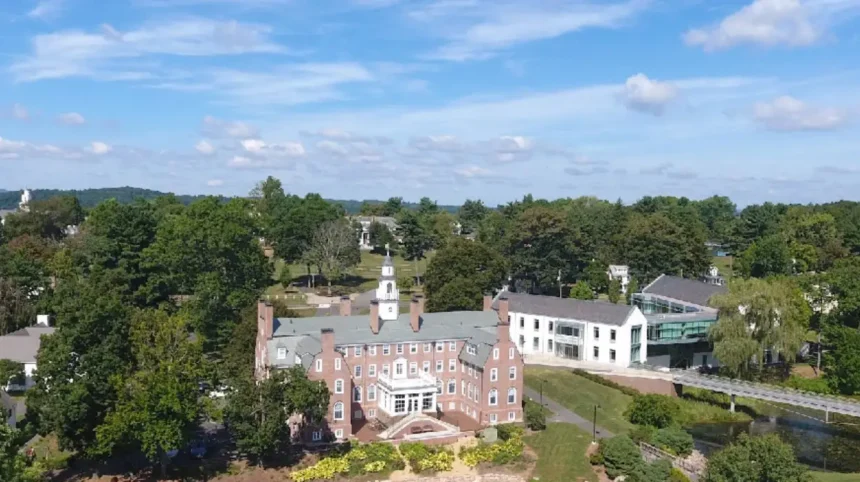
Choate Rosemary Hall is a private coeducational college preparatory boarding and day school located in Wallingford Connecticut United States. The institution serves students in grades 9 through 12 and offers a postgraduate program. Founded in 1890, the school operates on a 458-acre campus in the scenic New England town. Choate Rosemary Hall maintains a student enrollment of approximately 850 to 868 students with a student-teacher ratio of 7 to 1. The school combines rigorous academic preparation with comprehensive extracurricular programs designed to develop future leaders.
- How did Choate Rosemary Hall develop its historical legacy?
- What academic programs distinguish Choate Rosemary Hall from other boarding schools?
- What are the admission requirements for Choate Rosemary Hall?
- How much does attending Choate Rosemary Hall cost?
- What facilities and resources does the Wallingford campus provide?
- Who are notable alumni of Choate Rosemary Hall?
- What college matriculation outcomes do Choate students achieve?
- What extracurricular opportunities exist at Choate Rosemary Hall?
- How does residential life function at Choate Rosemary Hall?
- FAQs About Choate Rosemary Hall in Wallingford
- What is the acceptance rate at Choate Rosemary Hall and how competitive is admission?
- How much does it cost to attend Choate Rosemary Hall including tuition and fees?
- What are the signature academic programs offered at Choate Rosemary Hall?
- What percentage of Choate graduates attend Ivy League or top universities?
- What makes Choate Rosemary Hall different from other elite boarding schools?
The institution formed through the 1978 merger of two separate schools, The Choate School for boys and Rosemary Hall for girls. Mary Atwater Choate founded Rosemary Hall in 1890 as a college preparatory school for girls in Wallingford Connecticut. Six years later in 1896, her husband Judge William Gardner Choate established The Choate School for boys on an adjacent campus in the same town. The merger created one of the most prestigious college preparatory institutions in the United States. Choate Rosemary Hall holds memberships in the Eight Schools Association and the Ten Schools Admission Organization, both prestigious groups of elite boarding schools. The school motto Fidelitas et Integritas translates to Fidelity and Integrity in English, reflecting the institutional values that guide student development.
How did Choate Rosemary Hall develop its historical legacy?
The historical development of Choate Rosemary Hall reflects the evolution of American preparatory education over 136 years. Mary Atwater Choate, an alumna of Miss Porter’s School and great-granddaughter of Caleb Atwater, established Rosemary Hall with a vision for quality girls education. Caleb Atwater served as a Connecticut merchant who supplied American forces during the Revolutionary War from 1741 to 1832. William Gardner Choate, who lived from 1830 to 1921, served as a federal judge and brought his commitment to rigorous academic standards to The Choate School. Both founders emphasized classical academics, character development, and preparation for Ivy League universities.
Rosemary Hall relocated from Wallingford to Greenwich Connecticut in 1900 to expand its facilities while maintaining focus on liberal arts instruction for girls. Headmistress Caroline Ruutz-Rees led the school from 1900 to 1947, establishing academic traditions that continued for decades. The Choate School remained in Wallingford, growing into a prominent institution known for producing alumni in public service and business. The schools operated independently for more than seven decades before merging. The 1978 merger combined the strengths of both institutions, creating a coeducational environment that preserved the best traditions of each school. The unified institution adopted the name Choate Rosemary Hall and established its campus in Wallingford on the original Choate School grounds. This merger reflected broader trends in American education toward coeducation during the 1970s.
What academic programs distinguish Choate Rosemary Hall from other boarding schools?
Choate Rosemary Hall offers more than 300 elective and interdisciplinary courses ranging from astronomy and architecture to digital video and development economics. The curriculum includes advanced placement courses, with 68 students scoring 4 and 5 on AP exams in recent years. Approximately 73 percent of faculty members hold master’s degrees or higher, ensuring expert instruction across all disciplines. The school provides signature programs that allow students to pursue specialized multi-year concentrations in specific fields. These signature programs include the Advanced Robotics Program, Arabic and Middle Eastern Studies, Arts Concentration, Capstone Program, Environmental Immersion Program, Global Engagement, and the John F Kennedy Program in Government and Public Service.
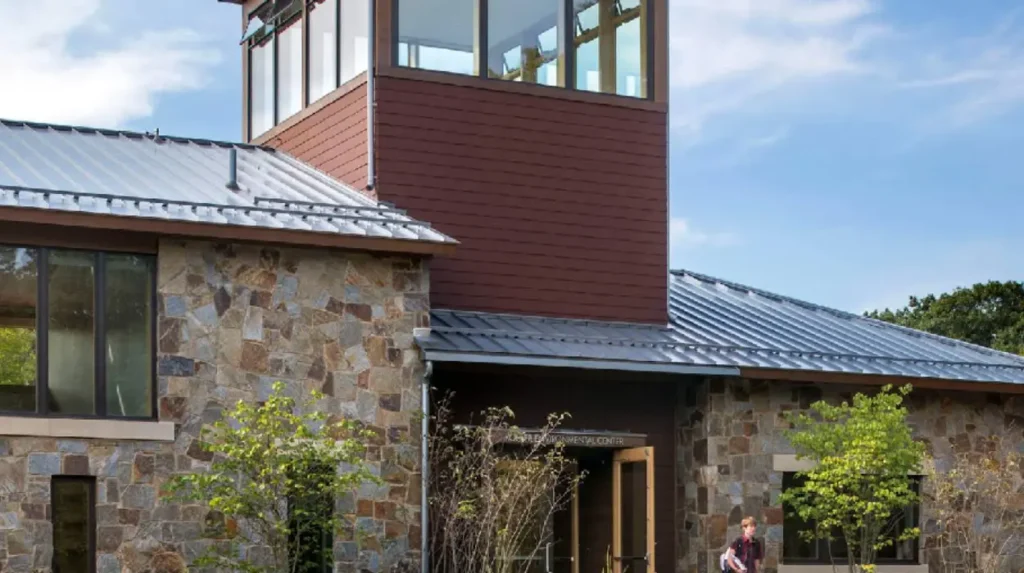
The Kohler Environmental Center hosts the year-long Environmental Immersion Program for 14 upperclassmen annually. This residential program operates on a separate campus located one mile from the main campus where students take courses exclusively related to environmental studies. Course offerings include nature photography, environmental literature, and sustainability science. The Science Research Program enables students to conduct advanced research projects under faculty mentorship. The Advanced Robotics Program features award-winning teams that compete nationally and internationally. The John F Kennedy 35 Program in Government and Public Service honors the school’s most famous alumnus, President John F Kennedy who graduated in 1935. Students in this program engage with political leaders, participate in government internships, and develop leadership skills for public service careers.
What are the admission requirements for Choate Rosemary Hall?
The admission process for Choate Rosemary Hall follows a holistic review approach that evaluates academic achievement, character, leadership potential, essays, and interviews. The application deadline occurs on January 15 for entry the following September. Required materials include the Gateway to Prep Schools Application, school transcripts from the current year and prior two years, and two to three teacher recommendations. Students must submit standardized test scores including SSAT or ISEE results, though the school does not mandate testing when scores do not accurately reflect academic ability. International students must provide TOEFL scores demonstrating English language proficiency.
The acceptance rate stands at approximately 16 percent, making Choate Rosemary Hall one of the most selective boarding schools in the United States. The school admits approximately 200 to 225 new students per year from an applicant pool exceeding 2500 candidates. Successful applicants typically score in the 85th percentile or higher on the SSAT. The selection process considers likelihood of success in campus life beyond academic metrics. Students with exceptional talents in performing arts, visual arts, athletics, science competitions, or service activities gain competitive advantages. Examples include world-class performers, Olympic-level athletes, award-winning science students who compete in international competitions, and students demonstrating dedicated engagement in social justice or environmental sustainability efforts. The school has produced five female Olympic medalist hockey players and students who represented the United States at the International Physics Olympiad Competition.
How much does attending Choate Rosemary Hall cost?
The tuition for Choate Rosemary Hall for the 2026-27 school year reaches $74,530 for boarding students and $54,990 for day students. The total fee typically includes tuition, boarding costs, student management fees, and other charges associated with the residential program. An additional technology fee of $1,000 applies to all students. These costs represent significant increases from previous years as the school continues investing in facilities, faculty, and programs. The school offers payment plans to help families manage costs including a two-payment plan splitting charges between July and November and a nine-month payment plan spreading payments from July through March with automatic bank deductions.
Choate Rosemary Hall commits to meeting 100 percent of demonstrated financial need for admitted students. The financial aid budget for the 2025-26 school year totaled $16.5 million with awards ranging from $1,000 to full tuition coverage. Approximately 35 percent of students receive need-based financial aid with the average aid grant covering 80 percent of tuition. The school encourages families who need financial assistance to apply regardless of income level. The robust financial aid program enables Choate to enroll talented students from diverse economic backgrounds independent of family financial circumstances. This commitment to accessibility ensures the school can admit the best possible students based on merit rather than ability to pay.
What facilities and resources does the Wallingford campus provide?
The Choate Rosemary Hall campus spans 458 acres in Wallingford Connecticut, featuring a blend of historic buildings and modern state-of-the-art facilities. The campus integrates seamlessly into the town center, creating an open campus environment where school boundaries blend with the surrounding community. The Lanphier Center for Mathematics and Computer Science, a LEED Gold-certified facility designed by Pelli Clarke Pelli Architects, opened in March 2015. This building houses all mathematics classes and features the first purpose-built innovation lab that serves as a catalyst for hands-on learning and collaboration. The facility supports the award-winning Robotics Team with dedicated workspace and equipment.
Colony Hall provides an auditorium with acoustics suitable for spoken word, amplified music, and symphonic performances. The west side includes a music classroom wing with a Recital Hall seating 100 people for rehearsals of major music ensembles. Athletic facilities support 24 interscholastic sports including archery, baseball, basketball, crew, cross country, diving, field hockey, football, golf, ice hockey, lacrosse, sailing, soccer, softball, squash, swimming, tennis, track and field, ultimate frisbee, volleyball, water polo, and wrestling. The school fields 83 interscholastic teams with exceptional programs in swimming, squash, and rowing supported by world-class facilities. The Kohler Environmental Center operates as a separate residential campus dedicated to environmental education. Students and faculty actively participate in community service in Wallingford, with the school serving as the town’s fifth largest employer.
Who are notable alumni of Choate Rosemary Hall?
Choate Rosemary Hall has produced more than 18,000 alumni who have achieved prominence across diverse fields including politics, business, entertainment, journalism, and athletics. The most famous alumnus is John F Kennedy, who graduated in 1935 and became the 35th President of the United States. Kennedy’s leadership during the Cold War and establishment of the Peace Corps marked significant contributions to American history. Adlai Stevenson, class of 1918, served as Governor of Illinois and ran for president twice as the Democratic nominee. These political leaders established a tradition of public service among Choate graduates.
Entertainment industry alumni include Glenn Close, class of 1965, an acclaimed actress with multiple Academy Award nominations for roles in films including Fatal Attraction and Dangerous Liaisons. Paul Giamatti, who graduated in 1985, became a distinguished actor known for both film and television work. Playwright Edward Albee from the class of 1946 won multiple Tony Awards and Pulitzer Prizes for dramatic works. Tom Brokaw earned recognition as a distinguished journalist and former anchor of NBC Nightly News, covering major historical events throughout his career. Athletic achievements include Angela Ruggiero from 1998 and Hilary Knight from 2007, both Olympic medalist hockey players. Chris Denorfia, class of 1998, played professional baseball in Major League Baseball. Victoria Nuland from 1979 served in senior diplomatic positions including Assistant Secretary of State. The alumni network of more than 18,000 graduates provides career guidance, mentorship, and networking opportunities through platforms including ChoateNexus.
What college matriculation outcomes do Choate students achieve?
Choate Rosemary Hall maintains a 100 percent graduation rate with 98 percent of graduates attending four-year colleges. The average SAT composite score reaches 1440 out of 1600 while the average ACT composite score stands at 33 out of 36. Approximately 17.89 percent of Choate graduates matriculate to Harvard, Yale, Princeton, Stanford, or MIT combined. About 21.27 percent attend top 25 ranked universities in the United States while 21.01 percent enroll in top 50 universities. These statistics demonstrate the academic preparation students receive and the strength of college counseling support.
The college counseling office provides individualized guidance throughout the application process beginning in the junior year. Students receive assistance with college selection, application strategy, essay development, and interview preparation. The school’s reputation among admissions officers at selective colleges provides advantages for Choate applicants. Strong relationships between college counselors and university admissions offices facilitate the placement process. The diversity of college destinations reflects varied student interests and goals rather than a narrow focus on Ivy League institutions. Students pursue undergraduate education at liberal arts colleges, research universities, specialized programs, and international institutions based on individual fit and academic interests.
What extracurricular opportunities exist at Choate Rosemary Hall?
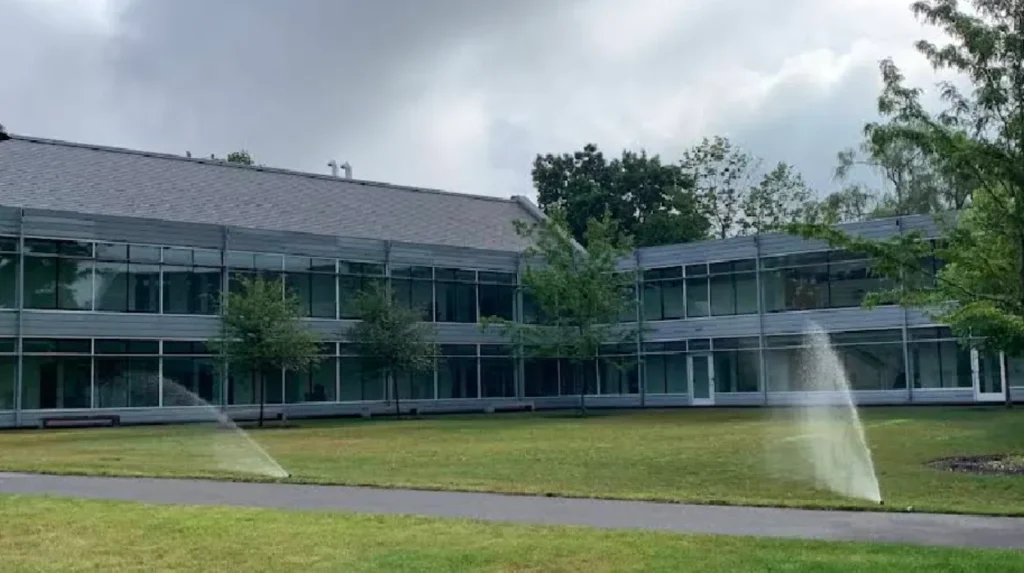
Students at Choate Rosemary Hall can participate in more than 120 clubs and organizations covering academic interests, cultural groups, community service, creative outlets, and special interests. The annual club fair at the start of each year introduces students to available organizations beyond the classroom. Examples include entrepreneurship clubs, performing arts groups, public speaking organizations, cultural affinity groups, and environmental activism clubs. The Choate News serves as the student newspaper providing journalism experience and coverage of campus events. The Brief functions as the school yearbook documenting each academic year.
Athletic participation reaches high levels with opportunities for beginners and experienced athletes across 24 sports programs. The school emphasizes skill development, sportsmanship, and teamwork in supportive environments regardless of prior experience level. Performing arts programs include theater productions, dance performances, musical ensembles, and visual arts exhibitions. Students can pursue interests in music through orchestra, jazz band, choir, and chamber groups that rehearse and perform throughout the year. Visual arts facilities support painting, sculpture, photography, printmaking, and digital media creation. Community service projects connect students with Wallingford organizations including the Spanish Community of Wallingford and local schools. Students gain leadership experience through student government, residential life positions, and peer mentoring programs that develop skills applicable beyond school.
How does residential life function at Choate Rosemary Hall?
The residential life program at Choate Rosemary Hall serves boarding students who live on the 458-acre campus throughout the academic year. Dormitories provide housing supervised by residential faculty members who live in apartments within student buildings. The residential structure creates a community where students develop independence, time management skills, and relationships with peers from diverse backgrounds. Weekend programming includes social events, cultural activities, athletic competitions, and optional trips to nearby cities and attractions. Day students can participate in weekend activities and are encouraged to maintain active campus presence beyond required class time.
The school operates 24 hours a day, seven days a week, creating an immersive educational environment where learning extends beyond classroom hours. Study halls provide structured time for academic work with faculty support available. Dining halls serve meals that accommodate dietary restrictions and preferences while providing social gathering spaces. Health services through Pratt Health Center address medical needs with professional staff available on campus. The residential community includes students from across the United States and international countries, creating cultural diversity that enriches the educational experience. Residential life staff organize orientation programs for new students, facilitate conflict resolution, and provide pastoral care supporting student wellbeing. The integration of residential and academic life distinguishes boarding school education from day school experiences, creating opportunities for deeper learning and personal growth.
FAQs About Choate Rosemary Hall in Wallingford
What is the acceptance rate at Choate Rosemary Hall and how competitive is admission?
Choate Rosemary Hall has an acceptance rate of approximately 16 percent, making it one of the most selective boarding schools in the United States. The school admits around 200 to 225 new students annually from an applicant pool exceeding 2500 candidates. Successful applicants typically score in the 85th percentile or higher on the SSAT. The holistic review process evaluates academic achievement, character, leadership potential, essays, interviews, and extracurricular talents beyond just test scores and grades.
How much does it cost to attend Choate Rosemary Hall including tuition and fees?
The tuition for Choate Rosemary Hall for the 2026-27 school year is $74,530 for boarding students and $54,990 for day students, plus a $1,000 technology fee. The school offers robust financial aid with a budget of $16.5 million annually, and approximately 35 percent of students receive need-based assistance. Choate commits to meeting 100 percent of demonstrated financial need with awards ranging from $1,000 to full tuition coverage. The average financial aid grant covers 80 percent of tuition costs for families who qualify.
What are the signature academic programs offered at Choate Rosemary Hall?
Choate Rosemary Hall offers specialized signature programs including the Advanced Robotics Program, Arabic and Middle Eastern Studies, Arts Concentration, Environmental Immersion Program, and the John F Kennedy Program in Government and Public Service. The Kohler Environmental Center hosts a unique year-long residential program for 14 upperclassmen who take only environment-related courses on a separate campus. The school provides more than 300 elective and interdisciplinary courses with approximately 73 percent of faculty holding master’s degrees or higher. These programs allow students to pursue multi-year concentrations in specific fields beyond the standard curriculum.
What percentage of Choate graduates attend Ivy League or top universities?
Approximately 17.89 percent of Choate Rosemary Hall graduates matriculate to Harvard, Yale, Princeton, Stanford, or MIT combined. About 21.27 percent attend top 25 ranked universities while 21.01 percent enroll in top 50 universities in the United States. The school maintains a 100 percent graduation rate with 98 percent of graduates attending four-year colleges. Average standardized test scores include an SAT of 1440 and ACT of 33, reflecting the strong academic preparation students receive.
What makes Choate Rosemary Hall different from other elite boarding schools?
Choate Rosemary Hall features an open campus integrated into downtown Wallingford Connecticut rather than an isolated or remote location like many peer schools. The 458-acre campus blends seamlessly with the town center, and the school serves as Wallingford’s fifth largest employer with strong community partnerships. Choate offers unique programs like the residential Kohler Environmental Center and maintains a less traditional atmosphere compared to other elite boarding schools. The school’s student-teacher ratio of 7 to 1 and diverse offerings across 120 clubs and 24 sports provide extensive opportunities for exploration and personal growth.