Magdalen College deer park is a historic, 18th–21st century managed meadow on the college’s northwest grounds that houses a herd of fallow deer, preserves rare floodplain plants, contains archaeological earthworks from the Civil War, and functions as shared academic, ecological, and ceremonial space.
- What is the Magdalen College deer park?
- Who introduced deer to the Grove and when?
- How large is the deer park and how many deer live there?
- What species of deer live in the park and what are their characteristics?
- Why is the deer park ecologically important?
- What are the historic features and archaeological remains in the Grove?
- How does seasonal management work for flowers and deer?
- What ceremonial and cultural roles does the Grove serve?
- How does the college balance public access, conservation, and privacy?
- What are notable ecological data and long‑term trends for the Grove?
- What governance, ownership, and legal protections apply to the deer park?
- How have human uses of the Grove changed over time?
- Are there research or educational opportunities linked to the deer park?
- What practical visitor guidance and rules apply to the Grove?
- What future issues and conservation priorities face the deer park?
- What primary sources and records document the Grove’s history?
What is the Magdalen College deer park?
The deer park is a large, tree‑lined meadow known as the Grove that sits northwest of Magdalen College and hosts a herd of fallow deer while providing floodplain habitat, historic earthworks, and public viewpoints.
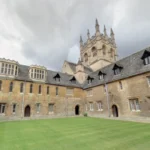
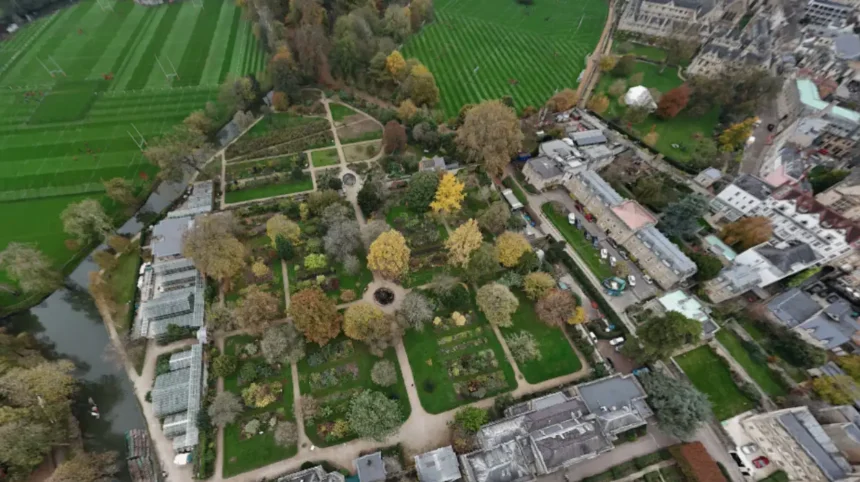
Magdalen’s deer park (called the Grove or Deer Grove) occupies most of the college’s northwest grounds between the New Building, Grove Quad, and Holywell Ford. The site is a grazed meadow and water meadow complex bounded by the River Cherwell and Addison’s Walk; it contains Bat Willow Meadow and the Fellows’ Garden to the east. The college manages the meadow as mixed-use grounds that combine a resident deer herd, seasonal management of wildflowers, and public sightlines to college architecture.
Who introduced deer to the Grove and when?
Deer were established in the college grounds by at least the early 18th century, with records showing deer cultivation by the 1720s and an ongoing herd since then.
Contemporary accounts and maps show the Grove evolving from formal gardens in the 16th century to parkland used for deer by the 18th and 19th centuries; by the 1720s deer were recorded on the site and the meadow gradually became primarily pastoral. The transition reflects broader English landscape trends that replaced walled gardens and bowling greens with naturalistic parkland during the 17th–18th centuries.
How large is the deer park and how many deer live there?
The Grove is part of Magdalen’s extensive grounds (the college holds roughly 100 acres including the Grove) and the herd typically numbers around 50–70 fallow deer depending on season and management.
Magdalen College’s overall estate covers about 100 acres that include the Grove, water meadows, and sports grounds; the Grove itself forms the major northwestern meadow visible from New Building and Grove Quad. Photographic and visitor reports place the herd at approximately 60 deer in peak months, with the population varying by births, transfers, and seasonal movement across the college meadows.
What species of deer live in the park and what are their characteristics?
The herd consists primarily of fallow deer (Dama dama), a medium‑sized European cervid with palmate antlers on males and seasonal breeding and fawning cycles in spring and summer.
Fallow deer are common in UK parkland and are characterized by a shoulder height around 70–100 cm; males grow palmate (broad, flattened) antlers annually and rut in autumn, with fawns born in spring and early summer. Magdalen’s herd is managed to reflect animal welfare standards and to avoid overgrazing on the meadows that host protected flora such as snake’s‑head fritillary (Fritillaria meleagris).
Why is the deer park ecologically important?
The Grove provides floodplain meadow habitat that supports rare plants (snake’s‑head fritillary), pollinators, and seasonally flooded hydrology that sustains biodiversity in Oxford’s riverscape.
The adjacent water meadow floods in wet winters, a process that maintains the unique wet‑grassland conditions required for Fritillaria meleagris, a rare bulb that has been recorded in the water meadow since c.1785. The combination of managed grazing by deer and seasonal flooding preserves plant community diversity and supports insect and bird populations associated with traditional haymeadow ecosystems.
What are the historic features and archaeological remains in the Grove?
The Grove contains earthworks and structural traces from the English Civil War, 16th–19th century garden layouts, and later Victorian and 20th‑century landscape changes.
Maps from 1578 record the Grove as enclosed gardens, tree avenues, an orchard, and a fishpond. During the Civil War (1642–1645) the Grove hosted Royalist ordnance and workshops; visible earthworks connected with Dover’s Speare bastion and other defensive works remain detectable as landscape features. Later landscaping in the 18th–19th centuries turned the space into parkland, and many large trees were lost to Dutch elm disease in the 1970s, altering the canopy structure.
How does seasonal management work for flowers and deer?
Magdalen rotates meadow use: spring displays of snake’s‑head fritillary are left to flower, after which the deer herd moves into that meadow for summer and autumn grazing.
The college allows the fritillary to flower on Addison’s Walk water meadow from early spring; once flowering ends the herd is moved into the meadow for grazing during summer and autumn to reduce scrub encroachment and maintain open sward structure. Winter and early spring often house the deer within the Grove proper, and managers adjust grazing intensity to balance plant conservation, deer welfare, and visitor access.
What ceremonial and cultural roles does the Grove serve?
The Grove functions as a ceremonial backdrop, part of May Morning sightlines, a setting for college events, and a named landscape feature linked to Magdalen’s identity.
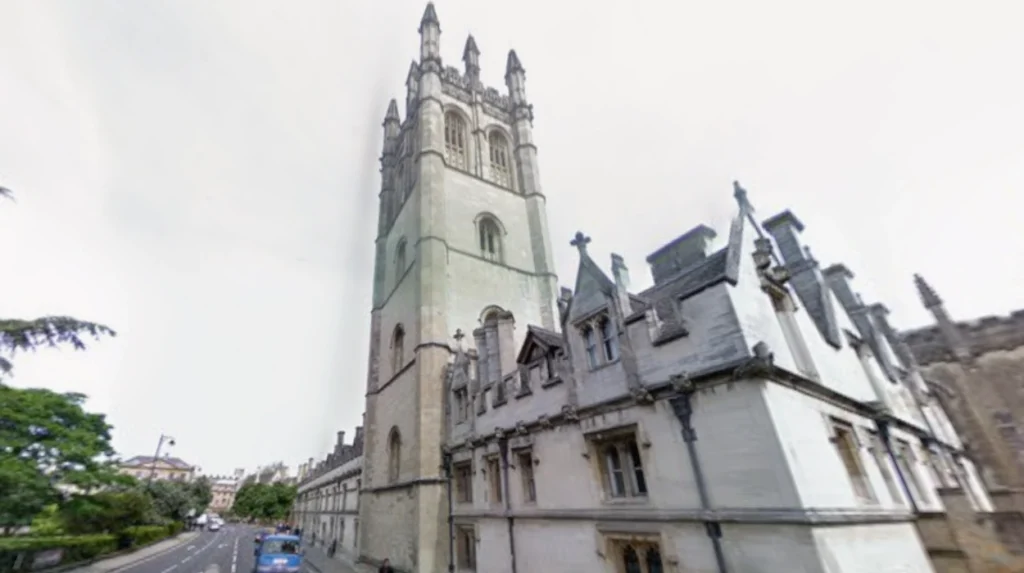
Magdalen Tower and the surrounding grounds form the core of May Morning traditions; the Grove provides visual green space and routes (Addison’s Walk, Holywell Ford) used by students, fellows, and visitors. The college commissioned artworks such as Mark Wallinger’s 10‑metre sculpture “Y” in Bat Willow Meadow for the college’s 550th anniversary, embedding contemporary art into the historic landscape.
How does the college balance public access, conservation, and privacy?
Magdalen provides controlled public views into the Grove from designated paths and archways while the college maintains private areas, scheduled visiting hours, and seasonal restrictions to protect habitats and residents.
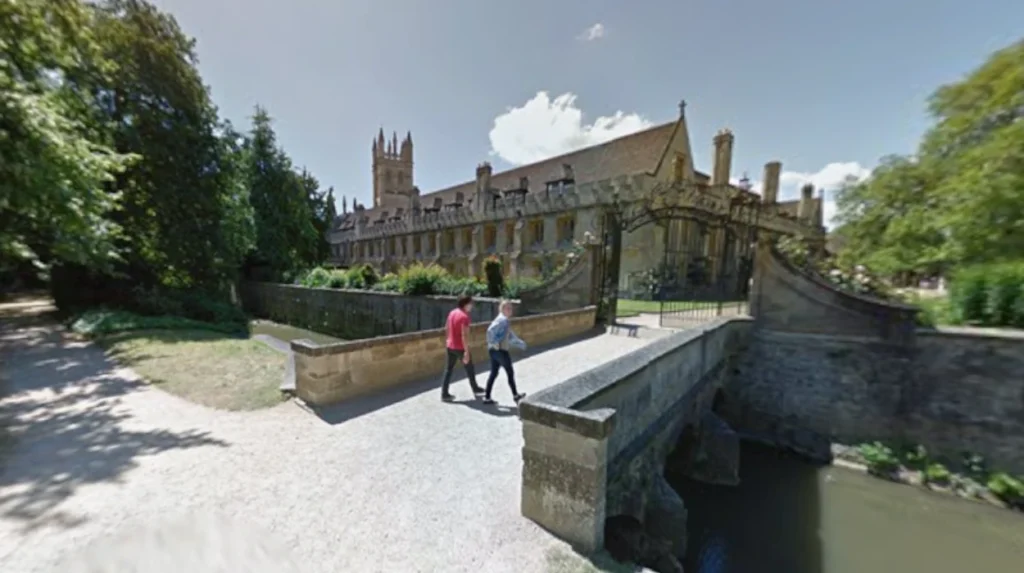
Visitors can view the Grove and deer from the archway in New Building, the path between New Building and Grove Quad, and along Addison’s Walk; these access points are intentionally sited to preserve the Fellows’ Garden and private college spaces. The college sets visiting times and entry conditions that integrate conservation objectives (protecting fritillary blooms and nesting birds) with educational and tourism uses.
What are notable ecological data and long‑term trends for the Grove?
Long‑term records show persistent fritillary presence since c.1785, tree losses in the 1970s due to Dutch elm disease, and ongoing meadow management to maintain species diversity in floodplain conditions.
Historical botanical records document Fritillaria meleagris in the water meadow from c.1785, establishing long‑term continuity for that rare plant population. Landscape change records cite significant tree loss from Dutch elm disease in the 1970s, which changed canopy cover and required replanting and willow management; the willows were felled and replanted in recent decades, and some wood was recycled into cricket bats. These trends show adaptive management responding to disease, hydrology, and biodiversity goals.
What governance, ownership, and legal protections apply to the deer park?
The Grove is college‑owned land managed by Magdalen College under university governance, subject to UK wildlife, animal‑welfare, and heritage laws that guide habitat protection and historic‑site conservation.
Magdalen College owns and manages the Grove as part of its private estate and operates it under statutory obligations for animal welfare (for the deer), conservation of protected species and habitats (where applicable), and preservation of listed buildings and archaeological remains visible across the college grounds. Management practices align with best‑practice conservation for floodplain meadows and with obligations to protect scheduled or listed features within college property.
How have human uses of the Grove changed over time?
The Grove transformed from 16th‑century formal gardens and orchards to Civil War military use, then to 18th–19th century parkland dedicated to deer, and 20th–21st century conservation and academic recreation.
In the 16th century the Grove contained formal enclosed gardens, tree avenues, an orchard, and a fish pond; by 1630 a bowling green had replaced the orchard. During 1642–1645 the Grove served Royalist military purposes including forges and ordnance; after the Civil War it gradually converted to parkland with deer, culminating in the 18th–19th century deer cultivation noted by college sources. Twentieth‑century pressures—disease, urban expansion, and recreational demand—shifted management toward conservation, art commissions, and controlled public use.
Are there research or educational opportunities linked to the deer park?
The Grove offers on‑site research potential in ecology, hydrology, archaeology, and landscape history for college researchers and external academics, and supports teaching via guided walks and specimen records.
The deer park’s long botanical records (fritillary observations since c.1785), floodplain hydrology, Civil War earthworks, and continuing grazing regime create datasets for ecological monitoring, historical landscape research, and student fieldwork. Magdalen’s ownership of nearby assets (e.g., the Oxford Science Park and college laboratories historically) and its academic fellows provide institutional capacity for collaborative projects that study meadow ecology, deer population dynamics, and heritage management.
What practical visitor guidance and rules apply to the Grove?
Visitors should observe college opening hours, stay on designated paths (Addison’s Walk, viewing archways), avoid disturbing deer and fritillary blooms, and follow posted signs for seasonal restrictions.
Magdalen sets visiting times and entry conditions; access to interior quads and some gardens is restricted to college members and paying visitors during posted hours, while Addison’s Walk and externally visible viewpoints provide public access without entering private spaces. Respect for nesting birds, protected plants, and deer welfare requires that dogs are controlled or excluded and that litter and off‑path trampling are avoided.
What future issues and conservation priorities face the deer park?
Priority issues include climate‑driven flood regime changes, invasive species and tree disease management, deer population control to prevent overgrazing, and maintaining historic features while allowing academic and public use.
Climate change alters flood timing and intensity, affecting meadow plant phenology for species like Fritillaria meleagris and requiring adaptive hydrological management. Ongoing threats include tree pathogens (e.g., honey fungus historically and Dutch elm disease in the 1970s) and invasive plant species that could alter meadow composition; managers must balance deer numbers to avoid overgrazing and soil compaction while preserving open habitats and archaeological features.
What primary sources and records document the Grove’s history?
Primary documentation includes 16th–18th century maps and botanical records, college archives detailing Civil War use and landscaping, visitor guides, and contemporary conservation reports held by Magdalen and regional heritage bodies.
Magdalen’s archive and published college histories record the Grove’s change from formal gardens to deer park; 1578 maps show early garden layouts, and college records note Civil War fortifications and later landscape shifts. Visitor guides and institutional webpages summarize the Grove for the public and reflect ongoing stewardship and access arrangements.
Illustration: view the Grove from New Building archways to observe deer grazing and floodplain layout during spring and summer; the water meadow hosts fritillary displays before deer grazing.
Sources: Magdalen College institutional descriptions and grounds history; college grounds and visitor guides; long‑form institutional history and Wikipedia summary of Magdalen College and its Grove.