Modern Art Oxford is a publicly funded, non-collecting contemporary art gallery located at 30 Pembroke Street, Oxford, England. Founded in 1965, it draws over 100,000 visitors annually and operates as a registered charity, supported primarily by Arts Council England and Oxford City Council.
- What Are the Most Defining Modern Art Oxford Exhibit Highlights From Its History?
- What Types of Exhibitions Does Modern Art Oxford Currently Present?
- Which Artists and Themes Define the Modern Art Oxford Exhibit Programme in 2025?
- How Does Modern Art Oxford’s Learning Programme Support Its Exhibition Highlights?
- What Is the Future Significance of Modern Art Oxford Within the UK Art Landscape?
- FAQs About Modern Art Oxford Exhibit
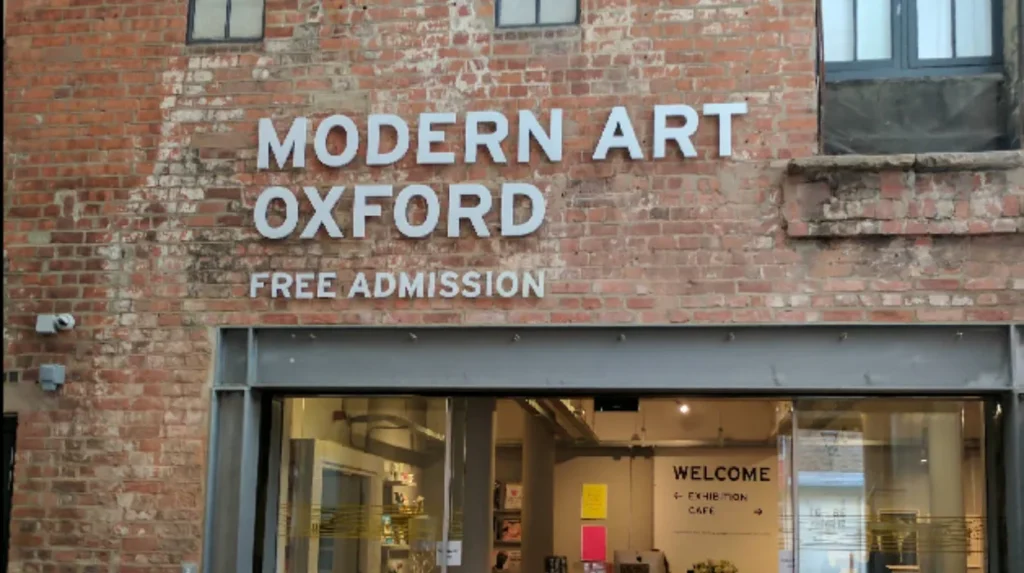
The gallery was originally established as The Museum of Modern Art, Oxford in 1965. It was renamed Modern Art Oxford in 2002 to better reflect its focus on temporary, evolving exhibitions rather than a permanent collection. The building occupies a converted Victorian brewery on Pembroke Street, situated in Oxford city centre, less than half a mile from Gloucester Green Bus Station and just over half a mile from Oxford’s mainline rail station.
Modern Art Oxford occupies over 500 square metres of gallery space. These areas are distributed across multiple floors and configured to accommodate large-scale international shows, solo presentations, experimental project rooms, and community exhibitions. Unlike national institutions with permanent collections, the gallery maintains a programme driven entirely by temporary exhibitions, meaning the visitor experience changes multiple times each year.
The gallery’s significance within the UK contemporary art sector is documented through six decades of international programming. It has hosted first British solo exhibitions by major artists including Tracey Emin, Marina Abramovic, and Jenny Saville. It has also given early platform to internationally recognised figures before their wider institutional recognition, which has established its reputation as a forward-looking and artistically rigorous venue.
Funding from Arts Council England enables the majority of ground floor programming to remain free to visitors. Ticketed exhibitions on upper floors are priced accessibly, with current rates at 9.50 GBP standard and 7.00 GBP concession as of 2025. The gallery also provides free activity resources, backpacks, and family exploration materials at the welcome desk for children and first-time visitors.
The gallery has been led by Director Paul Hobson since September 2013. Previous directors include Nicholas Serota (1973 to 1976), who later led Tate for 28 years, and David Elliott (1976 to 1996), who expanded the programme to include photography, architecture, graphic design, and artists from Africa, Asia, and the Soviet Union. These directorial periods collectively shaped the institution into one of England’s most respected non-metropolitan contemporary art spaces.
What Are the Most Defining Modern Art Oxford Exhibit Highlights From Its History?
Modern Art Oxford exhibit highlights span six decades and include landmark solo shows by Richard Long (1971), Joseph Beuys (1974), Sol LeWitt (1973), Yoko Ono (1997), Marina Abramovic (1995), and Tracey Emin (2002), each representing pivotal moments in British and international contemporary art history.
The gallery’s 1971 exhibition by Richard Long, one of Britain’s foremost land artists, placed Modern Art Oxford among the first public institutions to present his work in a formal gallery setting. Sol LeWitt’s 1973 exhibition introduced Conceptual art to Oxford audiences at a time when the movement had minimal institutional support in the United Kingdom. These early programming decisions established the gallery’s identity as a risk-taking venue willing to engage with unproven artistic movements.
Tracey Emin’s 2002 exhibition, titled “This Is Another Place”, served as both the reopening of the gallery after renovation and Emin’s first British solo exhibition since 1997. The show included drawings, etchings, film, neon text works, and large-scale sculpture, most notably a wooden pier piece titled “Knowing My Enemy”. This exhibition generated significant national press coverage and confirmed the gallery’s role as a leading platform for British contemporary artists.
The 2003 exhibition by Jake and Dinos Chapman, “The Rape of Creativity”, drew national attention and critical debate. The artists purchased an original mint collection of 80 Francisco de Goya prints and systematically altered them. The exhibition was reviewed by the BBC and The Daily Telegraph and is cited as a defining example of the gallery’s willingness to engage with intellectually provocative and legally contested work.
Lubaina Himid’s 2017 exhibition “Invisible Strategies” at Modern Art Oxford was one of the most significant presentations of her career prior to winning the Turner Prize that same year. The show brought together paintings from the 1980s to 2017, alongside sculptures, ceramics, and works on paper. This exhibition is directly associated with the renewed critical recognition of Himid’s practice at a national level.
Ruth Asawa’s 2022 exhibition introduced the wire sculpture and public art pioneer to a broad UK audience. Asawa, who worked extensively in California from the 1950s onwards, had limited prior institutional exposure in the United Kingdom. The Modern Art Oxford presentation drew together her wire-hanging sculptures, watercolours, and drawings, and was accompanied by a major catalogue co-published with Moderna Museet in Stockholm, Sweden.
Marina Abramovic returned to Modern Art Oxford for a major presentation in 2022 to 2023, her first engagement with the gallery since her 1995 exhibition. The return reflects the institution’s capacity for long-term artist relationships and its continued ability to present performance and durational art at institutional scale.
What Types of Exhibitions Does Modern Art Oxford Currently Present?
Modern Art Oxford presents four primary exhibition formats: major ticketed solo or thematic shows in upper galleries, free ground-floor presentations, community co-curated projects, and interdisciplinary residency-based exhibitions combining video, performance, painting, and installation across multiple art forms.
The gallery’s upper-floor programme focuses on major solo exhibitions by established and emerging international artists. Current examples include Suzanne Treister’s “Prophetic Dreaming”, which explores the intersection of technology and future narratives through fantastical visual systems, and Josh Kline’s “Freedom”, a dystopian installation addressing the erosion of privacy and civil liberties in 21st-century democratic societies.
The ground floor gallery, which is free to enter, provides access to shorter-run presentations, project-space exhibitions, and community-engaged works. These shows frequently result from regional open calls and collaborations with institutions such as Oxford Brookes University. The 2022 exhibition “Adapt Transform”, presented across Modern Art Oxford and the Glass Tank Gallery at Oxford Brookes University, exemplified this cross-institutional collaborative model.
Community co-curation has become a structural feature of the programme since 2020. Exhibitions such as “Adapt Transform” were developed by volunteer curatorial groups working directly with responding artists. This model integrates local community knowledge into institutional exhibition development and positions non-professional voices within formal curation processes.
Interdisciplinary programming remains a consistent thread throughout the gallery’s annual calendar. Carey Young’s 2023 exhibition “Appearance” used video installation and photography to examine gender and systemic power in legal institutions, incorporating a slow-moving portrait of female judges and earlier works exploring cinema, visual culture, and the female body in relation to law and industry.
The Creative Studio operates continuously alongside the exhibition programme and offers sensory play sessions for young children, adult evening classes, and structured creative workshops. The cafe, designed by British artist Emma Hart as an integrated artwork titled “Club Together”, serves food using local ingredients within an immersive colour and light environment, making it one of the few gallery catering spaces in the UK to function as an artwork in its own right.
Which Artists and Themes Define the Modern Art Oxford Exhibit Programme in 2025?
In 2025, Modern Art Oxford exhibit highlights centre on technology, ecology, identity, and community futures. Key artists include Suzanne Treister, whose practice merges speculative science with visual systems, and the EMPRes Collective, who explore convergences between electronic music, visual art, and live performance.
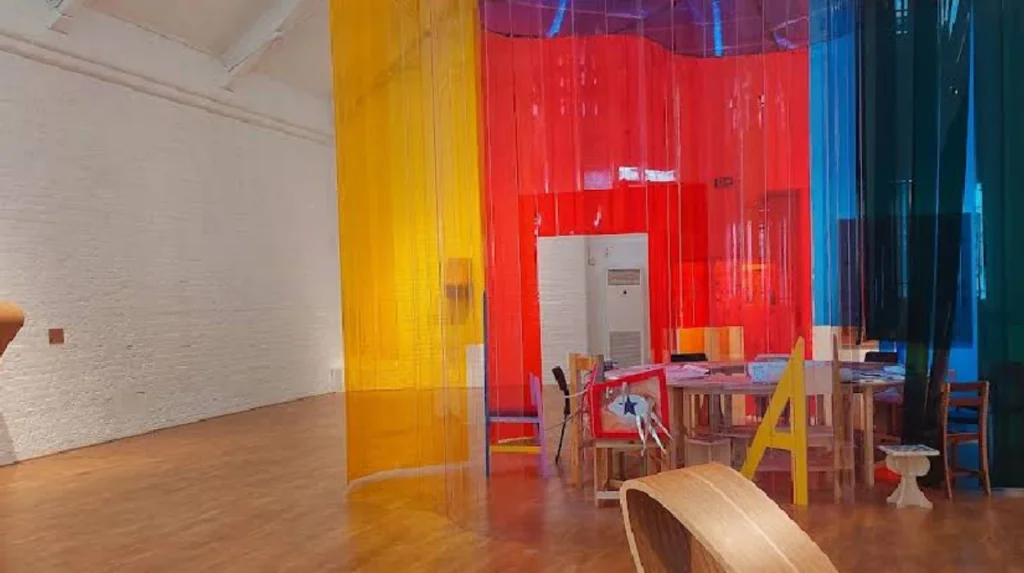
Suzanne Treister is a British artist whose multi-decade practice uses visual diagrams, alternative knowledge frameworks, and narrative fiction to examine how technology shapes human consciousness and political futures. Her 2025 exhibition at Modern Art Oxford, “Prophetic Dreaming”, is part of a broader body of work examining surveillance technology, predictive systems, and the relationship between artificial intelligence and human imagination.
The EMPRes Collective, whose work sits at the intersection of sound composition and electronic performance, presented a programme of showcases and workshops at Modern Art Oxford in 2025. Their presentations explore non-linear relationships between sound and visual experience and connect with a wider institutional interest in live, time-based, and process-driven art forms.
A collaborative exhibition exploring connections between art, science, and ecology was announced as part of the 2025 programme. This reflects growing institutional attention to environmental themes in contemporary visual culture and follows broader international trends in which major publicly funded galleries have increased programming devoted to climate-related artistic practice.
The gallery’s 60th anniversary in 2025 prompted a dedicated programme of retrospective and celebratory events. These include a special After Hours Book Club marking the anniversary, career talks from gallery staff across multiple departments, and a season-long series of events drawing on the gallery’s archive, which holds materials documenting all exhibitions and education programmes since 1966.
Identity-focused programming continues to occupy a central part of the exhibition calendar. This includes works examining gender, race, and post-colonial power structures, themes that have shaped the gallery’s programming since at least the 1980s. The continuity of this commitment across six successive directorships distinguishes Modern Art Oxford from many of its regional contemporaries in the English publicly funded arts sector.
How Does Modern Art Oxford’s Learning Programme Support Its Exhibition Highlights?
Modern Art Oxford’s learning programme directly connects to its exhibition content through structured workshops, school visits, artist talks, and participatory events. It reaches thousands of people annually across Oxfordshire, with specific provision for children, young people, adults, and visitors with accessibility requirements.
Creative learning is identified as a central pillar of the institution’s public mission. Every major exhibition is accompanied by a corresponding learning strand. Schools from across Oxfordshire visit the gallery through a dedicated education programme that aligns with national curriculum frameworks. Artist talks scheduled within each exhibition period provide direct public access to the conceptual and biographical contexts behind each show.
The Studio offers drop-in sensory sessions under the Make Play banner, targeting families with children under five. These sessions rotate themes weekly in response to current gallery exhibitions. Activities have included exhibition design, loose-parts construction, and light and shadow exploration linked to specific works on display. Participation does not require advance booking and remains free of charge for all attendees.
Adult programmes include evening classes, After Hours events, and special project-based workshops linked to current exhibitions. The Book Club series, relaunched as part of the 60th anniversary programme in 2025, brings together reading, discussion, and direct engagement with exhibition themes in a structured social format. Evening access hours on selected days extend the gallery’s reach to working adults unavailable during standard daytime opening hours.
Accessibility provision includes step-free access throughout the building, wheelchair-accessible galleries, accessible audio guides, hearing loops, baby-changing facilities, and a guide-dog-friendly environment throughout all spaces. The gallery publishes a step-by-step visual visitor guide online to assist visitors with sensory or cognitive needs. These measures reflect a consistent institutional commitment to welcoming all audiences regardless of physical, sensory, or economic circumstance.
What Is the Future Significance of Modern Art Oxford Within the UK Art Landscape?
Modern Art Oxford holds a distinctive position within the UK’s publicly funded gallery network. As a non-collecting institution with a 60-year track record of introducing internationally significant art to non-metropolitan UK audiences, it functions as a critical bridge between London-centred art discourse and regional civic cultural life.
The gallery’s charitable model, dependent on Arts Council England funding alongside Oxford City Council support and private donations, makes it representative of the publicly funded arts ecosystem in England. Its continued operation has enabled free admission for most programming, sustaining accessibility as a practical policy rather than a theoretical aspiration. This model is increasingly relevant as debates around arts funding and civic cultural investment intensify nationally.
The gallery’s location in Oxford creates structural connections to one of the world’s foremost university cities, providing proximity to academic research communities, student audiences, and international visiting scholars. These relationships have contributed to collaborative commissions, scholarly exhibition catalogues, and cross-institutional partnerships that extend exhibition reach well beyond the physical gallery walls.
Digital programming, expanded significantly since 2020, has extended the gallery’s reach to audiences unable to visit in person. Online studio sessions, digital exhibition resources, and active e-newsletter engagement form a consistent part of the institution’s public programme. As of 2025, the gallery continues to invest in digital infrastructure as a stated priority within its broader commitment to innovation in public engagement.
The 60th anniversary in 2025 represents a moment for the institution to consolidate its identity and articulate its next strategic direction. Programming decisions made during this period, including which emerging and mid-career artists receive major institutional platform, will shape the gallery’s critical reputation for the following decade. The anniversary season demonstrates the gallery’s dual function as both a historical record of six decades of contemporary art and an active, forward-facing site of current cultural production.
FAQs About Modern Art Oxford Exhibit
Is Modern Art Oxford Worth Visiting If You Are Not an Art Expert?
Yes, Modern Art Oxford is designed to be accessible for both regular gallery visitors and complete beginners. Many exhibitions include interactive installations, video works, workshops, and free interpretation materials that explain the themes in simple ways. Visitors on Reddit and Quora often ask whether contemporary art galleries feel “too academic,” but Modern Art Oxford is widely considered welcoming, especially because of its free ground-floor exhibitions and family-friendly activities.
What Are the Best Exhibitions Ever Held at Modern Art Oxford?
Some of the gallery’s most discussed exhibitions include shows by Tracey Emin, Marina Abramovic, Yoko Ono, and Richard Long. Visitors and art communities frequently mention the Chapman brothers’ controversial “The Rape of Creativity” exhibition and Lubaina Himid’s “Invisible Strategies” as defining moments in the gallery’s history. These exhibitions helped establish the venue as one of the UK’s most experimental contemporary art spaces outside London.
How Much Time Do You Need To Explore Modern Art Oxford?
Most visitors spend between 1.5 and 3 hours exploring the exhibitions, café, and creative spaces inside the gallery. Because the exhibitions change throughout the year, some people return multiple times annually rather than treating it as a one-time visit. Quora users often ask whether it can fit into a day trip itinerary, and the answer is yes, especially since the gallery sits close to central Oxford landmarks and transport links.
Why Does Modern Art Oxford Not Have a Permanent Collection?
Unlike traditional museums, Modern Art Oxford focuses entirely on temporary and evolving exhibitions instead of maintaining a permanent collection. This allows the gallery to continuously showcase new artists, experimental ideas, and current social themes such as technology, identity, ecology, and politics. Many Reddit discussions highlight this as one of the gallery’s strengths because every visit feels different and reflects contemporary cultural conversations.
Is Modern Art Oxford Good for Families and Children?
Yes, the gallery actively supports families through sensory play sessions, creative workshops, activity backpacks, and free educational resources. The Creative Studio regularly hosts hands-on sessions linked to current exhibitions, making contemporary art more engaging for children and first-time visitors. Parents on forums frequently recommend the gallery because it combines interactive learning with accessible public spaces and step-free facilities.