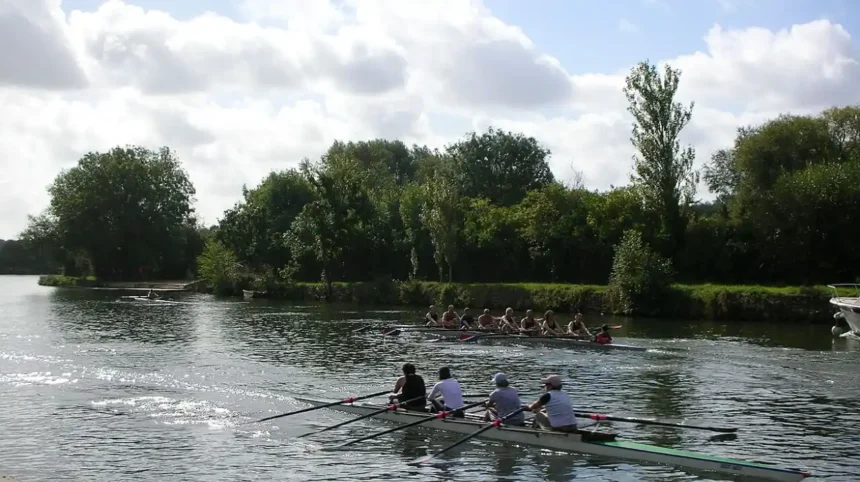
Punting involves a person standing on the deck of a flat-bottomed boat and pushing against the riverbed using a long pole. Rowing requires a seated person to pull oars through the water while facing the stern to generate momentum.
- How did the historical origins of punting and rowing diverge?
- What are the specific equipment requirements for punting vs. rowing?
- Which method offers better efficiency for speed and distance?
- How do the physical demands of punting vs. rowing compare?
- What are the environmental impacts of punting and rowing?
- How does the steering mechanism work in punting vs. rowing?
- What are the modern applications and competitive formats for both?
Punting relies on a physical connection with the ground beneath the water. The punter stands at the rear of the vessel, known as the till, or the front, depending on regional tradition. By applying pressure to the pole, the punter moves the craft forward in a straight line. The pole acts as both the engine and the rudder. In contrast, rowing uses the water itself as the medium of resistance. Rowers sit on fixed or sliding seats. They use wooden or carbon fiber oars to lever the boat across the surface. Rowing is designed for efficiency and speed over long distances. Punting is better suited for shallow, slow-moving waters where the pole can reach the solid bottom easily.
The design of the craft differs significantly between the two methods. A punt is a square-ended boat with a flat bottom and no keel. This design allows the boat to operate in water as shallow as 10 centimeters. Rowing boats, or shells, are often narrow and pointed at both ends. They feature a curved hull and sometimes a keel to improve tracking and stability. Rowers use oarlocks to secure their tools to the side of the boat. Punters do not use mechanical pivots. They hold the pole freely in their hands. This lack of a fixed point requires the punter to have a superior sense of balance. Rowing generates power through the legs, back, and arms. Punting focuses the physical strain on the core and the upper body during the downward push.
How did the historical origins of punting and rowing diverge?
Rowing originated as a primary means of transport and warfare in ancient civilizations like Egypt and Greece. Punting developed later as a practical method for moving cargo and livestock across shallow marshlands and fens in rural European regions.
Historical records indicate that rowing was a vital technology for maritime expansion. The Greeks used triremes, which were vessels powered by hundreds of rowers, to dominate the Mediterranean Sea. These ships moved independently of wind conditions. Rowing transitioned from a utility into a competitive sport in the 18th century on the River Thames. The first professional rowing races involved watermen who transported passengers across London. Punting has a more localized history rooted in agriculture and trade. In the 19th century, punts were used by fowlers and fishermen in the English Fens. These laborers used the flat-bottomed design to navigate reed beds where traditional oars would get tangled or hit the bottom.
The cultural shift of punting into a leisure activity occurred at the universities of Oxford and Cambridge. Students began using the workboats for recreation around the year 1860. This led to the development of the pleasure punt, which included comfortable seating and cushions for passengers. Rowing followed a different social trajectory. It became the foundation for the modern Olympic Games and international regattas. The Royal Henley Regatta, established in 1839, remains a premier event for the rowing community. Punting remains popular in specific locations such as Christchurch, New Zealand, and Tübingen, Germany. While rowing became a global athletic discipline, punting remained a symbol of academic and regional heritage. These two traditions represent different approaches to interacting with inland waterways and coastal environments.
What are the specific equipment requirements for punting vs. rowing?
Punting requires a heavy pole made of wood or aluminum and a flat-bottomed boat without a rudder. Rowing requires oars, oarlocks, and a boat equipped with a sliding seat or a fixed bench to facilitate the rowing stroke.
The punt pole, often called a quant in certain regions, typically measures between 4 and 5 meters in length. It features a metal shoe at the bottom to prevent the wood from splitting when it strikes the riverbed. The boat itself is constructed from wood like teak or mahogany, or modern materials like fiberglass. It lacks any mechanical steering devices. The punter must twist the pole at the end of a stroke to steer. Rowing equipment is more complex and specialized for speed. Oars are measured precisely to match the size of the boat and the strength of the athlete. These oars consist of a handle, a shaft, and a blade. The blade is the flat part that enters the water.
Rowing boats are categorized into two types: sculling and sweeping. In sculling, each person holds two oars, one in each hand. In sweeping, each person holds a single oar with both hands. This necessitates different configurations of oarlocks and riggers. Riggers are the metal frames that extend from the side of the boat to hold the oars. Punting does not use any such frames. The simplicity of punting gear makes it easier to maintain but more difficult to master. Rowing gear is designed for ergonomic efficiency. Modern rowing shells use carbon fiber to reduce weight and increase hull stiffness. This allows for maximum power transfer from the rower to the water. Punting equipment remains heavy and stable to support the weight of a standing operator.
Which method offers better efficiency for speed and distance?

Rowing is significantly more efficient for achieving high speeds and covering long distances on open water. Punting is efficient only in shallow, calm environments where the operator can maintain constant contact with the solid riverbed.
The physics of rowing allow for a continuous application of force through the water. A trained rower can propel a shell at speeds exceeding 20 kilometers per hour. The use of the sliding seat allows the rower to utilize the large muscle groups in the legs. This mechanical advantage is why rowing is the preferred method for competitive racing and long-distance travel. Punting is a slower process. The maximum speed of a punt is limited by the time it takes to recover the pole. The operator must pull the pole out of the mud and bring it back to the front of the boat. This recovery phase creates a pause in propulsion that prevents high speeds.
Punting efficiency drops to zero in deep water. If the pole cannot reach the bottom, the boat cannot move forward. Rowing remains effective in deep rivers, lakes, and the ocean. However, rowing is inefficient in very shallow water. Oars require a certain depth to submerge the blade fully without hitting rocks or silt. If an oar hits the bottom, it can cause the rower to lose control, a mistake known as catching a crab. Punting excels in these environments. It is the only viable method for navigating narrow, overgrown channels. The direct push against the earth provides a 1:1 transfer of energy. This makes punting the most efficient choice for heavy loads in marshy areas where rowing is impossible.
How do the physical demands of punting vs. rowing compare?
Rowing is a high-intensity cardiovascular workout that engages 86 percent of the body’s muscles in every stroke. Punting is a low-impact activity that emphasizes balance, core stability, and upper body endurance during the pushing motion.
Rowing is recognized as one of the most demanding physical sports. It requires a combination of aerobic capacity and anaerobic power. The rowing stroke consists of four phases: the catch, the drive, the finish, and the recovery. During the drive, the rower pushes with their legs and pulls with their arms simultaneously. This creates a massive load on the quadriceps, hamstrings, and latissimus dorsi. Heart rates during a rowing race often reach their maximum limits. Punting is less taxing on the cardiovascular system. It is often described as a graceful or leisurely activity. However, it requires a strong core to maintain balance on a moving platform. The punter must manage the weight of the heavy pole constantly.
The risk of injury differs between the two disciplines. Rowers often suffer from lower back pain, rib stress fractures, and tendonitis in the wrists. These injuries result from the repetitive nature of the high-force stroke. Punting injuries are less common and usually involve muscle strains in the shoulders or arms. A punter is also at risk of falling overboard if the pole gets stuck in deep mud. This is a common occurrence for beginners who hold onto the pole for too long. Rowing is a seated sport, which eliminates the risk of falling but increases the pressure on the spine. Punting is a weight-bearing activity, which can help with bone density in the legs and core. Both activities require coordination, but rowing focuses on synchronization while punting focuses on individual stability.
What are the environmental impacts of punting and rowing?
Punting and rowing are both environmentally friendly modes of transport that produce zero emissions and minimal noise pollution. Punting has a slightly higher impact on riverbeds, while rowing can cause bank erosion.
Because both methods rely on human power, they do not contribute to carbon emissions. They are ideal for protected waterways and nature reserves. Punting involves placing a metal-shod pole onto the riverbed repeatedly. This can disturb the sediment and affect bottom-dwelling organisms. In areas with high punting traffic, the riverbed may become compacted. However, this impact is localized to the center of the channel where punters usually travel. Rowing does not touch the riverbed. The oars only interact with the upper layers of the water. This makes rowing safer for sensitive benthic ecosystems. The main environmental concern with rowing is the wake created by high-speed shells and their accompanying motorized coaching launches.
Waves generated by fast-moving boats can cause erosion on the banks of narrow rivers. This can destroy the habitats of water birds and voles. Rowing clubs often have regulations to limit speed in sensitive areas. Punting creates almost no wake because the boat moves slowly and the hull displacement is shallow. This makes punting very gentle on riverbanks. Both activities are far superior to motorized boating in terms of preserving water quality. They do not leak oil or fuel into the ecosystem. They also allow the operator to observe wildlife without scaring animals away with engine noise. Many conservation groups encourage punting and rowing as sustainable ways to enjoy the outdoors. These methods foster a closer connection between the human operator and the natural environment.
How does the steering mechanism work in punting vs. rowing?
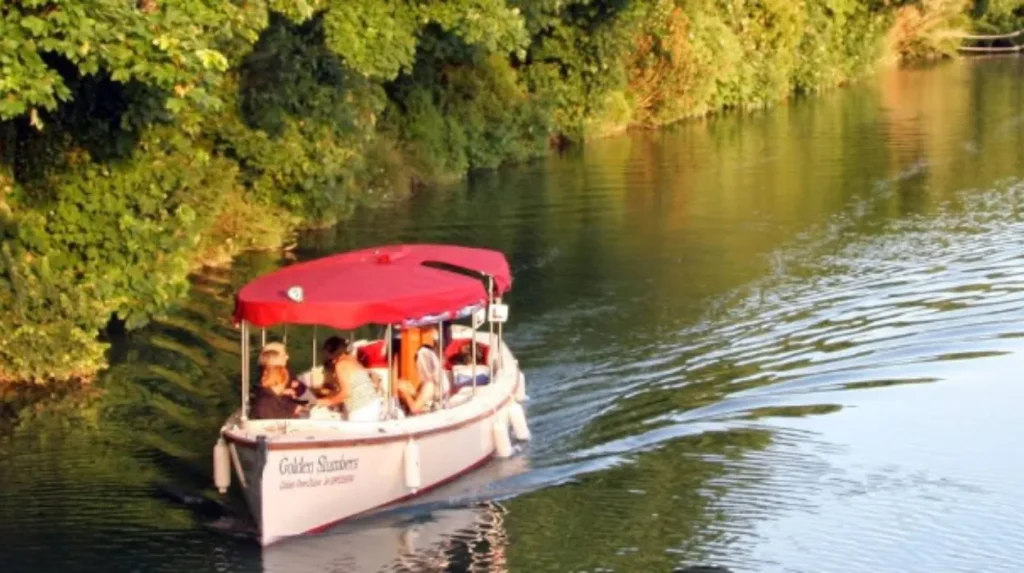
Steering a punt is achieved by using the pole as a rudder at the end of the stroke to guide the stern. Steering a rowing boat is done by varying the pressure on the oars or using a dedicated rudder.
In punting, there is no separate steering wheel or handle. After the punter pushes the boat forward, they leave the pole in the water behind them. By trailing the pole and moving it to one side, they create drag. This drag pulls the back of the boat, causing the front to point in the desired direction. This requires a high degree of finesse and timing. If the punter removes the pole too quickly, they lose steering control. Rowing steering depends on the type of boat. In a sculling boat, the rower pulls harder on the right oar to turn left. In larger sweeping boats, like an eight-man shell, a coxswain sits in the stern. The coxswain uses a small hand-operated rudder to steer.
The coxswain also provides commands to the crew to ensure the boat stays on course. This allows the rowers to focus entirely on generating power. In boats without a coxswain, one of the rowers may have a foot-steering mechanism connected to the rudder. Punting is almost always a solo steering effort. Even if there are passengers, the punter is the sole navigator. This makes punting a more meditative and individualistic experience. Rowing steering is a collaborative effort in team boats. The precision of rowing steering is much higher, allowing shells to navigate tight turns at high speeds. Punting is more suited for wide, slow turns. If a punt gets stuck in a corner, the punter can simply push off the bank with the pole.
What are the modern applications and competitive formats for both?
Rowing is an established international sport with standardized racing formats over 2,000 meters. Punting survives primarily as a tourism attraction and a niche recreational pastime in specific university towns.
Modern competitive rowing is governed by FISA, the International Federation of Rowing Associations. It includes events at the Olympic Games, uk/world/">World Championships, and collegiate levels. Races are held on flat water courses with buoyed lanes. Athletes compete in various categories based on age, weight, and boat size. The focus is on physical peak performance and technical synchronization. Punting does not have a professional international circuit. There are local club races, such as those held by the Thames Punting Club. These races involve navigating a set course with a turn around a marker. Competitive punting is more about agility and technical skill than raw speed. It often involves “stop-watch” trials rather than head-to-head sprint racing.
Tourism is the most common way people experience punting today. In Cambridge and Oxford, commercial punting companies take thousands of tourists on guided tours every year. Chauffeurs provide historical commentary while propelling the boat. This has turned punting into a significant economic driver for these cities. Rowing also has a recreational side, but it is often linked to fitness clubs. People join rowing clubs to improve their health and social connections. Coastal rowing is a growing trend that uses wider boats to handle choppy ocean waves. While rowing is seen as a serious athletic pursuit, punting is viewed as a relaxing social activity. Both continue to be celebrated as symbols of traditional watercraft mastery and heritage.
What are the two types of rowing?
Regarding punting vs. rowing: key differences, the two types of rowing are sculling and sweep rowing. In sculling, each rower handles two oars simultaneously. In sweep rowing, every athlete holds a single oar with both hands to move the boat.
What are the 4 strokes of rowing?
A complete rowing cycle consists of the catch, the drive, the finish, and the recovery. These phases define the technical execution of the stroke, distinguishing the rhythmic movement of rowing from the continuous pushing motion found in traditional river punting.
What is another name for a punt boat?
In the context of punting vs. rowing: key differences, a punt is often referred to as a flat-bottomed boat or a ferry. In specific regional English dialects, particularly in marshy areas, these vessels are sometimes called quants or fowling punts.
What is punt slang for?
In British English, a punt is slang for a bet or a gamble, usually on sports. While this differs from punting vs. rowing: key differences, it implies taking a risk, much like the precarious balance required when navigating a river.
Why is it called a punt?
The name originates from the Old English word “punte,” derived from the Latin “ponto,” meaning a flat-bottomed ferry. This etymology highlights the vessel’s primary function as a stable platform for transporting goods across shallow waters rather than for speed.